Understanding the Global Landscape of German Speakers
Whether you are expanding a business into Europe or planning a move abroad, knowing how many german native speakers exist is crucial for your strategy. German is the most widely spoken native language in the European Union, serving as a powerhouse for science, engineering, and commerce.
Currently, there are approximately 95 to 100 million native German speakers and over 130 million total speakers worldwide. This guide provides a step-by-step breakdown of where these speakers are located and how to leverage this demographic data for your personal or professional goals.
### 💡 Expert Summary: Key Takeaways Primary Count: There are roughly 95-100 million native German speakers globally. Total Reach: When including second-language learners, the number of how many german speakers there are rises to over 135 million. Core Region: The vast majority reside in the DACH region (Germany, Austria, Switzerland). Economic Value: German is the second most important language for global science and the most spoken native tongue in the EU.
Step 1: Quantifying the Global Population of German Native Speakers
The first step in understanding this linguistic group is to look at the raw data regarding how many german native speakers in the world currently exist. Unlike English, which has more non-native speakers than natives, German maintains a very strong core of first-language users.
Analyze the “Big Three” (DACH Region)
Most native speakers are concentrated in Central Europe. To understand how many native german speakers you will encounter, you must look at these three primary countries:
- Germany: With over 80 million native speakers, it is the largest hub.
- Austria: Home to approximately 8.5 million native speakers.
- Switzerland: About 5.3 million people (62% of the population) speak German as their first language.
Evaluate Minor Regions and Enclaves
Beyond the DACH region, you will find significant pockets of native speakers in:
Liechtenstein: 100% of the population (approx. 39,000).
Luxembourg: Where German is an official administrative language.
Belgium: The German-speaking community in the East Cantons (approx. 77,000).
South Tyrol (Italy): Roughly 62% of the local population.
| Region | Estimated Native Speakers | Percentage of Population |
|---|---|---|
| Germany | 80,600,000 | ~95% |
| Austria | 8,500,000 | ~93% |
| Switzerland | 5,300,000 | ~62% |
| Luxembourg | 400,000 | ~65% |
| South Tyrol (Italy) | 315,000 | ~62% |
Step 2: Mapping the Reach of German Speakers in Europe
After identifying native speakers, you must calculate how many german speakers in europe use the language as a second or third tongue (L2 speakers). This is vital for businesses targeting the European Union market.
Identify German as a Lingua Franca
In Central and Eastern Europe, German often serves as a bridge language. Experts estimate that nearly 16% of the EU population speaks German as their mother tongue, but an additional 10-15% can converse in it fluently.
Step-by-Step European Breakdown:
Step 2.1: Look at the Netherlands and Denmark, where German is widely understood due to linguistic similarities and tourism.
Step 2.2: Research Poland and the Czech Republic, where historical ties and economic partnerships make German a popular second language in schools.
Step 2.3: Factor in the “Guest Worker” (Gastarbeiter) history, which has created large Turkish-German and Balkan-German bilingual communities.
Step 3: Tracking German Speakers in the United States
If you are focusing on the Western Hemisphere, you need to know how many german speakers in the us are currently active. While the numbers have declined since the early 20th century, the presence remains significant.
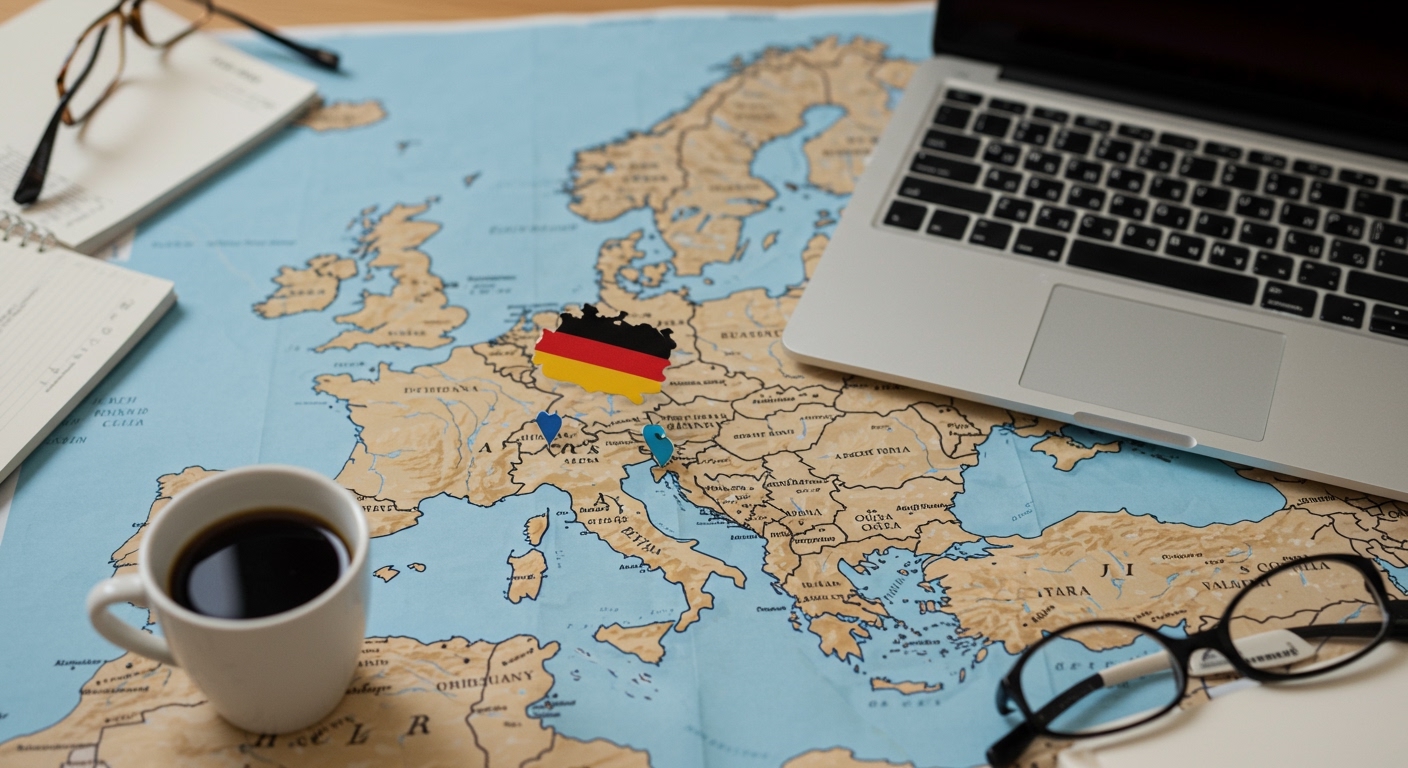
Locate the “German Belt”
Historically, the Midwest (Wisconsin, Pennsylvania, Ohio) was the heart of German immigration. To find how many native german speakers reside in the US today, follow these metrics:
- Census Data: According to the US Census Bureau, approximately 1 million people speak German at home.
- Heritage Populations: Over 40 million Americans claim German ancestry, though only a fraction are fluent.
- Specific Communities: Groups like the Amish and Old Order Mennonites speak Pennsylvania Dutch (a German dialect) as their primary daily language.
Identify Modern Business Hubs
Many German speakers in the US today are expatriates working for companies like BMW, Volkswagen, or Siemens. These hubs are often located in:
South Carolina (Spartanburg/Greenville)
Tennessee (Chattanooga)
California (Silicon Valley tech sector)
Step 4: Calculating the Total Global Audience
To get the final answer to how many german speakers worldwide exist, you must combine native speakers with learners. This “Total Reach” is the number that matters for digital content creators and global marketers.
Use the “130 Million” Rule
Most linguistic experts, including those from Ethnologue and the Goethe-Institut, agree that the total number of how many german speakers are there in the world is roughly 130 to 135 million.
Categorize the Learners
Active Learners: There are roughly 15.4 million people currently learning German worldwide.
Digital Presence: German is the 4th most used language on the internet in terms of content volume, trailing only behind English, Russian, and Spanish.
Step 5: Leveraging German Speaker Data for Career and Business
Knowing how many native german speakers in the world are available is only useful if you know how to interact with them. Follow these steps to maximize your impact in this market.
Adopt “Hochdeutsch” for Formal Communication
While there are many dialects (Bavarian, Saxon, Swiss German), always use Standard German (Hochdeutsch) for professional writing. This ensures all 95 million native speakers can understand you perfectly.
Respect Regional Nuances
In Germany: Be direct, punctual, and focus on technical specifications.
In Austria: Use more formal titles and expect a slightly more indirect communication style.
In Switzerland: Be aware that “Swiss German” is spoken daily, but “Standard German” is used for writing.
Tools and Materials for Reaching German Speakers
To effectively engage with the millions of German speakers, you will need the following resources:
| Tool Category | Recommended Resource | Purpose |
|---|---|---|
| Data Tracking | Statista / Eurostat | Updates on how many german speakers by region. |
| Language Standards | Duden | The “Bible” of German grammar and spelling. |
| Cultural Insights | Goethe-Institut | Understanding the diaspora and cultural trends. |
| Translation | DeepL | The most accurate AI translator for German nuances. |
Expert Pro-Tips for Engaging German Speakers
Don’t ignore the “Du” vs. “Sie” distinction. Using “Du” (informal) with a German business partner can be seen as highly unprofessional unless specifically invited to do so.
Localize for Austria and Switzerland. While the language is the same, vocabulary for food, law, and government differs. For example, use Jänner instead of Januar in Austria.
Focus on Privacy. German speakers are highly sensitive to data privacy (GDPR). Ensure your websites and communications prioritize security.
- Highlight Quality. The “Made in Germany” brand is a point of pride. If you are selling or working in this market, emphasize reliability and precision.
Common Mistakes to Avoid
- Assuming everyone speaks English: While many Germans speak English well, they prefer conducting business and consuming media in German.
- Confusing “German speakers” with “Germany residents”: Remember that how many german speakers are there includes millions in Austria, Switzerland, and the US.
- Ignoring Dialects: If you are running a local radio ad in Zurich, using Standard German might sound “too foreign.” Use local voice talent.
- Overestimating the US numbers: While many Americans have German names, very few can actually hold a conversation. Don’t rely on heritage alone for marketing.
Frequently Asked Questions
(FAQs)
How many german speakers are there in the world today?
There are approximately 130 to 135 million German speakers worldwide. This includes roughly 95-100 million native speakers and about 30 million people who have learned German as a second language.
Which country has the most native German speakers?
Germany has the highest number, with over 80 million people speaking it as their first language. Austria and Switzerland follow with 8.5 million and 5.3 million respectively.
How many german speakers are there in the US?
According to recent census data, there are about 1 million people in the United States who speak German at home. However, over 40 million Americans claim German ancestry, making it the largest ethnic ancestral group in the US.
Is German the most spoken language in Europe?
German is the most spoken native language in the European Union. However, when counting both native and second-language speakers across the entire continent, English and Russian have higher total numbers.
Why are there so many German speakers in South America?
During the 19th and 20th centuries, large waves of German immigrants moved to countries like Brazil and Argentina. Today, there are still hundreds of thousands of people in Southern Brazil (specifically the Hunsrückisch dialect) who speak German.
Conclusion
Understanding how many german native speakers exist globally reveals a massive, affluent, and technologically advanced audience. With nearly 100 million natives and over 130 million total speakers, German remains a dominant force in the global economy.
By following the steps in this guide—mapping the DACH region, accounting for the European L2 speakers, and identifying US enclaves—you can tailor your communication to reach this influential demographic effectively. Whether for business, travel, or academic research, the German-speaking world offers unparalleled opportunities for those who take the time to understand its scale and reach.
Ready to connect with the German market? Start by localizing your top-performing content into Standard German today to tap into a community of over 130 million people.