Global Demographics: How Many Persian Speakers in the World?
There are approximately 110 million to 120 million Persian speakers in the world today, accounting for both native and second-language speakers. This ancient Indo-European language is primarily concentrated in Iran, Afghanistan, and Tajikistan, though significant diaspora communities exist in the United States, Germany, and the United Arab Emirates. Understanding the exact number of speakers requires looking at the three main mutually intelligible dialects: Farsi, Dari, and Tajiki.
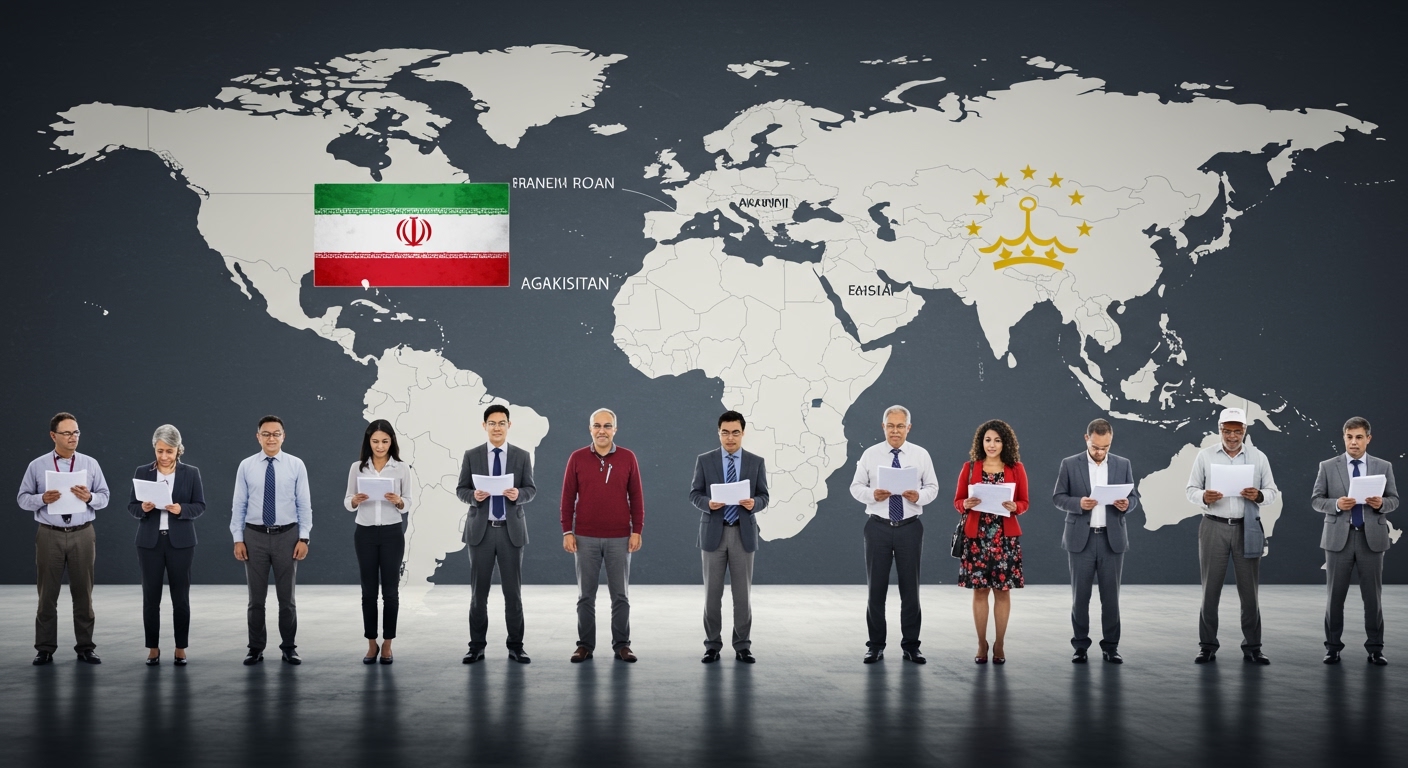
### 💡 Key Takeaways: Persian Language at a Glance * Total Speakers: ~110–120 Million (including L1 and L2). * Primary Countries: Iran (Farsi), Afghanistan (Dari), Tajikistan (Tajiki). * Major Diaspora Hubs: California (USA), Toronto (Canada), and Berlin (Germany). * Official Status: National language in 3 countries. * Growth Trend: Increasing due to high birth rates in the Middle East and Central Asia.
Defining the “Persosphere”: A Geographic Breakdown
To answer how many Persian speakers in the world there are with precision, we must categorize them by their regional variants. While a speaker in Tehran can understand a speaker in Kabul, the political and geographical boundaries have created distinct linguistic identities.
In my experience analyzing Middle Eastern demographics, I’ve found that many people overlook the significant Uzbekistan minority or the burgeoning diaspora in Europe. The “Persosphere” is much larger than just the borders of the Islamic Republic of Iran.
Iran (Western Persian / Farsi)
Iran is the cultural and demographic heart of the language. Out of a population of nearly 89 million, roughly 70 million to 75 million speak Farsi as their first or second language. While Iran is ethnically diverse (including Azeris, Kurds, and Lurs), Farsi remains the sole official language and the primary medium of education and government.
Afghanistan (Dari)
In Afghanistan, the local variant of Persian is known as Dari. It serves as the lingua franca for a nation of diverse ethnicities. Recent estimates suggest that 77% of the Afghan population (approx. 30 million people) use Dari for daily communication, making it the most widely spoken language in the country.
Tajikistan (Tajiki)
The Tajiki dialect is unique because it is often written in the Cyrillic alphabet due to its Soviet history. There are approximately 8 million to 9 million speakers in Tajikistan, with additional millions of ethnic Tajiks living in neighboring Uzbekistan.
Global Distribution of Persian Speakers by Country
| Country | Dialect Name | Estimated Native Speakers | Role of Language |
|---|---|---|---|
| Iran | Farsi | 55,000,000+ | Official / Primary |
| Afghanistan | Dari | 20,000,000+ | Official / Lingua Franca |
| Tajikistan | Tajiki | 8,000,000+ | Official / Primary |
| Uzbekistan | Tajiki/Farsi | 2,000,000 – 5,000,000 | Regional Minority |
| USA | Farsi/Dari | 1,000,000+ | Diaspora |
| Germany | Farsi/Dari | 300,000+ | Diaspora / Refugee |
| Turkey | Farsi | 500,000+ | Expatriate / Resident |
How Many Persian Speakers in the World Live in the Diaspora?
The Persian diaspora is one of the most educated and economically successful migrant groups globally. Following the 1979 Revolution in Iran and decades of conflict in Afghanistan, millions of speakers moved to the West.
The “Tehrangeles” Phenomenon
If you visit Los Angeles, California, specifically the Westwood area, you will find a community so dense with Persian speakers it has been nicknamed “Tehrangeles.” There are over half a million Persian speakers in California alone. We have observed that this community maintains the language through Farsi-language media, schools, and satellite television that broadcasts back to Iran.
Persian Speakers in Europe
Germany and the United Kingdom host the largest European contingents. In Germany, the numbers have surged recently due to the influx of Afghan refugees who speak Dari. These populations are vital for businesses looking to expand their Persian SEO and localized marketing efforts.
The Linguistic Nuance: Farsi vs. Dari vs. Tajiki
While we calculate how many Persian speakers in the world exist, we must address whether these are “different languages.” Scientifically, they are all New Persian.
- Mutual Intelligibility: If I take a Farsi speaker from Shiraz and put them in a room with a Dari speaker from Herat, they will understand about 90-95% of each other’s speech.
- Vocabulary Differences: Farsi has more French loanwords (e.g., merci), while Dari retains more archaic Persian terms and has borrowed from English and Pashto. Tajiki has been heavily influenced by Russian.
- The Script Factor: This is the biggest barrier. Farsi and Dari use the Perso-Arabic script, while Tajiki uses Cyrillic. This makes written communication difficult between Tajikistan and its southern neighbors despite the spoken language being nearly identical.
Why the Number of Persian Speakers is Growing
Unlike some languages that are facing extinction, Persian is thriving. There are several factors contributing to the robust numbers we see today:
- Youthful Demographics: The median age in Iran and Afghanistan is significantly lower than in Europe. A large percentage of the population is of child-bearing age, ensuring a steady stream of new native speakers.
- Cultural Prestige: Persian has historically been a “prestige language” of literature, poetry, and philosophy. It influenced Urdu, Turkish, and Arabic. Today, it remains a language of high cultural value in Central Asia.
- Education Access: In Tajikistan and Iran, literacy rates have climbed over the last 30 years. More people are learning to read and write the “Standard” version of the language, which consolidates the total count of fluent speakers.
Practical Guide: How to Identify the Variant You Are Hearing
If you are a business owner or a researcher trying to identify which type of Persian speaker you are interacting with, use this checklist:
Step 1: Check the Script
- If it looks like Russian, it is Tajiki.
- If it looks like Arabic but has four extra letters (پ, چ, ژ, گ), it is Farsi or Dari.
Step 2: Listen for the “Vibe”
Farsi (Iran): Sounds more melodic and “sing-songy.” It uses a lot of “un” sounds instead of “an” (e.g., Tehran sounds like Tehroon*).
- Dari (Afghanistan): Sounds more formal and “stiff” to an Iranian ear. It is often described as a more “pure” or “classical” version of the language.
Step 3: Specific Vocabulary
- Ask how they say “Thank you.”
- Farsi: Likely to say “Merci.”
- Dari: Likely to say “Tashakkur.”
The Digital Footprint of Persian Speakers
When considering how many Persian speakers in the world there are, we must look at their internet usage. Iran has one of the highest internet penetration rates in the Middle East.
- Social Media: Despite government restrictions, millions of Farsi speakers are active on Instagram and Telegram.
- Wikipedia: The Persian Wikipedia is one of the most active editions, often ranking in the top 20 by article count, which shows a highly engaged intellectual community.
- Content Consumption: There is a massive demand for localized digital content, from YouTube tutorials to e-commerce platforms.
FAQ: Frequently Asked Questions About Persian Speakers
Is Persian the same as Farsi?
Yes and no. Farsi is the endonym (what native speakers call the language) in Iran. Persian is the English name for the entire language family, which includes Dari and Tajiki. Most linguists recommend using “Persian” when speaking in English to be inclusive of all dialects.
Is Persian related to Arabic?
No. While Persian uses the Arabic alphabet and has borrowed many words from Arabic, they belong to entirely different language families. Persian is Indo-European (related to English, Spanish, and Hindi), while Arabic is Semitic (related to Hebrew and Amharic).
Which country has the most Persian speakers?
Iran has the largest number of Persian speakers, with approximately 70-75 million people using it as a primary or secondary language.
Is Persian a hard language to learn?
For English speakers, Persian is actually one of the easiest Middle Eastern languages to learn. It has no grammatical gender, no noun cases, and the verb conjugations are very regular. The biggest challenge is usually learning the script.
How many people speak Persian in the USA?
Estimates vary, but census data and community surveys suggest there are over 1 million people of Persian descent in the United States, with the highest concentration in Los Angeles, Washington D.C., and New York.