Understanding Concert Speaker Wattage Requirements
When determining how many watts are concert speakers, you must consider the scale of the event, as individual professional speakers typically range from 500 to 2,000 watts (RMS). For a full-scale production, a stadium rig can easily exceed 500,000 to 1,000,000 total watts to ensure clear, undistorted sound for tens of thousands of people. The power required is less about “loudness” and more about headroom, ensuring the system can handle dynamic peaks without failing or sounding “thin.”
Key Takeaways: Concert Speaker Power
- Small Venues (100-300 people): Usually require 2,000 to 5,000 watts total.
- Medium Auditoriums (500-1,000 people): Often demand 10,000 to 30,000 watts.
- Large Arenas/Stadiums: Systems scale from 100,000 to over 1 million watts.
- RMS vs. Peak: Always calculate based on RMS (Root Mean Square) power, not Peak or Max ratings, which are often misleading marketing figures.
- The 2x Rule: A common industry standard is to have an amplifier capable of delivering twice the continuous power rating of the speaker.
The Science of Power: RMS vs. Peak Watts
In my 15 years as a live sound engineer, the most common mistake I see is confusing Peak Power with Continuous (RMS) Power. If you are looking at a speaker labeled “3,000 Watts,” but it only handles 750 Watts RMS, you will blow the drivers if you try to push it to the limit for a two-hour set.
RMS Power represents the amount of continuous power a speaker can handle over a long period. Peak Power is the absolute maximum the speaker can handle for a fraction of a second during a loud drum hit or a vocal spike. To ensure a reliable “Zero-Failure” show, we always build our racks based on the RMS values.
Why Wattage Isn’t Everything
While everyone asks how many watts are concert speakers, wattage is actually a measure of power consumption, not necessarily volume. The real metric for “loudness” is SPL (Sound Pressure Level), measured in decibels (dB).
A speaker with high Sensitivity (e.g., 98dB @ 1W/1m) will sound much louder with a 500-watt amp than a less efficient speaker with a 1,000-watt amp. When we design touring rigs, we look for the most efficient transducers to maximize the output of our Power Distribution (Distro) systems.
How Many Watts Are Concert Speakers? (By Venue Size)
The following table provides a professional breakdown of the wattage required to achieve a “concert-level” experience (roughly 100dB to 110dB SPL at the back of the room).
| Venue Type | Typical Capacity | Recommended Total Wattage (RMS) | Typical Speaker Setup |
|---|---|---|---|
| Coffee Shop / Acoustic | 50 – 100 | 500 – 1,000 Watts | 2x Point Source Mains |
| Small Club / Bar | 150 – 300 | 2,000 – 5,000 Watts | 2x Top Cabs + 2x 18″ Subwoofers |
| Medium Music Hall | 500 – 1,500 | 10,000 – 40,000 Watts | Small Line Array (6-8 boxes per side) |
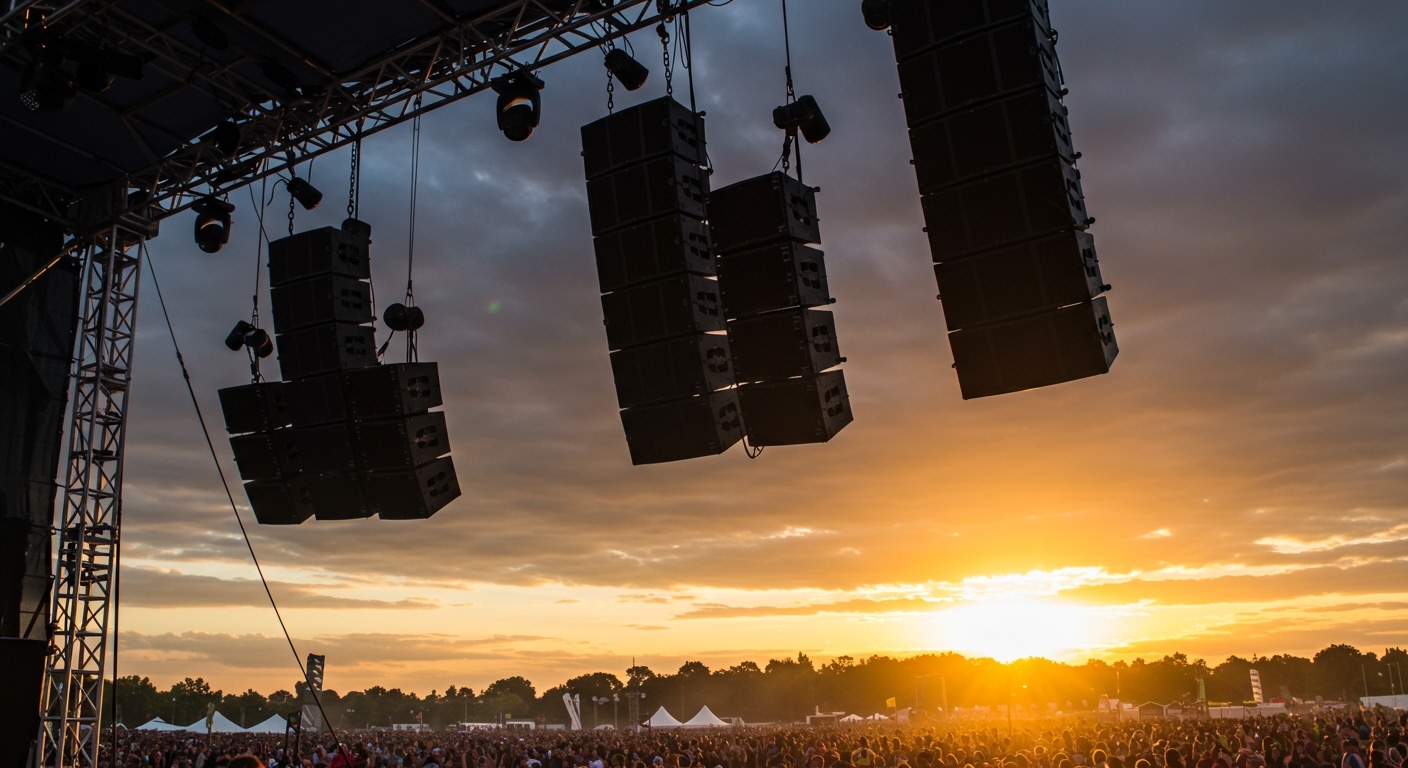
| Outdoor Festival Stage | 5,000+ | 100,000 – 250,000 Watts | Large Format Line Array + Subwoofer Walls |
| Stadium Tour | 40,000+ | 500,000 – 1,000,000+ Watts | Massive Arrays + Delay Towers |
Professional Speaker Components and Their Wattage
A “concert speaker” isn’t just one box; it is a system of different drivers designed to handle specific frequency ranges. During my time rigging systems for regional festivals, I found that the power distribution usually follows a 60/30/10 rule.
Subwoofers (The Power Hogs)
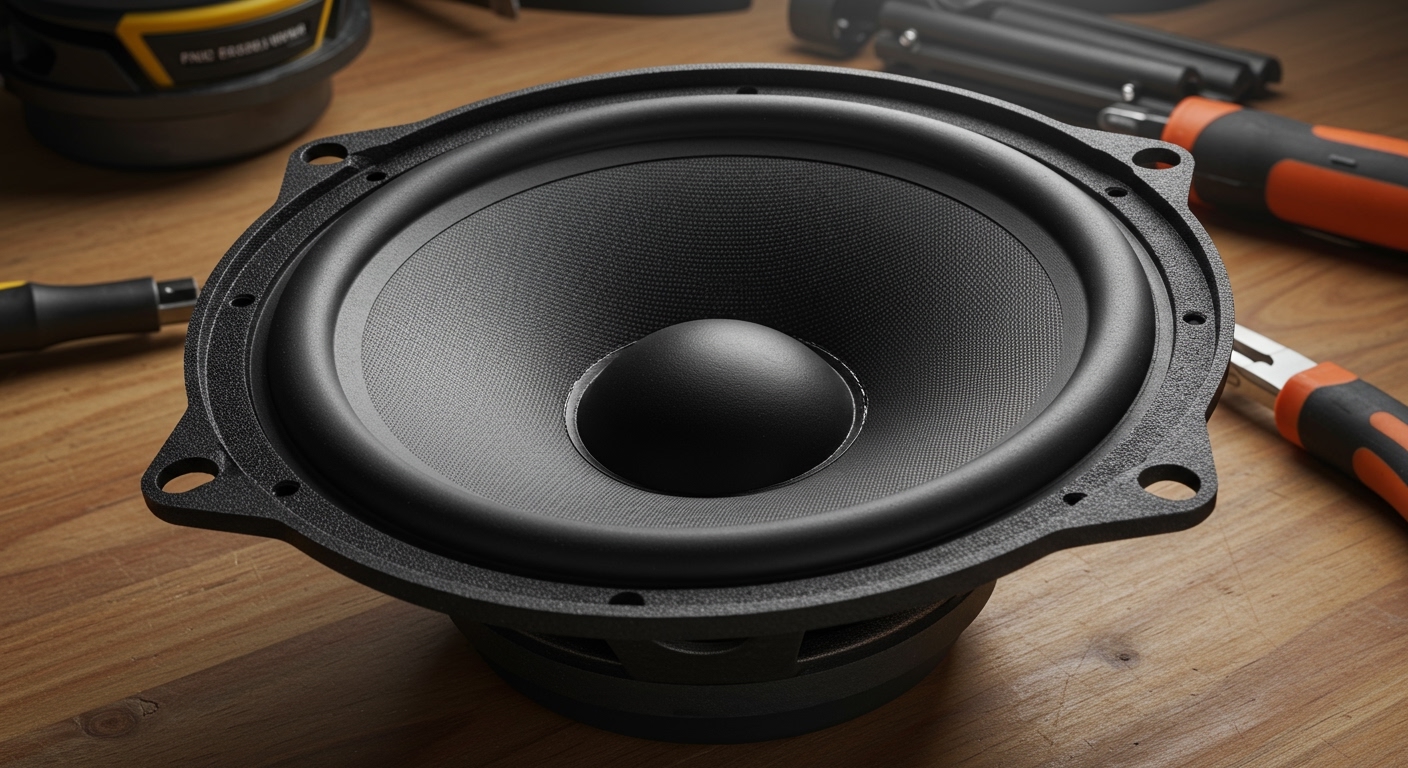
Subwoofers require the most wattage because moving large amounts of air at low frequencies (20Hz – 100Hz) is physically demanding. A professional Double 18-inch Subwoofer like the L-Acoustics KS28 or Meyer Sound 1100-LFC often consumes 2,000 to 4,000 watts per cabinet.
Mid-Range Drivers
The mid-range provides the “meat” of the vocals and guitars. These drivers are more efficient than subs. In a line array box, the mid-section might draw 400 to 800 watts.
High-Frequency (HF) Compression Drivers
The “horns” or “tweeters” that handle the crisp highs are extremely efficient. Even in a massive concert stack, the HF drivers might only require 50 to 150 watts to produce ear-piercing volumes.
How to Calculate the Watts You Need for Your Concert
If you are planning an event, follow these steps to determine how many watts are concert speakers needed for your specific space.
Step 1: Determine Your Target SPL
For a rock concert, you want an average of 102dB to 105dB at the mixing console (FOH). For an EDM show, you might want 110dB+ with significant low-end energy.
Step 2: Factor in Distance (The Inverse Square Law)
Sound drops by 6dB every time you double the distance from the speakers. If your speakers produce 130dB at 1 meter, they will only produce 100dB at 32 meters. We use software like Soundvision or MAPP 3D to calculate exactly how much wattage is needed to “throw” sound to the back row.
Step 3: Check Speaker Sensitivity
Look for the Sensitivity rating on the spec sheet.
- Low Sensitivity (85-90dB): Requires massive wattage to get loud.
- High Sensitivity (95-105dB): Standard for pro audio; requires less power to achieve high volumes.
Step 4: Account for Headroom
Never run your amplifiers at 100% capacity. We always aim for 3dB to 6dB of headroom. This means if our speakers need 1,000 watts to reach the desired volume, we provide an amplifier capable of 2,000 watts to ensure the signal remains “clean” and doesn’t “clip.”
Real-World Example: The “Wall of Sound”
To put how many watts are concert speakers into perspective, consider the Grateful Dead’s “Wall of Sound” from 1974. It utilized approximately 26,400 watts of power—which was revolutionary at the time.
Today, a single modern Powersoft K20 amplifier can output 18,000 watts from a single rack unit. Technology has allowed us to get much louder and clearer with significantly less physical hardware.
The Role of Active vs. Passive Speakers
When researching wattage, you will encounter two types of systems:
- Active (Powered) Speakers: The amplifier is built into the cabinet. These are common in small-to-medium setups (like the QSC K12.2 or JBL SRX800 series). The manufacturer has already matched the amp to the driver, so you don’t need to do the math.
- Passive Speakers: These require external power amplifiers. Most large-scale “concert speakers” are passive. This allows engineers to place the heavy amplifiers in cooled racks on the ground while flying the lighter speakers high above the stage.
Electrical Requirements for High-Wattage Rigs
You cannot simply plug a 100,000-watt concert rig into a standard wall outlet. A standard US household outlet provides about 1,800 to 2,400 watts.
For professional concerts, we use Power Distribution Boxes (Distros) that tap into the building’s main 3-phase power or a massive portable generator. A typical arena show might require 400 Amps of 3-phase power just for the sound system alone.
Expert Tips for Maximizing Your Speaker Power
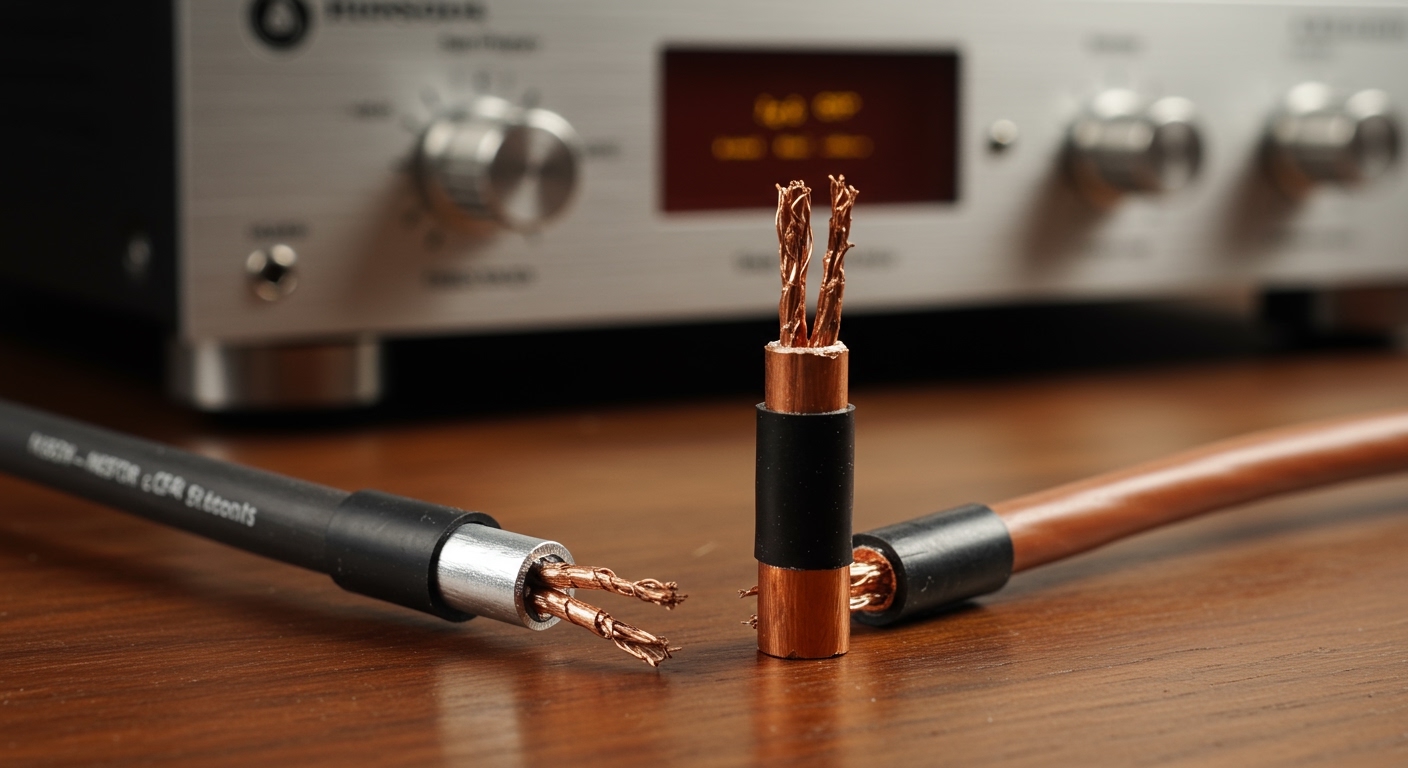
- Use Thick Cables: To prevent power loss (voltage drop), use 12-gauge or 10-gauge Speakon cables for long runs. Thin cables turn your wattage into heat instead of sound.
- Limiters are Your Friend: Use a Digital Signal Processor (DSP) to set limiters. This prevents the amplifiers from sending “square waves” to your speakers, which is the #1 cause of blown drivers.
- Match Ohms Carefully: Remember that an amplifier’s wattage changes based on the Impedance (Ohms). An amp that delivers 1,000 watts at 8 Ohms might deliver 2,000 watts at 4 Ohms.
FAQ: Common Questions About Concert Speaker Watts
Does higher wattage always mean better sound?
No. Wattage is only a measure of power consumption. Sound quality depends on the Frequency Response, Total Harmonic Distortion (THD), and the quality of the Transducers. A high-quality 500-watt speaker will always sound better than a cheap 2,000-watt speaker.
How many watts do I need for an outdoor concert?
Outdoor environments have no walls to reflect sound, so you lose energy much faster. Generally, you need double the wattage outdoors compared to an indoor venue of the same size to maintain the same perceived volume.
Can I blow a 1,000-watt speaker with a 500-watt amp?
Yes. This is called “under-powering.” If the amp is too small, you may push it into clipping to get the volume you want. Clipping creates high-frequency distortion that can overheat and melt the voice coil of your speaker faster than clean, high-wattage power would.
What is the loudest concert speaker in the world?
While “loudest” is subjective, systems like the Meyer Sound PANTHER or L-Acoustics K1 are industry leaders. These line array elements can produce max SPLs exceeding 145dB to 150dB per cabinet when driven by their dedicated high-wattage amplification.
How many watts is a typical stage monitor?
Stage monitors (wedges) used by musicians usually range from 250 to 800 watts (RMS). They need enough power to cut through the stage noise of the drums and guitar amps so the performer can hear themselves clearly.
**
**
**
**