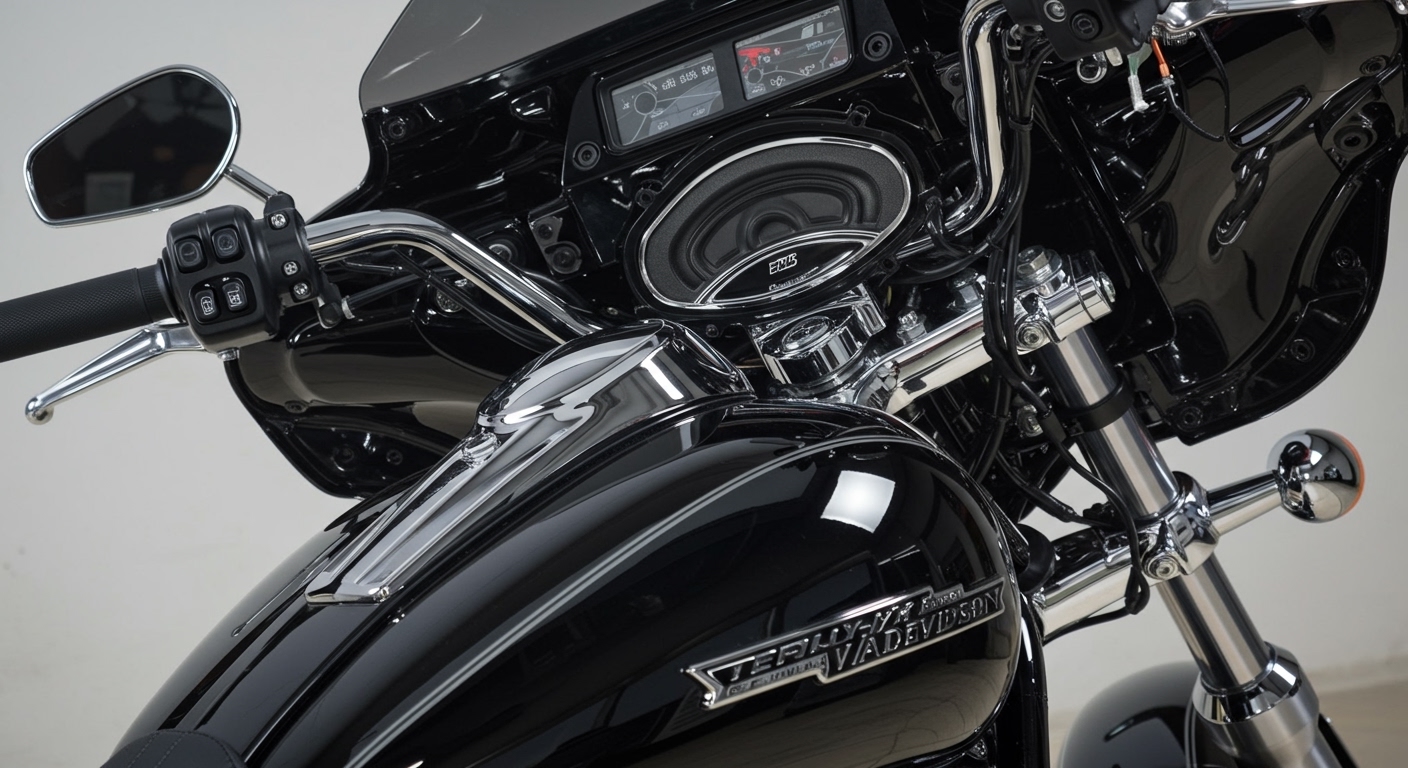
How Many Watts Are Stock Harley Speakers?
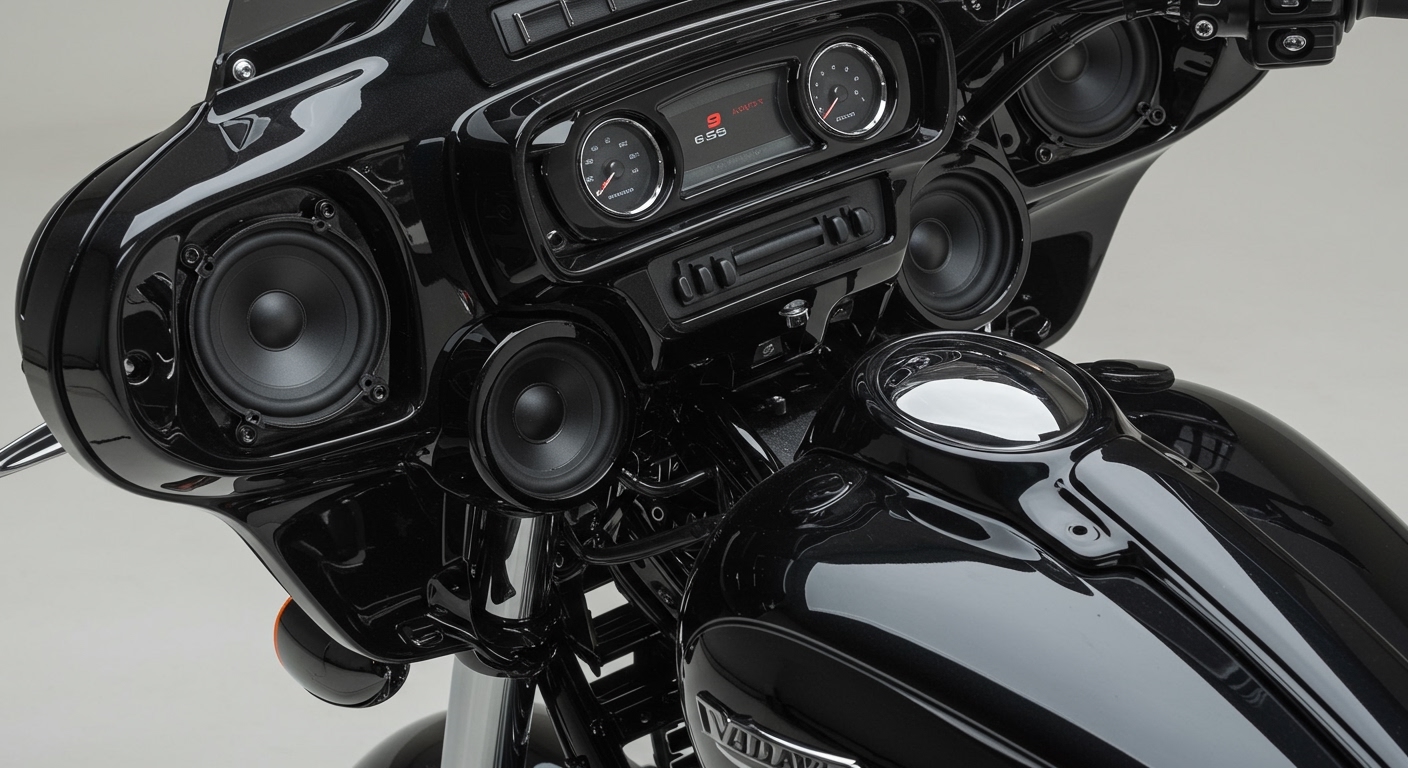
Most factory-installed Harley-Davidson speakers deliver between 25 and 50 watts RMS per channel, typically operating at a 2-ohm impedance. If you own a base model Street Glide or Road Glide with the Boom! Box system, your head unit is likely pushing about 25 watts of continuous power to each speaker. CVO models or bikes equipped with Boom! Audio Stage II kits may reach higher levels, but even these “premium” setups often fall short of high-speed highway demands.
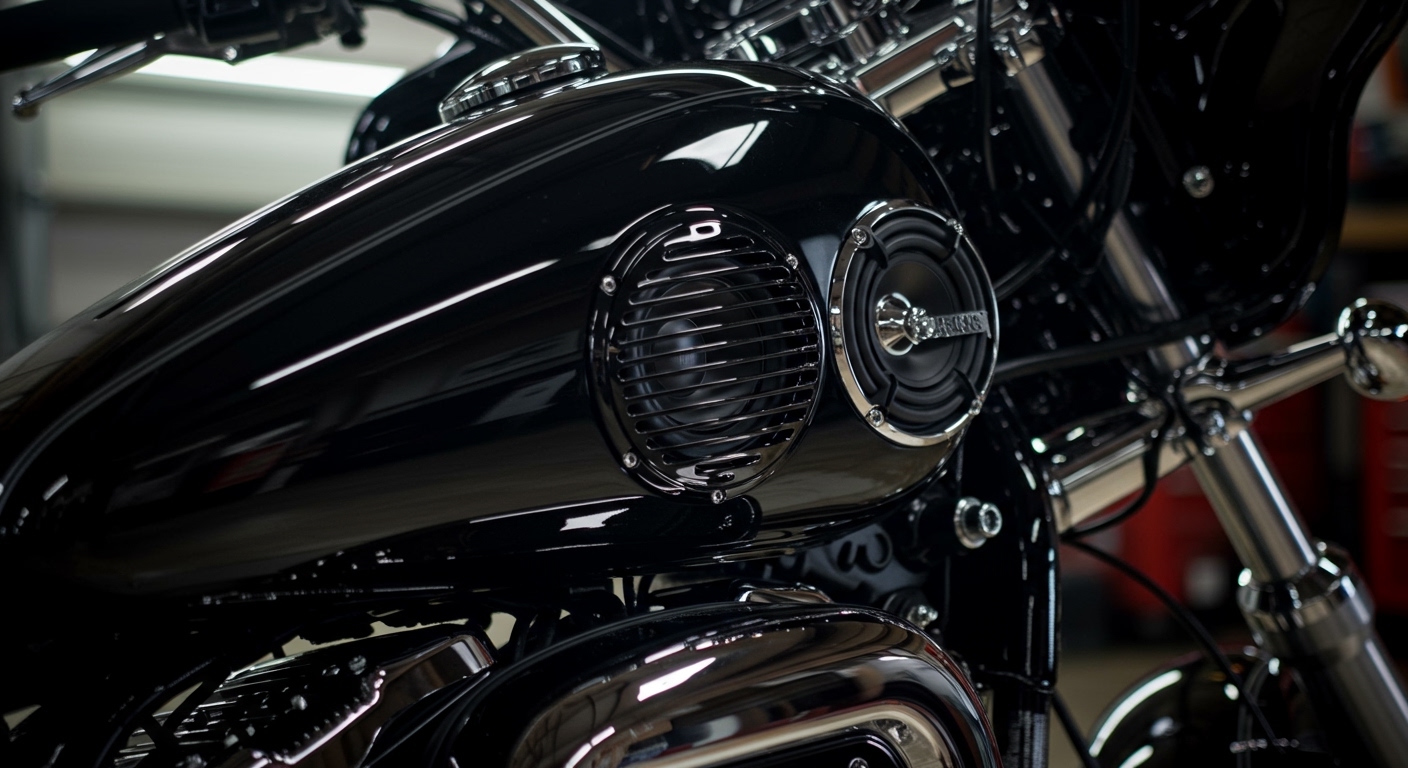
Knowing how many watts are stock harley speakers is the first step in diagnosing why your music sounds “thin” or distorted when you twist the throttle. In my experience wrenching on Touring models, the bottleneck isn’t just the wattage; it is the factory EQ curve and the high-impedance limitations of the stock head unit.
TL;DR: Key Takeaways for Harley Audio
- Standard Wattage: 25W – 50W RMS (Root Mean Square).
- Impedance: Most stock Harley speakers are 2-ohm, which is uncommon in the car audio world.
- The Problem: Low wattage leads to “clipping” (distortion) at high volumes.
- The Solution: Adding an external amplifier and high-sensitivity aftermarket speakers.
- Compatibility: Upgrading usually requires a technician flash or a DSP to flatten the factory radio’s EQ.
Deep Dive: How Many Watts Are Stock Harley Speakers?
To truly understand how many watts are stock harley speakers, we have to distinguish between Peak Power and RMS Power. Marketing materials often brag about “100-watt systems,” but that is usually the combined peak power of all speakers.
For real-world performance, the RMS rating is the only number that matters. On a standard Rushmore (2014+) bike, the internal amp of the GTS or 6.5GT radio provides roughly 25 watts RMS. This is enough for cruising around town at 35 MPH, but it completely loses clarity once wind noise and exhaust notes enter the mix.
Factory Wattage Comparison by System
The table below breaks down the typical power ratings I have encountered during bench testing and installs:
| System Type | Wattage (RMS per Channel) | Impedance (Ohms) | Typical Bike Models |
|---|---|---|---|
| Standard Factory | 25W | 2-Ohm | Street Glide, Road Glide (Base) |
| Boom! Audio Stage I | 40W – 50W | 2-Ohm | Optional Dealer Upgrade |
| Boom! Audio Stage II | 75W (Bi-amped) | 2-Ohm | CVO Models, Ultra Limited |
| Pre-Rushmore (2013-) | 15W – 20W | 2-Ohm / 4-Ohm | Electra Glide (Older) |
Why 2-Ohm Impedance Matters for Your Harley
When investigating how many watts are stock harley speakers, you cannot ignore impedance (ohms). Harley-Davidson uses 2-ohm speakers to squeeze more volume out of their low-voltage head units.
In basic electrical terms, lower resistance (ohms) allows more current to flow. If you swap your stock 2-ohm speakers for standard 4-ohm car speakers without adding an amp, your volume will actually decrease by 50%.
We always recommend checking the back of your speaker magnet for the Ω symbol before buying replacements. If you are keeping the stock radio and no amp, you must stay with 2-ohm speakers to maintain that 25-50 watt output.
The Limitation of Factory “High Wattage” Systems
Even if you have the Stage II system with higher wattage, you might notice the sound is still lacking. This is because Harley-Davidson applies a “heavy” EQ flash to the radio.
The factory flash cuts bass frequencies as you increase the volume to protect the cheap paper-cone speakers from blowing. This results in a “tinny” sound at 70 MPH. No matter how many watts are stock harley speakers, they cannot overcome a digital signal that is actively stripping away the depth of your music.
Step-by-Step Guide: Testing Your Stock Speaker Wattage
If you suspect your speakers are failing or want to verify your current output, follow this process. We use this in the shop to baseline a bike before an upgrade.
Access the Fairing**
Remove the T-27 Torx bolts from your inner fairing. On a Street Glide, there are four on the inside and three holding the windshield. On a Road Glide, the process involves the “hook” mechanism and side bolts.
Identify the Speaker Leads**
Locate the positive and negative wires connected to the back of the speaker. Do not disconnect them yet if you want to test “live” voltage.
Use a Digital Multimeter**
Set your multimeter to AC Voltage. With the bike running and the volume at roughly 75% (using a 1kHz test tone), measure the voltage across the speaker terminals.
Calculate the Wattage**
Use Ohm’s Law (Wattage = Voltage² / Resistance). For example, if you see 7.07 volts on a 2-ohm speaker:
7.07 7.07 = 50
- 50 / 2 = 25 Watts RMS.
Actionable Advice: Upgrading Your Stock Setup
Now that you know how many watts are stock harley speakers, you likely realize it isn’t enough for the open road. Here is how we recommend upgrading based on your budget:
Level 1: The “Plug-and-Play” Swap
- Goal: Better clarity without an external amp.
- Parts: Hertz SX 165 Neo or Rockford Fosgate TMS65.
- Why: These are high-efficiency speakers designed to run on the limited power of the stock head unit.
Level 2: The Amp and Speaker Combo
- Goal: Hearing music clearly at 80 MPH with a full-face helmet.
- Parts: Sinfoni, Cicada Audio, or Diamond Audio 4-channel amp.
- Technical Tip: You will need a wiring harness (like the American Hard Bag kit) to avoid cutting your factory wires.
Level 3: The Competition Setup
- Goal: “Parking lot” loud and studio quality.
- Parts: Digital Signal Processor (DSP) like the Dayton Audio DSP-408 or Rockford DSR1.
- Requirement: A professional “radio flash” to flatten the factory EQ output.
Common Problems with Stock Harley Audio
- Blown Cones: Stock speakers use treated paper. Rain and vibration eventually tear the surround, causing a buzzing sound.
- Heat Soak: The internal amps in the GTS radio can overheat in summer desert riding, leading to “thermal rollback” where the volume automatically drops.
- Corroded Terminals: Harley speakers are exposed to the elements. I often see green corrosion on the spade bits, which increases resistance and lowers wattage.
Expert Perspective: Why Wattage Isn’t Everything
In the world of motorcycle audio, Sensitivity (dB) is often more important than wattage. A speaker with a 93dB sensitivity requires half the power to reach the same volume as a 90dB sensitivity speaker.
When people ask me how many watts are stock harley speakers, I tell them the number is low, but the sensitivity of those stock speakers is actually decent. The problem is they aren’t “durable” enough to handle high-excursion bass.
Frequently Asked Questions
Can I add an amp to my stock Harley speakers?
We do not recommend this. Stock Harley speakers are rated for 25-50W. Most aftermarket amps start at 100W RMS. You will likely melt the voice coils or tear the paper cones within minutes of high-volume play.
What is the best radio flash for stock speakers?
If you are keeping the stock speakers, keep the stock flash. If you add an amp and better speakers, the Rockford Fosgate or 8-Speaker/2-Amp flash is the industry standard for creating a “flat” signal.
Do CVO Harleys have better speakers?
Yes, CVO models usually feature the Stage II Boom! Audio system. These utilize bi-amplification (separate wires for the woofer and tweeter) and provide roughly 75 watts per channel. However, they are still 2-ohm systems and are difficult to integrate with aftermarket parts.
Are stock Harley speakers waterproof?
They are water-resistant, not waterproof. They can handle a light rain or a wash, but high-pressure water behind the fairing or submerging them will ruin the paper cones.