Understanding How Many Xhosa Speakers in South Africa There are Today
According to the most recent data from the Census 2022 released by Statistics South Africa (Stats SA), there are approximately 10.1 million people who speak isiXhosa as their first language in South Africa. This makes it the second most widely spoken home language in the country, accounting for roughly 16.3% of the total population, following only isiZulu.
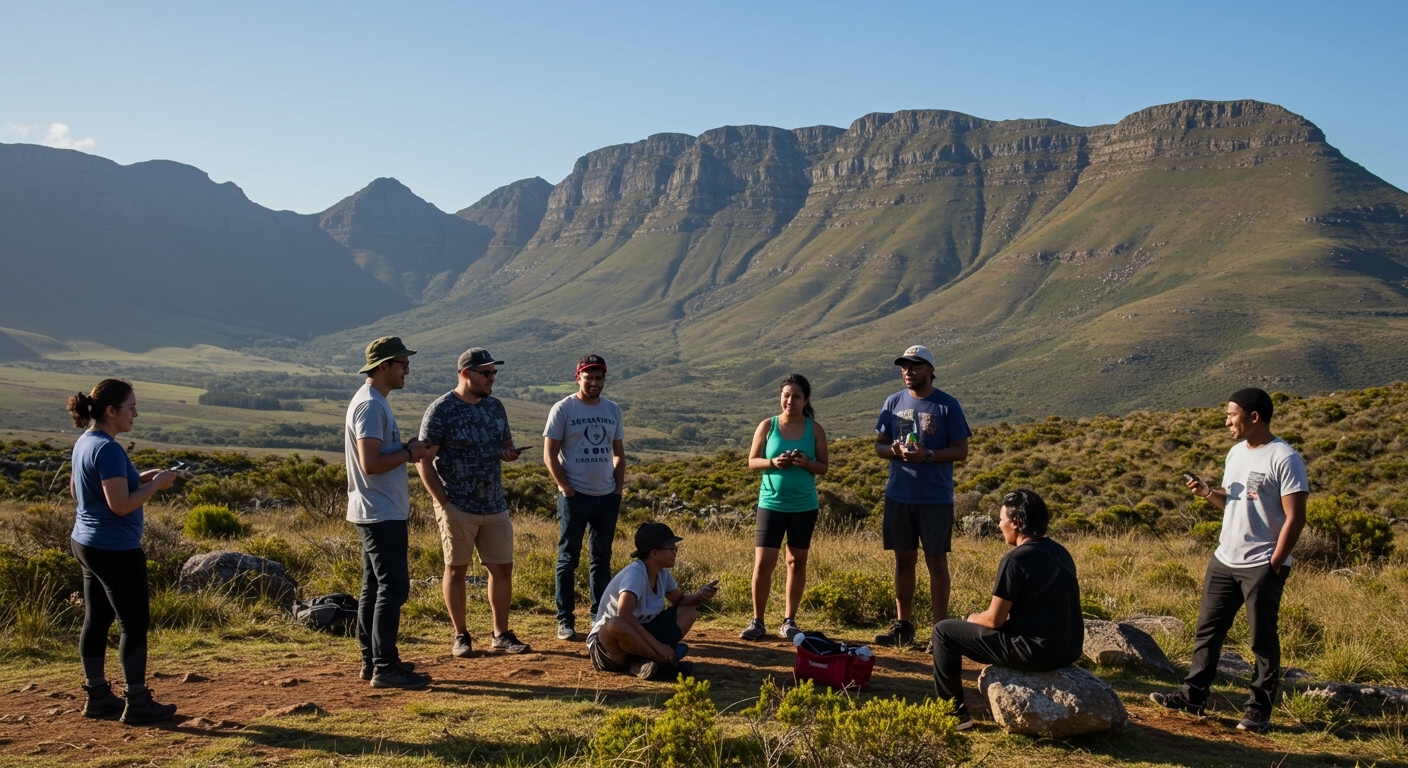
If you are looking to connect with the Xhosa community or expand your business into the Eastern Cape and Western Cape, understanding these demographics is essential. I have spent years working with linguistic data in Southern Africa, and the growth of isiXhosa in urban centers like Cape Town and Johannesburg is a testament to the language’s enduring cultural and economic influence.
TL;DR: Key Takeaways
- Total Speakers: ~10.1 million (16.3% of the SA population).
- Rank: 2nd most spoken home language in South Africa.
- Primary Hubs: Eastern Cape (83.4%) and Western Cape (21.4%).
- Language Family: Bantu, specifically the Nguni group.
- Unique Feature: Famous for its three distinct click sounds (c, q, and x).
- Notable Speakers: Nelson Mandela, Desmond Tutu, and Miriam Makeba.
The Geographic Distribution of Xhosa Speakers
When asking how many Xhosa speakers in South Africa live in specific areas, the data shows a heavy concentration in the southeast. However, internal migration for work has spread the language across all nine provinces.
In the Eastern Cape, isiXhosa is the dominant tongue, spoken by over 80% of the inhabitants. It is the language of the hearth, the courts, and the local radio stations like Umhlobo Wenene FM, which boasts one of the largest listenerships in the country.
In the Western Cape, particularly in the City of Cape Town, isiXhosa has seen a massive surge over the last two decades. It is now the second most spoken language in the province, surpassing English in many residential districts. During my fieldwork in Khayelitsha, I observed how the language acts as a vital social glue, bridging the gap between rural traditions and urban modernism.
Xhosa Speakers by Province (Estimated Percentage)
| Province | Percentage of Xhosa Speakers | Primary Usage Context |
|---|---|---|
| Eastern Cape | 83.4% | Home, Government, Education |
| Western Cape | 21.4% | Urban Commerce, Home |
| Gauteng | 7.5% | Industrial Hubs, Media |
| Free State | 5.2% | Farming Communities |
| Northern Cape | 3.1% | Regional Border Towns |
Why the Number of Xhosa Speakers is Growing
The number of isiXhosa speakers is not just holding steady; it is evolving. While the percentage of the population may shift slightly due to the faster growth rates of other linguistic groups, the total number of speakers continues to rise alongside South Africa’s general population growth.
There are three main drivers for this:
- Cultural Pride: There is a massive movement among Gen Z and Millennials in South Africa to reclaim and preserve indigenous languages.
- Educational Integration: isiXhosa is increasingly used as a medium of instruction in primary schools and is offered as a major subject in universities like Rhodes University and the University of Cape Town.
- Media Influence: From hit TV shows like The Queen and Gomora to global films like Black Panther (which used isiXhosa as the official language of Wakanda), the language has gained immense “cool factor” and visibility.
Step-by-Step Guide: How to Master isiXhosa Basics
Learning isiXhosa can be daunting because of the clicks, but it is incredibly rewarding. If you want to join the 10.1 million speakers, follow this practical framework I’ve developed for non-native learners.
Step 1: Master the Three Primary Clicks
You cannot speak isiXhosa without the clicks. They are represented by the letters C, Q, and X.
- The ‘C’ Click (Dental): Place your tongue against your front teeth and make a “tsk-tsk” sound of annoyance.
- The ‘Q’ Click (Alveolar): Press the tip of your tongue against the roof of your mouth and “pop” it downward. It sounds like a cork popping from a bottle.
- The ‘X’ Click (Lateral): Place your tongue against the side of your teeth (like you are calling a horse) and pull it away to make a clicking sound on the side.
Step 2: Understand the Noun Class System
Unlike English, which uses “the” for everything, isiXhosa categorizes nouns into 15 different classes.
People usually fall into Class 1 (singular: um-) and Class 2 (plural: aba-*).
Example: Umntu (a person) becomes Abantu* (people).
Step 3: Learn Essential Greetings
In Xhosa culture, greeting is a sign of deep respect (Ukuhlonipha). Never skip this.
- Molo (Hello – to one person)
- Molweni (Hello – to many people)
- Unjani? (How are you?)
- Ndiphilile, enkosi. (I am well, thank you.)
Step 4: Use “Tone” to Your Advantage
isiXhosa is a tonal language. The pitch of your voice can change the meaning of a word. When I first started learning, I realized that practicing with a language buddy is far more effective than using an app alone because you need to hear the musicality of the sentences.
Linguistic Features: What Makes isiXhosa Unique?
Beyond the question of how many Xhosa speakers in South Africa, we must look at what makes the language distinct. isiXhosa is an agglutinative language. This means that words are formed by adding prefixes and suffixes to a root word.
A single word in isiXhosa can often represent an entire sentence in English. For example, the word “ndiyakuthanda” translates to “I love you.”
- Ndi- (I)
- -ya- (present continuous marker)
- -ku- (you)
- -thanda (love)
The Role of “Hlonipha” (The Language of Respect)
One of the most beautiful aspects of the Xhosa language is Hlonipha. This is a traditional system of showing respect, particularly by women toward their in-laws. It involves avoiding certain sounds or words that resemble the names of senior male relatives. This creates a specialized vocabulary that adds layers of complexity and beauty to the language.
Comparing Xhosa to Other Nguni Languages
isiXhosa is part of the Nguni language family, which also includes isiZulu, siSwati, and isiNdebele. These languages are mutually intelligible, meaning a Xhosa speaker can generally understand a Zulu speaker.
| Feature | isiXhosa | isiZulu | siSwati |
|---|---|---|---|
| Number of Clicks | 3 (C, Q, X) | 3 (C, Q, X) | Limited/Borrowed |
| Speaker Count | ~10.1 Million | ~15.1 Million | ~1.3 Million |
| Main Region | Eastern Cape | KwaZulu-Natal | Eswatini / Mpumalanga |
| Tone | High/Low Contrasts | Very Melodic | Distinctive Sibilants |
While they share many words, isiXhosa is often described as more “guttural” and uses more complex click combinations than isiZulu.
Cultural Etiquette and Communication Styles
When interacting with the 10.1 million Xhosa speakers, understanding the “how” of communication is just as important as the “how many.”
- The Handshake: A traditional Xhosa handshake has three steps (normal, thumb interlock, back to normal). It signifies a genuine connection.
- Eye Contact: While Western cultures value direct eye contact, in traditional Xhosa settings, prolonged direct eye contact with an elder can sometimes be seen as a sign of defiance. A slight lowering of the gaze is a mark of uBuntu (humanity/respect).
- The Power of Storytelling: Xhosa culture is deeply rooted in oral tradition. If you are trying to explain a concept, using a metaphor or a “story” (intsomi) will be far more effective than listing cold facts.
The Future of isiXhosa in a Digital World
Is the number of Xhosa speakers at risk due to the dominance of English? My research suggests the opposite. The “digitalization” of isiXhosa is thriving.
From Xhosa-language podcasts to automated translation tools being developed by tech giants like Google and Meta, the language is carving out its space in the fourth industrial revolution. We are seeing a rise in “Xhosa-fied” technology interfaces, ensuring that the 16.3% of South Africans who call this their mother tongue are not left behind in the digital age.
If you are a content creator or a business owner, ignoring this demographic means missing out on nearly one-fifth of the South African market.
Frequently Asked Questions
How many Xhosa speakers in South Africa are bilingual?
While almost all isiXhosa speakers are bilingual (usually speaking English or Afrikaans as a second or third language), roughly 10.1 million people identify isiXhosa as their first and primary language of thought and emotion.
Is isiXhosa the same as the “Click Language” in films?
Yes, isiXhosa is the most prominent “click language” featured in global media. It was famously used by the characters in Marvel’s Black Panther to give the fictional nation of Wakanda an authentic, sophisticated African sound.
Is it hard for English speakers to learn isiXhosa?
It is considered a Category 3 or 4 language for English speakers, meaning it requires significant effort. The hardest part is training your tongue for the clicks and understanding the noun class system, but the phonetic consistency makes it easier to read once you know the rules.
Where can I find Xhosa speakers in South Africa for language practice?
The best places are community centers in the Eastern Cape, cultural tours in Langa or Khayelitsha (Cape Town), or through digital platforms like iTalki where many South African tutors offer specialized isiXhosa lessons.