How Much Do Speakers Weigh? A Direct Answer
Most consumer speakers weigh between 1 pound and 100 pounds, depending entirely on their size, driver components, and cabinet materials. A portable Bluetooth speaker typically weighs 0.5 to 3 pounds, while a standard bookshelf speaker ranges from 10 to 25 pounds. If you are looking at floorstanding tower speakers, expect them to weigh anywhere from 40 to 150 pounds or more per unit.
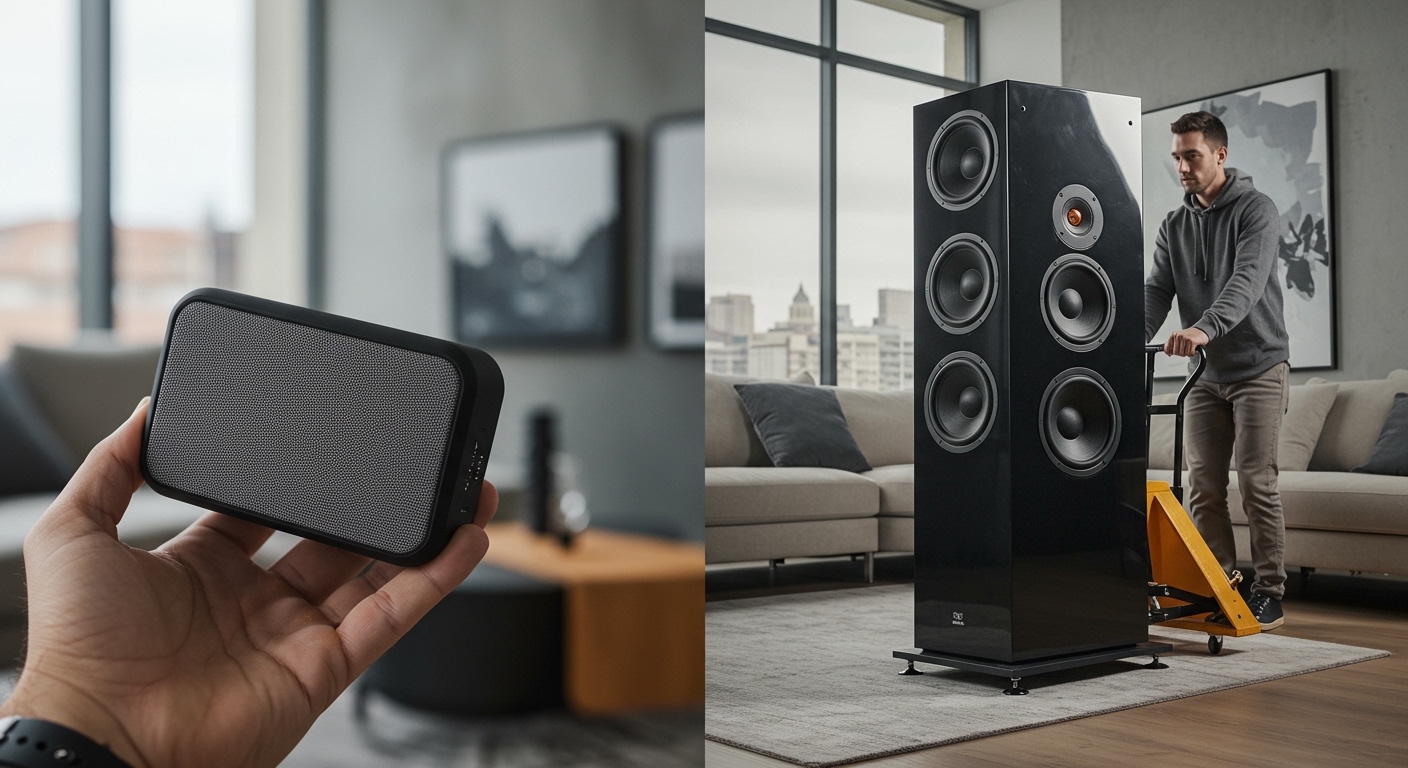
In my years of installing professional home theaters and lugging around PA systems for live events, I have learned that weight is often a proxy for build quality, but it is not the only factor. While heavy magnets and dense cabinets usually indicate better sound, modern materials like Neodymium are changing the scales by offering high performance at a fraction of the traditional weight.
TL;DR: Speaker Weight Key Takeaways
- Portable Speakers: Light and travel-friendly (0.5 – 5 lbs).
- Bookshelf Speakers: Medium weight, require sturdy stands (10 – 30 lbs).
- Floorstanding/Tower Speakers: Heavy, often requiring two people to move (40 – 150+ lbs).
- Subwoofers: Dense and heavy due to large drivers and built-in amps (20 – 100+ lbs).
- Primary Weight Drivers: The magnet assembly (Ferrite), cabinet material (MDF/Wood), and internal power transformers.
Average Weight by Speaker Category
To understand how much do speakers weigh, we have to break them down by their specific use cases. Weight is a critical logistical factor when you are planning a wall mount, choosing a bookshelf, or calculating shipping costs for a return.
Portable and Bluetooth Speakers
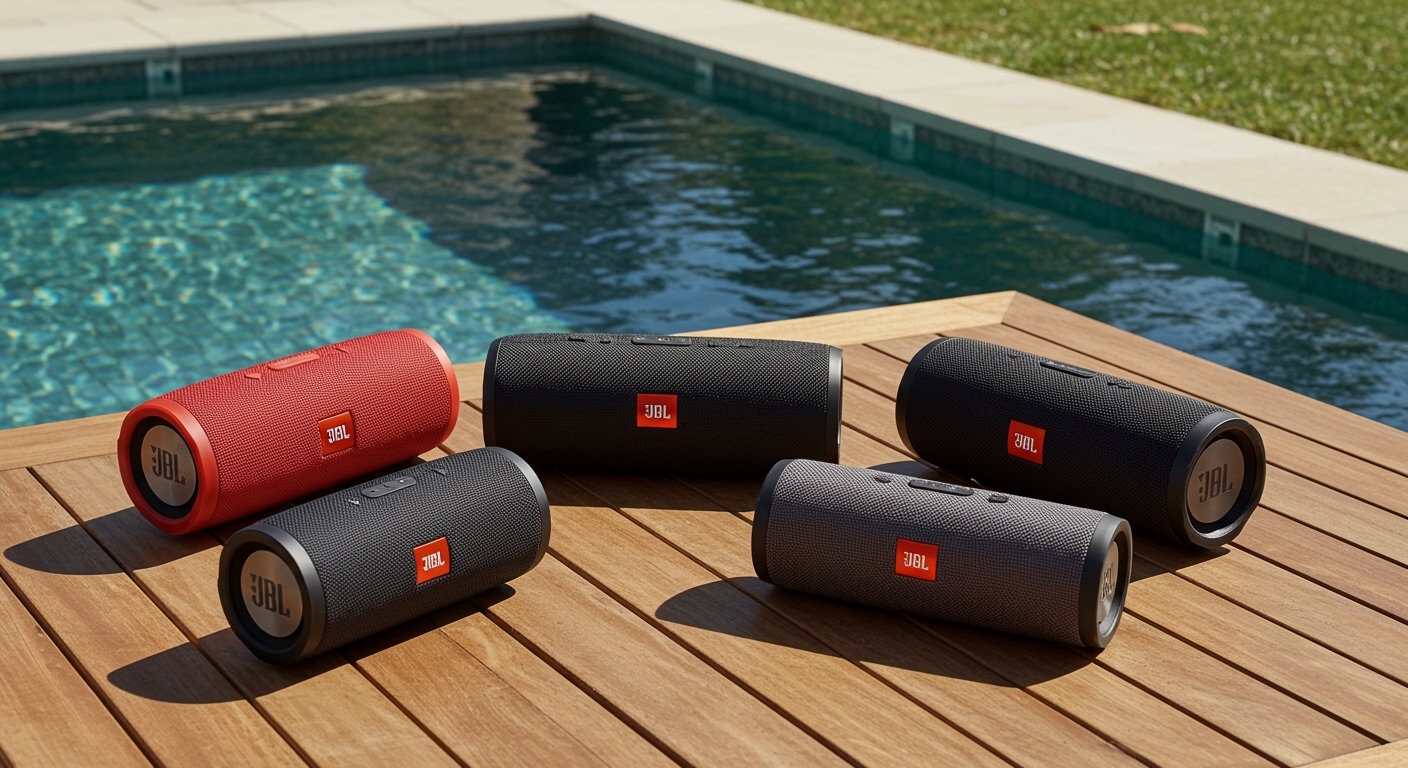
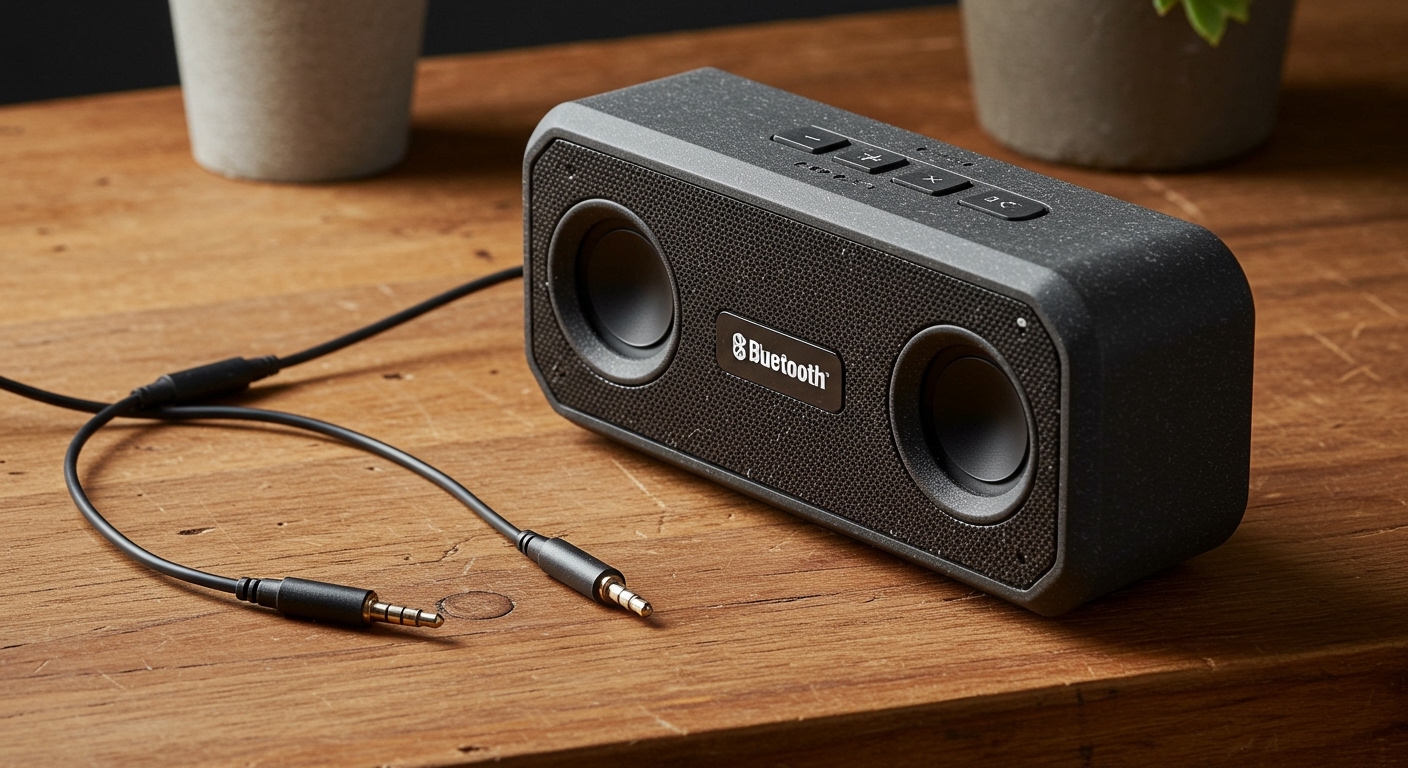
These are designed for mobility. In my testing of the JBL Flip and Ultimate Ears Boom series, portability is the priority. These units use plastic housings and smaller lithium-ion batteries to keep the weight down.
- Ultra-portable (Clip-on): 0.5 – 0.8 lbs (e.g., JBL Clip 4)
- Standard Portable: 1.2 – 2.5 lbs (e.g., Bose SoundLink Flex)
- Large “Boombox” Style: 10 – 15 lbs (e.g., JBL Boombox 3)
Bookshelf and Desktop Speakers
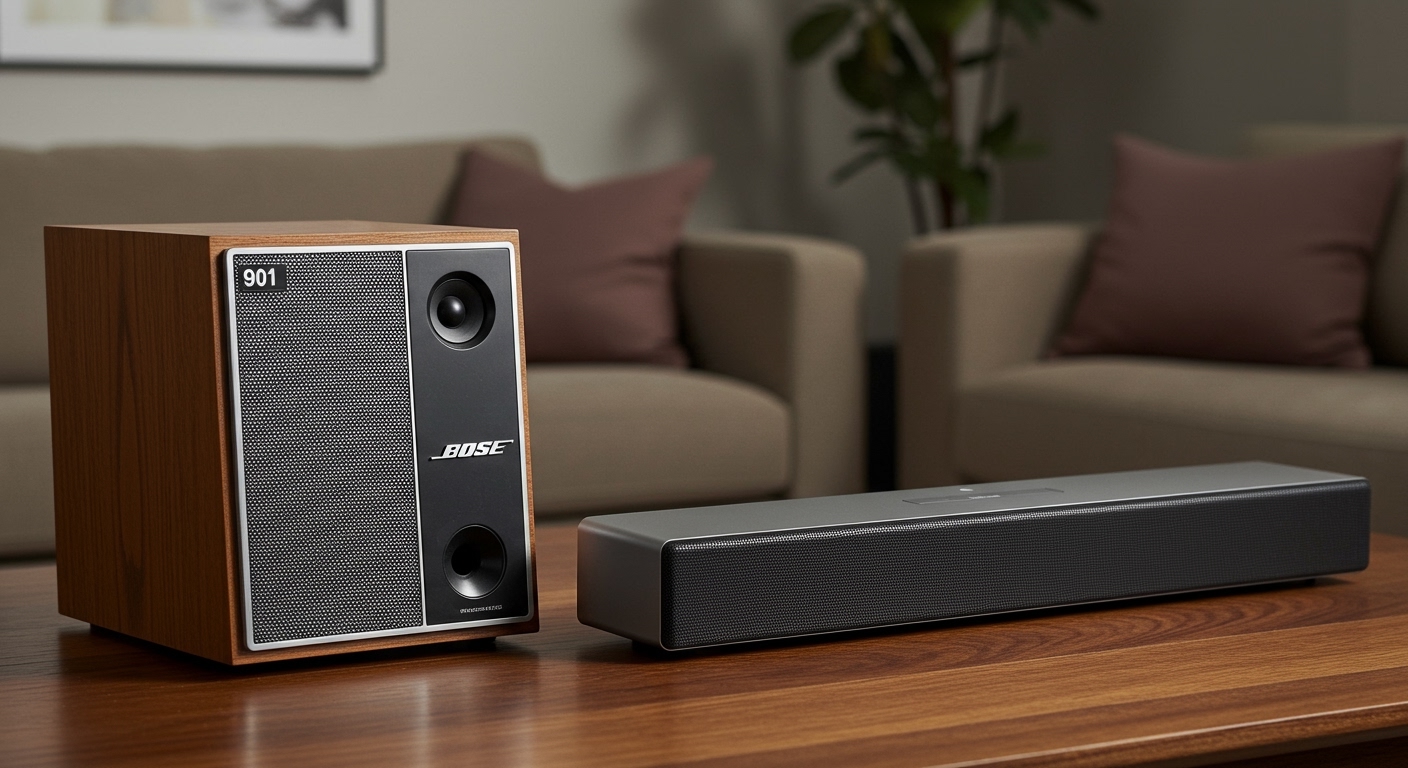
Bookshelf speakers occupy the middle ground. They need enough mass to prevent the cabinet from vibrating, which would distort the audio. I have found that a 15-pound speaker usually feels “planted” and provides much tighter bass than a flimsy 5-pound plastic alternative.
- Small Computer Speakers: 2 – 5 lbs per pair.
- Entry-level Bookshelf: 8 – 12 lbs each.
- High-end Audiophile Bookshelf: 15 – 30 lbs each (e.g., KEF LS50 Meta).
Floorstanding (Tower) Speakers
This is where weight increases significantly. These speakers are large to accommodate multiple woofers and a large internal air volume. I’ve installed tower speakers that required a hand truck to move into the living room.
- Slim Towers: 30 – 50 lbs.
- Standard Towers: 50 – 90 lbs.
- Flagship/Reference Towers: 100 – 250+ lbs (e.g., Bowers & Wilkins 801 D4).
Subwoofers
Subwoofers are almost always the heaviest component in a home theater. This is due to the massive magnet required to move a 10-inch or 12-inch driver and the internal amplifier. A heavy subwoofer is actually desirable; it prevents the unit from “walking” across the floor during intense bass scenes.
- Compact 8-inch Sub: 15 – 25 lbs.
- Standard 12-inch Sub: 40 – 80 lbs.
- Dual-driver Pro Sub: 100 – 200 lbs (e.g., SVS PB-16 Ultra).
Weight Comparison Table: Popular Speaker Models
| Speaker Type | Model Example | Weight (lbs) | Best Use Case |
|---|---|---|---|
| Portable | Sony SRS-XB13 | 0.56 lbs | Travel & Hiking |
| Smart Speaker | Amazon Echo (4th Gen) | 2.1 lbs | Kitchen/Countertop |
| Bookshelf | Klipsch R-51M | 11.0 lbs | Small Rooms/Desks |
| Studio Monitor | Yamaha HS8 | 22.5 lbs | Music Production |
| Tower Speaker | SVS Ultra Evolution | 101.0 lbs | Dedicated Home Theater |
| Powered Sub | SVS SB-1000 Pro | 26.0 lbs | Living Room Bass |
| PA Speaker | JBL EON715 | 37.0 lbs | Live Events/DJs |
What Makes a Speaker Heavy? (The “Big Three” Factors)
When customers ask me how much do speakers weigh, they are often surprised by the internal components. It isn’t just “empty air” inside those boxes. There are three primary components that dictate the total mass.
The Magnet Assembly**
The permanent magnet is the heart of the speaker driver. Traditional Ferrite (Ceramic) magnets are heavy and bulky. A high-performance woofer might have a magnet assembly weighing 5 to 20 pounds on its own.
However, we are seeing a shift toward Neodymium magnets. These are rare-earth magnets that are roughly 10 times stronger than ferrite. This allows manufacturers to create lightweight speakers (like the Bose L1 Pro series) that still pack a massive punch.
Cabinet Material and Construction**
The box itself is usually the heaviest part. Quality speakers use Medium Density Fiberboard (MDF) because it is acoustically inert and very dense.
- Cheap Speakers: Use thin plastic or particle board (light but prone to vibration).
- Premium Speakers: Use thick HDF (High Density Fiberboard), multi-layered plywood, or even aluminum and carbon fiber to eliminate resonance.
Internal Power Components (Active vs. Passive)**
If you are comparing how much do speakers weigh, check if they are “Active” or “Passive.”
- Passive Speakers: Rely on an external amp. They are lighter.
- Active (Powered) Speakers: Contain an internal amplifier and a power transformer. Large Toroidal transformers found in high-end powered monitors add significant weight.
The E-E-A-T Perspective: Does Weight Equal Quality?
In the “Golden Age” of audio (the 1970s), weight was a definitive sign of quality. If a receiver or speaker was heavy, it meant it had a massive transformer and a solid wood cabinet. While this is still a good rule of thumb, modern engineering has created exceptions.
In my experience, I have seen 20-pound Class D amplifiers outperform 80-pound Class A/B vintage units. Similarly, a well-engineered carbon fiber cabinet can be lighter and stiffer than a 1-inch thick MDF cabinet.
Expert Advice: Don’t buy a speaker just because it’s heavy, but be wary of large tower speakers that feel “light” or hollow when you tap them. A hollow sound usually indicates poor internal bracing, which leads to “muddy” audio.
Practical Tips for Handling Heavy Speakers
Understanding how much do speakers weigh is vital for safety and home maintenance.
- Check Wall Studs: Never mount a speaker weighing more than 5 lbs directly into drywall using only plastic anchors. Always find a wooden stud or use heavy-duty toggle bolts.
- Shelf Capacity: Most floating shelves are rated for 15-20 lbs. A premium bookshelf speaker can easily exceed this limit once you add the weight of the speaker wire.
- Floor Spikes: For heavy tower speakers (60+ lbs), use floor spikes on carpet to couple them to the subfloor. On hardwood, use protective discs to prevent the weight from denting your floors.
- Shipping Costs: If you buy speakers online, remember that shipping 100 lbs of audio gear can cost $150-$300. Always check the return policy to see if “Prepaid Return Shipping” is included.
Frequently Asked Questions (FAQ)
How much do speakers weigh for wall mounting?**
Most small satellite speakers for surround sound weigh between 2 and 5 pounds, making them easy to wall mount. However, larger “Bookshelf” speakers can weigh 15+ pounds, requiring specialized heavy-duty brackets and attachment to wall studs.
Are heavier speakers always better?**
Not necessarily, but there is a correlation. Heavier speakers usually have larger magnets for better driver control and denser cabinets to reduce unwanted vibrations. However, modern materials like Neodymium and Carbon Fiber allow for high-end performance at lower weights.
How much does a 12-inch subwoofer weigh?**
A typical 12-inch powered subwoofer weighs between 40 and 70 pounds. The weight comes from the massive motor structure of the 12-inch driver, the thick MDF walls needed to contain the pressure, and the internal power amplifier.
Can one person lift a floorstanding speaker?**
It depends on the model. Many entry-level towers weigh around 40-50 lbs and are manageable for one adult. However, high-end “Reference” towers often exceed 100 lbs and are quite tall, making them a two-person job to avoid injury or damage to the speaker.
Why are vintage speakers so heavy?**
Vintage speakers used real wood veneers, thick particle board, and Alnico or Ferrite magnets. They lacked the lightweight synthetic materials and efficient digital amplifiers (Class D) we use today, requiring more physical mass to achieve high volume and deep bass.