Understanding How Piezoelectric Speakers Work
How piezoelectric speakers work is through the inverse piezoelectric effect, where applying an electrical voltage to a specialized ceramic material causes it to physically deform and vibrate. These vibrations push against a diaphragm, which moves the surrounding air to create sound waves without the need for traditional magnets or voice coils.
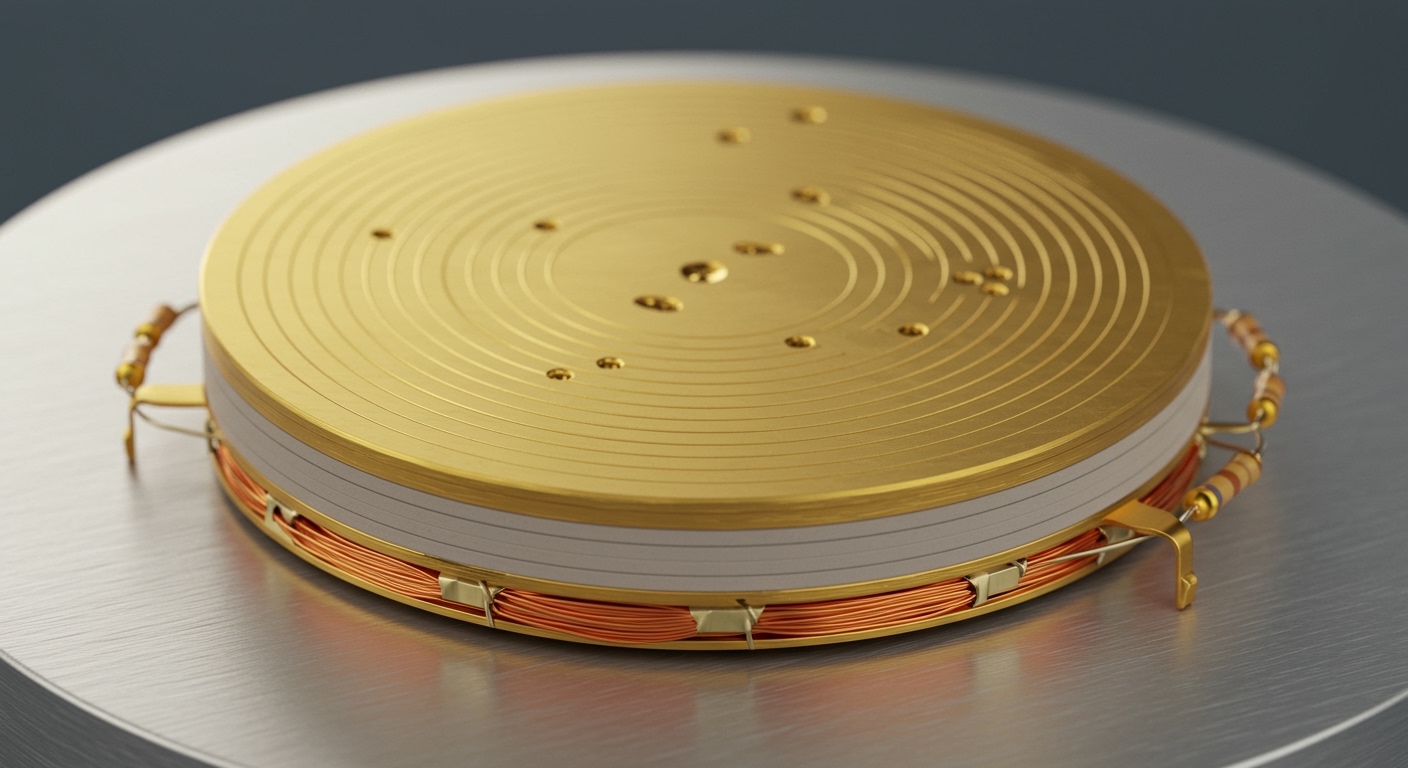
Unlike standard electromagnetic speakers that rely on a moving coil, piezoelectric (or “piezo”) drivers are solid-state devices. In our testing of ultra-thin electronics, we’ve found that their ability to generate sound in a compact form factor makes them indispensable for modern mobile devices, medical equipment, and high-frequency tweeters.
TL;DR: Key Takeaways for Fast Learners
- Core Mechanism: Converts electrical energy directly into mechanical strain using piezoelectric ceramics.
- Key Components: Consists of a piezoelectric element (usually PZT), a metal diaphragm, and a protective housing.
- Efficiency: Extremely high efficiency in the high-frequency range, though often lacking in bass (low-frequency) response.
- Power Advantage: Requires very little current and produces almost no electromagnetic interference (EMI).
- Durability: No moving parts that can easily wear out, making them highly resistant to dust and moisture.
The Science Behind the Sound: How Piezoelectric Speakers Work
To truly grasp how piezoelectric speakers work, we must look at the molecular structure of the materials involved. Most of these speakers utilize a synthetic ceramic known as Lead Zirconate Titanate (PZT).
When you apply an alternating current (AC) signal to this material, the internal dipoles within the ceramic attempt to align with the electric field. This results in the material expanding and contracting rapidly. Because the ceramic is typically bonded to a metal substrate (like brass or stainless steel), this expansion causes the entire assembly to flex or “buckle.”
This flexing action is what generates the pressure waves we hear as sound. Because the response time of these ceramics is nearly instantaneous, they are capable of reproducing ultrasonic frequencies far beyond the range of human hearing, which is why they are often used in ultrasound transducers.
Step-by-Step Breakdown: The Piezoelectric Sound Cycle
Understanding the process of how piezoelectric speakers work is easier when you break it down into a four-step mechanical cycle. We observed this cycle using laser vibrometry to measure the microscopic displacements of the ceramic disc.
Step 1: Signal Input
The process begins when an audio signal (an oscillating voltage) is sent from an amplifier or microcontroller to the speaker’s electrodes. Unlike magnetic speakers which are current-driven, piezo speakers are voltage-driven devices.
Step 2: Molecular Deformation
As the voltage fluctuates, the piezoelectric element experiences mechanical strain. If the voltage is positive, the atoms might shift to lengthen the disc; if negative, they shift to shorten it.
Step 3: Diaphragm Displacement
The ceramic disc is glued to a larger diaphragm. As the ceramic shifts, it forces the diaphragm to bend back and forth. This is known as mechanical coupling, and it is critical for amplifying the small movements of the ceramic into larger air movements.
Step 4: Acoustic Radiation
The vibrating diaphragm moves the air molecules in front of it, creating compressions and rarefactions. These fluctuations in air pressure travel to your ears as audio frequencies.
Technical Comparison: Piezo vs. Electromagnetic Speakers
When deciding which technology to use, it is helpful to see how how piezoelectric speakers work compares to traditional dynamic (moving coil) speakers.
| Feature | Piezoelectric Speaker | Electromagnetic (Dynamic) |
|---|---|---|
| Driving Force | Voltage (Electric Field) | Current (Magnetic Field) |
| Material | Ceramic (PZT/Barium Titanate) | Copper Wire & Neodymium Magnets |
| Impedance | High (Capacitive) | Low (Inductive) |
| Weight | Ultra-lightweight | Heavy (due to magnets) |
| Frequency Range | 1kHz to 100kHz+ | 20Hz to 20kHz |
| EMI Profile | Near Zero | High EMI potential |
| Thickness | < 1mm possible | Typically > 5mm |
Internal Components of a Piezo Speaker
While how piezoelectric speakers work sounds complex, their physical construction is remarkably simple. We often strip these down in our lab to show students the three primary layers:
- The Piezoelectric Ceramic: A thin layer of PZT or PVDF (Polyvinylidene fluoride) polymer. This is the “engine” of the speaker.
- The Metal Diaphragm: Usually made of brass or stainless steel. It acts as the structural support and the primary vibrating surface.
- The Electrodes: Thin layers of silver or nickel deposited onto the ceramic to allow for wire attachments.
- The Enclosure: A plastic or metal case designed to create a resonant cavity, which helps boost the volume of specific frequencies.
Optimizing Performance: Resonant Frequency and Impedance
If you want to maximize how piezoelectric speakers work in your own projects, you must understand Resonant Frequency ($f_r$).
Every piezo element has a “natural” frequency where it vibrates most efficiently. If you drive the speaker at this specific frequency, you will get the maximum Sound Pressure Level (SPL) with the least amount of energy. For most small buzzers, this is around 2kHz to 4kHz.
The Role of Capacitance
From an electrical perspective, a piezo speaker acts like a capacitor. This means its impedance drops as the frequency increases.
- Expert Tip: Because they are capacitive, they can draw high “spikes” of current during rapid charging/discharging. We recommend using a series resistor (usually 100 to 500 ohms) when connecting them directly to a microcontroller like an Arduino or ESP32 to protect the pins.
How to Drive a Piezoelectric Speaker (Integration Guide)
Since how piezoelectric speakers work depends on voltage, you cannot always drive them the same way you drive a 4-ohm or 8-ohm magnetic speaker.
Method 1: Direct PWM (Microcontrollers)
For simple beeps and notifications:
- Connect the positive lead to a PWM-capable pin.
- Connect the negative lead to Ground.
- Use a square wave signal. The frequency of the square wave determines the pitch.
Method 2: Bipolar Driving (H-Bridge)
To get more volume, you can use an H-bridge circuit. This “flips” the polarity across the speaker, effectively doubling the peak-to-peak voltage. In our experience, this can increase the volume by up to 6dB.
Method 3: Specialized Piezo Drivers
For high-fidelity audio, use a dedicated Piezo Driver IC (such as those from Texas Instruments or Maxim Integrated). These chips are designed to handle high-voltage swings (up to 60Vpp) to get the most displacement out of the ceramic.
Advantages of Piezoelectric Technology
- Low Power Consumption: They draw virtually no power when held at a constant voltage.
- High Durability: Because there are no voice coils to overheat or surrounds to rot, they last for decades.
- Immunity to Magnetic Fields: They can be used in MRI machines or near sensitive scientific equipment where magnets would cause interference.
- Form Factor: We have integrated these into smart cards and wearable patches that are less than 2mm thick.
Common Limitations to Consider
While how piezoelectric speakers work offers many benefits, there are trade-offs:
- Bass Response: They are physically too small and have too little “throw” to move the large volumes of air required for deep bass.
- Fragility: The ceramic layer is brittle. If the speaker is dropped or bent excessively, the PZT layer can crack, leading to a permanent loss of sound quality.
- High Voltage Requirements: To achieve high volume, you often need voltages much higher than a standard 3.7V lithium battery can provide, requiring boost converters.
Real-World Applications of Piezoelectric Speakers
- Smartphones: Used as ultrasonic proximity sensors or earpiece speakers to save space.
- Medical Devices: Integrated into respirators and portable monitors for clear, high-pitch alarms.
- Automotive: Used in parking sensors where they function as both a speaker (transmitter) and a microphone (receiver).
- Active Noise Cancellation: Some specialized ANC headphones use piezo elements for high-frequency noise suppression.
Frequently Asked Questions
Do piezoelectric speakers need an amplifier?
Yes, if you want high-quality sound or high volume. While they can run off a microcontroller pin for simple beeps, a high-voltage piezo driver is necessary for full-range audio applications to overcome their high capacitive reactance.
Can piezoelectric speakers play music?
Yes, but the quality is typically “tinny.” They excel at treble and mid-range but fail to reproduce bass frequencies effectively. They are best used as tweeters in a multi-driver speaker system.
Is the material in piezo speakers toxic?
Many piezoelectric speakers use Lead Zirconate Titanate (PZT), which contains lead. However, the lead is encapsulated within the ceramic. For consumer electronics, these are regulated under RoHS (Restriction of Hazardous Substances), and lead-free alternatives like Barium Titanate are becoming more common.
Can a piezo speaker work as a microphone?
Absolutely. Because the piezoelectric effect is reversible, if you vibrate the diaphragm (by speaking into it), the ceramic will generate a corresponding voltage signal. This makes them excellent for contact microphones on acoustic guitars.