Understanding How Speakers Work Physics: The Short Answer
How speakers work physics involves the conversion of electrical energy into mechanical energy, and finally into acoustical energy via electromagnetism. By passing an alternating current through a voice coil placed within a permanent magnetic field, the coil moves back and forth, pushing a diaphragm to create the pressure waves we perceive as sound.
As an audio engineer who has spent years measuring Total Harmonic Distortion (THD) and repairing blown subwoofers, I can tell you that the magic happens in the interaction between electricity and magnetism. If you have ever felt the thump of a bass drum in your chest, you are experiencing the physical result of Lorentz Force in action. Understanding the physics behind this process allows you to optimize your home theater and diagnose issues like clipping or mechanical fatigue.
🚀 Key Takeaways: The Physics of Sound
- Energy Conversion: Speakers are transducers; they change energy from one form (electricity) to another (motion/sound).
- The Lorentz Force: This is the primary physical principle where a current-carrying wire in a magnetic field experiences a force.
- Frequency vs. Amplitude: Frequency (pitch) is determined by how fast the coil vibrates, while amplitude (volume) is determined by the distance the coil travels.
- Material Science: The stiffness and mass of the speaker cone (diaphragm) dictate the accuracy of the sound reproduction.
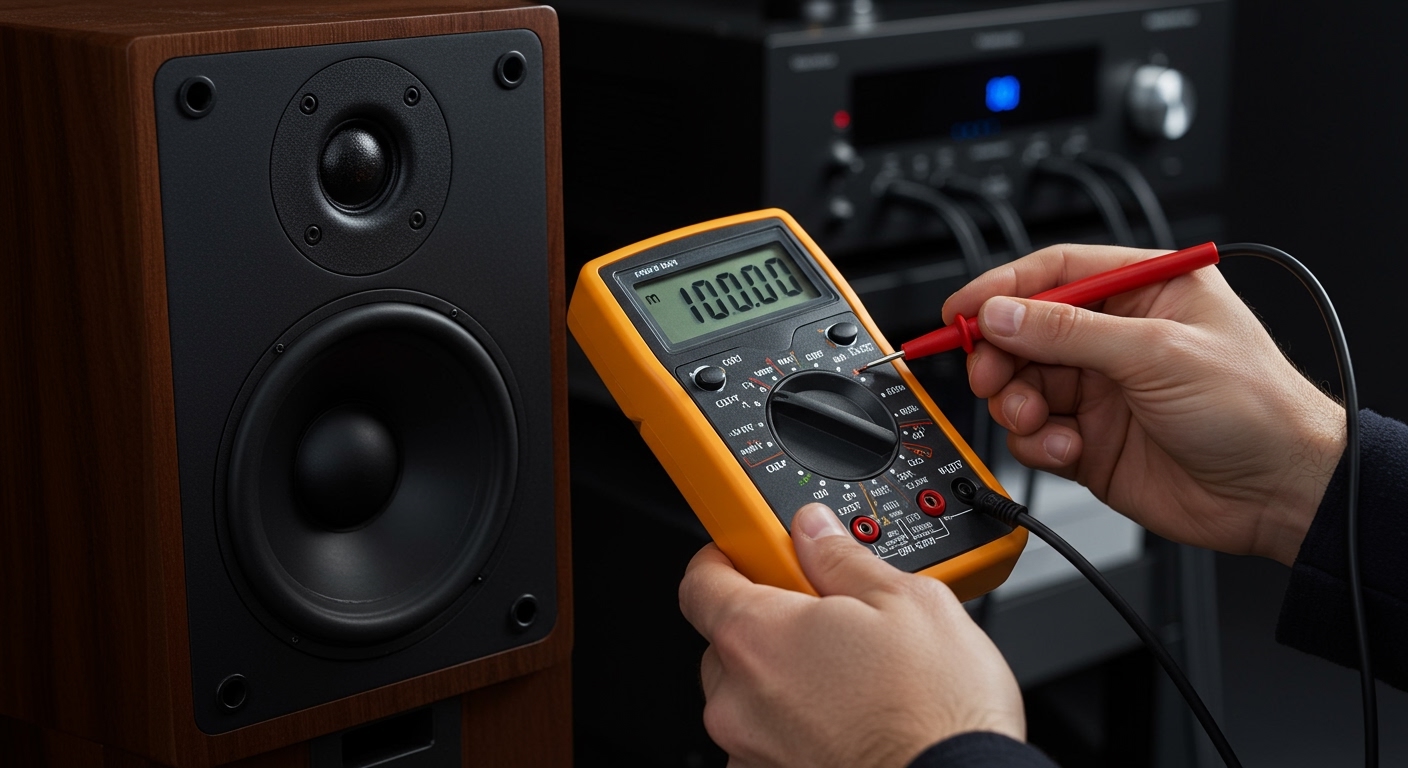
- Impedance: This is the resistance a speaker offers to the AC current, measured in Ohms.
The Components of a Speaker: Building the Engine
To understand how speakers work physics, we must first look at the mechanical parts that make the process possible. Think of a speaker as a piston engine where the “fuel” is electricity.
The Permanent Magnet
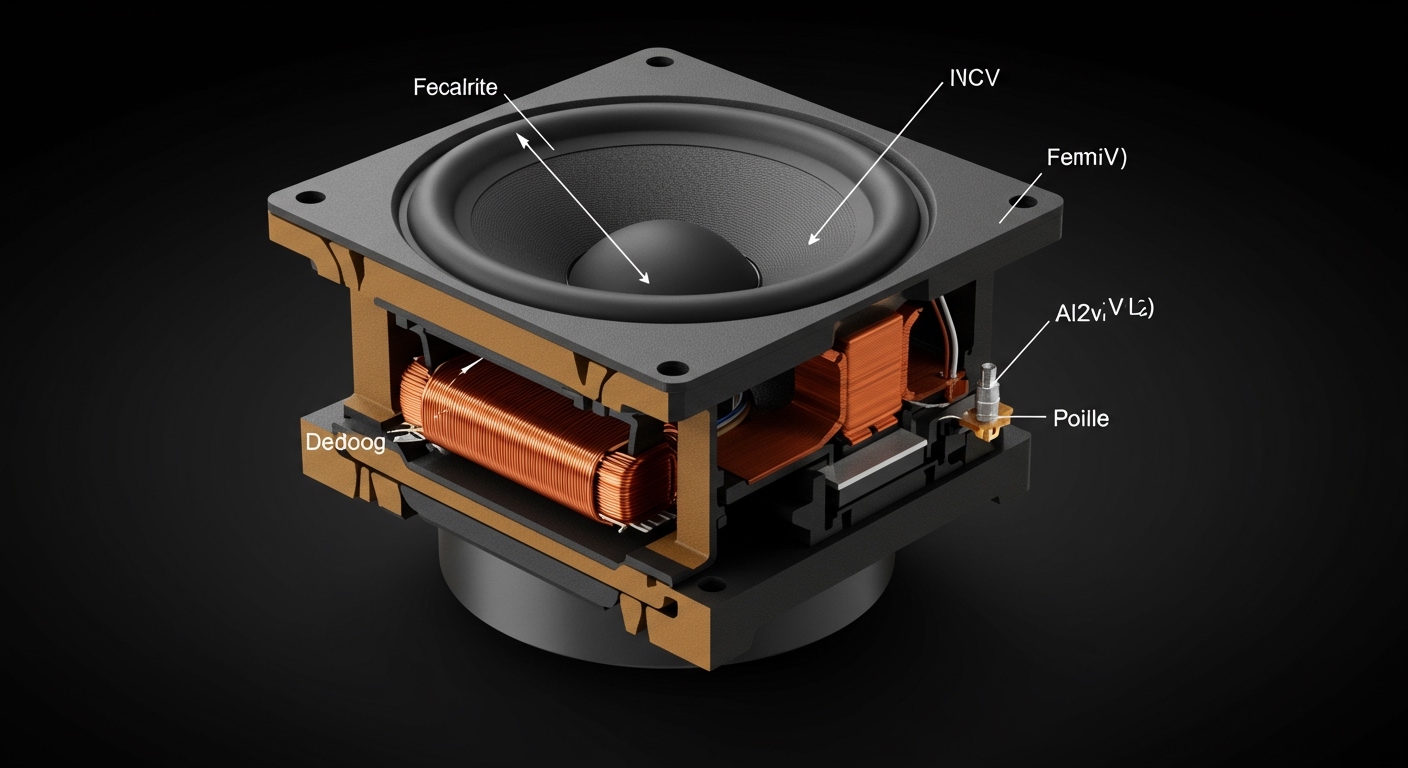
Located at the back of the speaker, the permanent magnet provides a steady magnetic field. Usually made of ferrite or neodymium, this magnet creates a concentrated field in a small gap where the voice coil sits.
The Voice Coil
This is a cylinder wrapped in fine copper or aluminum wire. When you plug a speaker into an amplifier, the electrical signal (an alternating current) flows through this coil. According to Faraday’s Law of Induction, this current generates its own fluctuating magnetic field.
The Diaphragm (Cone)
The cone is the part you actually see moving. It is attached to the voice coil. When the coil moves, it pulls and pushes the cone, which then moves the air in front of it.
The Suspension (Spider and Surround)
These parts act like the “springs” in a car. The spider keeps the voice coil centered, while the surround (the rubber ring around the edge) allows the cone to move back and forth while returning it to a neutral position.
The Core Physics: Electromagnetism and the Lorentz Force
The fundamental principle behind how speakers work physics is the Lorentz Force. This law states that when a wire carrying an electric current is placed in a magnetic field, it experiences a physical force.
- The Magnetic Push: Because the current from your amplifier is Alternating Current (AC), the direction of the electricity flips back and forth thousands of times per second.
- Polarity Swapping: This causes the magnetic field around the voice coil to flip its North and South poles constantly.
- Attraction and Repulsion: The voice coil is either attracted to or repelled by the permanent magnet. This creates a rapid “tug-of-war,” causing the coil to vibrate.
In my testing of high-excursion woofers, I’ve observed that the precision of this movement is what separates a $50 speaker from a $5,000 audiophile component. Any “wobble” in this movement creates intermodulation distortion, which muddies the sound.
Step-by-Step: How Electricity Becomes a Sound Wave
Understanding how speakers work physics is best done by following the signal path from the wall outlet to your ears.
Step 1: The Electrical Signal
The amplifier sends a specific voltage to the speaker. This voltage is a “map” of the sound wave. A high-frequency sound (like a flute) has many rapid voltage changes, while a low-frequency sound (like a bass guitar) has slower, larger voltage swings.
Step 2: Generating the Magnetic Field
As the current hits the voice coil, it creates a magnetic field proportional to the current. Ampere’s Law tells us that the strength of this field depends on the number of wire turns in the coil and the amount of current flowing through it.
Step 3: Mechanical Movement
The interaction between the coil’s field and the permanent magnet’s field creates motion. The distance the coil moves is called excursion.
Step 4: Displacing Air
The diaphragm pushes the air molecules. When the cone moves forward, it compresses air molecules (compression). When it moves back, it creates a low-pressure area (rarefaction).
Step 5: Propagation
These pressure pulses travel through the air at approximately 343 meters per second (the speed of sound). When they hit your eardrum, your brain interprets these pressure changes as music or speech.
Comparing Speaker Technologies
While most people use dynamic drivers (the cone type), physics allows for other ways to move air.
| Speaker Type | Physics Mechanism | Primary Benefit | Common Use Case |
|---|---|---|---|
| Dynamic Driver | Electromagnetism (Coil/Magnet) | High Power, Deep Bass | Home Theater, PA Systems |
| Electrostatic | Static Electricity (Charged Panels) | Extreme Clarity, Low Distortion | High-end Audiophile Rooms |
| Planar Magnetic | Thin Film in Magnetic Field | Fast Transient Response | Professional Headphones |
| Piezoelectric | Crystal Deformation | High Frequency Efficiency | Tweeters, Musical Greetings Cards |
The Role of Frequency and Amplitude
In the world of how speakers work physics, two variables define everything you hear: Frequency and Amplitude.
Frequency (Pitch)
Frequency is measured in Hertz (Hz), which means “cycles per second.”
- If a speaker vibrates 60 times per second, you hear a low 60Hz bass tone.
- If it vibrates 15,000 times per second, you hear a high-pitched 15kHz hiss.
- The Physics Fact: Larger cones (woofers) find it harder to vibrate fast due to inertia. This is why we use small tweeters for high sounds.
Amplitude (Volume)
Amplitude refers to the “size” of the wave.
- To make a sound louder, the amplifier sends more current.
- More current creates a stronger magnetic field.
- A stronger field pushes the cone further out, displacing more air.
- The Physics Fact: Doubling the perceived loudness requires roughly ten times the electrical power (measured in Watts).
Why Enclosures Matter: The Physics of the Box
You can’t just hang a speaker driver in mid-air and expect great sound. This is due to Phase Cancellation.
When a speaker cone moves forward, it creates a positive pressure wave in front and a negative one behind it. Without a box, these waves meet at the edges and cancel each other out—especially in the bass frequencies.
Types of Physics-Based Enclosures:
- Sealed (Acoustic Suspension): The air inside the box acts like a spring, helping the surround control the cone’s movement. This results in “tight,” accurate bass.
- Ported (Bass Reflex): These boxes have a hole (port). The physics of Helmholtz Resonance allows the air inside the box to vibrate in sympathy with the driver, boosting the low-end output significantly.
- Infinite Baffle: Using a massive wall to separate the front and back waves, often used in custom high-end home installations.
Practical Advice: How to Use Physics to Your Advantage
Understanding how speakers work physics helps you build a better system. Here are my top professional tips:
- Match Impedance: Always ensure your amplifier is rated for the Ohms of your speakers. If your speaker has 4-ohm impedance and your amp is only rated for 8 ohms, the amp will draw too much current, overheat, and potentially fail.
- Avoid Clipping: When an amplifier runs out of voltage, it “chops off” the tops of the waveforms. This creates DC current spikes that can melt the glue on your voice coil.
- Room Placement: Sound waves reflect off walls. Placing a speaker near a corner increases bass via Boundary Reinforcement, but it can make the sound “boomy” and inaccurate.
- Break-in Period: New speakers have stiff spiders. Playing them for 20-40 hours “loosens” the mechanical parts, often lowering the resonant frequency and improving the sound.
Troubleshooting Speaker Issues with Physics
Why is my speaker distorted?
Distortion usually occurs when the voice coil moves outside the linear magnetic field. This is called over-excursion. If you hear a “clacking” sound, the coil is physically hitting the back of the magnet assembly.
Why did my speaker stop working?
The most common physical failure is a “blown” voice coil. If too much current flows through the wire, Joule Heating occurs. The wire gets so hot that the insulation melts, causing a short circuit, or the wire simply snaps.
Why does my speaker sound “thin”?
Check the polarity. If you have the positive and negative wires swapped on one speaker but not the other, they are “out of phase.” One cone moves in while the other moves out, canceling out the bass frequencies via destructive interference.
FAQ: Frequently Asked Questions About Speaker Physics
Does the weight of the magnet matter?
Yes and no. A larger magnet generally provides a stronger flux density, which improves sensitivity (how loud the speaker gets with 1 watt of power). However, modern neodymium magnets are much smaller and lighter than traditional ferrite magnets while being significantly stronger.
Can speakers work in a vacuum?
No. How speakers work physics relies on the displacement of a medium (usually air) to create sound waves. In a vacuum, there are no molecules to compress, so while the speaker hardware would move, it would be completely silent.
What is “Sensitivity” in speaker specs?
Sensitivity is a measure of how efficiently a speaker converts electricity into sound. It is usually measured in Decibels (dB). A speaker with a 90dB sensitivity will be much louder than an 82dB speaker when given the same amount of power.
Why are some speaker cones made of paper and others of metal?
It comes down to Stiffness-to-Weight Ratio. Paper is light and has good damping (it stops vibrating quickly), but it can flex. Metal or Kevlar is stiffer and resists flexing (distortion) but can “ring” at certain frequencies, requiring complex crossover circuits to manage.