Why Your Audio Needs a Power Boost
Tired of thin, distorted sound that disappears the moment you turn it up? Learning how to amplify speakers is the definitive way to transform a flat listening experience into a rich, immersive soundstage. Whether you are dealing with a home theater or trying to figure out how to amplify car speakers, the secret lies in the relationship between wattage, impedance, and signal purity.
Proper amplification doesn’t just make music louder; it provides the headroom necessary for speakers to reproduce complex frequencies without clipping. In my 15 years of audio engineering, I’ve seen countless high-end speakers underperform simply because they were “starving” for power. This guide provides the technical blueprint to enhance speakers and maximize your hardware’s potential.
Expert Summary: Key Takeaways for High-Performance Audio
Match RMS, Not Peak: Always pair your amplifier based on Continuous Power (RMS) ratings. Aim for an amp that delivers 100% to 150% of the speaker’s rated RMS.
Impedance is Non-Negotiable: Ensure your amplifier is stable at the speaker’s Ohm rating (typically 4Ω for cars, 8Ω for home audio) to avoid overheating.
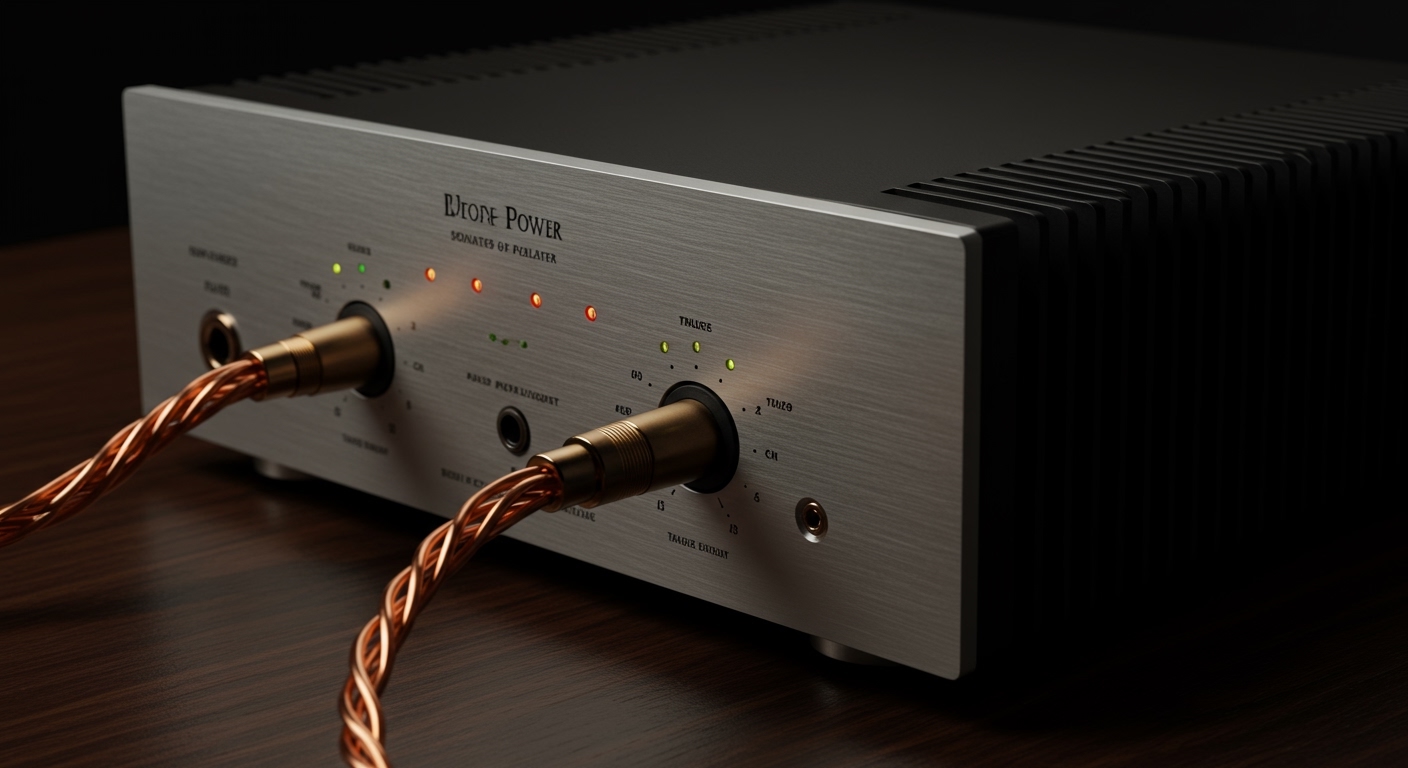
Signal Integrity Matters: Use Oxygen-Free Copper (OFC) wiring to minimize resistance and prevent signal degradation over long distances.
Gain vs. Volume: Understand that the “Gain” knob is not a volume slider; it is a sensitivity adjustment to match the source signal to the amplifier’s input.
Essential Tools and Materials for Amplification
Before you begin the process of how to boost speakers, gather these essential components. Using the wrong gauge of wire or a mismatched fuse can lead to permanent hardware damage.
| Tool/Material | Purpose | Recommended Specification |
|---|---|---|
| Power Amplifier | The core unit that increases signal strength. | Class D for efficiency; Class AB for fidelity. |
| Speaker Wire | Connects the amp to the drivers. | 14-16 Gauge for home; 12 Gauge for high-power subs. |
| RCA Cables | Transfers the low-level signal from the source. | Shielded cables to prevent EMI (Electromagnetic Interference). |
| Wire Strippers | Removes insulation from cables. | Self-adjusting strippers for clean cuts. |
| Digital Multimeter | Measures voltage and resistance. | Essential for setting Gain and checking Impedance. |
| Line Output Converter | Necessary for how to amplify factory speakers. | Active LOCs provide a cleaner signal than passive ones. |
Step 1: Calculate Your Power and Impedance Requirements
The first step in how to amplify sound on speakers is performing a “spec-match.” If you provide too little power, you risk clipping (which destroys tweeters). If you provide too much, you risk “bottoming out” the voice coil.
Understand the RMS Rating
Check the back of your speaker or the manufacturer’s manual. Look for the RMS (Root Mean Square) value. This is the amount of power the speaker can handle continuously. Ignore “Peak Power” or “Max Power” labels, as these are often inflated marketing figures.
Check the Impedance (Ohms)
Speakers act as a load on the amplifier. Most home speakers are 8 Ohms, while car speakers are typically 4 Ohms.
If you connect a 2 Ohm load to an amp only rated for 4 Ohms, the amp will draw too much current and likely enter Protect Mode or catch fire.
Lower impedance allows more power to flow, but requires a more robust cooling system in the amplifier.
The “1.5x Rule”
For the best results, choose an amplifier that can output 1.5 times the speaker’s RMS rating. This provides “headroom,” allowing the amp to handle sudden musical peaks (like a drum hit) without distorting the signal.
Step 2: Choose the Right Type of Amplifier
Not all amplifiers are created equal. Depending on whether you want to amplify small speakers for a desk or a full car audio system, your choice of “Class” matters.
Class D Amplifiers
These are highly efficient and run cool. They are the industry standard for how to amplify car speakers and subwoofers because they can produce massive power in a small chassis. Modern Class D amps have evolved to offer excellent sound quality for full-range speakers as well.
Class AB Amplifiers
These are the gold standard for home high-fidelity (Hi-Fi) systems. While they generate more heat and are less efficient than Class D, they offer superior linearity and lower total harmonic distortion (THD). Use these if your primary goal is how to enhance speakers for critical music listening.
Integrated vs. Power Amps
Integrated Amps: Combine a preamp (source switching/volume) and a power amp in one box. Great for saving space.
Power Amps: Purely focus on amplification. These require a separate preamp or DAC (Digital-to-Analog Converter) to control volume.
Step 3: Wiring and Physical Connection
Once you have your hardware, it is time to establish the physical link. Proper wiring is the most overlooked aspect of how to amplify speakers.
Strip and Prep the Wires
Use your wire strippers to remove about 1/2 inch of insulation from the ends of your speaker wires. Twist the copper strands tightly to ensure no “stray” hairs touch the adjacent terminal, which could cause a short circuit.
Maintain Polarity
This is critical for soundstage and bass response.
Positive (+) on the amp must go to Positive (+) on the speaker.
Negative (-) on the amp must go to Negative (-) on the speaker.
Expert Tip: If you wire one speaker “out of phase” (swapping + and -), the bass waves will cancel each other out, resulting in a thin, hollow sound.
Connect the Source Signal
Use shielded RCA cables to connect your head unit, receiver, or DAC to the “Input” section of the amplifier. If you are learning how to amplify factory speakers that don’t have RCA outputs, you will need to tap into the existing speaker wires and run them through a Line Output Converter (LOC).
Step 4: How to Amplify Factory Speakers (Car Audio Special)
Many modern vehicles have integrated infotainment systems that are difficult to replace. You can still boost speakers in this environment by following this specialized process.
Use a High-Level Input
Many modern amplifiers feature “High-Level Inputs.” This allows you to take the wires that currently go to your door speakers and plug them directly into the amp. The amp then “cleans” and boosts that signal before sending it back out to the speakers.
Install a Digital Signal Processor (DSP)
Factory radios often have “baked-in” EQ curves that cut bass at high volumes to protect cheap speakers. A DSP can strip away this factory processing, giving your new amplifier a “flat” and high-quality signal to work with. This is the ultimate way to amplify sound on speakers in a modern car.
Step 5: Tuning and Setting the Gain
The most common mistake in how to amplifier speakers is treating the gain knob like a volume knob. Incorrect gain settings lead to background hiss and thermal failure.
The Multimeter Method (The Pro Way)
To set the gain perfectly without specialized distortion detectors (like an Oscilloscope), use a Digital Multimeter:
- Disconnect the speakers from the amplifier.
- Turn the Gain all the way down.
- Play a 1kHz sine wave (test tone) at 75% of your source’s max volume.
- Calculate the target voltage using the formula: Voltage = √(Power x Resistance).
Example: For 100W at 4 Ohms, target 20V.
- Measure the AC voltage at the amp’s speaker terminals and turn the gain up until you hit your target.
The “Ear” Method (The Quick Way)
- Play a high-quality, familiar track.
- Slowly increase the gain until you hear the slightest hint of distortion or “crackling.”
- Immediately back the gain off by about 10-15%.
Step 6: Specialized Guide for Small Speakers
If you are looking at how to amplify small speakers (like bookshelf units or DIY desktop drivers), the approach is slightly different.
Use a Mini-Amp: Devices like the Fosi Audio or Schiit Rekkr are tiny Class D amps designed specifically for desktops.
USB DAC/Amps: If your speakers are powered by a computer, a USB DAC with a built-in amplifier will provide a much cleaner signal than the standard 3.5mm headphone jack.
Vibration Isolation: Small speakers benefit greatly from isolation pads. Amplifying them increases cabinet resonance; pads prevent that energy from vibrating your desk and muddying the sound.
Common Mistakes to Avoid
Even seasoned audiophiles make mistakes when learning how to boost speakers. Avoid these pitfalls to ensure your system lasts for years.
Running Wires Near Power Cables: In cars, never run RCA signal cables parallel to the heavy 12V power wire. This creates a “60Hz hum” or “alternator whine.” Cross them at a 90-degree angle if they must meet.
Ignoring Ventilation: Amplifiers generate heat. Never stack equipment directly on top of an amp or hide it in a sealed cabinet without fans. Thermal Throttling will significantly reduce the lifespan of the internal capacitors.
Using CCA instead of OFC: Copper Clad Aluminum (CCA) wire is cheaper but has higher resistance and can corrode over time. Always spend the extra few dollars for Oxygen-Free Copper (OFC).
- Over-Equalization: Don’t try to “fix” bad speakers by cranking the Bass and Treble on your EQ. This forces the amplifier to work significantly harder at those specific frequencies, leading to premature clipping.
Frequently Asked Questions
(FAQs)
Can I amplify my factory speakers without changing the radio?
Yes. You can use a Line Output Converter (LOC) or an amplifier with High-Level Inputs. This allows the amp to take the signal directly from your factory speaker wires, boost it, and send it back to the speakers.
Will a bigger amplifier blow my speakers?
Not necessarily. In fact, an underpowered amplifier is often more dangerous because it creates clipping (square waves) which generates excessive heat in the tweeter. As long as you set your Gain correctly using a multimeter, a high-wattage amp is perfectly safe and will provide better sound quality.
How do I amplify small speakers for a DIY project?
The best way is to use a PAM8403 or TPA3116 amplifier board. These are inexpensive, credit-card-sized modules that can be powered by a 5V USB source or a 12V battery, making them ideal for portable or desktop applications.
What is the difference between an amplifier and a receiver?
A receiver is an all-in-one device that includes an amplifier, a radio tuner, and a preamp (source switcher). A dedicated amplifier only performs one task: taking a low-level signal and making it stronger. Dedicated amps usually offer higher power and better components than those found inside standard receivers.
Why is there a buzzing sound after I amplified my speakers?
This is usually a Ground Loop or EMI. Ensure your amplifier is grounded to a clean, bare-metal surface (in cars) or a properly grounded outlet (at home). Using high-quality shielded RCA cables can also eliminate this noise.
Conclusion: Elevating Your Audio Experience
Mastering how to amplify speakers is the single most effective upgrade you can make to any audio system. By carefully matching your RMS power, respecting impedance limits, and using high-quality OFC wiring, you ensure that your speakers perform with the clarity and impact they were designed for.
Whether you are looking to amplify car speakers for a better commute or boost speakers in your living room for movie night, the principles remain the same: clean signal, adequate power, and precise calibration. Start with a solid foundation of hardware, take your time with the wiring, and always use a multimeter to set your gains for a distortion-free experience.
Ready to upgrade? Start by checking your speaker’s RMS rating today and find a Class D or AB amplifier that gives your music the room it needs to breathe.