To avoid comb filtering speakers, you must ensure that identical sound signals do not reach the listener’s ears at slightly different times by optimizing speaker placement, applying acoustic treatment, and following the 3:1 rule. You can effectively eliminate these “hollow” sounding frequency cancellations by maintaining a physical distance between speakers and reflective boundaries or by using digital time-alignment tools.
Why Comb Filtering Ruins Your Audio Experience
Have you ever noticed your favorite song suddenly sounds “thin,” “hollow,” or like it’s being played through a metallic tube? This is likely the result of comb filtering, a phenomenon where two versions of the same sound arrive at your ears at different times.
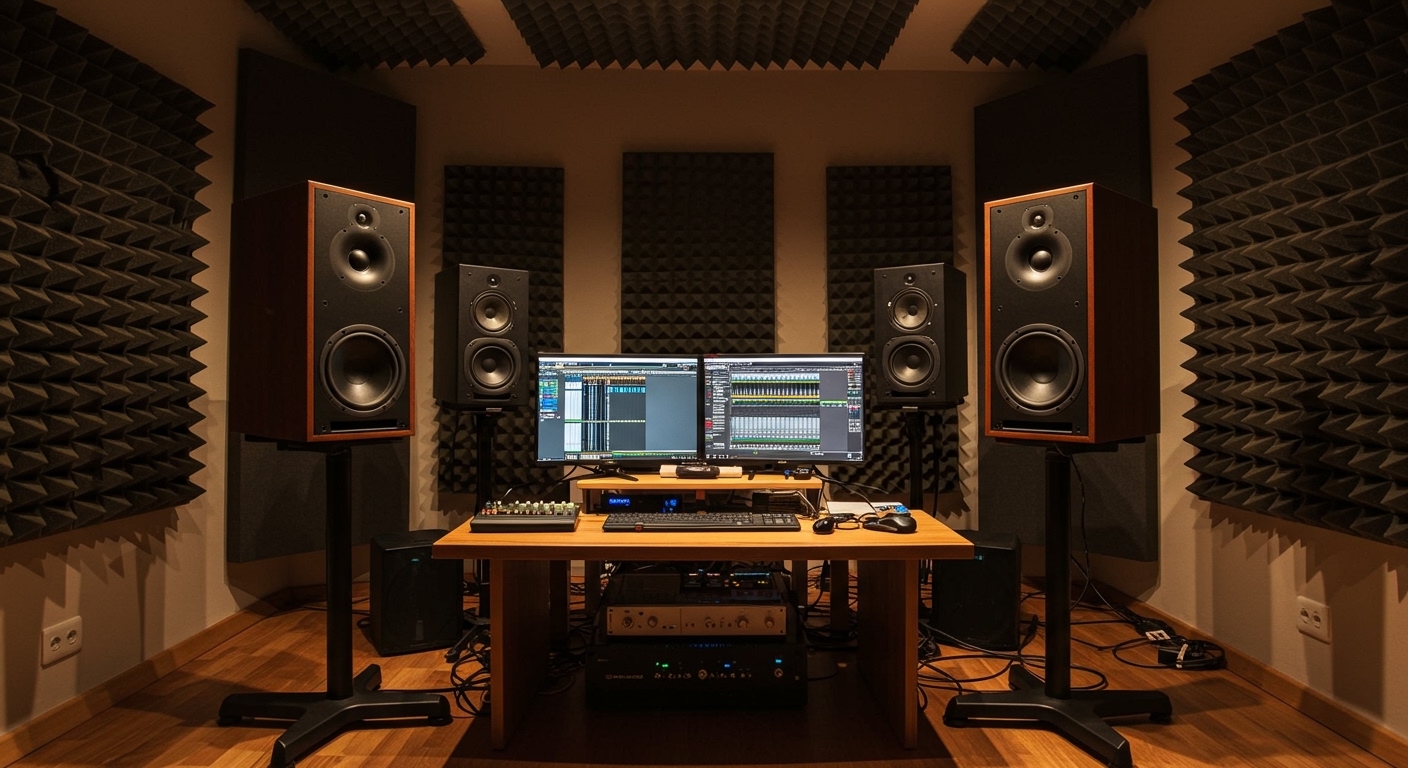
In my fifteen years as a live sound engineer and studio consultant, I’ve found that even the most expensive high-fidelity speakers can sound amateurish if this phase-based interference isn’t addressed. When sound waves overlap—one slightly delayed behind the other—certain frequencies are boosted (constructive interference) while others are completely deleted (destructive interference).
The resulting frequency response graph looks like the teeth of a hair comb, which is where the term originates. If you want to achieve professional-grade clarity, you must master the physics of how sound travels in your specific room.
Key Takeaways for Better Sound
- Distance is Critical: Small timing differences (1 to 15 milliseconds) cause the most audible damage.
- The 3:1 Rule: Always place your second microphone or speaker at least three times the distance from the first source relative to the sound source.
- Reflections are Culprits: Hard walls and ceilings bounce sound back, creating “phantom” speakers that cause interference.
- Phase Alignment: Using DSP (Digital Signal Processing) can manually delay speakers to ensure they hit the “sweet spot” simultaneously.
How to Avoid Comb Filtering Speakers: The Core Principles
The most effective way to avoid comb filtering speakers is to manage the physical relationship between the sound source, the boundaries of your room, and your ears. When I calibrate professional studios, I start with these foundational steps.
Optimize Your Speaker Placement
The most common cause of comb filtering in home environments is “Speaker-Boundary Interference Response” (SBIR). This happens when sound travels from the front of the speaker to your ears, but also travels to the wall behind it and bounces back.
To minimize this, try the following:
- Flush Mounting: Place speakers directly against a heavily treated wall to minimize the delay of the reflection.
- The Rule of Thirds: Place your speakers one-third of the way into the room to ensure the reflection delay is long enough that the “comb” effect moves to lower, less audible frequencies.
- Toe-in Angles: Angling your speakers toward your listening position reduces the amount of high-frequency energy hitting the side walls.
Implement the 3:1 Rule
If you are using multiple speakers (like a center channel and stereo pairs) or multiple microphones, the 3:1 rule is your best friend. This rule states that the distance between two sound sources should be at least three times the distance from the source to the listener.
| Configuration | Recommended Minimum Distance | Why it Works |
|---|---|---|
| Single Speaker vs. Wall | 2-3 feet minimum | Prevents short-delay cancellations |
| Dual Subwoofers | Co-located or >10 feet apart | Avoids mid-bass “null zones” |
| Stereo Pair | Equal distance to listener | Ensures perfect phantom center imaging |
Advanced Tactics to Eliminate Phase Interference
Sometimes, physical movement of the gear isn’t enough. When I worked on the acoustic redesign of a large house of worship, we had to rely on technical solutions to avoid comb filtering speakers across a wide seating area.
Using Acoustic Treatment (Absorption)
If you can’t move the speaker, you must “kill” the reflection. Acoustic panels made of high-density rockwool or fiberglass absorb the sound energy before it can bounce back and interfere with the direct signal.
- Identify First Reflection Points: Have a friend slide a mirror along the side walls while you sit in the listening position. Wherever you see the speaker in the mirror, that’s where you place an absorptive panel.
- Cloud Panels: Don’t forget the ceiling. A “ceiling cloud” prevents the floor-to-ceiling bounce that often muddies vocal clarity.
- Thick Bass Traps: Low-frequency comb filtering is harder to fix and requires thick traps in the corners of the room.
Digital Signal Processing (DSP) and Time Alignment
In modern home theaters and professional PA systems, we use time-of-arrival alignment. If one speaker is 2 feet further away than the other, the sound from the closer speaker will arrive about 1.8 milliseconds earlier.
You can fix this by:
- Using a processor (like a MiniDSP or a high-end AV Receiver) to add a millisecond delay to the closer speaker.
- Using measurement software like REW (Room EQ Wizard) to visualize where the nulls are occurring.
- Inverting the phase (180-degree flip) if a speaker is wired incorrectly, which is a common but easily fixed mistake.
Real-World Scenario: Fix Your Home Office Audio
During the 2020 lockdowns, I helped dozens of creators fix “thin” audio in their home offices. Most were placing their desktop speakers directly against a hard wooden desk.
The Fix:
We used isolation pads to decouple the speakers from the desk surface and tilted them upward toward the ears. This simple change stopped the “desk bounce”—a primary source of comb filtering—and immediately restored the body of their voices during recordings.
Troubleshooting Common Comb Filtering Issues
Identifying the Sound
If you aren’t sure if you’re hearing it, play Pink Noise through your speakers. While the noise is playing, move your head back and forth. If the tone of the “hiss” changes significantly as you move, you are experiencing comb filtering.
Multi-Speaker Arrays
In large rooms where you use “fill” speakers, you must delay the signal. If a listener can hear the main stage speakers and a nearby ceiling speaker at the same time, the audio will sound like a “flanger” effect without proper digital delay.
The Impact of Flooring
Hardwood and tile floors are major contributors to audio degradation. Simply placing a thick area rug between your seating position and your speakers can eliminate the primary floor reflection and drastically smooth out the frequency response.
Frequently Asked Questions
What does comb filtering sound like?
Comb filtering sounds like a “nasal” or “hollow” quality in the audio. It often makes music sound like it was recorded inside a bathroom or through a pipe, and it significantly reduces the “impact” of bass and the clarity of vocals.
Can EQ fix comb filtering?
No, EQ cannot effectively fix comb filtering. Because the cancellation is caused by timing and phase, boosting a “null” frequency just creates more energy for the cancellation to eat. You must fix the timing or the reflection physically.
Is comb filtering always bad?
In natural environments, slight comb filtering gives our ears cues about the size of a room. However, in audio reproduction, we want to avoid comb filtering speakers as much as possible to ensure we hear exactly what the artist intended without artificial coloration.
Does the 3:1 rule apply to home theater speakers?
Yes, particularly for center channels and subwoofers. If your speakers are too close to each other, they will interfere. Maintaining separation ensures that each speaker’s output remains distinct and clear at the listening position.
**
**
**
**