Understanding How to Build 3-Way Speakers
To learn how to build 3-way speakers, you must select three specific drivers—a woofer, a midrange, and a tweeter—and integrate them using a crossover network. This process involves calculating cabinet volume, designing a circuit to split audio frequencies, and assembling a rigid enclosure to minimize resonance. By following a structured design phase, you can achieve audiophile-grade sound that often surpasses commercial speakers costing three times as much.
Building your own speakers is the ultimate “rabbit hole” for any audio enthusiast. I remember my first 3-way build; I spent weeks obsessing over the crossover points only to realize that the room acoustics played an even bigger role. This guide distills years of workshop experience and acoustic testing into a repeatable, professional workflow.
Key Takeaways for DIY Speaker Building
- Driver Matching: Ensure all three drivers have similar sensitivity (dB) ratings to avoid a “lopsided” soundstage.
- The Crossover is King: The 3-way crossover is the brain of the speaker; without a well-designed circuit, even $1,000 drivers will sound poor.
- Cabinet Rigidity: Use MDF (Medium Density Fiberboard) or Baltic Birch plywood with internal bracing to prevent “box coloration.”
- Measurement Tools: Invest in a calibrated microphone (like the UMIK-1) to measure the actual frequency response of your build.
The Advantages of a 3-Way Speaker Design
When researching how to build 3-way speakers, it is important to understand why you are adding the extra complexity of a third driver. In a standard 2-way system, the woofer is forced to handle both deep bass and critical vocal frequencies.
A 3-way system introduces a dedicated midrange driver. This allows the woofer to focus exclusively on low-end impact (typically below 400Hz) and the tweeter to handle the delicate highs (above 3kHz). The result is significantly lower Intermodulation Distortion (IMD) and a much cleaner “mid-band” where most human vocals reside.
Driver Comparison Table
| Driver Type | Frequency Range | Key Role | Common Materials |
|---|---|---|---|
| Woofer | 20Hz – 500Hz | Bass impact and “thump” | Paper, Polypropylene, Aluminum |
| Midrange | 500Hz – 4,000Hz | Vocals, guitars, and clarity | Treated Paper, Kevlar, Silk |
| Tweeter | 4,000Hz – 20,000Hz+ | High-end detail and air | Silk Dome, Ribbon, Beryllium |
Step 1: Selecting the Right Components
The first step in how to build 3-way speakers is component selection. You cannot simply pick three random drivers and hope they work together. You must look at their Thiele/Small parameters.
I recommend starting with reputable brands like Dayton Audio, Peerless by Tymphany, or Scan-Speak. When I built my “reference” towers, I chose a 10-inch aluminum cone woofer for its stiffness and a 2-inch dome midrange for its wide dispersion.
Vital Parameters to Watch:
- Sensitivity (SPL): Aim for drivers within 2-3dB of each other. If your tweeter is 95dB and your woofer is 85dB, the tweeter will overpower everything.
- Resonant Frequency (Fs): Your crossover point should generally be at least one octave above the driver’s Fs to prevent distortion.
- Impedance: Most DIY builds aim for an 8-ohm nominal impedance to ensure compatibility with standard home theater receivers.
Step 2: Designing the Speaker Enclosure
The “box” is more than just a container; it is a functional acoustic component. When learning how to build 3-way speakers, you will likely choose between a sealed (acoustic suspension) or ported (bass reflex) design.
Enclosure Volume Calculation
Use software like WinISD or VituixCAD to calculate the internal volume (Vas). Enter your woofer’s parameters, and the software will tell you exactly how many liters of air the driver needs to produce deep bass.
Construction Tips:
- Material: Use 3/4-inch MDF for its high internal damping.
- Internal Bracing: Glue “window braces” inside the cabinet. If you knock on the side of the cabinet, it should sound like a solid brick, not a hollow drum.
- Baffle Layout: Keep the midrange and tweeter as close together as possible. This improves “point source” imaging, making the music sound like it’s coming from a single spot in space.
Step 3: Engineering the 3-Way Crossover
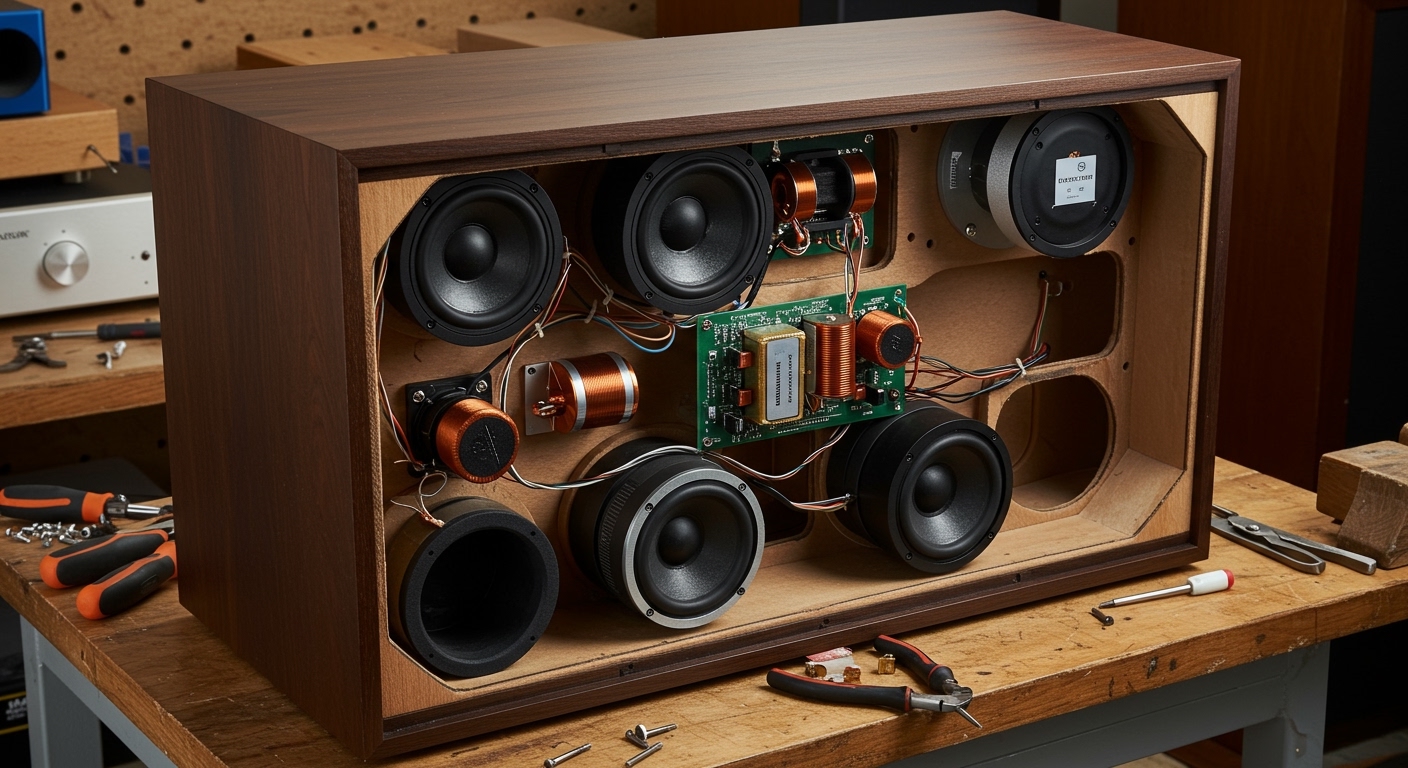
This is the most technical part of how to build 3-way speakers. A 3-way crossover consists of three filters:
- Low-Pass Filter: Blocks highs from reaching the woofer.
- Band-Pass Filter: Allows only a specific “slice” of frequencies to reach the midrange.
- High-Pass Filter: Blocks lows from reaching the tweeter.
Choosing Crossover Slopes
I prefer 2nd Order (12dB/octave) or 4th Order (24dB/octave) Linkwitz-Riley filters. In my experience, 4th order filters are more forgiving because they sharply cut off frequencies that the driver wasn’t meant to handle.
Pro Tip: Do not buy “pre-made” generic crossovers. They do not account for the unique impedance peaks of your specific drivers and will almost always result in a harsh, uneven sound. Use a breadboard to test your circuit before soldering.
Step 4: Assembly and Internal Damping
Once your cabinets are built and your crossovers are wired, it’s time for assembly. This is where many DIYers rush and make mistakes.
Sealing the Cabinet
A 3-way speaker must be airtight (unless it’s a ported design, in which case only the port should leak air). Use gasket tape behind every driver. If air escapes around the screw holes, you will hear a whistling “chuffing” sound during bass-heavy tracks.
Internal Damping Materials
Line the internal walls with Polyfill or Sonic Barrier foam. This prevents back-waves from bouncing off the rear wall and hitting the back of the driver cone, which causes “smearing” in the audio.
- Apply damping material to at least three non-parallel internal walls.
- Keep the area around the woofer port clear to allow for proper airflow.
- Ensure the midrange driver has its own isolated sub-enclosure so the woofer’s pressure doesn’t interfere with its movement.
Step 5: Final Testing and Room Correction
The final stage of how to build 3-way speakers is “voicing.” This is where you listen and measure.
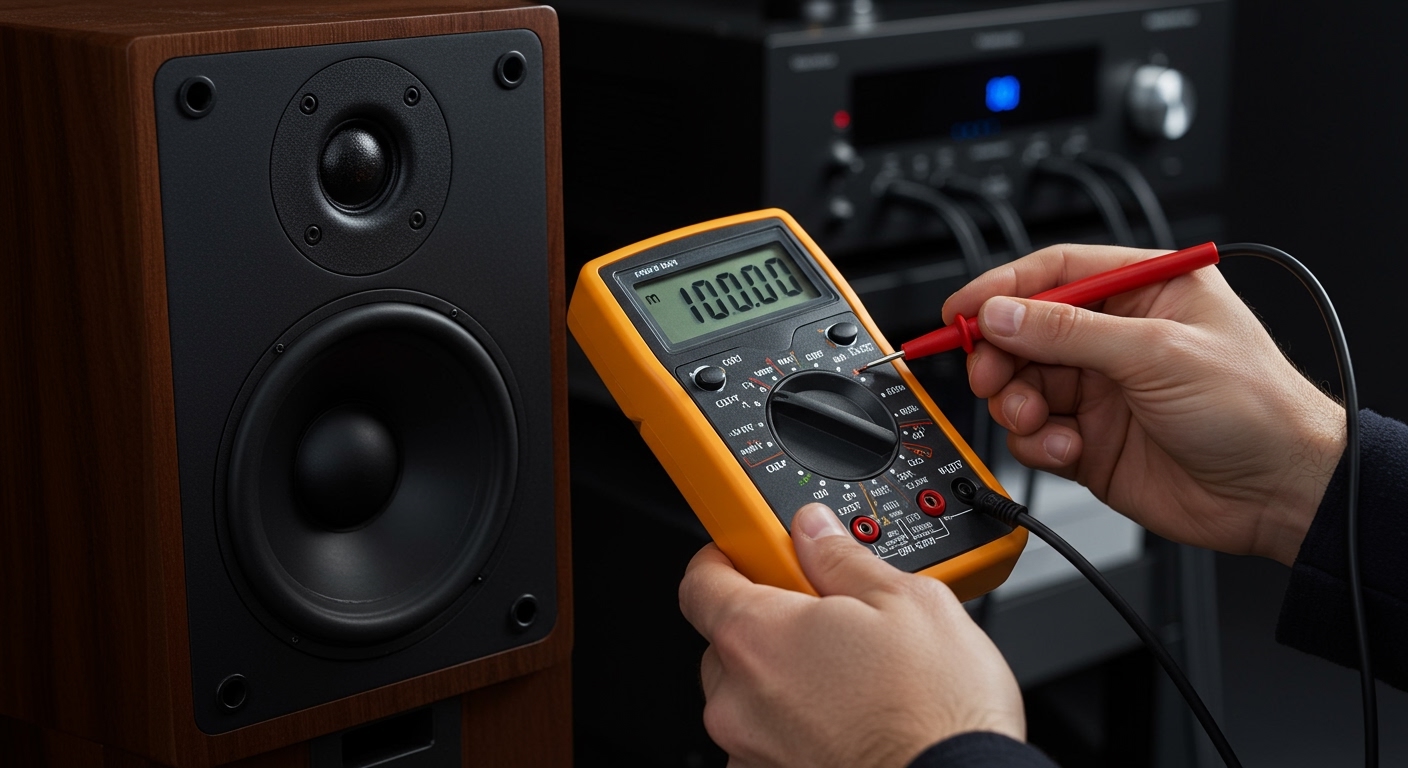
I use the REW (Room EQ Wizard) software along with a calibrated microphone. When I first measured my 3-way towers, I noticed a huge dip at 2kHz. It turned out I had wired the midrange driver out of phase. Swapping the positive and negative wires immediately fixed the “hole” in the sound.
The “Golden Ear” Test
After the measurements look flat, listen to high-quality recordings you know well.
- Female Vocals: Should sound centered and clear, not “chesty.”
- Cymbals: Should shimmer without being “piercing.”
- Bass: Should be tight and fast, not “boomy.”
Frequently Asked Questions
Is it cheaper to build your own speakers?
In terms of pure part quality, yes. A $500 DIY 3-way speaker often uses the same high-end drivers found in $2,000 commercial speakers. However, you must factor in the cost of tools (saws, routers, soldering irons) and your time.
What is the best wood for speaker cabinets?
MDF is the industry standard because it is isotropic (uniform in all directions) and dense. However, Baltic Birch plywood is lighter, stronger, and much more attractive if you plan on staining the wood rather than painting it.
Can I build a 3-way speaker without a crossover?
No. Sending low-frequency bass signals directly to a tweeter will cause the delicate voice coil to overheat and blow out within seconds. A crossover is essential for driver protection and frequency distribution.
Do I need a separate chamber for the midrange?
Yes, absolutely. If the midrange shares the same air space as the woofer, the massive air pressure generated by the woofer will physically push the midrange cone, causing massive distortion and potential damage.