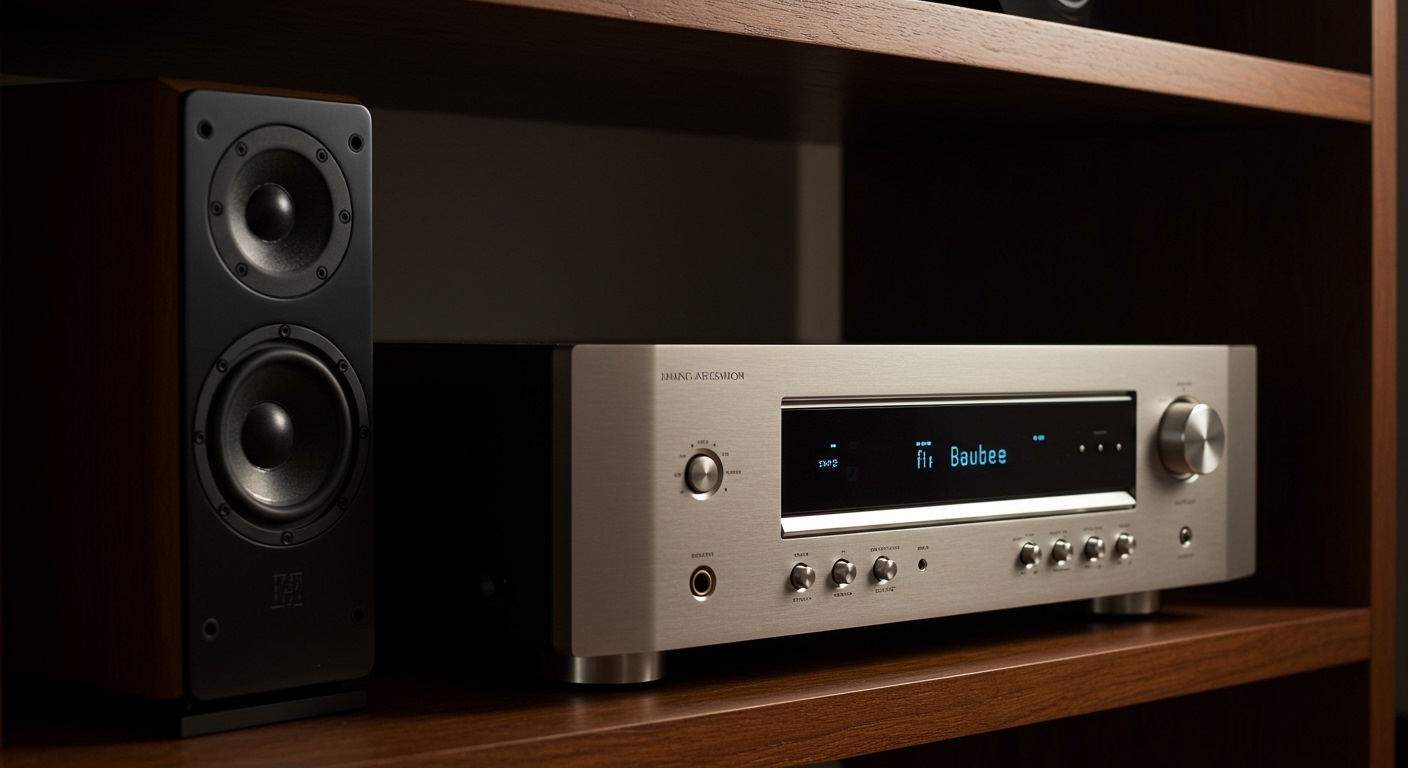
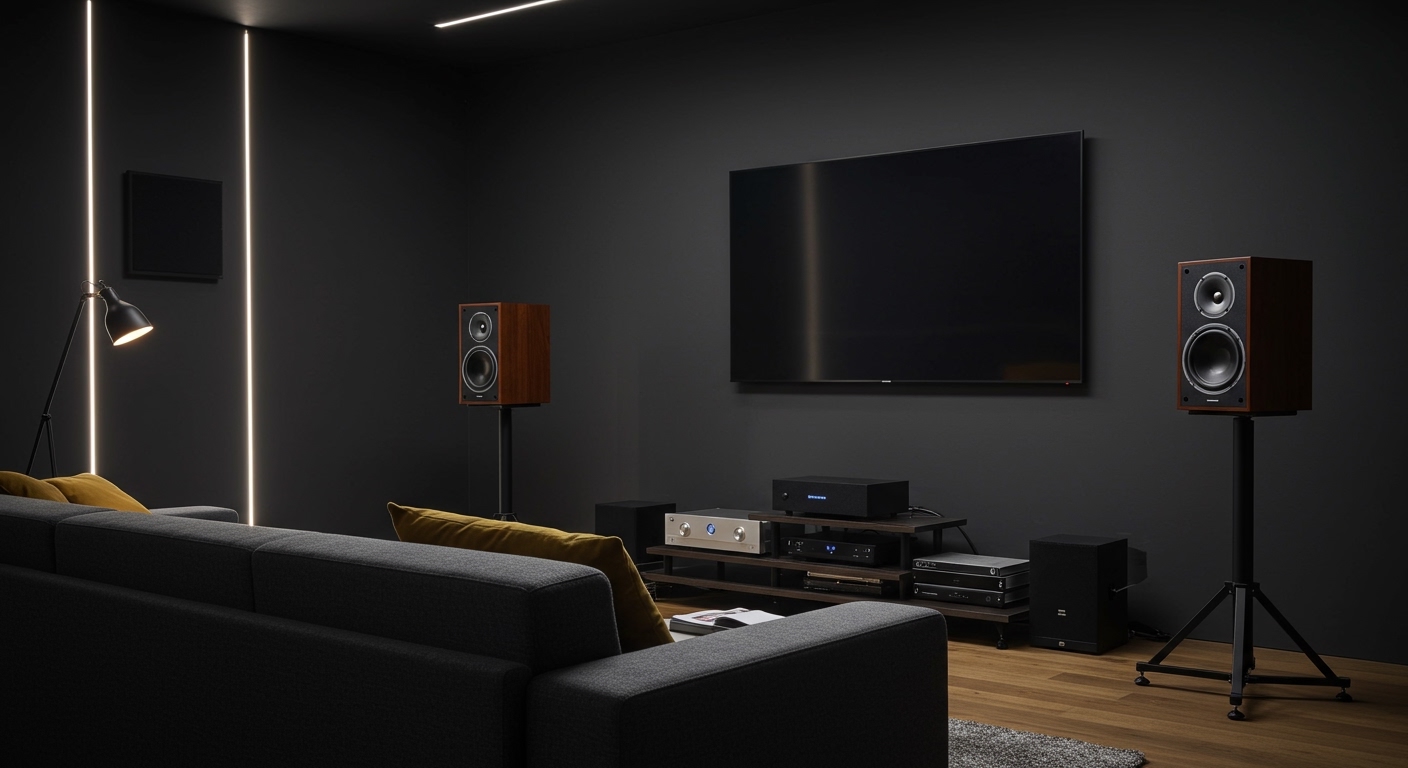
Understanding the Basics: How to Choose Receiver for Speakers
Setting up a high-fidelity audio system often feels like solving a complex puzzle. If you are wondering how to choose receiver for speakers, the secret lies in matching electrical specifications with your listening goals. Mismatching these components can lead to distorted sound, or worse, permanent damage to your expensive equipment.
This guide provides a professional roadmap to help you how to match receiver with speakers effectively. Whether you are building a dedicated home theater or a vinyl listening nook, understanding how to match speakers to receiver requirements ensures longevity and peak performance. By following these technical yet accessible steps, you will transform a collection of boxes into a cohesive, spine-tingling sonic experience.
Key Takeaways: Expert Summary
Impedance Match: Ensure the Receiver’s rated impedance (Ohms) is equal to or lower than the Speakers’ rating to prevent overheating.
Power Headroom: Aim for a receiver that delivers 100% to 150% of the speaker’s continuous power (RMS) rating for “clean” sound.
Sensitivity Matters: High-sensitivity speakers (90dB+) require less power; low-sensitivity speakers (<85dB) need high-current amplification.
Future Proofing: Always choose a receiver with more Channels (e.g., 7.2 or 9.2) than you currently need to allow for system expansion.
Tools and Materials Needed for Setup
Before you learn how to buy a receiver for speakers, ensure you have the following essentials ready for your installation.
| Tool/Material | Purpose | Expert Recommendation |
|---|---|---|
| Speaker Wire | Transfers audio signal | 14-gauge or 16-gauge Oxygen-Free Copper (OFC) |
| Banana Plugs | Secure, clean connections | Gold-plated for corrosion resistance |
| Wire Stripper | Prepares cable ends | Adjustable stripper for various gauges |
| HDMI 2.1 Cables | Video/Audio data | Certified Ultra High Speed for 4K/120Hz |
| Sound Level Meter | Calibration | Use a dedicated device or a smartphone app |
Step 1: Identify Your Speaker Specifications
The first step in how to choose the right receiver for your speakers is to look at the “Spec Sheet” or the sticker on the back of your cabinets. You cannot effectively match speakers with receiver units without knowing these three numbers: Impedance, Sensitivity, and Power Handling.
Check the Impedance (Ohms)
Impedance is the electrical resistance a speaker provides. Most consumer speakers are 8 Ohms, but high-end audiophile models are often 4 Ohms.
If you have 4-ohm speakers, you must buy a receiver explicitly rated for high-current delivery. Using a standard 8-ohm receiver with 4-ohm speakers can cause the receiver to go into “Protect Mode” or burn out its internal transistors.
Review Power Handling (Watts)
Look for the RMS (Root Mean Square) or Continuous Power rating. Ignore “Peak” or “Max” power numbers, as these are often marketing fluff.
Your goal in learning how to match speakers to receiver is to ensure the receiver can comfortably provide enough “juice” to move the speaker cones without straining.
Step 2: Match Impedance for Safety
When learning how to choose speakers for receiver setups, safety comes first. Think of impedance like a water pipe; lower ohms mean a wider pipe that allows more electricity to flow.
The Golden Rule of Ohms
Safe Match: Receiver (6-8 Ohms) + Speakers (8 Ohms).
Risky Match: Budget Receiver (8 Ohms only) + Speakers (4 Ohms).
Pro Match: High-End Receiver (4-8 Ohm Switchable) + Any Speaker.
In my years of testing home theater gear, I’ve seen many entry-level receivers fail because users tried to drive demanding 4-ohm tower speakers. If your speakers are low-impedance, prioritize a receiver with a heavy Toroidal Transformer.
Step 3: Calculate the Power Requirements
A common mistake in how to buy speakers for receiver systems is “under-powering.” Surprisingly, a weak receiver is more likely to blow a speaker than a powerful one. This happens through clipping, where the receiver sends a distorted, square-wave signal that melts speaker voice coils.
The 1.5x Power Rule
To ensure Information Gain and peak audio quality, try to find a receiver that outputs roughly 1.5 times the speaker’s recommended RMS power.
For example, if your speakers are rated for 20W – 100W RMS, look for a receiver that delivers 80W to 120W per channel. This provides “headroom,” allowing the system to handle sudden loud bursts (like explosions in a movie) without distortion.
Consider Speaker Sensitivity
Sensitivity (measured in dB) tells you how loud a speaker plays with just 1 watt of power.
90dB+ (High): Can be driven by almost any receiver.
85dB or lower (Low): Requires a high-wattage, high-current receiver to sound “alive.”
Step 4: Choose the Correct Number of Channels
When you buy a receiver for speakers, you need to decide how many speakers you eventually want in the room. This is the “Channel Count.”
Standard Configurations
- 2.0 Channel: Best for pure music (Left and Right speakers).
- 2.1 Channel: Music plus a Subwoofer for deep bass.
- 5.1 Channel: The classic home theater (Front L/R, Center, Surround L/R, and Sub).
- 7.2.4 Channel: Modern Dolby Atmos setup with ceiling speakers and dual subwoofers.
If you are currently only buying two speakers but plan to expand, I highly recommend buying a 7.2 channel receiver now. It saves you from having to buy a whole new unit in two years when you want surround sound.
Step 5: Evaluate Connectivity and Modern Features
Knowing how to choose receiver for speakers involves more than just raw power. You need the right “brains” to handle your devices.
Essential Ports and Standards
HDMI 2.1: Essential for PS5/Xbox Series X gamers to support VRR and 4K/120Hz.
eARC: Allows your TV to send high-quality audio (like Dolby Atmos) back to the receiver through a single cable.
Phono Input: A must-have if you plan to connect a turntable without a built-in preamp.
Wi-Fi/Bluetooth: Look for AirPlay 2, Chromecast, or HEOS for seamless music streaming.
Room Correction Software
Modern receivers include a microphone and software (like Audyssey, Dirac Live, or YPAO). This is a game-changer. The receiver plays test tones and “listens” to your room, automatically adjusting the EQ to fix acoustic problems like boomy bass or muffled dialogue.
Common Mistakes to Avoid
Ignoring the Center Channel: In home theaters, 70% of dialogue comes from the center speaker. Ensure your receiver has enough power to keep this channel clear.
Using Thin Wire: Don’t use the “free” wire that comes in some boxes. Use at least 16-gauge wire for runs under 50 feet to maintain signal integrity.
Ventilation Neglect: Receivers generate significant heat. Never stack other components directly on top of the receiver’s vents, or it will eventually fail.
- Chasing Peak Watts: Manufacturers often list “1000 Watts Peak.” This is a meaningless number. Always look for All Channels Driven RMS ratings for a true measurement of power.
Expert Comparison: Receiver Types
| Feature | Stereo Receiver | AV Receiver (AVR) | Integrated Amplifier |
|---|---|---|---|
| Primary Use | Music / Vinyl | Movies / Gaming | High-End Audiophile Music |
| Channel Count | 2.0 or 2.1 | 5.1 to 13.2 | 2.0 |
| Video Switching | No | Yes (HDMI) | No |
| Sound Quality | High (Simple paths) | Good (Processing heavy) | Highest (Purest signal) |
| Room Correction | Rare | Standard | Occasional |
Frequently Asked Questions
(FAQs)
Can I use 4-ohm speakers with an 8-ohm rated receiver?
It is not recommended unless the receiver specifically states it is “4-ohm stable.” An 8-ohm receiver will work at low volumes, but at higher volumes, it will pull too much current, potentially causing the receiver to overheat or shut down.
Is it better to have more watts than the speaker’s max rating?
Yes, having more power (headroom) is generally safer than having too little. As long as you don’t turn the volume knob to a point where the speakers physically distort, a high-wattage receiver provides cleaner, more dynamic sound.
Does the brand of the receiver have to match the brand of the speakers?
No. There is no technical benefit to matching brands. In fact, many people prefer “mixing and matching” to find a specific sound signature. For example, pairing “warm” sounding speakers with a “neutral” receiver is a common expert tactic.
What is the difference between a 5.1 and a 7.1 receiver?
A 5.1 receiver supports five speakers and one subwoofer. A 7.1 receiver adds two “Rear Surround” speakers. If you have a large room, the extra two speakers in a 7.1 setup provide a much more immersive “bubble” of sound.
Final Thoughts on Matching Audio Gear
Mastering how to choose receiver for speakers is the bridge between owning “equipment” and owning a “system.” By prioritizing Impedance matching, calculating RMS power with the 1.5x rule, and selecting a unit with future-proof connectivity, you ensure your investment lasts for a decade or more.
Don’t be afraid to start small. A high-quality 2.1 setup often sounds better than a cheap, plastic 7.1 “Home Theater in a Box.” Focus on the technical compatibility first, and let your ears guide the rest of the journey.
Ready to upgrade your sound? Start by checking the sticker on the back of your current speakers and see if your receiver is truly giving them the power they deserve.