Understanding How to Choose Speakers for Room Size
To how to choose speakers for room size, you must match the acoustic output (SPL) and physical footprint of the speaker to the total cubic volume of your listening area. Smaller rooms (under 1,500 cu. ft.) typically require bookshelf speakers to avoid “boomy” bass, while large, open-concept spaces (over 3,000 cu. ft.) demand floorstanding towers with high sensitivity ratings to fill the air without distortion.
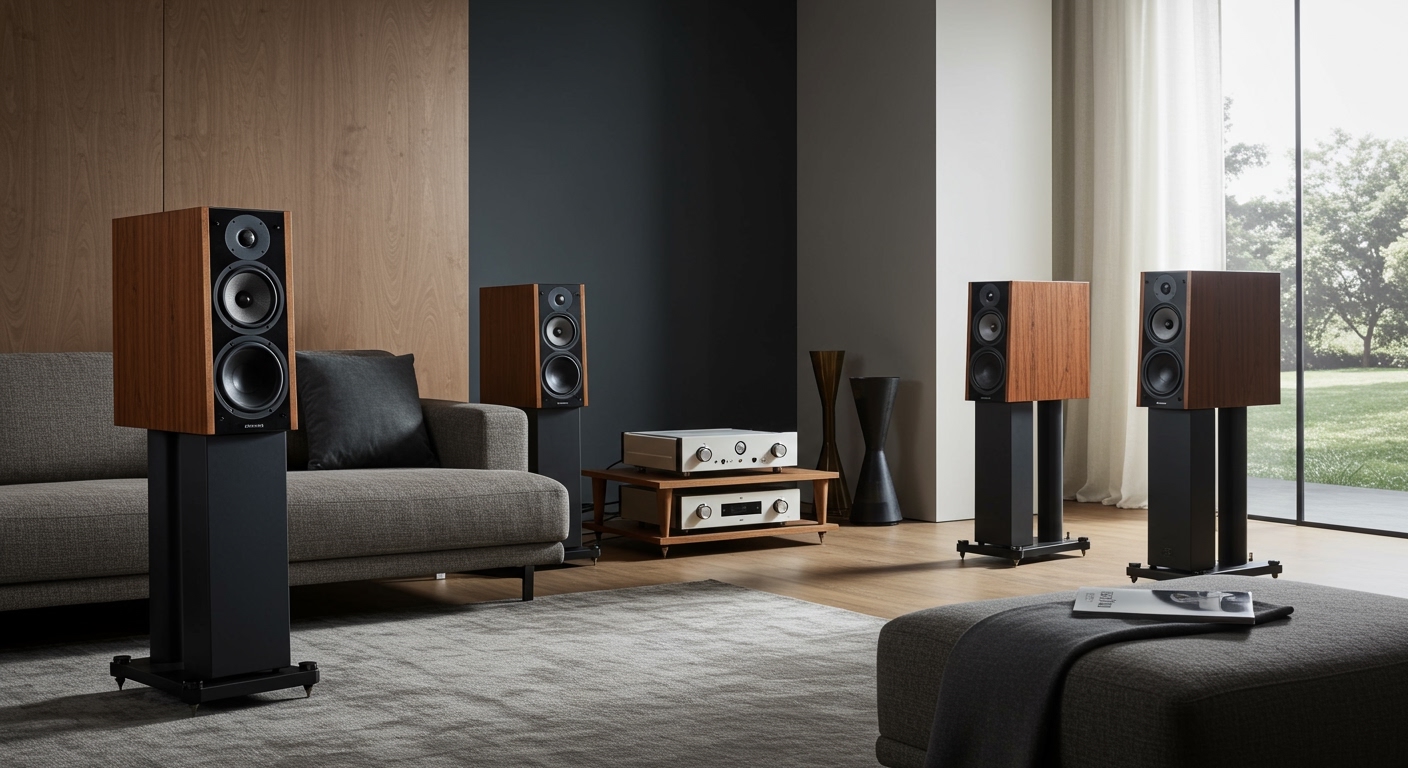
Choosing the wrong size often leads to two major frustrations: speakers that sound “thin” and lost in a large room, or large speakers that “overpower” a small room with muddy, uncontrolled bass. I have spent over 15 years testing audio gear in everything from cramped New York apartments to dedicated home theaters, and the secret isn’t just the price tag—it’s the displacement.
TL;DR: Quick Guide to Speaker Sizing
- Small Rooms (< 150 sq. ft.): Opt for bookshelf speakers or high-end satellites. A 5-inch to 6.5-inch woofer is usually the “sweet spot.”
- Medium Rooms (150–350 sq. ft.): High-output bookshelf speakers with a subwoofer or smaller floorstanding towers.
- Large Rooms (> 350 sq. ft.): Large floorstanding towers with multiple woofers and high sensitivity (90dB+).
- Key Factor: Always calculate cubic volume (length x width x height), as high ceilings significantly increase the demand on your speakers.
Why Room Volume Dictates Your Audio Experience
When learning how to choose speakers for room size, most people look only at floor space. However, sound travels in three dimensions. A room with 12-foot vaulted ceilings requires much more energy to “pressurize” than a room with 8-foot ceilings, even if the square footage is identical.
The Problem with “Over-Sizing”
If you put massive floorstanding speakers in a tiny bedroom, you encounter standing waves. These are acoustic reflections that cause certain bass frequencies to become bloated and “one-note.” In my experience, even the most expensive towers can sound terrible if they don’t have enough “breathing room” from the walls.
The Problem with “Under-Sizing”
Conversely, small speakers in a massive living room suffer from dynamic compression. You will find yourself turning the volume up to hear dialogue or detail, but the small drivers will simply distort. You aren’t just listening to the speaker; you are listening to how the speaker interacts with the air mass in the room.
Speaker Categories and Room Compatibility
To simplify the process, we can categorize the most common speaker types by the room volumes they are best suited to handle.
| Speaker Type | Recommended Room Size | Typical Woofer Size | Best Use Case |
|---|---|---|---|
| Satellite Speakers | Small (< 1,200 cu. ft.) | 2″ – 4″ | Offices, small bedrooms, or PC setups. |
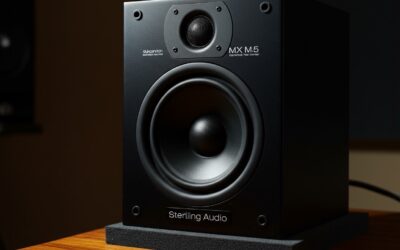
| Bookshelf Speakers | Small to Medium | 5.25″ – 6.5″ | Apartments, dens, and stereo listening. |
| Small Towers | Medium | Dual 5.25″ or 6.5″ | Living rooms with 8-foot ceilings. |
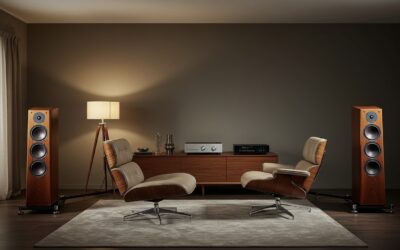
| Large Towers | Large (> 3,000 cu. ft.) | Dual 8″ or larger | Home theaters, open-concept homes. |
Step 1: Calculate Your Total Cubic Footage
Before looking at spec sheets, grab a measuring tape. You need to know exactly how much air your speakers need to move.
- Measure Length and Width: Multiply these to get your square footage.
- Measure Ceiling Height: This is the most overlooked variable.
- Multiply (L x W x H): This gives you the Total Cubic Volume.
If your room is an “open concept” that leads into a kitchen or hallway without a door, you must include that additional volume. Sound waves do not stop at invisible boundaries; they will bleed into those adjacent spaces, effectively making your “small” living room a “large” acoustic space.
Step 2: Evaluating Speaker Sensitivity and Power Handling
Once you know your room size, you need to look at Speaker Sensitivity. This is usually measured in decibels (dB). It tells you how loud a speaker will play with exactly one watt of power at one meter away.
- Low Sensitivity (80dB – 85dB): These require a powerful amplifier and are best for small rooms where you sit close to the speakers (near-field).
- Moderate Sensitivity (86dB – 90dB): The industry standard for medium rooms.
- High Sensitivity (91dB+): Essential for large rooms. Brands like Klipsch or JBL specialize in high-sensitivity designs that can fill massive spaces with very little effort.
In my testing, using a low-sensitivity speaker in a large room is the fastest way to blow a tweeter. The amp works too hard, starts “clipping,” and sends a distorted signal that destroys the speaker components.
Step 3: Understanding Bass Response and Room Gain
Bass is the most difficult frequency range to manage when figuring out how to choose speakers for room size.
The Concept of Room Gain
Small rooms naturally boost lower frequencies through a phenomenon called Room Gain. If you use a speaker that is already “bass-heavy,” the room will amplify those frequencies further, resulting in a muddy sound. For small rooms, I often recommend sealed-box (acoustic suspension) speakers rather than rear-ported ones.
Ported vs. Sealed Enclosures
- Rear-Ported Speakers: Have a hole in the back to increase bass. These need to be at least 1-2 feet away from the wall. In small rooms, this isn’t always possible.
- Sealed Speakers: Offer tighter, more accurate bass and are much more forgiving regarding placement near walls.
Step 4: The Rule of Proximity (The “Triangle” Method)
Your seating position is just as important as the room size. No matter how big the room is, if you are sitting 6 feet away from the speakers, you are in a near-field or mid-field listening scenario.
- The Equilateral Triangle: Your speakers should be as far apart from each other as they are from you.
- Toe-In: Angling the speakers toward your ears can help “focus” the sound in larger rooms where side-wall reflections might cause blurring.
- Ear Level: High-frequency drivers (tweeters) are highly directional. Ensure they are at ear level when you are seated.
Step 5: Matching Speakers to Room Decor and Logistics
While acoustic performance is king, the physical reality of your room matters. When learning how to choose speakers for room size, consider the “Visual Weight.”
- Floorstanding Speakers: These take up a permanent footprint. They cannot be tucked away. If your room has high foot traffic, consider their stability.
- Bookshelf Speakers on Stands: These actually take up the same amount of floor space as towers but look “lighter” visually.
- In-Wall/In-Ceiling Speakers: Best for “invisible” audio in large rooms, but they require professional installation and lack the “soundstage” depth of freestanding cabinets.
Common Mistakes to Avoid
Through my years of consulting for home audio setups, I see the same three errors repeatedly:
- Buying Based on Wattage: “1000 Watts” on a box is usually a marketing lie. Focus on Sensitivity and RMS Power.
- Ignoring the Floor Material: Hardwood floors reflect sound, making any speaker sound “bright” or “harsh.” Rugs are your best friend in large rooms.
- Matching Small Speakers with a Giant Subwoofer: This creates a “sonic hole” in the mid-bass. Ensure your main speakers can play low enough (around 80Hz) to blend seamlessly with a sub.
FAQ: Speaker Selection for Different Spaces
Can I use large floorstanding speakers in a small room?
You can, but it is not recommended without room correction software (like Dirac Live or Audyssey). Without it, the bass will likely be overwhelming and “boomy,” masking the fine details in the music or movie dialogue.
How do I choose speakers for a room with high ceilings?
Focus on Sensitivity and Vertical Dispersion. Speakers with “waveguides” or “horns” help direct the sound toward your ears rather than letting it bounce off the ceiling. You will also need more power (higher wattage) to compensate for the extra air volume.
Do I need a subwoofer if I have large tower speakers?
In a medium to large room, yes. While towers have better bass than bookshelves, a dedicated powered subwoofer handles the sub-20Hz frequencies that even large towers struggle to reproduce. This also frees up your main speakers to play mid-range frequencies more clearly.
What is the best speaker size for an 11×11 bedroom?
An 11×11 room is a “square” room, which is an acoustic nightmare due to overlapping standing waves. I recommend high-quality bookshelf speakers with a 5.25-inch woofer. Avoid large towers, as they will excite the room’s natural resonances too much.