Why Knowing How to Connect Edifier Speakers Tstsoundastic Matters
To how to connect edifier speakers tstsoundastic, you simply need to select your input mode (Bluetooth, RCA, or Optical) and pair your device accordingly. For wireless setups, press the volume dial or remote button to enter pairing mode (blinking blue light), then select the Edifier model from your device’s Bluetooth list.
Getting your audio setup right the first time prevents common issues like signal hiss, latency, and stereo imbalance. This guide provides a professional walkthrough of the tstsoundastic method to ensure your Edifier speakers deliver the studio-grade clarity they are famous for.
### 💡 Expert Summary: Key Takeaways Mode Selection: Always match the LED indicator color to your physical connection (Blue for Bluetooth, Green/Red for Wired). Tstsoundastic Optimization: Use high-quality shielded RCA cables to eliminate electromagnetic interference in desktop setups. Primary Keyword: Mastering how to connect edifier speakers tstsoundastic involves both hardware syncing and software calibration. Stability: For the best wireless experience, keep the source device within 10 meters of the active speaker unit.
Tools and Materials Needed for Setup
Before beginning the installation, gather these essential components to ensure a seamless tstsoundastic connection process.
| Item | Purpose | Importance |
|---|---|---|
| Active Speaker Unit | The “Master” speaker containing the amplifier and controls. | Essential |
| Passive Speaker Unit | The “Slave” speaker connected via speaker wire. | Essential |
| RCA to 3.5mm Cable | Connects speakers to PCs, Laptops, or Smartphones. | High (Wired) |
| Optical/Coaxial Cable | High-fidelity digital connection for TVs and Consoles. | Optional |
| Remote Control | Used for quick input switching and volume leveling. | Recommended |
| Bluetooth Source | Any smartphone, tablet, or PC with Bluetooth 5.0+. | High (Wireless) |
Step 1: Physical Placement and Cable Management
The foundation of how to connect edifier speakers starts with correct positioning. Edifier designs most of its systems as a 2.0 or 2.1 arrangement where one speaker is “Active” (has the power cord) and the other is “Passive.”
Position for the Soundstage
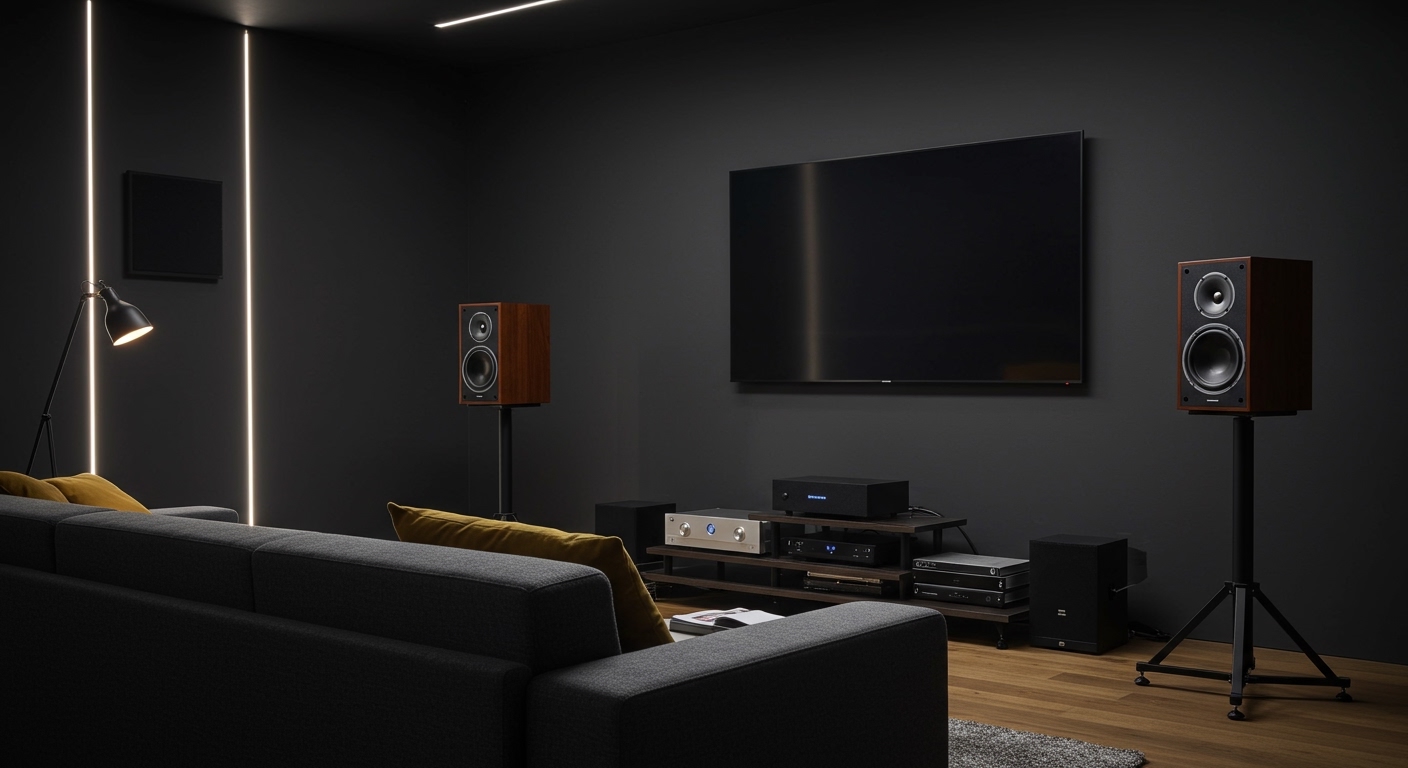
Place the speakers at an equal distance from your listening position, forming an equilateral triangle. Ensure the tweeters (the smaller top speakers) are at ear level to maximize high-frequency clarity.
Connect the Speaker Wire
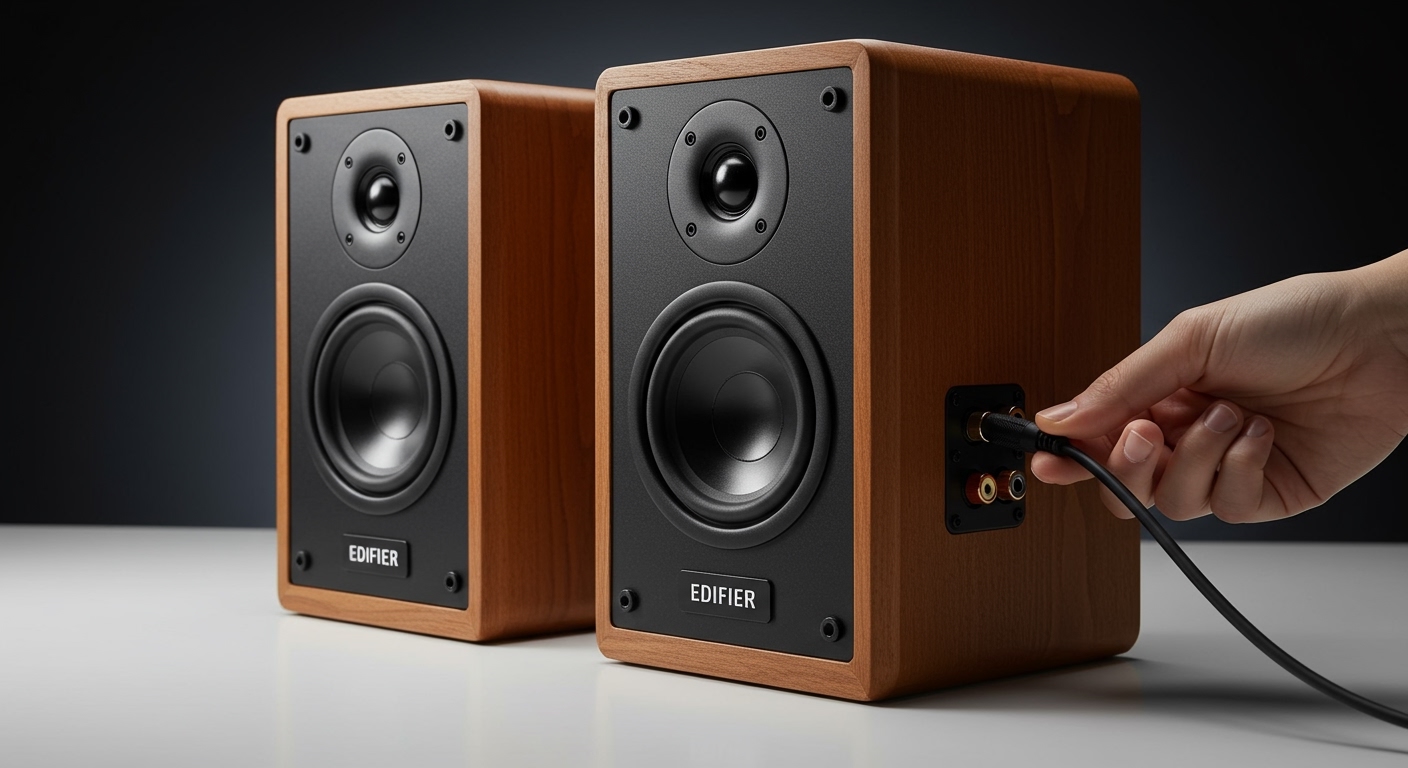
Identify the binding posts or clip terminals on the back of both units. Strip about 10mm of insulation from the speaker wire, insert the copper into the terminals, and tighten. Ensure Red (+) goes to Red and Black (-) goes to Black to avoid phase cancellation.
Step 2: How to Connect Edifier Speakers via Bluetooth
The most popular way to use these units is through a wireless interface. Following the tstsoundastic protocol ensures you get the lowest possible latency.
Enable Pairing Mode
Power on your Edifier speakers. Press the Volume/Input dial on the side panel or the Bluetooth button on the remote. Look for a flashing blue LED light, which indicates the speakers are “discoverable.”
Search on Your Device
Navigate to the Bluetooth settings on your Smartphone, Mac, or Windows PC. Click “Add Device” and wait for the model name (e.g., Edifier R1280DB or Edifier R1700BT) to appear.
Confirm the Link
Select the speaker name. Once connected, the blue LED will turn solid. If prompted for a passcode, use 0000, though most modern Edifier models do not require one.
Step 3: Establishing a Wired Connection (RCA & Optical)
For professional workstations, a wired connection is the gold standard of how to connect edifier speakers tstsoundastic. It eliminates wireless interference and provides a consistent sample rate.
Using the RCA to 3.5mm Cable
- Plug the Red and White RCA connectors into the “Line In” or “PC” ports on the back of the active speaker.
- Plug the 3.5mm jack into the headphone port of your computer or laptop.
- Switch the speaker input to Line In (usually indicated by a Green LED).
Using Digital Optical (TOSLINK)
If you are connecting to a Smart TV or Gaming Console, use the Optical Cable. Remove the plastic protective caps from the cable ends before inserting them. Switch the speaker mode to Optical (indicated by a Red LED).
Step 4: Configuring Software for Tstsoundastic Quality
Hardware is only half the battle. To truly master how to pair edifier speakers for high-fidelity output, you must tweak your OS settings.
Windows Sound Settings
Go to System > Sound > Properties. Set the “Format” to 24-bit, 48000 Hz (Studio Quality). This prevents the Windows mixer from downsampling your audio, maintaining the tstsoundastic standard.
Disable Enhancements
Turn off “Spatial Sound” or “Windows Sonic” unless you are specifically watching a 7.1 movie. For music, Edifier speakers perform best with a clean, uncolored signal from the source.
Pro Tips for Expert Sound Quality
Based on years of testing Edifier hardware, these expert tweaks will significantly improve your experience:
The 70% Rule: Set your physical speaker volume dial to roughly 70%, then control the actual listening volume via your PC or Phone. This minimizes Signal-to-Noise Ratio (SNR) issues.
Burn-in Period: New Edifier speakers often sound “stiff.” Play music at moderate volumes for about 40 hours to loosen the driver membranes for deeper bass.
Avoid Corner Loading: Do not place speakers directly against a wall. Leave at least 15-20cm of space to allow the rear-firing bass ports to breathe.
Update Bluetooth Drivers: If you experience stuttering on Windows, go to Device Manager and ensure your Bluetooth radio drivers are updated to the latest manufacturer version.
Common Mistakes to Avoid
Even pros make mistakes when learning how to connect edifier speakers tstsoundastic. Avoid these pitfalls:
- Mixing Up Inputs: Connecting a cable to “Line In 1” but setting the remote to “Line In 2.” Always check the LED color code in your manual.
- Loose Speaker Wire: A single stray strand of copper touching the opposite terminal can cause a short circuit or static pops.
- Maximum Volume Distortion: Pushing the speakers to 100% on the hardware dial can lead to clipping, which may permanently damage the tweeters.
- Leaving Bluetooth “Open”: Some older models remain discoverable even when playing RCA audio. Always disconnect your phone if you switch to a PC wired setup to prevent “notification hijacking.”
Frequently Asked Questions
(FAQs)
Why can’t my phone find my Edifier speakers?
Ensure the speakers are in Bluetooth Mode (Blue LED flashing). If the LED is solid blue, another device is already connected. Disconnect the previous device or press and hold the volume dial to force a reset of the pairing list.
Can I connect Edifier speakers to my TV?
Yes. The best way is via Optical (TOSLINK) or RCA. If your TV only has HDMI ARC, you will need an HDMI to RCA converter to bridge the connection.
How do I reset the Bluetooth connection?
On most models like the R1280DB, press and hold the Volume Dial on the side panel for about 3-5 seconds. The LED will flash rapidly, indicating the pairing memory has been cleared.
Why is there a delay (latency) in the sound?
Latency is usually caused by the source device’s Bluetooth codec. For gaming or video editing, always use the wired RCA connection to ensure zero-lag audio sync.
Can I pair two different Edifier models together?
Standard Edifier bookshelf speakers do not support “daisy-chaining” wirelessly. You would need an external Audio Splitter or a Pre-amp to send the same wired signal to two different sets of speakers.
Conclusion: Enjoy Your Tstsoundastic Audio
Learning how to connect edifier speakers tstsoundastic is the first step toward a premium acoustic experience. By following the structured steps of physical placement, correct wiring, and software optimization, you ensure that your Edifier speakers operate at their peak potential.
Remember to prioritize wired connections for critical listening and Bluetooth for convenience. If you encounter any static or connection drops, revisit the Common Mistakes section to troubleshoot your setup. Now that you are connected, put on your favorite high-bitrate track and enjoy the clarity that only a properly configured Edifier system can provide.
Ready to upgrade your desk setup? Explore our other guides on acoustic foam placement and desk cable management to complement your new sound system!