Essential Guide: How to Cut Holes in Fiberglass Boat for Speakers
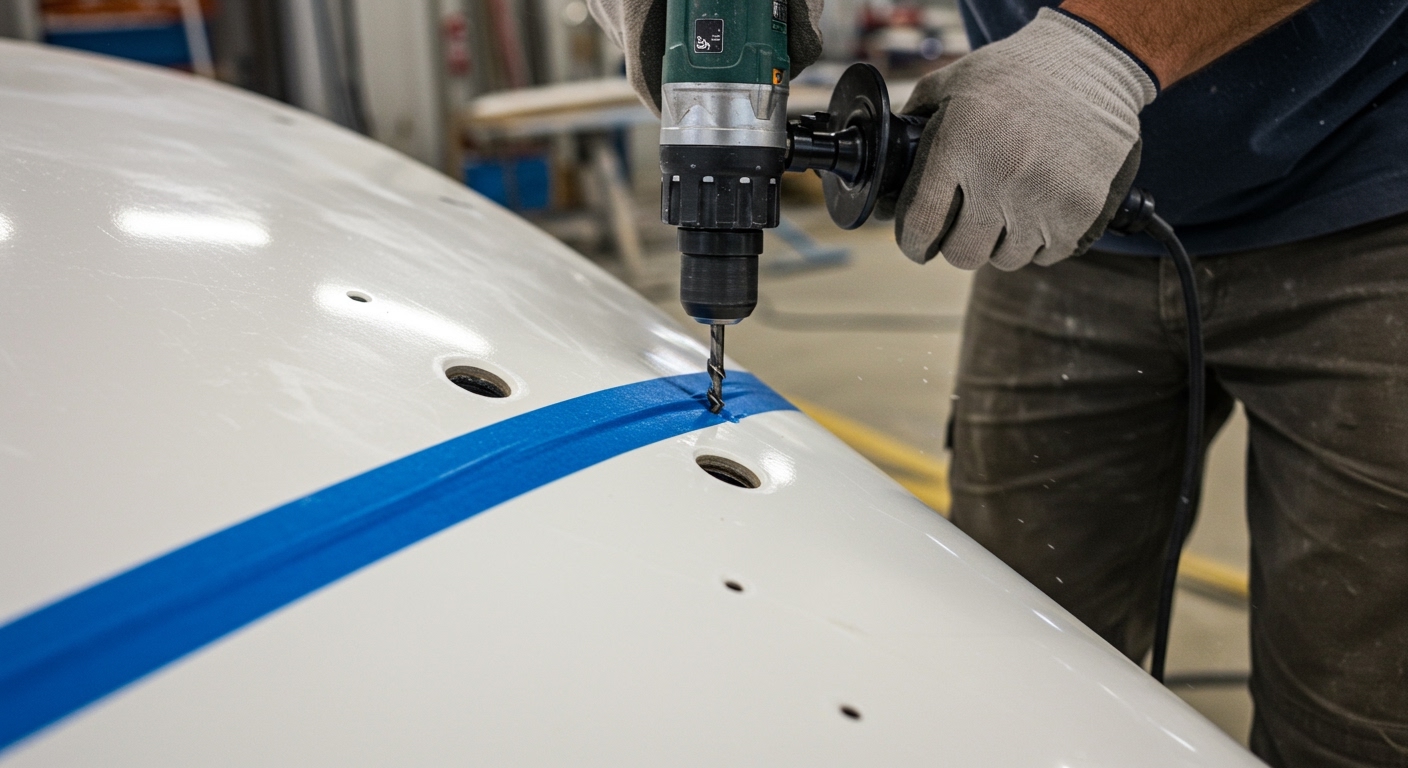
Learning how to cut holes in fiberglass boat for speakers requires a blend of precision, the right tools, and a “measure twice, cut once” mindset to avoid damaging your gelcoat. To achieve a professional finish, you must use a bi-metal hole saw or a jigsaw with a fine-tooth carbide blade, always masking the area with blue painter’s tape to prevent chipping. In my decade of marine upholstery and electronics installation, I’ve found that running your drill in reverse for the first few seconds is the secret to a crack-free edge.
Quick Summary: Key Takeaways for Boat Speaker Installation
- Best Tool: A bi-metal hole saw is the cleanest method for standard round speakers.
- Gelcoat Protection: Always apply high-quality masking tape over the cut area to prevent spider-cracking.
- Safety First: Fiberglass dust is highly irritant; wear a P100 respirator, safety goggles, and long sleeves.
- The “Reverse” Trick: Start your hole saw in reverse to score the gelcoat before cutting through the fiberglass laminate.
- Structural Check: Always verify there are no fuel lines, electrical looms, or structural stringers behind the mounting surface.
Planning Your Speaker Placement and Layout
Before you pick up a drill, you need a strategy. In my experience, most DIY errors occur during the planning phase, not the cutting phase. Fiberglass is unforgiving, and a misplaced hole is a permanent (and expensive) mistake.
Checking for Obstructions
The most critical step in how to cut holes in fiberglass boat for speakers is “looking behind the curtain.” Use a flexible inspection camera or a simple mirror and flashlight to check the cavity. You are looking for:
- Main Wiring Harnesses: Usually tucked under the gunwales.
- Fuel Lines: Especially in center console boats.
- Stringers and Bulkheads: Never cut into the structural skeleton of the hull.
- Depth Clearance: Ensure the speaker magnet has at least 0.5 inches of “breathing room” from the back wall.
Using Manufacturer Templates
Most high-end marine speakers from brands like JL Audio, Fusion, or Rockford Fosgate include a cardboard template. Do not eyeball this. I recommend taping the template to the hull and sitting in the captain’s chair to ensure the symmetry and line of sight are perfect.
Essential Tools and Materials Checklist
To perform a professional-grade modification, you need the right gear. Using a standard wood blade will heat up, dull quickly, and likely burn the resin in your fiberglass.
| Tool / Material | Purpose | Expert Recommendation |
|---|---|---|
| Bi-Metal Hole Saw | Cleanest circular cuts | Milwaukee Hole Dozer or Lenox |
| Jigsaw | For non-standard or large oval speakers | Bosch Barrel Grip Jigsaw |
| Carbide Grit Blade | Cutting fiberglass without shredding | Bosch T150 Carbide Blade |
| Blue Painter’s Tape | Protects gelcoat and prevents chipping | 3M ScotchBlue Multi-Surface |
| Variable Speed Drill | Precise control during the initial score | DeWalt 20V Max XR |
| Marine Grade Sealant | Waterproofing the screw holes | 3M Marine Adhesive Sealant 4200 |
| PPE Gear | Health protection | Tyvek Suit and N95/P100 Mask |
Step-by-Step Guide: How to Cut Holes in Fiberglass Boat for Speakers
Follow this proven workflow we use in the shop to ensure a clean, factory-look finish every time.
Step 1: Prep the Surface
Clean the area with Isopropyl alcohol to remove any wax or detailing sprays. Apply two layers of painter’s tape over the entire area where the speaker will sit. This provides a surface to draw on and, more importantly, holds the brittle gelcoat together during the vibration of the cut.
Step 2: Mark the Center and Pilot Hole
Using your template, mark the exact center point. If using a hole saw, drill a small 1/4″ pilot hole. Pro Tip: Place a wet sponge or have an assistant hold a vacuum nozzle directly under the drill bit to catch the “itchy” dust immediately.
Step 3: Scoring the Gelcoat (The Secret Step)
This is where beginners go wrong. Set your drill to REVERSE. Place the hole saw in the pilot hole and spin it backwards against the gelcoat. This uses friction to “sand” a clean groove through the shiny outer layer without the teeth grabbing and cracking it. Once you see a clear white circle through the gelcoat, switch the drill back to FORWARD.
Step 4: Execution of the Main Cut
Apply steady, moderate pressure. Let the tool do the work. If you force a hole saw through thick fiberglass, the friction will create heat, which can discolor the surrounding gelcoat. Keep the drill level. If you are using a jigsaw, keep the base plate firm against the hull to prevent “chatter.”
Step 5: Deburring and Sealing
Once the “puck” of fiberglass falls out, the edges will be sharp and potentially “furry” with glass strands. Use 80-grit sandpaper to smooth the inner diameter.
Crucial Step: Fiberglass is porous. If your boat has a balsa or foam core, you must seal the exposed edge with marine epoxy or 3M 4200. This prevents water from wicking into the core and causing rot over time.
Handling Different Hull Materials
Not all fiberglass is created equal. Depending on your boat’s age and brand, you might encounter different internal structures.
Solid Fiberglass (Laminate)
Found in older hulls and many modern heavy-duty fishing boats. It is very hard on blades but easy to seal because there is no “core” to rot. Ensure you use cobalt or carbide-tipped tools for these.
Cored Fiberglass (Sandwich Construction)
Common in high-performance bass boats and modern cruisers to save weight. You will see a layer of fiberglass, then end-grain balsa or PVC foam, then another layer of glass.
- The Risk: Water intrusion into the core is “boat cancer.”
- The Fix: “Over-drill and fill.” Dig out about 1/4 inch of the core material around the hole, fill it with thickened epoxy (West System), let it dry, and then re-drill. This creates a permanent waterproof “bung” around your speaker hole.
Advanced Troubleshooting: Common Issues
What if I crack the gelcoat?
If a small “spider crack” appears, don’t panic. You can stop it from spreading by drilling a tiny 1/16″ hole at the very tip of the crack (stop-drilling). You can later fill this with a gelcoat repair kit matched to your hull color.
My hole saw is smoking!
This means your RPM is too high. Fiberglass is an abrasive. High speed creates heat, which melts the resin. Slow down the drill and, if necessary, spray a tiny mist of water on the cut to act as a coolant.
The speaker doesn’t sit flush
Check for “high spots” in the fiberglass or hidden wires pushing the magnet out. Sometimes the hull has a slight curve, and the speaker flange is flat. In this case, you may need to manufacture a custom HDPE (Starboard) spacer ring to bridge the gap and ensure a watertight seal.
Frequently Asked Questions (FAQ)
Can I use a standard wood hole saw for fiberglass?
Technically, yes, but it will likely be ruined by the end of the second hole. Fiberglass is extremely abrasive. For a clean cut and tool longevity, a bi-metal hole saw is the minimum requirement, while diamond-grit or carbide is the gold standard.
How do I prevent fiberglass itch?
Prevention is better than a cold shower. Wear a disposable Tyvek suit and tape the sleeves to your gloves. If you do get dust on your skin, wash with COLD water first. Hot water opens your pores and lets the glass fibers sink deeper, causing more irritation.
Is it better to use a jigsaw or a hole saw?
For standard 6.5-inch or 8-inch round speakers, a hole saw provides a much more precise and perfectly round hole. Use a jigsaw only for larger subwoofers, oval (6×9) speakers, or when the mounting area is too cramped for a large drill.
Should I use silicone or 3M 4200 for mounting?
Avoid cheap household silicone; it doesn’t withstand the marine environment or vibrations well. Use 3M Marine Adhesive Sealant 4200. It provides a waterproof seal but remains flexible enough that you can remove the speaker in the future without ripping chunks of fiberglass out.
How do I find out what is behind the fiberglass before cutting?
The best method is to gain access through an existing inspection hatch or by removing a nearby component (like a cup holder or a different panel). If no access exists, use a stud finder (some high-end models can detect wires and pipes through fiberglass) or a small pilot hole to probe the area with a stiff wire.