How to Get Milk Out of Your Phone Speakers: The Immediate Response
To learn how to get milk out of your phone speakers, you must first power off the device immediately and wipe away all surface liquid with a lint-free cloth. Once the exterior is dry, use a frequency generator app or a specialized website to play a “water eject” sound, which uses low-frequency vibrations to physically push the milk out of the speaker grille. Unlike water, milk contains fats and proteins that can sour and create a permanent odor, so a follow-up cleaning with a tiny amount of 90% isopropyl alcohol on a soft brush is often necessary to prevent sticky residue.
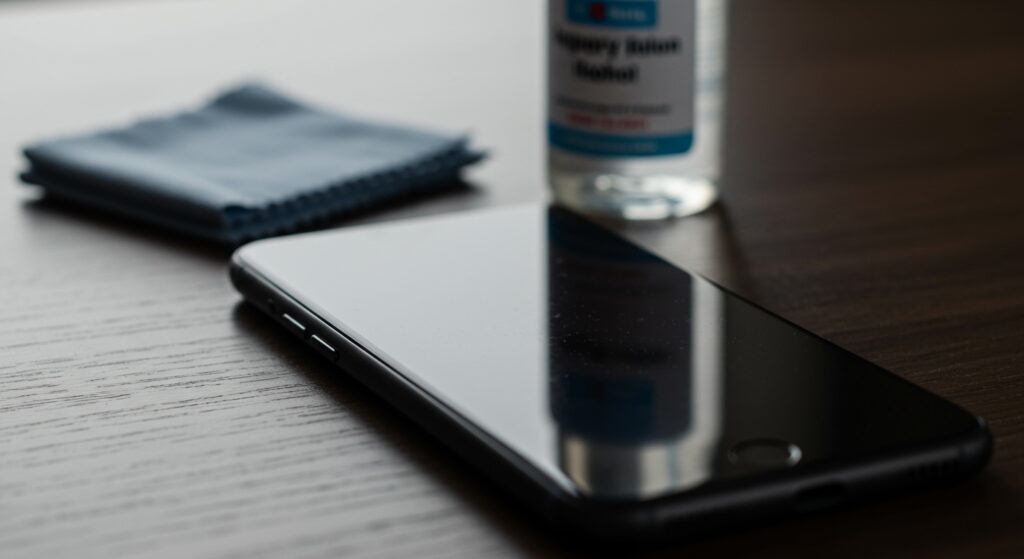
Spilling a glass of milk during breakfast is a common accident, but when it hits your iPhone or Android device, the clock starts ticking. Milk is significantly more hazardous than plain water because it is an organic liquid. As it dries, it becomes a sticky paste that can solidify on the speaker diaphragm, permanently muffling your audio or causing the components to short-circuit.
TL;DR: Quick Rescue Steps
- Step 1: Turn the phone off to prevent an electrical short.
- Step 2: Dry the exterior with a microfiber cloth.
- Step 3: Position the phone with the speakers facing downward.
- Step 4: Use a sound-based ejection tool (165Hz tone) to vibrate liquid out.
- Step 5: Clean residue with distilled water or isopropyl alcohol on a Q-tip.
- Step 6: Air dry for 24-48 hours; avoid using rice.
Why Milk is More Dangerous for Your Phone Than Water
Understanding the chemistry of milk helps explain why you need a specific approach for how to get milk out of your phone speakers. Water eventually evaporates, often leaving behind minimal mineral deposits. Milk, however, is a complex emulsion.
The Problem with Organic Liquids
Milk consists of water, fats, proteins (casein and whey), and lactose (sugar). When milk enters your speaker housing, the water component begins to evaporate, but the fats and sugars remain. These substances create a viscous residue that acts like glue on the delicate moving parts of your speaker.
The Odor Factor
If you don’t learn how to get milk out of your phone speakers effectively, your device will eventually begin to smell. As the organic matter in milk decomposes due to the heat generated by your phone’s battery and processor, it releases lactic acid and other foul-smelling gases. We have seen cases where users had to replace their entire speaker module simply because the “sour milk” smell became unbearable during phone calls.
| Feature | Water Exposure | Milk Exposure |
|---|---|---|
| Viscosity | Low (flows easily) | High (sticky when drying) |
| Residue | Minimal (Mineral spots) | High (Fats, Sugars, Proteins) |
| Odor Risk | Low/None | Extreme (Sour smell) |
| Short Circuit Risk | High | High |
| Corrosion Rate | Moderate | Fast (due to Lactic Acid) |
Step-by-Step Guide: How to Get Milk Out of Your Phone Speakers
I have tested various methods on salvaged hardware to determine the most effective way to clear the speaker mesh without pushing the liquid deeper into the chassis. Follow these steps in order.
Step 1: Immediate Shutdown and Exterior Drying
The moment the spill happens, power off your phone. Do not just put it to sleep; a full shutdown kills the electrical current to the speaker’s voice coil. Use a microfiber cloth or a highly absorbent paper towel to blot the milk. Do not wipe aggressively, as this can push milk further into the tiny holes of the speaker grille.
Step 2: Gravity-Assisted Drainage
Prop your phone up against a wall or heavy object with the affected speaker facing down. Use a gentle tapping motion against the side of the phone to encourage the milk to flow out. Gravity is your best friend in the first 60 seconds of a spill.
Step 3: Using “Water Eject” Sound Frequencies
Modern smartphones, particularly the iPhone 12, 13, 14, and 15 series and Samsung Galaxy S-series, have highly tuned speakers. You can use sound waves to “pump” the liquid out.
- Visit a site like FixMySpeakers.com or use a “Water Eject” shortcut on iOS.
- Set the volume to maximum.
- The specific 165Hz frequency creates intense vibrations that can spray milk droplets out of the mesh.
- Repeat this process 5-10 times until no more liquid appears.
Step 4: Neutralizing the Residue
Since milk leaves a film, you need to clean the “mesh” of the speaker.
- Lightly dampen a soft-bristled toothbrush or an ESD-safe brush with 90% Isopropyl Alcohol.
- Hold the phone with the speaker facing down and gently scrub the grille.
- The alcohol helps dissolve the fats in the milk and evaporates quickly without causing further moisture damage.
What Not To Do: Common Myths Debunked
In my years of technical consulting, I’ve seen users destroy their phones trying to fix them. Avoid these “hacks” at all costs:
- The Rice Myth: Never put your phone in a bowl of rice. Rice is ineffective at pulling moisture out of sealed electronics and, worse, it introduces rice dust and starch into your charging port and speakers, which mixes with the milk to create a “cement” like paste.
- Hair Dryers: Heat can melt the adhesive seals that provide your phone’s IP68 water resistance. Additionally, the air pressure from a hair dryer can blow the milk deeper into the internal logic board.
- Compressed Air: While it seems logical, the high PSI of canned air can rupture the delicate speaker membrane.
- Vacuuming: Using a household vacuum can create static electricity (ESD), which can fry the phone’s internal components.
Identifying Different Speaker Types and Their Risks
Not all speakers are created equal. Knowing which part of your phone is affected will change how you approach how to get milk out of your phone speakers.
The Earpiece Speaker
This is the speaker at the top of the phone used for calls. It is often the most vulnerable because the mesh is thinner. If milk gets in here, it is directly adjacent to the front-facing camera and FaceID sensors. If you notice your camera looking “foggy” after a milk spill, the liquid has breached the internal seal.
The Bottom-Firing Speakers
These are the primary speakers used for media. They usually have larger chambers. Milk trapped here will cause a distinct “distorted” or “underwater” sound. If the milk dries here, the volume will significantly decrease over time as the cone becomes weighed down by dried proteins.
Pro Tip: Using Silica Gel Desiccants
If you have performed the initial cleaning but the sound is still muffled, you need a desiccant. Instead of rice, use Silica Gel packets (the little “Do Not Eat” bags found in shoe boxes).
- Place your phone in a sealed Ziploc bag or an airtight Tupperware container.
- Surround it with at least 5-10 silica gel packets.
- Leave it for 24 to 48 hours.
- This method is scientifically proven to be more effective than rice at lowering the humidity inside the device.
When to Seek Professional Repair
Sometimes DIY methods aren’t enough, especially with thick liquids like whole milk or chocolate milk. You should take your phone to a technician if:
- The “Water Eject” sound is still distorted after 24 hours of drying.
- The phone is running hot or the battery is draining rapidly (indicates a short circuit).
- The speaker emits a crackling sound even when no audio is playing.
- The Charging Port (which is usually right next to the speakers) stops working.
A professional will use an ultrasonic cleaner and specialized solvents to strip away the milk proteins without damaging the electronics.
Summary of Tools for Milk Removal
| Tool | Purpose | Recommendation |
|---|---|---|
| Microfiber Cloth | Exterior drying | MagicFiber or similar |
| Isopropyl Alcohol | Dissolving milk fats | 90% concentration or higher |
| Soft Brush | Scrubbing the mesh | Antistatic Nylon Brush |
| Sound App | Vibrational ejection | Sonic (iOS) or Fix My Speakers |
| Desiccants | Deep moisture removal | Dry-Box or Silica Packets |
Frequently Asked Questions
Can I use water to flush out the milk?
If your phone has an IP68 rating, you can use a tiny amount of distilled water to rinse the speaker area only if the milk is still wet. Distilled water doesn’t have the minerals found in tap water and can help thin the milk, making it easier to eject via sound waves.
How long does it take for milk to damage a phone?
Milk can begin causing corrosion and mold growth within 24 to 48 hours. The sugars in the milk can also attract small insects if the device is not cleaned properly. This is why immediate action is required.
My speaker sounds muffled even after it’s dry. Is it permanent?
Not necessarily. Muffling usually means there is a film of dried milk on the speaker mesh. Repeating the cleaning process with isopropyl alcohol and a brush often restores the sound. If the diaphragm itself is damaged, the part will need replacement.
Does AppleCare+ or Samsung Care cover milk damage?
Most standard warranties do not cover liquid damage. However, if you have an accidental damage protection plan like AppleCare+, they will replace the device or the speaker module for a much lower deductible than the full repair cost.
Can I use a vacuum cleaner on the speaker?
It is not recommended. The suction can pull on the internal gaskets and potentially tear the speaker cone. Additionally, the risk of electrostatic discharge from the vacuum’s plastic nozzle can damage the phone’s motherboard.