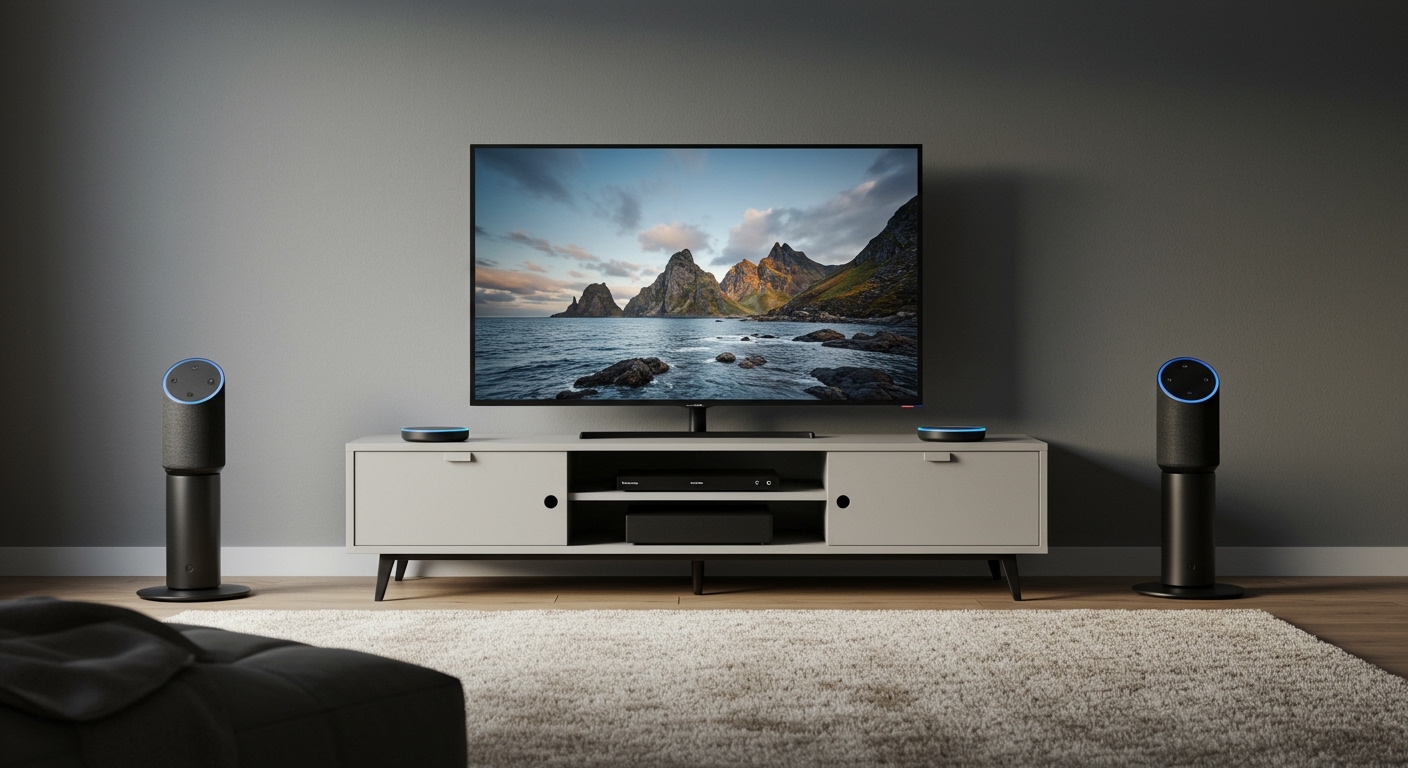
Why Proper Speaker Placement Changes Everything
Getting your sound system off the floor and into the “sweet spot” is the single most effective way to upgrade your home theater without buying new gear. Whether you want to save floor space or achieve that perfect 3D soundstage, learning how to hang bookshelf speakers correctly ensures both safety and acoustic precision.
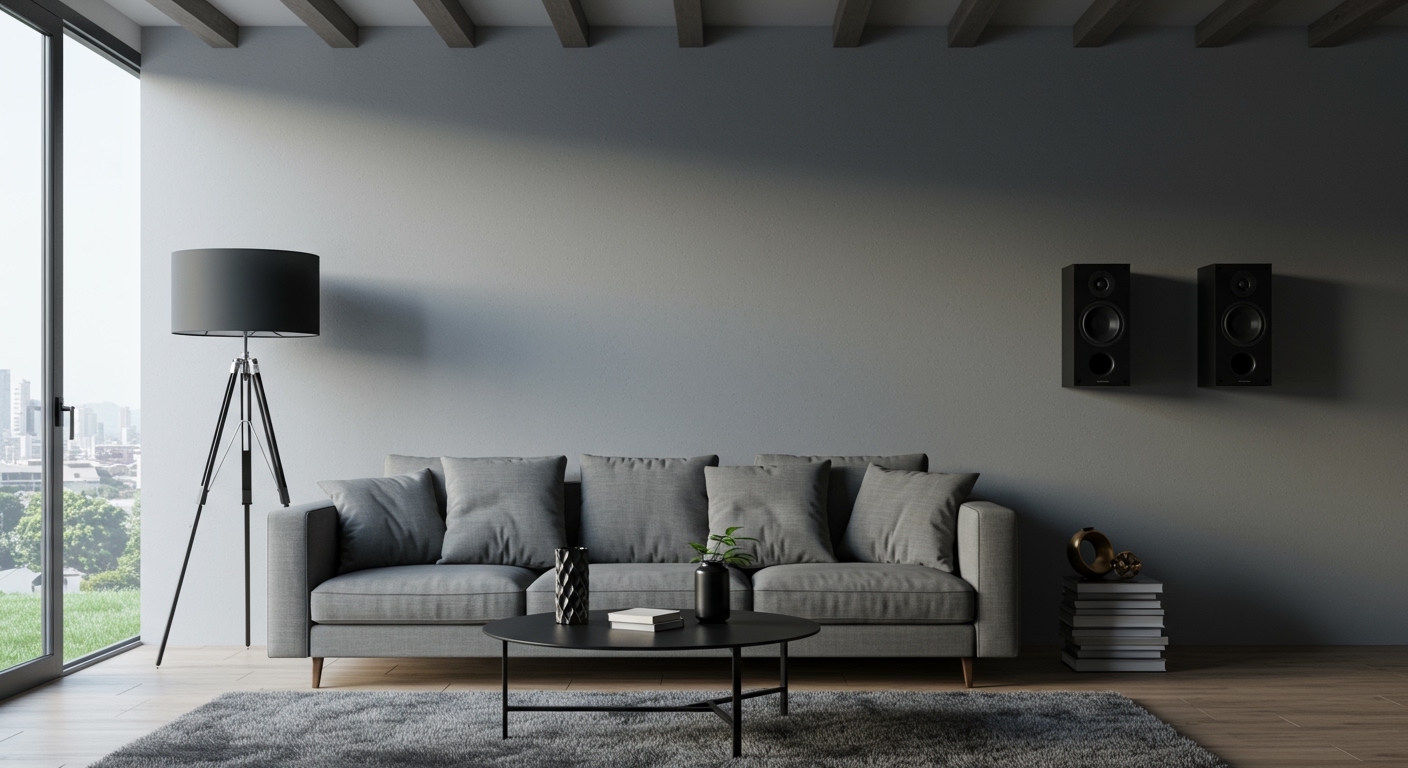
In this guide, we break down the professional methods for bookshelf speaker mounting so you can enjoy immersive audio without the clutter.
### 💡 Key Takeaways: Expert Summary Ear Level is King: Always aim to have the tweeters at ear height when seated for the clearest high-frequency response. Studs are Mandatory: Never rely on drywall alone; always secure mounts into wall studs or use heavy-duty toggle bolts. Decoupling Matters: Use rubber pads or isolation mounts to prevent wall vibrations from muddying your bass. Angle for Success: For rear surrounds, mount them 2-3 feet above ear level and tilt them downward.
Can You Wall Mount Bookshelf Speakers?
The short answer is: Yes, you can wall mount bookshelf speakers. Most modern speakers, including popular Klipsch bookshelf speakers, are designed with mounting in mind, featuring either threaded inserts or keyhole slots on the back.
However, how to mount bookshelf speakers depends heavily on their weight and port design. If your speakers are “rear-ported” (the hole is on the back), mounting them flush against a wall can choke the bass. In these cases, you need a bracket that provides at least 2-4 inches of clearance.
Choosing Your Mounting Method
There are three primary ways to elevate your audio:
- Wall Brackets: Best for permanent home theater setups.
- Ceiling Mounts: Ideal for Dolby Atmos or rooms with limited wall space.
- Speaker Stands: The safest option for heavy, high-end audiophile speakers.
Essential Tools and Materials
Before you start drilling, gather these professional-grade tools to ensure a clean and secure installation.
| Tool / Material | Purpose | Why It’s Important |
|---|---|---|
| Stud Finder | Locates wooden beams | Prevents the speaker from falling off the wall. |
| Spirit Level | Ensures the bracket is straight | Aesthetics and weight distribution. |
| Power Drill & Bits | Creating pilot holes | Necessary for driving screws into studs. |
| Toggle Bolts | Heavy-duty drywall anchors | Use only if a stud is unavailable (rated for 50lbs+). |
| Speaker Wire Concealer | Hiding cables | Provides a professional, “floating” look. |
| Rubber Bumpers | Vibration isolation | Prevents the speaker from rattling against the mount. |
How to Hang Bookshelf Speakers on Wall: Step-by-Step
Follow these steps to ensure your how to wall mount bookshelf speakers project is a success.
Step 1: Identify the Acoustic Sweet Spot
Don’t just guess where the speakers go. For a standard stereo setup, the speakers and your primary listening chair should form an equilateral triangle.
Height: Position the tweeter (the smaller driver) at ear level.
Distance: Keep speakers at least 6 feet apart for a wide soundstage.
Avoid Corners: Placing a speaker directly in a corner causes “bass boom,” which makes the audio sound muddy.
Step 2: Locate the Wall Studs
Using a stud finder, mark the edges of the wooden studs behind your drywall. How to mount bookshelf speakers to wall safely requires at least one screw to hit a solid stud. If you must mount to drywall, use zinc-alloy toggle bolts rather than plastic plug anchors.
Step 3: Attach the Mounting Brackets
Most bookshelf speaker mounting kits come in two parts: the wall plate and the speaker arm.
- Hold the wall plate against your mark and check for level.
- Drill pilot holes to prevent the wood stud from splitting.
- Secure the plate with heavy-duty lag screws.
Step 4: Secure the Speaker to the Mount
Depending on your model, you will use one of these three attachment styles:
Threaded Insert: Screw the mount directly into the pre-installed hole on the back of the speaker.
Clamping Mounts: These “grip” the sides of the speaker. They are perfect if you don’t want to drill holes into your speaker cabinets.
Keyhole Hook: Simple but less secure; best for very light speakers.
Step 5: Cable Management
Nothing ruins the look of how to hang bookshelf speakers like dangling wires. Use paintable D-line cable trunking to hide wires along the wall, or if you are comfortable with DIY, fish the wires behind the drywall for a completely invisible look.
How to Mount Bookshelf Speakers to Ceiling
If your room has large glass windows or an open floor plan, you might wonder how to mount bookshelf speakers on ceiling. This is a popular choice for Dolby Atmos height channels.
Structural Safety First
Ceiling mounting carries more risk due to gravity. Ensure your ceiling mount for bookshelf speakers is rated for at least double the weight of the speaker.
- Find the Joists: Never mount a speaker to ceiling drywall alone. You must find the ceiling joists.
- Use Safety Cables: In professional installs, we always use a steel safety wire. One end attaches to the speaker and the other to the joist. If the mount fails, the speaker won’t fall on someone’s head.
- Angle the Sound: Since the speakers are high up, use a mount with a 30-to-40-degree tilt capability to point the sound toward the seating area.
Why Proper Speaker Placement Changes Everything
Getting your sound system off the floor and into the “sweet spot” is the single most effective way to upgrade your home theater without buying new gear. Whether you want to save floor space or achieve that perfect 3D soundstage, learning how to hang bookshelf speakers correctly ensures both safety and acoustic precision.
In this guide, we break down the professional methods for bookshelf speaker mounting so you can enjoy immersive audio without the clutter.
### 💡 Key Takeaways: Expert Summary Ear Level is King: Always aim to have the tweeters at ear height when seated for the clearest high-frequency response. Studs are Mandatory: Never rely on drywall alone; always secure mounts into wall studs or use heavy-duty toggle bolts. Decoupling Matters: Use rubber pads or isolation mounts to prevent wall vibrations from muddying your bass. Angle for Success: For rear surrounds, mount them 2-3 feet above ear level and tilt them downward.
Can You Wall Mount Bookshelf Speakers?
The short answer is: Yes, you can wall mount bookshelf speakers. Most modern speakers, including popular Klipsch bookshelf speakers, are designed with mounting in mind, featuring either threaded inserts or keyhole slots on the back.
However, how to mount bookshelf speakers depends heavily on their weight and port design. If your speakers are “rear-ported” (the hole is on the back), mounting them flush against a wall can choke the bass. In these cases, you need a bracket that provides at least 2-4 inches of clearance.
Choosing Your Mounting Method
There are three primary ways to elevate your audio:
- Wall Brackets: Best for permanent home theater setups.
- Ceiling Mounts: Ideal for Dolby Atmos or rooms with limited wall space.
- Speaker Stands: The safest option for heavy, high-end audiophile speakers.
Essential Tools and Materials
Before you start drilling, gather these professional-grade tools to ensure a clean and secure installation.
| Tool / Material | Purpose | Why It’s Important |
|---|---|---|
| Stud Finder | Locates wooden beams | Prevents the speaker from falling off the wall. |
| Spirit Level | Ensures the bracket is straight | Aesthetics and weight distribution. |
| Power Drill & Bits | Creating pilot holes | Necessary for driving screws into studs. |
| Toggle Bolts | Heavy-duty drywall anchors | Use only if a stud is unavailable (rated for 50lbs+). |
| Speaker Wire Concealer | Hiding cables | Provides a professional, “floating” look. |
| Rubber Bumpers | Vibration isolation | Prevents the speaker from rattling against the mount. |
How to Hang Bookshelf Speakers on Wall: Step-by-Step
Follow these steps to ensure your how to wall mount bookshelf speakers project is a success.
Step 1: Identify the Acoustic Sweet Spot
Don’t just guess where the speakers go. For a standard stereo setup, the speakers and your primary listening chair should form an equilateral triangle.
Height: Position the tweeter (the smaller driver) at ear level.
Distance: Keep speakers at least 6 feet apart for a wide soundstage.
Avoid Corners: Placing a speaker directly in a corner causes “bass boom,” which makes the audio sound muddy.
Step 2: Locate the Wall Studs
Using a stud finder, mark the edges of the wooden studs behind your drywall. How to mount bookshelf speakers to wall safely requires at least one screw to hit a solid stud. If you must mount to drywall, use zinc-alloy toggle bolts rather than plastic plug anchors.
Step 3: Attach the Mounting Brackets
Most bookshelf speaker mounting kits come in two parts: the wall plate and the speaker arm.
- Hold the wall plate against your mark and check for level.
- Drill pilot holes to prevent the wood stud from splitting.
- Secure the plate with heavy-duty lag screws.
Step 4: Secure the Speaker to the Mount
Depending on your model, you will use one of these three attachment styles:
Threaded Insert: Screw the mount directly into the pre-installed hole on the back of the speaker.
Clamping Mounts: These “grip” the sides of the speaker. They are perfect if you don’t want to drill holes into your speaker cabinets.
Keyhole Hook: Simple but less secure; best for very light speakers.
Step 5: Cable Management
Nothing ruins the look of how to hang bookshelf speakers like dangling wires. Use paintable D-line cable trunking to hide wires along the wall, or if you are comfortable with DIY, fish the wires behind the drywall for a completely invisible look.
How to Mount Bookshelf Speakers to Ceiling
If your room has large glass windows or an open floor plan, you might wonder how to mount bookshelf speakers on ceiling. This is a popular choice for Dolby Atmos height channels.
Structural Safety First
Ceiling mounting carries more risk due to gravity. Ensure your ceiling mount for bookshelf speakers is rated for at least double the weight of the speaker.
- Find the Joists: Never mount a speaker to ceiling drywall alone. You must find the ceiling joists.
- Use Safety Cables: In professional installs, we always use a steel safety wire. One end attaches to the speaker and the other to the joist. If the mount fails, the speaker won’t fall on someone’s head.
- Angle the Sound: Since the speakers are high up, use a mount with a 30-to-40-degree tilt capability to point the sound toward the seating area.
How to Mount Klipsch Bookshelf Speakers
Klipsch speakers are famous for their high efficiency and copper-colored woofers. However, their rear-firing ports require specific care.
The 2-Inch Rule: When learning how to mount Klipsch bookshelf speakers, ensure there is a minimum of 2 inches (5cm) between the rear port and the wall. This allows the speaker to “breathe” and produce accurate bass.
Threaded Inserts: Most Klipsch Reference and Premiere models use a 1/4″-20 threaded insert. Ensure your mounting bracket includes this specific screw size.
Weight Considerations: Klipsch speakers often have heavy magnets. Ensure your bracket is rated for at least 15-20 lbs to prevent “neck droop” over time.
Common Mistakes to Avoid
In my 10 years of home theater consulting, I see the same three mistakes repeatedly:
Using Plastic Anchors: Standard plastic wall plugs will eventually pull out of the drywall due to the constant vibration of the speaker. Always use studs or toggle bolts.
Mounting Too High: Unless they are surround speakers, mounting near the ceiling ruins the stereo image. Keep your front L/R speakers at seated ear level.
Ignoring Wire Gauge: For runs over 20 feet, use 14-gauge oxygen-free copper (OFC) wire to prevent signal loss. For shorter runs, 16-gauge is sufficient.
Expert Pro-Tips for Better Sound
- Toe-In: Angle your speakers slightly inward toward the listener. This improves “imaging,” making it sound like the singer is standing right in front of you.
- Blu-Tack is Your Friend: If using a platform-style mount, put a small marble-sized piece of Blu-Tack on each corner of the speaker bottom. It prevents the speaker from sliding and provides excellent vibration isolation.
- Calibrate After Mounting: Once mounted, run your AV receiver’s “Auto Room Correction” (like Audyssey or YPAO). The wall placement will change the bass response, and the software can fix this digitally.
Frequently Asked Questions
(FAQs)
Can I mount bookshelf speakers on stands instead of walls?
Yes, and for many, this is the preferred method. Knowing how to mount bookshelf speakers on stands is easier as it requires no drilling. Stands allow you to move the speakers away from walls to reduce bass reflections, which often results in a “cleaner” sound.
Is it safe to drill holes into my speaker cabinet for mounting?
Generally, it is safe as long as you stay away from the internal electronics and crossover. However, drilling into the cabinet will void your warranty. If you are hesitant, use clamping-style wall mounts that hold the speaker by tension without any drilling.
How high should I hang my surround speakers?
For 5.1 or 7.1 systems, surround speakers should be mounted about 2 feet above ear level. This helps create a sense of “ambient” sound rather than the sound being beamed directly into your ear.
Can you hang bookshelf speakers with Command Strips?
Absolutely not. Command strips are not designed for the constant weight or the mechanical vibrations produced by speakers. Using them will almost certainly result in your speakers falling and being damaged.
Final Thoughts on Bookshelf Speaker Mounting
Mastering how to hang bookshelf speakers is a rewarding DIY project that clears floor space and optimizes your listening experience. By prioritizing wall studs, maintaining ear-level alignment, and using the right mounting hardware, you can create a professional-grade home theater setup.
Ready to transform your room? Start by measuring your listening height and choosing a high-quality bracket that matches your speaker’s weight. Your ears—and your floor space—will thank you.
Looking for more audio tips? Check out our guides on speaker wire selection and room acoustics to further refine your sound!