Master the Art of Speaker Installation: Expert Sound Placement
To learn how to hang outdoor speakers or indoor surround systems effectively, you must balance structural security with acoustic precision. The process involves selecting the right mounting brackets, locating wall studs for stability, and optimizing the “listening sweet spot” to ensure high-fidelity audio. Whether you are upgrading a patio or a home theater, professional mounting prevents equipment damage and eliminates messy wire clutter.
Key Takeaways (TL;DR)
Safety First: Always use stud finders to secure mounts into wood studs or use toggle bolts for drywall.
Acoustic Height: Position speakers at ear level or slightly above, tilted down 15–20 degrees.
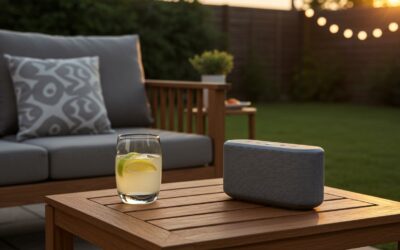
Outdoor Specifics: When learning how to hang outdoor speakers, always mount them under eaves to protect them from direct rain and UV rays.
Wire Management: Use CL2 or CL3 rated in-wall cables to comply with building codes and ensure fire safety.
Angle Matters: For surround sound, aim speakers toward the center of the seating area for a cohesive soundstage.
Essential Tools and Materials for Mounting
Before you begin, gather the necessary hardware. Using the wrong anchor is the leading cause of speaker “sag” or wall damage.
| Tool/Material | Purpose | Expert Recommendation |
|---|---|---|
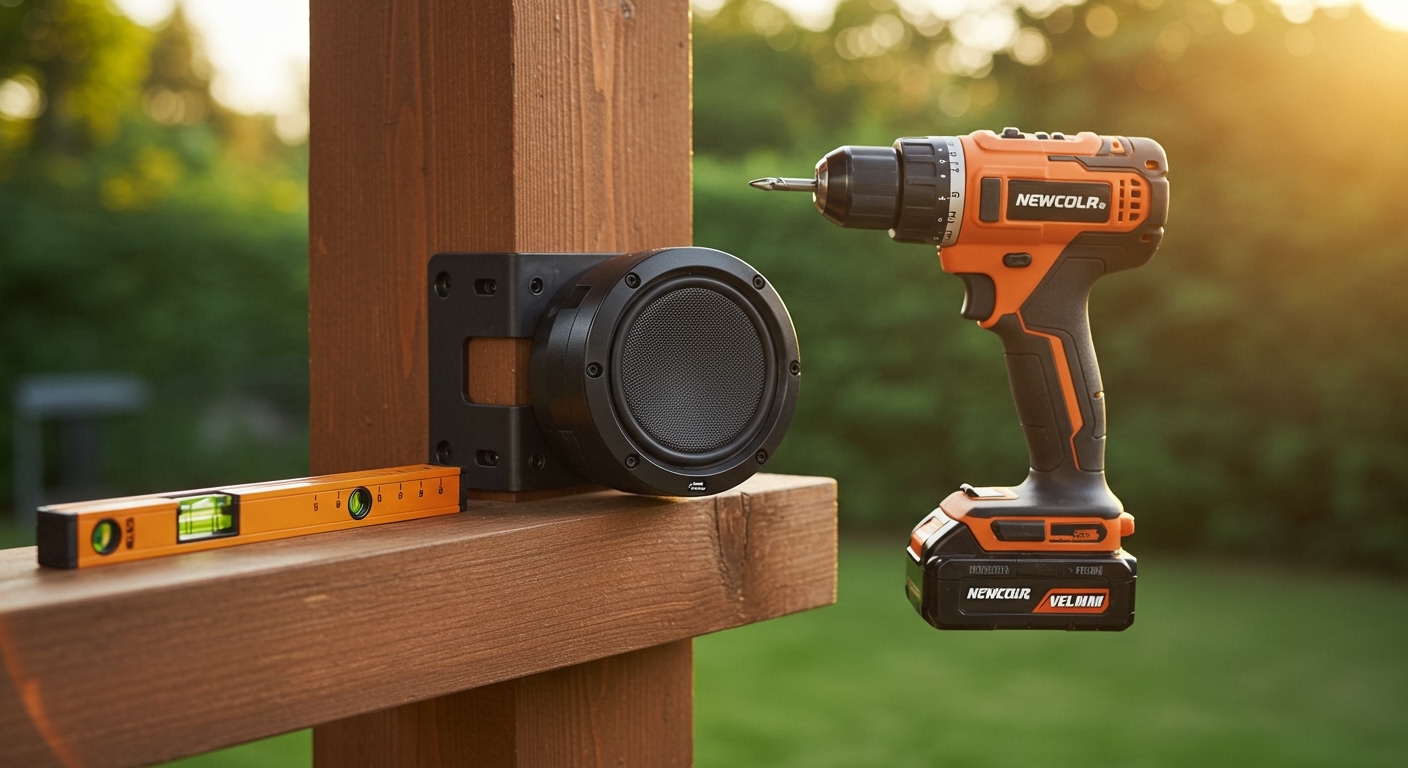
| Power Drill | Creating pilot holes and driving screws | 18V Cordless Drill |
| Stud Finder | Locating structural support behind drywall | Magnetic or Electronic sensor |
| Level | Ensuring brackets are perfectly horizontal | 9-inch Torpedo Level |
| Wall Anchors | Supporting weight in the absence of studs | Toggle Bolts (for heavy speakers) |
| Speaker Wire | Carrying audio signals | 14AWG or 16AWG Oxygen-Free Copper |
| Mounting Brackets | Holding the speaker to the wall | Universal Swivel Mounts |
Step 1: Planning Your Sound Stage and Placement
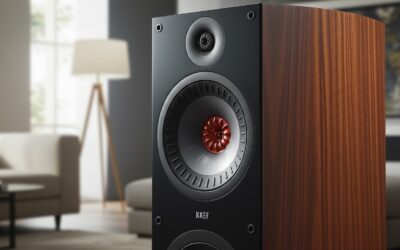
The most common mistake I see is people mounting speakers too high. This creates a “God voice” effect where sound feels like it is falling on you rather than surrounding you.
How to Hang Speakers in a Corner
Corners are excellent for bass reinforcement but can cause “muddiness.” If you are learning how to hang speakers in a corner, maintain a gap of at least 1-2 inches from the side walls to prevent excessive vibration. Use a corner-specific bracket that allows for a wide swivel range.
How to Hang Surround Sound Speakers
For a 5.1 or 7.1 setup, your side and rear speakers should be about 2 feet above ear level when seated. This creates a more diffuse, atmospheric sound. When figuring out how to hang surround speakers on wall, ensure the left and right channels are equidistant from your primary chair.
Step 2: Choosing the Right Mounting Hardware
Your choice of mount depends entirely on the speaker’s weight and the wall material.
Keyhole Slots: Common on small satellite speakers. These require a single screw and a plastic anchor.
Threaded Inserts: Most home theater speakers have a ¼-20 threaded hole on the back. These require articulating wall mounts.
Large PA Speakers: If you need to know how to hang pa speakers, you must use heavy-duty steel yokes or “U-brackets” bolted directly into masonry or double-studs.
Step 3: Preparing the Wall and Locating Studs
Never trust drywall alone to hold a heavy speaker. Over time, the vibration from the bass will loosen standard plastic anchors.
How to Hang Speakers on Drywall
- Use a Stud Finder: Move the device horizontally until it signals a stud. Mark the edges and the center.
- No Stud? Use Toggle Bolts: If a stud isn’t available exactly where you need it, use toggle bolts (butterfly anchors). They expand behind the wall and can support up to 50 lbs.
- Avoid Utilities: Check for electrical wires or plumbing pipes before drilling. I recommend using a “live wire” detector feature found on many modern stud finders.
Step 4: Installing the Brackets
Once your marks are leveled and your holes are drilled, it is time for the physical installation.
- Drill Pilot Holes: Use a bit slightly smaller than your screw diameter. This prevents the wood stud from splitting.
- Secure the Base: Screw the wall portion of the bracket into the wall. Pro Tip: Use a level one last time before tightening the screws completely.
- Attach the Speaker Plate: Fix the secondary part of the bracket to the back of the speaker. Ensure it is tight to prevent rattling at high volumes.
Step 5: Wiring and Cable Management
Visible wires ruin the aesthetic of a professional install. When learning how to hang up surround sound speakers, you have two main options for wires.
In-Wall Wiring (The Pro Way)
If you are comfortable cutting small holes in your drywall, you can fish the wires through the wall. Always use CL3-rated wire, which has a fire-resistant jacket. This is critical for insurance compliance.
External Raceways (The Easy Way)
If you are learning how to hang speakers in garage or rental units, use paintable cable raceways. These plastic channels stick to the wall and hide the wires. You can paint them to match your wall color for a “invisible” look.
Step 6: Specialized Installation Scenarios
How to Hang Outdoor Speakers
Outdoor environments are harsh. When installing outdoor speakers, follow these three rules:
Angle Downward: Tilt the speaker face down slightly. This prevents water from pooling in the driver cone.
Use Stainless Steel Hardware: Standard screws will rust within one season. Only use stainless steel or galvanized mounting hardware.
Drip Loops: Create a small loop in the wire before it enters the wall. This ensures rainwater drips off the wire rather than running into your house.
How to Hang Speakers in a Garage
Garages often have high ceilings and hard surfaces that cause echoes. To optimize how to hang speakers in garage, mount them at a height of 7-8 feet but tilt them sharply toward your workbench or gym area. Use heavy-duty brackets as garage doors and power tools create significant vibrations that can loosen flimsy mounts.
How to Hang Speakers Without Mounts
If you cannot drill into the walls (common in apartments), consider floating shelves or adhesive-backed heavy-duty cleats. However, I only recommend this for speakers under 5 lbs. For anything heavier, a dedicated floor stand is safer than a “no-drill” wall solution.
Expert Tips for Perfect Audio
The 60-Degree Rule: For the best stereo imaging, the distance between the two front speakers should be roughly the same as the distance from each speaker to your seat.
Decoupling: If your speakers vibrate against the wall, place a small piece of rubber foam or blu-tack between the bracket and the wall to dampen the energy.
Calibration: After hanging, use your receiver’s Auto-EQ (like Audyssey or Dirac) to adjust for the new wall-mounted acoustics. Wall mounting naturally boosts bass, which may need to be dialed back.
Common Mistakes to Avoid
- Ignoring Weight Limits: Always check the bracket’s weight rating. A falling speaker is a safety hazard for children and pets.
- Mounting Too High: Avoid the “TV above the fireplace” mistake. Sound should be at ear level for the most realistic dialogue and music.
- Wrong Wire Gauge: For runs longer than 50 feet, use 14AWG wire. Using thin 18AWG wire over long distances results in power loss and weak bass.
- Overtightening: When mounting to drywall, overtightening can crush the gypsum core, weakening the anchor’s hold.
Frequently Asked Questions
(FAQs)
Can I hang any speaker on the wall?
Most speakers can be wall-mounted, but they must have either built-in mounting points (threaded inserts or keyholes) or be small enough to fit on a side-clamping bracket. If a speaker is “rear-ported” (it has a hole in the back), leave at least 2 inches of space between the speaker and the wall to allow the bass to breathe.
How do I hide speaker wires without cutting the wall?
The best way to hide wires without cutting into drywall is using self-adhesive cable raceways or “D-Line” trunking. These can be painted to match your wall color. Alternatively, you can use flat adhesive speaker wire that sticks to the wall and can be covered with a thin layer of joint compound and paint.
Is it safe to hang speakers on drywall without a stud?
Yes, it is safe as long as you use heavy-duty toggle bolts or zinc self-drilling anchors. Do not use the cheap plastic “expansion” anchors that come in the box; they are prone to pulling out. For speakers over 20 lbs, I strongly recommend finding at least one stud.
What is the best height to hang outdoor speakers?
The ideal height for outdoor speakers is between 8 and 10 feet. This allows the sound to project over the noise of wind or conversation without being blocked by furniture or people. Ensure they are tucked under an eave for maximum longevity.
Conclusion
Learning how to hang outdoor speakers and indoor systems is a rewarding DIY project that significantly upgrades your home entertainment. By focusing on stud placement, using the correct toggle bolts, and following acoustic alignment principles, you ensure a setup that is both safe and sonically superior.
Ready to transform your space? Start by mapping out your “listening triangle” and selecting a high-quality articulating mount today. With the right tools and these expert steps, your home theater or patio will sound better than ever.