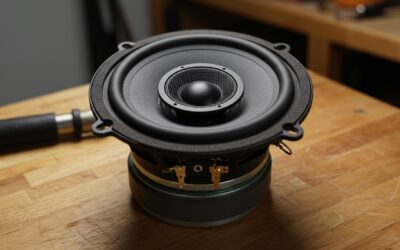
Transform Your Space: The Ultimate Guide to Stealth Audio
Nothing ruins a minimalist aesthetic faster than a clutter of bulky black boxes and a “spaghetti” mess of tangled wires. You can effectively how to hide bookshelf speakers and other audio gear by using acoustically transparent fabrics, integrating units into custom furniture, or installing in-wall speakers that blend seamlessly with your decor.
This guide provides a professional blueprint for achieving high-fidelity sound without the visual clutter, ensuring your home remains a sanctuary of style and sound.
🚀 Expert Summary: Key Takeaways for Stealth Audio
Acoustic Transparency is Non-Negotiable: Always use speaker cloth or open-weave fabrics to prevent muffled audio and frequency loss.
Ventilation Matters: Electronic components and speakers generate heat; ensure at least 2-3 inches of clearance for airflow in enclosed cabinets.
In-Wall is Permanent: How to hide in wall speakers requires cutting drywall, so map your studs and electrical lines using a high-quality stud finder first.
Camouflage Techniques: Use rock speakers for outdoors and picture frame speakers for indoor art-centric galleries.
Wire Management: Use ghost wire (flat adhesive wire) or raceways to hide the “trail” leading to your hidden equipment.
| Method | Best For | Installation Difficulty | Impact on Sound Quality |
|---|---|---|---|
| Acoustic Fabric Panels | Bookshelf speakers in cabinets | Low | Minimal (0.5dB loss) |
| Furniture Modification | Tower & Floor standing speakers | Medium | Low to Moderate |
| In-Wall/In-Ceiling | Home Theater & Multi-room | High | Minimal (if calibrated) |
| Landscape Camouflage | Patios and Gardens | Low | Low |
| Artistic Covers | Living rooms and Bedrooms | Medium | Moderate |
Step 1: How to Hide Bookshelf Speakers in Cabinets and Shelves
The most common challenge for homeowners is figuring out how to hide bookshelf speakers within existing furniture without ruining the acoustics. Standard wooden cabinet doors block high-frequency sound waves, resulting in a “muddy” listening experience.
1.1 Swap Solid Panels for Acoustic Cloth
To maintain sound clarity, you must replace the center panel of your cabinet doors. Use a utility knife to remove the wooden insert and staple acoustically transparent speaker cloth in its place. This allows sound to pass through while keeping the speaker invisible.
1.2 Optimize Placement for “Toe-In”
Even when hidden, speakers need proper positioning. Ensure your bookshelf speakers are angled slightly toward the primary listening position (the “sweet spot”). Use foam isolation pads underneath the speakers to prevent the cabinet wood from vibrating and distorting the bass.
1.3 Manage the Rear Port
Many bookshelf speakers are “rear-ported,” meaning they move air out of the back. If you are placing them in a tight shelf, leave at least 3-5 inches of space between the back of the speaker and the wall to avoid “boomy” or distorted low-end frequencies.
Step 2: How to Hide Floor Standing Speakers and Tower Units
Large audio equipment presents a bigger visual challenge. Learning how to hide floor standing speakers or how to hide tower speakers often involves using room elements as natural camouflage.
2.1 Utilize Decorative Room Dividers
Folding screens or shoji screens are excellent for concealing large tower speakers. These screens are often made of thin paper or fabric that allows sound to penetrate with minimal interference. Position the speakers 6 inches behind the screen to prevent physical contact during high-volume playback.
2.2 Strategic Greenery and Plants
Large, leafy plants like a Fiddle Leaf Fig or Monstera can effectively mask the silhouette of a floor standing speaker. Be careful not to let leaves touch the speaker cones, as this can cause buzzing sounds. Use a heavy-duty plant stand to elevate the greenery slightly above the speaker height.
2.3 Custom “Speaker Scrims”
For a professional look, you can build a three-sided wooden frame covered in black speaker mesh. Slide this over your tower speakers like a sleeve. This mimics the look of a modern decorative pillar while allowing 360-degree sound dispersion.
Step 3: Professional Techniques for How to Hide In Wall Speakers
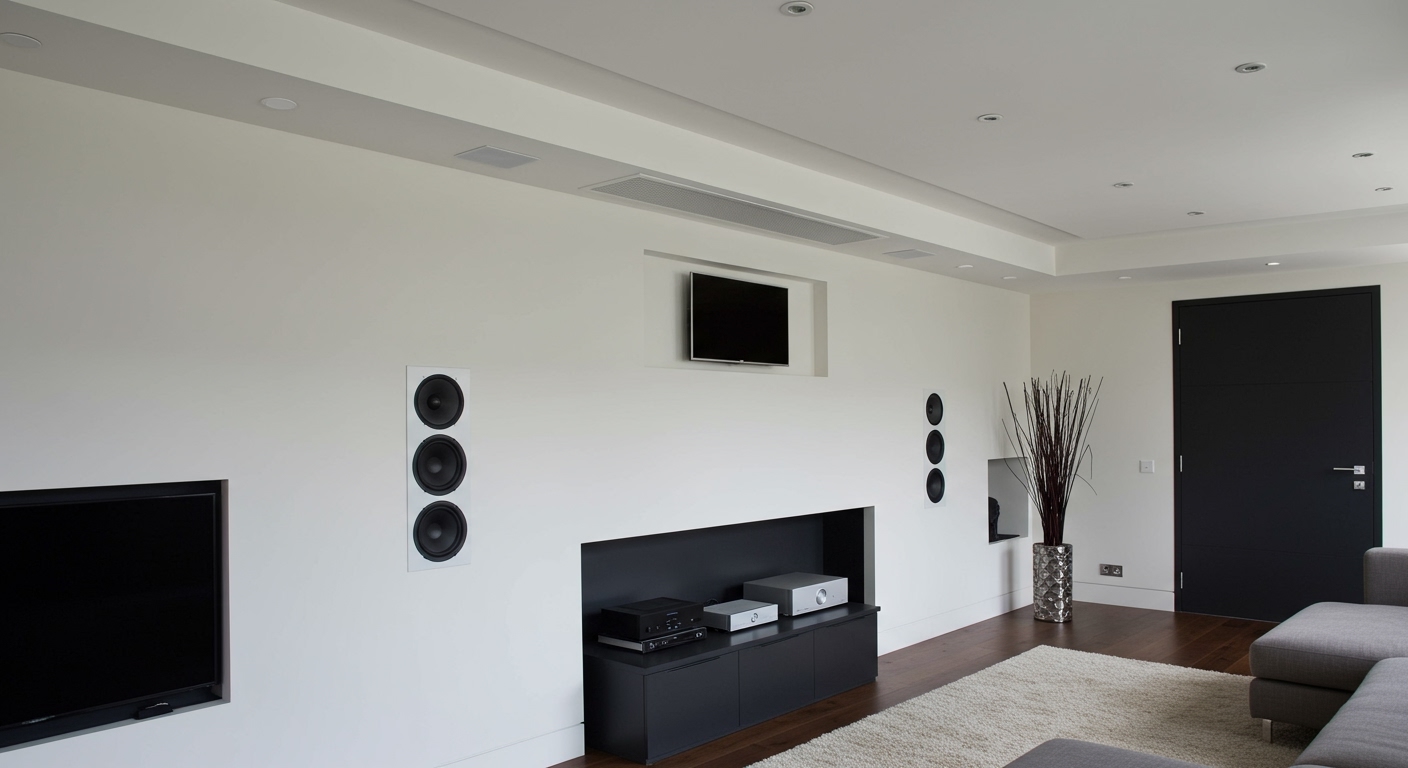
If you are undergoing a renovation, the cleanest solution is learning how to hide speakers in wall structures. This creates a completely flush look that is popular in high-end home theater designs.
3.1 Precise Cutting and Framing
To master how to hide in wall speakers, start by using the manufacturer’s provided template. Use a drywall saw to cut the opening between studs. Avoid placing speakers directly next to electrical outlets to prevent 60Hz hum or electromagnetic interference in your audio lines.
3.2 Paint the Grilles for Total Concealment
Most in-wall speakers come with white metal grilles. To make them truly invisible, use spray paint that matches your wall color precisely.
Pro Tip: Thin the paint slightly and apply multiple light coats.
Warning: If the paint is too thick, it will clog the perforations in the grille, severely muffling the sound.
3.3 Use Back Boxes for Sound Control
Installing speakers in wall cavities can cause sound to bleed into adjacent rooms. Install an acoustic back box or use R-13 fiberglass insulation behind the speaker to direct the sound forward into the listening room and improve bass response.
Step 4: How to Hide Home Theater Speakers and TV Audio
A full surround sound setup often involves five to seven speakers. Knowing how to hide speakers in home theatre environments requires a mix of furniture integration and architectural trickery.
4.1 Conceal the Center Channel
The center channel is critical for dialogue. You can how to hide tv speakers by placing the center channel inside a media console with a perforated metal front. This ensures that voices feel like they are coming directly from the screen rather than below it.
4.2 Hide Surround Speakers in End Tables
For the rear channels, look for hollowed-out end tables or “speaker-ready” furniture. Many modern brands now design side tables with built-in fabric sides specifically for how to hide home theater speakers.
4.3 Subwoofer Camouflage
Subwoofers are bulky and hard to hide. However, because bass is non-directional, you can hide a subwoofer:
Under a large couch (if using a “slim” subwoofer model).
Inside a ventilated decorative trunk.
Behind a floor-length curtain or drapery.
Step 5: How to Hide Outdoor Speakers for Seamless Entertainment
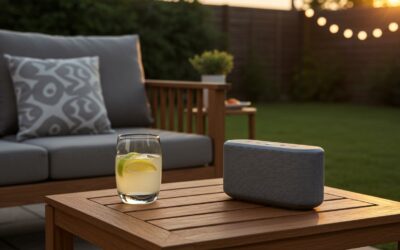
Outdoor audio often looks out of place in a natural garden. Learning how to hide outdoor speakers involves choosing hardware designed to mimic nature.
5.1 Rock and Planter Speakers
The most effective way to hide outdoor speakers is to use “rock speakers.” These are weather-resistant drivers housed in fiberglass shells that look like granite or lava rocks. Place them among real stones or in flower beds to blend them into the landscape.
5.2 Under-Eave Mounting
If you have a deck, mount small satellite speakers under the eaves or soffits. Paint the speaker housing to match the trim of your house. This keeps the hardware out of the direct line of sight while providing excellent sound coverage for the patio.
Essential Tools and Materials for Hidden Audio
| Category | Recommended Items | Purpose |
|---|---|---|
| Fabric | Guilford of Maine Acoustic Cloth | Covering cabinet fronts and DIY frames |
| Wiring | 14-Gauge CL2 Rated Wire | In-wall safety and signal integrity |
| Tools | Drywall Saw & Stud Finder | Essential for in-wall installations |
| Finishing | Paintable Caulking | Sealing gaps around in-wall grilles |
| Hardware | Isolation Pads | Decoupling speakers from furniture |
Expert Tips for Maintaining High-Fidelity Sound
- Avoid “The Box Effect”: Placing a speaker deep inside a wooden cubby creates a “megaphone” effect that distorts the sound. Always pull the speaker’s front edge flush with the front of the shelf.
- Calibrate After Hiding: Once your speakers are hidden, use an AV Receiver with Room Correction (like Audyssey or Dirac Live). The software will automatically adjust the EQ to compensate for any fabric or furniture blocking the sound.
- Use High-Quality Wire: When hiding wires behind baseboards or inside walls, use oxygen-free copper (OFC) wire. Since it’s hard to replace hidden wires, you want a cable that won’t corrode over time.
- Heat Management: If you are hiding an amplifier along with the speakers, install a USB-powered cooling fan in the back of the cabinet to prevent equipment failure.
Common Mistakes to Avoid
Using Regular Fabric: Never use heavy velvet or tightly woven cotton. These materials act as low-pass filters, effectively “killing” your treble.
Ignoring Vibration: A hidden speaker that vibrates against a cabinet door will create an annoying rattling sound. Use Blue-Tack or rubber feet to secure the speaker.
Blocking the IR Sensor: If your speakers are powered (active), don’t cover the Infrared (IR) receiver if you use a remote. You may need an IR Repeater kit to send signals through solid cabinet doors.
Placing Subwoofers in Corners: While it hides the sub, “corner loading” can make the bass sound boomy and undefined. Experiment with the “subwoofer crawl” before finalizing a hidden spot.
Frequently Asked Questions (FAQs)
Does hiding speakers affect the sound quality?
If done correctly using acoustically transparent materials, the impact is negligible. However, placing speakers behind solid wood, glass, or thick plastic will significantly muffle the audio and can lead to overheating.
Can I hide my speakers behind a painting?
Yes, but only if the “canvas” is actually printed acoustic fabric. Standard oil or acrylic paintings on canvas are too dense and will block high-frequency sounds. Several companies specialize in printing custom art onto speaker-friendly materials.
How do I hide the wires if I can’t go inside the walls?
Use flat adhesive speaker wire (often called Ghost Wire). You can stick it to the wall, paint over it, and it becomes virtually invisible. Alternatively, use D-Line raceways along the top of your baseboards.
What is the best fabric for hiding speakers?
The industry standard is polyolefin or polyester-based acoustic cloth. A simple test is to hold the fabric to your mouth and try to breathe through it; if you feel no resistance, it is likely safe for audio use.
Are in-wall speakers as good as bookshelf speakers?
Modern in-wall speakers from reputable brands like Sonos, Klipsch, or Bowers & Wilkins offer incredible performance. However, they lack the physical cabinet volume of a bookshelf speaker, so they often require a dedicated subwoofer to handle the low-end frequencies.
Conclusion: Achieving the Invisible Soundstage
Mastering how to hide bookshelf speakers and other audio components allows you to enjoy a premium cinema experience without sacrificing your interior design. Whether you choose the DIY route of modifying cabinets with acoustic cloth or the professional path of in-wall speaker installation, the key is balancing aesthetics with acoustic physics.
Start by auditing your room’s layout, selecting the right concealment method from our comparison table, and always prioritizing ventilation and acoustic transparency. Your ears—and your eyes—will thank you.
Ready to upgrade your home audio? Explore our other guides on smart home integration or leave a comment below with your specific room challenges!