Why Learning How to Install Aftermarket Door Speakers Changes Everything
Tired of muddy vocals and distorted bass from your factory car audio? Learning how to install aftermarket door speakers is the most effective DIY project to instantly upgrade your driving experience. By following a systematic approach, you can achieve professional-grade sound quality without the expensive shop labor fees.
### 💡 Expert Summary: Quick Takeaways Difficulty Level: Moderate (2/5). Requires basic hand tools and patience with plastic clips. Time Investment: Approximately 1-2 hours for a pair of front door speakers. Core Benefit: Massive improvement in clarity, frequency response, and volume compared to “paper-cone” factory units. Critical Tip: Always use vehicle-specific wiring harnesses to avoid cutting your factory wires and voiding warranties.
Essential Tools and Materials for Speaker Installation
Before you begin learning how to install new door speakers, gather your equipment. Having the right tools prevents broken plastic clips and stripped screws.
| Tool/Material | Purpose | Expert Recommendation |
|---|---|---|
| Panel Removal Tool | Pops door clips without scratching paint. | Nylon/Plastic sets are safer than metal. |
| Screwdriver Set | Removes hidden screws in door handles/armrests. | Use a magnetic tip to avoid losing screws. |
| Wiring Harness Adapters | Connects new speakers to factory plugs. | Brand: Metra or Scosche. |
| Sound Deadening Mats | Reduces door vibrations and improves bass. | Dynamat or Noico (80 mil thickness). |
| Electrical Tape/Heat Shrink | Insulates wire connections. | 3M Super 33+ for long-term durability. |
| Speaker Brackets | Adapts aftermarket speakers to factory holes. | Often included with high-end speakers. |
Step 1: Prepare the Vehicle and Disconnect Power
Disconnect the negative terminal of your car battery. This is a non-negotiable safety step when learning how to install front door car speakers to prevent short circuits or blown fuses.
Once the power is cut, ensure you have plenty of space to open the doors fully. Roll the windows down completely; this provides more leverage and prevents the glass from being damaged while you work inside the door cavity.
Step 2: Remove the Door Panels Carefully
Removing the panel is often the most intimidating part of how to install aftermarket speakers, but it is straightforward if you know where the “hidden” fasteners are.
Locate Hidden Screws
Most modern vehicles hide screws behind small plastic covers. Check these common locations:
- Behind the interior door release handle.
- Inside the “pull cup” or armrest grip.
- Along the very bottom edge of the door panel.
Pop the Retaining Clips
Insert your nylon panel tool between the door skin and the metal frame. Gently pry until you hear a “pop.” Work your way around the perimeter of the door until the panel is loose.
Disconnect Electronics
Once the panel is loose, do not pull it away forcefully. Reach behind to unplug the power window switches, lock controls, and the door latch cable. Set the panel aside in a safe, clean area (like a backseat or a workbench) to avoid scratches.
Why Learning How to Install Aftermarket Door Speakers Changes Everything
Tired of muddy vocals and distorted bass from your factory car audio? Learning how to install aftermarket door speakers is the most effective DIY project to instantly upgrade your driving experience. By following a systematic approach, you can achieve professional-grade sound quality without the expensive shop labor fees.
### 💡 Expert Summary: Quick Takeaways Difficulty Level: Moderate (2/5). Requires basic hand tools and patience with plastic clips. Time Investment: Approximately 1-2 hours for a pair of front door speakers. Core Benefit: Massive improvement in clarity, frequency response, and volume compared to “paper-cone” factory units. Critical Tip: Always use vehicle-specific wiring harnesses to avoid cutting your factory wires and voiding warranties.
Essential Tools and Materials for Speaker Installation
Before you begin learning how to install new door speakers, gather your equipment. Having the right tools prevents broken plastic clips and stripped screws.
| Tool/Material | Purpose | Expert Recommendation |
|---|---|---|
| Panel Removal Tool | Pops door clips without scratching paint. | Nylon/Plastic sets are safer than metal. |
| Screwdriver Set | Removes hidden screws in door handles/armrests. | Use a magnetic tip to avoid losing screws. |
| Wiring Harness Adapters | Connects new speakers to factory plugs. | Brand: Metra or Scosche. |
| Sound Deadening Mats | Reduces door vibrations and improves bass. | Dynamat or Noico (80 mil thickness). |
| Electrical Tape/Heat Shrink | Insulates wire connections. | 3M Super 33+ for long-term durability. |
| Speaker Brackets | Adapts aftermarket speakers to factory holes. | Often included with high-end speakers. |
Step 1: Prepare the Vehicle and Disconnect Power
Disconnect the negative terminal of your car battery. This is a non-negotiable safety step when learning how to install front door car speakers to prevent short circuits or blown fuses.
Once the power is cut, ensure you have plenty of space to open the doors fully. Roll the windows down completely; this provides more leverage and prevents the glass from being damaged while you work inside the door cavity.
Step 2: Remove the Door Panels Carefully
Removing the panel is often the most intimidating part of how to install aftermarket speakers, but it is straightforward if you know where the “hidden” fasteners are.
Locate Hidden Screws
Most modern vehicles hide screws behind small plastic covers. Check these common locations:
- Behind the interior door release handle.
- Inside the “pull cup” or armrest grip.
- Along the very bottom edge of the door panel.
Pop the Retaining Clips
Insert your nylon panel tool between the door skin and the metal frame. Gently pry until you hear a “pop.” Work your way around the perimeter of the door until the panel is loose.
Disconnect Electronics
Once the panel is loose, do not pull it away forcefully. Reach behind to unplug the power window switches, lock controls, and the door latch cable. Set the panel aside in a safe, clean area (like a backseat or a workbench) to avoid scratches.
Step 3: Remove the Factory Speaker
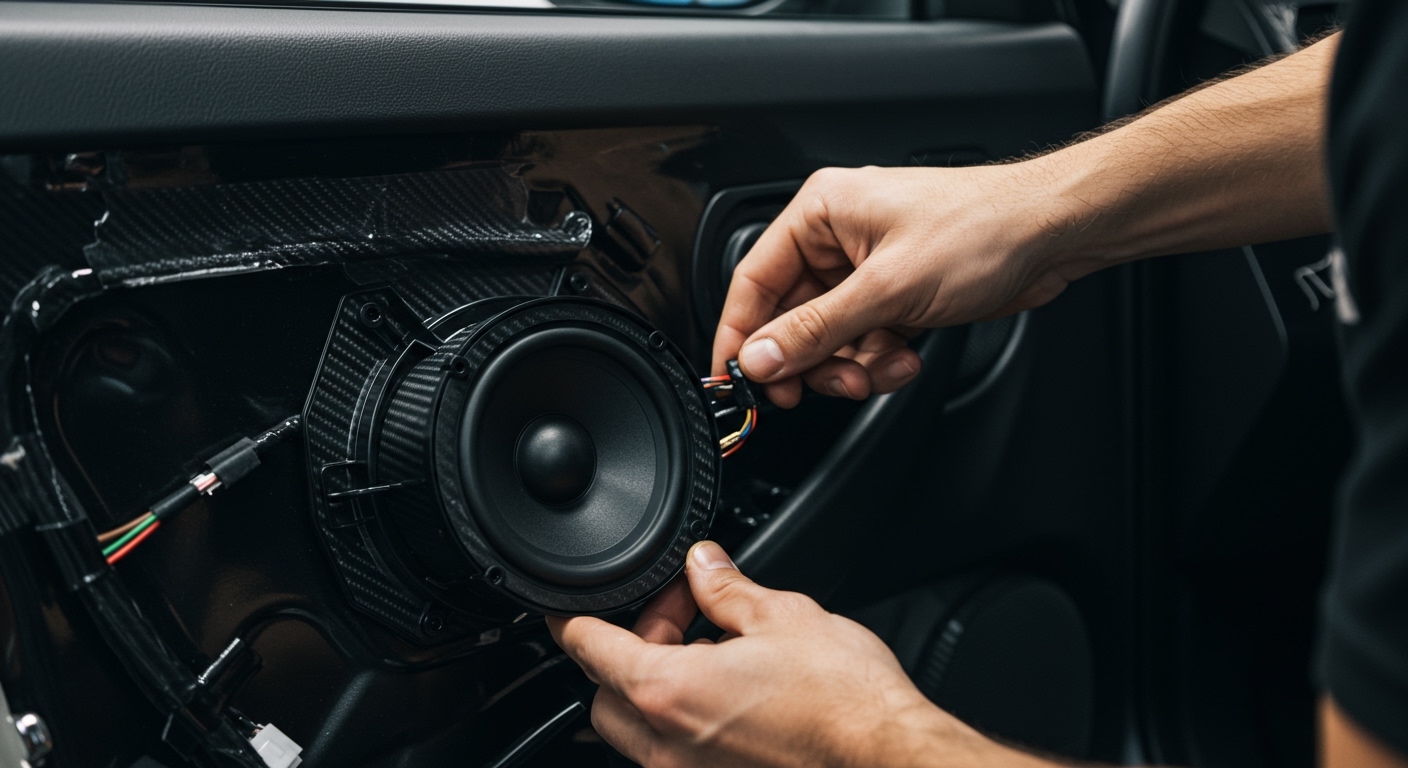
Now that the door’s “skeleton” is exposed, you can see the factory unit. Most factory speakers are held in by three or four screws or, in some cases, rivets.
For Screws: Simply unfasten them and pull the speaker out.
For Rivets: You will need a power drill to carefully drill out the center of the rivet.
Unplug the harness: Squeeze the plastic tab on the factory connector to release it from the speaker.
Step 4: Prepare the New Aftermarket Speaker
This is where you apply the core principles of how to install new speakers for maximum longevity.
Install the Mounting Bracket
Aftermarket speakers are rarely the exact same shape as factory ones. Secure your adapter bracket to the door frame first. If the bracket is plastic, consider adding a thin strip of foam tape to the back to prevent “plastic-on-metal” rattling.
Connect the Wiring Harness
I highly recommend using a vehicle-specific wiring adapter. One end plugs into your car’s factory plug, and the other has “slides” that fit onto the terminals of your new speaker.
Large Terminal: Usually Positive (+).
Small Terminal: Usually Negative (-).
If you must cut and splice, ensure you maintain proper polarity. If speakers are wired “out of phase,” they will cancel each other’s bass, resulting in a thin, weak sound.
Step 5: Mount the Speaker and Test
Secure the speaker into the bracket using the provided screws. Before you put the door panel back on, you must verify that everything works.
- Reconnect the car battery temporarily.
- Turn on the head unit and play a track you know well.
- Listen for clarity and ensure the speaker isn’t “farting” or rattling against the bracket.
- Crucial Check: Roll the window up and down to ensure the back of the speaker or the wiring doesn’t interfere with the window track.
Step 6: Apply Sound Deadening (The Pro Secret)
If you want to know how to install speakers like a professional, don’t skip sound treatment. Apply small squares of butyl-based deadening mat to the metal surface directly behind the speaker.
This reduces the “back wave” of the speaker, which significantly tightens the mid-bass response. Even a 6×6 inch square can make a $100 pair of speakers sound like a $300 set.
Step 7: Reassemble the Door Panel
Reverse the removal process to finish your how to install aftermarket door speakers project.
Reconnect the window and lock switches.
Hook the top of the door panel over the window track first.
Align the plastic clips with their holes and give the panel a firm “thump” with the palm of your hand to snap them back in.
Reinstall all hidden screws.
Expert Advice: Common Mistakes to Avoid
In my years of upgrading car audio, I’ve seen these three mistakes ruin a perfectly good how to install front door speakers project:
- Stripping the Screw Holes: Door metal is thin. Hand-tighten your screws rather than using a high-torque impact driver.
- Ignoring the Foam Ring: Use “Fast Rings” or foam gaskets between the speaker and the door panel. This directs the sound through the grille rather than letting it leak into the door cavity.
- Forgetting the Crossover: If you are installing component speakers (separate tweeter and woofer), you must use the included crossover box. Connecting a tweeter directly to full-range power will blow it instantly.
How to Install Speakers in House (Quick Guide)
While most of this guide focuses on car audio, many users ask how to install home speakers or how to install speakers in house walls. The logic is similar but the tools differ.
For In-Wall/Ceiling Speakers:
Step 1: Use a stud finder to ensure your mounting location is clear of wood or electrical wires.
Step 2: Use the provided cardboard template to trace the cutout.
Step 3: Use a drywall saw to cut the hole.
Step 4: Run CL2 or CL3 rated speaker wire (which is fire-rated for in-wall use) from your receiver to the hole.
Step 5: Connect the wires and tighten the “dog-leg” brackets that clamp the speaker to the drywall.
Frequently Asked Questions
(FAQs)
Do I need an amplifier to install aftermarket speakers?
Not necessarily. Most aftermarket speakers can run off the power from your factory radio. However, if you choose high-end speakers with a high RMS power rating, an external amplifier will be required to reach their full potential.
What is the difference between Coaxial and Component speakers?
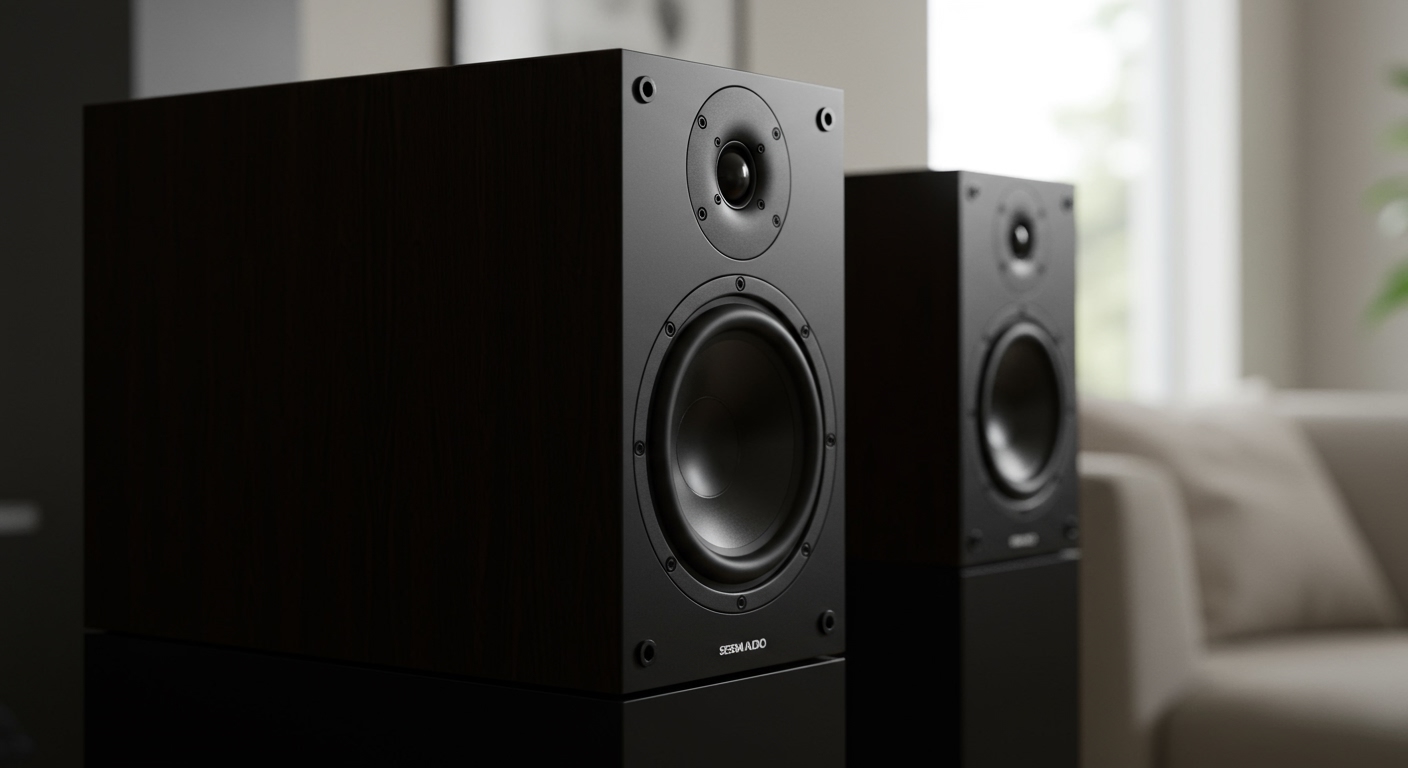
Coaxial speakers have the tweeter mounted in the center of the woofer (all-in-one). They are easier for those learning how to install front door car speakers. Component speakers separate the tweeter and woofer for better “soundstage” but require more complex mounting and wiring.
Will installing new speakers void my car warranty?
Generally, no. Under the Magnuson-Moss Warranty Act, a dealer cannot void your entire warranty because you changed speakers. However, if your DIY wiring causes an electrical fire, that specific damage won’t be covered.
How do I know what size speakers fit my car?
The most common sizes are 6.5-inch and 6×9-inch. Use an online fitment guide (like Crutchfield) to enter your year, make, and model before purchasing.
Conclusion: Enjoy Your New Soundscape
Learning how to install aftermarket door speakers is a rewarding weekend project that provides immediate gratification. By focusing on solid mounting, proper polarity, and a bit of sound deadening, you can achieve a high-fidelity environment that makes every commute enjoyable.
Ready to take the next step? If your new speakers still feel a bit quiet, consider researching how to install a compact under-seat subwoofer to fill in those low-end frequencies!