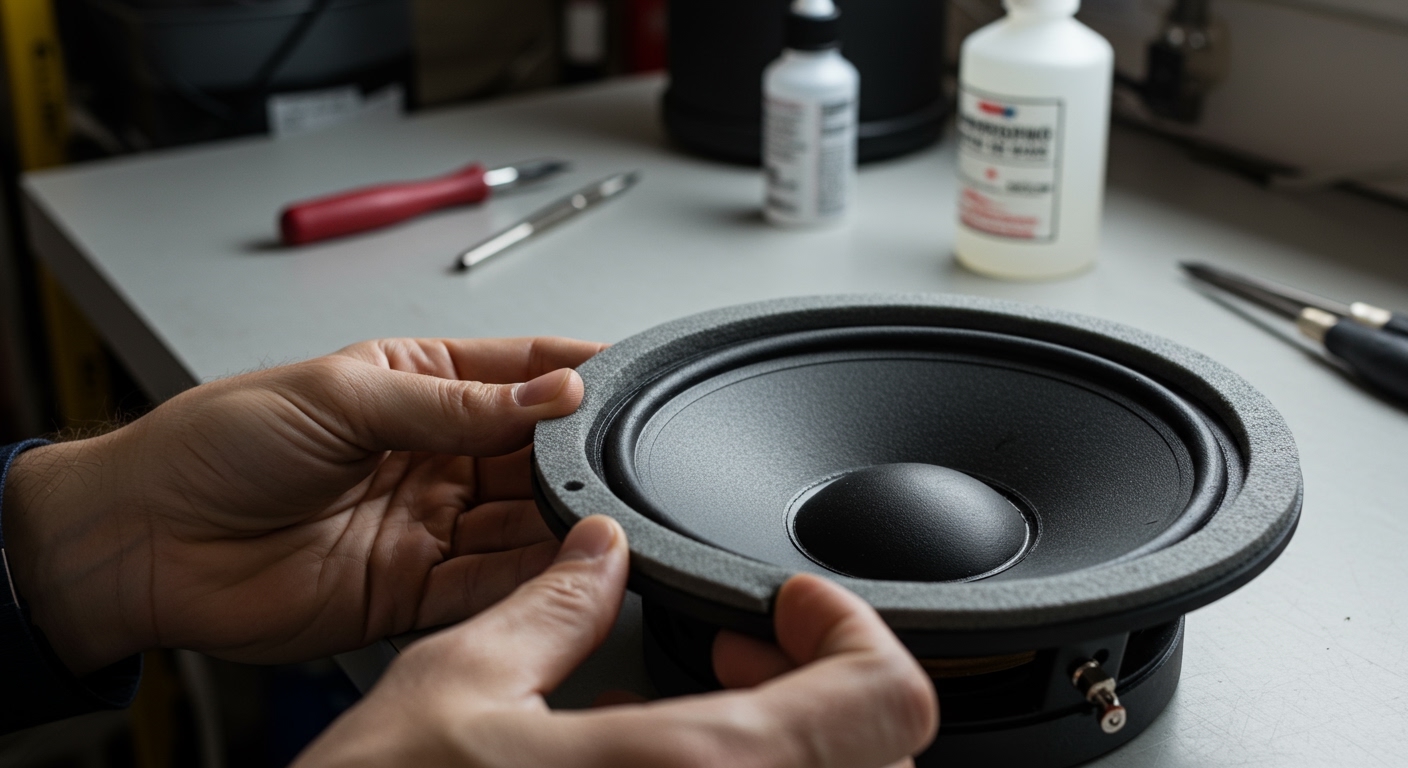
How to Install Ceiling Speakers in a Two Story House: The Expert Guide
Installing ceiling speakers in a two-story house is best achieved by identifying “chase” locations—like closets or utility gaps—to run wires between floors without destroying your drywall. For the top floor, you typically use attic access, while the bottom floor requires fish tapes and strategic routing through joist bays or behind crown molding.
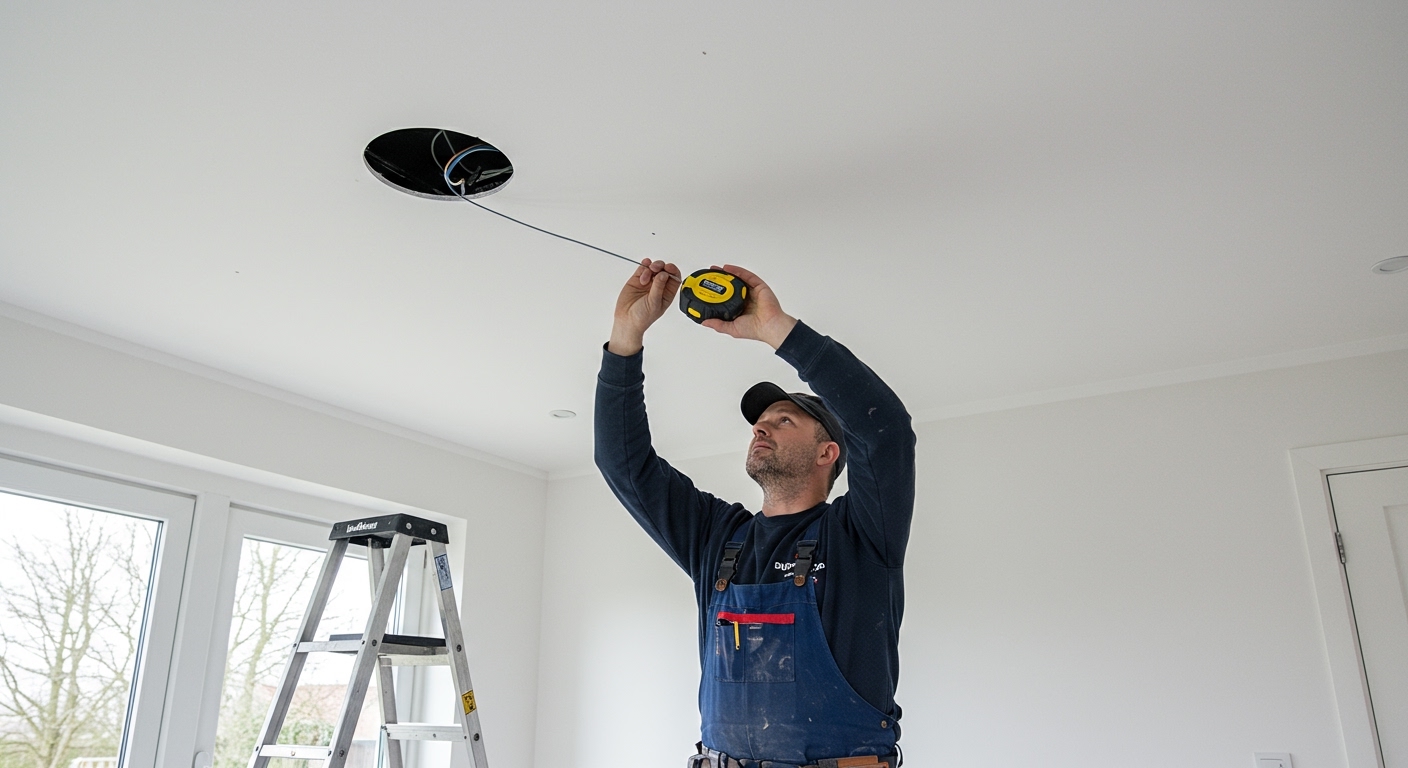
I have spent over a decade designing home theaters, and I can tell you that the biggest challenge isn’t the wiring itself; it’s the “invisible” pathing. In this guide, we will leverage my professional experience to help you achieve a seamless, audiophile-grade installation while minimizing the need for expensive drywall repairs.
Key Takeaways for Success
- Plan the Path: Use a stud finder with “deep scan” mode to map your joists before cutting.
- Tool Essentials: You absolutely need a flexible drill bit (6 feet) and a fish tape.
- Safety First: Always check for CL2 or CL3 rated speaker wire to comply with building codes for in-wall use.
- The “Closet Trick”: Use the corners of closets to run wires vertically between the first and second floors.
- Audio Quality: Choose aimable tweeters for first-floor living areas to direct sound toward the seating position.
Essential Tools and Materials for Installation
Before you make your first cut, ensure you have the right gear. Using the wrong wire or a dull saw can turn a four-hour project into a multi-day disaster.
| Tool/Material | Purpose | Expert Recommendation |
|---|---|---|
| Speaker Wire | Connects amp to speakers | 16 AWG CL3 Rated (Oxygen-Free Copper) |
| Fish Tape | Pulling wire through walls | Klein Tools 50ft Steel Fish Tape |
| Drywall Saw | Cutting speaker holes | Jab Saw with a sharp point |
| Stud Finder | Locating joists and obstacles | Zircon m40-FFP with metal detection |
| Flex Bit | Drilling through top/bottom plates | 3/4-inch x 72-inch Flexible Bit |
| Voltage Tester | Ensuring no live wires are present | Non-contact Voltage Detector |
Phase 1: Planning Your Audio Layout
When considering how to install ceiling speakers in a two story house, the layout is dictated by the direction of your floor joists. On the first floor, your speakers will sit in the cavity between the ceiling and the second-story floorboards.
Determining Speaker Placement
For a standard multi-room audio setup, place speakers 6 to 10 feet apart. If you are installing a home theater, the “surround” speakers should be slightly behind the primary listening position.
I always recommend staying at least 12 inches away from walls to prevent “bass boom,” which occurs when sound waves reflect off the vertical surface too quickly. Use the cardboard template provided by the manufacturer (like Polk Audio or Klipsch) to trace your circles.
Mapping the Joists
Use your stud finder to mark the edges of the joists. Most houses have joists spaced 16 inches or 24 inches on center. Ensure your speaker hole is dead-center between two joists to allow the “dog-leg” clamps to secure properly to the drywall.
Phase 2: Routing Wires Between Two Floors
This is the most technical part of how to install ceiling speakers in a two story house. You have two distinct scenarios: the “Easy Top Floor” and the “Complex Bottom Floor.”
The Second Floor (Attic Access)
If you are installing speakers on the top floor, you are in luck. You can simply go into the attic, drill down through the top plate of the wall where your amplifier is located, and drop the wires down. Then, move across the attic floor and drop the wires into the holes you cut for the speakers.
The First Floor (The “Sandwich” Challenge)
The first floor is harder because there is a finished room above it. To get wires from your receiver (usually on the first floor) to the first-floor ceiling:
- Identify Joist Direction: Wires move easily parallel to joists. If you need to move perpendicularly, you will likely need to cut small “access holes” or use a long flexible drill bit.
- Vertical Chases: Look for a utility stack (the big PVC pipe for plumbing) or a cold air return. You can often “hitchhike” your speaker wire alongside these pipes to get from the basement or crawlspace up to the first-floor ceiling.
- Crown Molding Hack: If you cannot get behind the wall, consider installing crown molding. You can run your speaker wires in the gap behind the molding, completely hiding the cable without touching the drywall.
Phase 3: Step-by-Step Installation Process
Once you have your path planned, follow these steps to finish the job.
Step 1: Cut the Holes
After tracing your template, use a non-contact voltage tester to ensure there are no live electrical wires behind the spot. Poke a small pilot hole with a screwdriver first to “feel” for obstructions like pipes. If clear, use your drywall saw to cut the circle.
Step 2: Fish the Wire
Send your fish tape from the speaker hole toward your “access point” (where the wire comes from the amp). Attach the CL3 speaker wire to the end of the fish tape using electrical tape. Pull the wire back through the ceiling.
Pro Tip: Always leave an extra 2 to 3 feet of “slack” at the speaker end. This makes it much easier to connect the wires while standing on a ladder.
Step 3: Connect and Mount
Strip about half an inch of insulation from the wire leads. Connect the positive (red) and negative (black) wires to the speaker terminals.
- Insert the speaker into the hole.
- Tighten the screws on the front baffle.
- As you turn the screws, the “dog-legs” on the back will flip out and sandwich the drywall.
- Do not over-tighten, or you might crack the ceiling plaster.
Step 4: Add Fire-Rated Back Boxes (Optional but Recommended)
In many jurisdictions, building codes require fire-rated hoods (like those from Dynamat or BlazeStop) over the back of the speaker. These not only satisfy code but also significantly reduce sound leakage to the rooms upstairs.
Phase 4: Connecting to the Amplifier
For a two-story house, you likely have multiple zones. If you are running more than two pairs of speakers off a single receiver, you must use an impedance-matching speaker selector.
Understanding Impedance
Most ceiling speakers are 8-ohm. If you connect four speakers in parallel to a standard receiver, the impedance drops to 2-ohms, which can cause your amplifier to overheat or catch fire.
We always use a multi-channel power amplifier (like the Sonos Amp or OSD Audio units) for two-story installs. This allows you to control the volume of the upstairs and downstairs independently via your phone.
Frequently Asked Questions (FAQ)
Do I need back boxes for speakers on the first floor?
While not always legally required in residential homes, I highly recommend them. Without a back box, the sound from your first-floor ceiling speakers will vibrate the floorboards of the bedroom directly above, causing unwanted noise.
Can I use standard speaker wire?
No. You must use CL2 or CL3 rated wire. This rating ensures the wire jacket is fire-resistant and won’t produce toxic smoke if it gets hot. Using standard “zip cord” can lead to insurance claim denials if a fire occurs.
How do I find the wire if it gets lost in the ceiling?
Use a Tone and Probe Kit. You attach the “toner” to one end of the wire, and the “probe” emits a sound when you get close to the other end behind the drywall. It’s a lifesaver for “blind” wire pulls.
What is the best way to bridge the first and second floor?
The most reliable method is finding a central closet that exists on both floors in roughly the same vertical plane. You can run a small piece of conduit inside the closet corner to move all your wires from the first-floor hub to the second-floor attic.
**
**
**
**