How to Install Grill Speakers for Your Outdoor Kitchen
To install grill speakers, you must select weather-resistant, marine-grade components, cut precise mounting holes in your grill island or outdoor cabinetry, and run CL3-rated speaker wire to a central amplifier. The process requires securing the speakers with stainless steel hardware and sealing all edges with marine-grade silicone to protect against moisture and grease.
Outdoor entertainment has evolved far beyond a portable Bluetooth speaker sitting on a picnic table. In my years of designing custom outdoor kitchens, I’ve found that integrated grill speakers are the gold standard for high-fidelity sound that survives the elements. Whether you are searing steaks or hosting a summer bash, a built-in system ensures the music is as crisp as your crust.
Quick Summary: The 5-Step Install
- Select Equipment: Choose IP65-rated speakers and an amplifier with enough channels for your zone.
- Plan the Layout: Place speakers 8–10 feet apart and at least 2 feet away from direct high-heat sources.
- Cut and Prep: Use a template to cut mounting holes in your stone, stucco, or stainless steel island.
- Wire the System: Run 14-gauge CL3 wire through protective conduit to your indoor or weather-protected amp.
- Seal and Test: Mount the speakers using anti-corrosive screws and apply a waterproof bead around the flange.
Step 1: Selecting the Right Gear for Heat and Humidity
When learning how to install grill speakers, the most common mistake is using standard “outdoor” speakers that aren’t built for the grease and heat of a cooking station. You need components that can handle high temperatures and frequent cleaning.
The Importance of Marine-Grade Certification
I always recommend Marine-Grade speakers for grill islands. These are designed for salt-fog environments, which means they can easily withstand the acidity of smoke and the humidity of outdoor cooking. Look for an IP (Ingress Protection) rating of at least IPX5 to ensure they can handle a splash from a garden hose during cleanup.
Choosing Your Speaker Type
| Speaker Type | Best Use Case | Pros | Cons |
|---|---|---|---|
| Flush-Mount | Grill Islands / Cabinetry | Sleek look, protected wiring. | Requires permanent cutting. |
| Surface-Mount | Pergolas / Walls | Easy to aim the sound. | More exposed to the sun. |
| Rock Speakers | Landscaping nearby | Blends into the garden. | Harder to wire to the grill. |
Step 2: Planning Your Sound Stage and Heat Safety
Before you drill a single hole, you must identify the “Sweet Spot.” In my experience, sound carries differently outdoors than indoors because there are no walls to reflect the waves.
Distance from Heat Sources
Never mount a speaker directly above the grill hood. The rising heat can warp the polypropylene cones and melt the internal crossovers. Aim for a distance of at least 24 to 36 inches to the side of the actual grill unit.
Height and Coverage
Mount speakers at “ear level” when seated. If your grill island has a bar-height counter, installing the speakers into the vertical face of the island works best. We typically space them 8 to 12 feet apart to create a wide “stereo image” that covers the entire patio.
Step 3: Tools and Materials Needed
To do this job right, you’ll need more than just a screwdriver. Collecting the right tools prevents cracked stonework or stripped wires.
- Power Drill with a masonry or metal-compatible bit.
- Jigsaw or Reciprocating Saw (with a diamond blade for stone or a fine-tooth blade for stainless steel).
- 14-AWG or 16-AWG CL3 Speaker Wire (CL3 is rated for in-wall and outdoor use).
- Flexible Non-Metallic Conduit (to protect wires from rodents).
- Marine-Grade Silicone Sealant.
- Wire Strippers and Heat-Shrink Tubing.
Step 4: Cutting the Mounting Holes
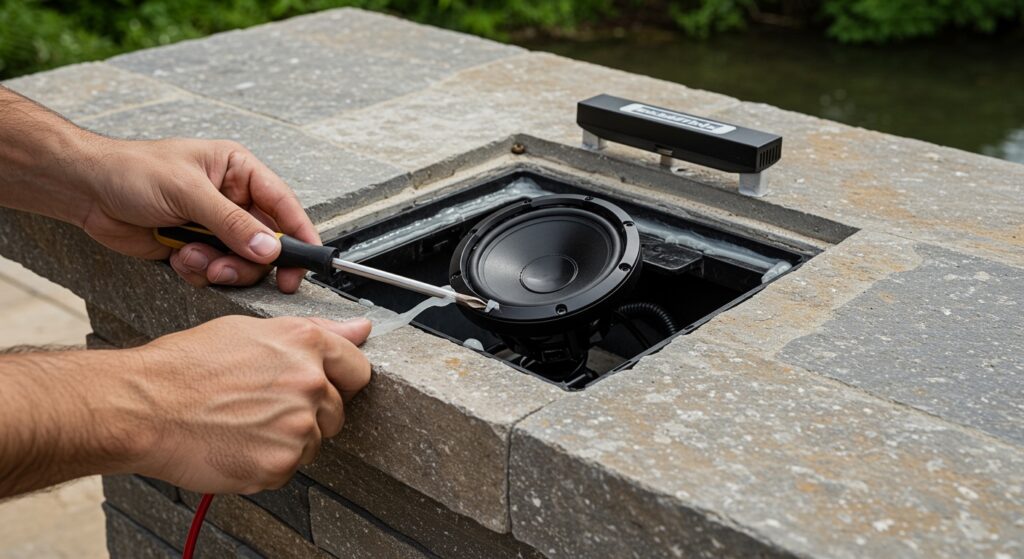
This is the most nerve-wracking part of learning how to install grill speakers. If you are working with a stone veneer island, I suggest taping the area first with blue painter’s tape to prevent chipping.
- Trace the Template: Most high-end speakers like Sonance or Klipsch include a cardboard template. Center it and level it before tracing.
- The Pilot Hole: Drill a large hole in the center of your circle to give your saw blade a starting point.
- Execute the Cut: Go slow. If you are cutting through stainless steel, use cutting oil to keep the blade cool and prevent the metal from discoloring.
- Dry Fit: Insert the speaker (without wiring) to ensure it sits flush. If it’s too tight, use a metal file to smooth the edges.
Step 5: Wiring for Longevity and Performance
Wiring is where most DIY installs fail after the first winter. You must protect your signal from moisture.
Running the Conduit
I’ve seen many homeowners just toss wires inside the grill island. Don’t do this. Use PVC conduit or flexible tubing to house your wires. This prevents them from touching hot grill components or being chewed by pests looking for a snack.
Connection Security
Use solder or waterproof wire nuts for all connections behind the speaker. Once connected, slide heat-shrink tubing over the joint and use a heat gun to seal it. This creates an airtight barrier that prevents the copper from oxidizing and turning green.
Step 6: Final Mounting and Weatherproofing
Now that the wires are pulled, it’s time to secure the units.
- Apply a Silicone Bead: Run a thin bead of clear marine-grade silicone around the back of the speaker flange. This creates a gasket that keeps rain from leaking into your grill island cabinetry.
- Tighten the “Dog-Leg” Clamps: Most flush-mount speakers use plastic tabs that swing out and grip the back of the wall. Tighten these by hand. Avoid using an impact driver, as it can easily crack the plastic frame.
- Attach the Grills: Most modern grill speakers use magnetic rust-proof grilles. Snap them into place and ensure they are seated firmly so they don’t rattle when the bass kicks in.
Expert Tips for Better Outdoor Sound
- Add a Subwoofer: Outdoor environments lose low-end frequencies rapidly. A buried “landscape sub” paired with your grill speakers will make the system sound 10x more expensive.
- Use a Dedicated Amp: Don’t just bridge your indoor receiver. Use an Outdoor-Rated Amplifier or keep a dedicated 2-channel amp in a dry, ventilated cabinet.
- Test Before Sealing: I always play a high-dynamic range track (like something from Steely Dan) to check for vibrations or “buzzing” in the cabinetry before I apply the final silicone.
Frequently Asked Questions
Can I use car speakers for my grill island?
While car speakers are designed for some moisture, they aren’t UV-rated for direct sun exposure. Marine-grade speakers are a better choice as they use UV-stabilized plastics that won’t crack or discolor over time.
Do I need an electrician to install grill speakers?
If you are only running low-voltage speaker wire, you generally do not need a licensed electrician. However, if you need to install a new GFCI outlet to power your amplifier, you should consult a professional to ensure the system is grounded and safe.
How do I prevent my grill speakers from rattling the island?
Vibration is common in metal grill islands. Use butyl rubber tape or foam insulation strips between the speaker flange and the mounting surface to dampen the transfer of energy and eliminate “metal-on-metal” noise.
What is the best wire gauge for outdoor speakers?
For runs under 50 feet, 16-gauge is sufficient. For longer runs (50–150 feet), use 14-gauge to prevent signal loss and maintain the “damping factor” of your amplifier.