Achieving Professional Audio: Why In-Wall Installation Matters
Learning how to install in wall speakers is the ultimate secret to achieving a high-end home theater aesthetic without the clutter of bulky floor-standing units. By mounting your audio system directly into the drywall, you reclaim floor space while creating an immersive, “invisible” soundstage that rivals professional cinemas.
Whether you are a DIY enthusiast or a first-time homeowner, mastering how to mount in wall speakers allows you to customize your acoustic environment perfectly. This guide provides a step-by-step blueprint to ensure your installation is safe, code-compliant, and acoustically optimized.
### 💡 Expert Summary: Key Takeaways Safety First: Always use CL2 or CL3-rated speaker wire for in-wall runs to meet fire safety codes. Strategic Placement: Place tweeters at ear level (typically 38-42 inches from the floor) for the best imaging. Obstacle Detection: Use a high-quality stud finder with “deep scan” and “AC wire detection” to avoid costly mistakes. Acoustic Tip: Add R-13 fiberglass insulation behind the speaker to reduce sound leakage into adjacent rooms.
Essential Tools and Materials for In-Wall Audio
Before you make the first cut, you must gather the right equipment. Using the correct tools prevents jagged drywall edges and ensures the speaker’s “dog-leg” clamps engage securely.
| Tool/Material | Purpose | Expert Recommendation |
|---|---|---|
| Stud Finder | Locates framing and electrical lines. | Use a model with Live AC Detection. |
| Drywall Saw | Manual cutting of speaker holes. | Choose a fixed-blade jab saw for precision. |
| Fish Tape | Pulling wire through wall cavities. | 25-50ft Steel or Fiberglass fish tape. |
| Level | Ensures the speaker sits perfectly straight. | Torpedo level (9-inch). |
| CL2/CL3 Wire | In-wall rated speaker cabling. | 14-gauge for runs over 50 feet. |
| Wire Strippers | Removing insulation from copper leads. | Self-adjusting strippers save time. |
Step 1: Design Your Soundstage and Map the Room
The first step in how to install in wall speakers is planning the layout. Sound waves are directional; if you place the speakers too high or too low, the “phantom center” of the audio will feel disconnected from your TV screen.
Determine the Ideal Height
For a standard home theater, your left, right, and center channels should be positioned so the high-frequency drivers (tweeters) are at ear level when seated. If you are mounting speakers as “surrounds,” place them 2-3 feet above ear level to create a more diffuse, atmospheric sound.
Check for Internal Obstructions
Walls are rarely empty. They contain electrical conduits, plumbing stacks, HVAC ducts, and fire blocks (horizontal wood between studs).
Use your stud finder to map out the 16-inch or 24-inch gaps between studs.
Tap the wall lightly; a “hollow” sound indicates an open cavity, while a “thud” suggests a stud or pipe.
Step 2: Trace the Template with Precision
Most premium brands like Sonance, Klipsch, or Polk Audio include a cardboard template in the box. This is your most important guide for how to mount in wall speakers correctly.
Position and Level
- Place the template against the wall in your desired location.
- Use a torpedo level to ensure the top edge is perfectly horizontal.
- Tape the template to the wall using painter’s tape to avoid peeling the paint.
Mark the Cut Line
Trace the internal perimeter of the template with a pencil. Do not use a marker, as the ink can bleed through the speaker’s outer flange or future paint jobs. Pro Tip: Double-check that your traced line is at least 1 inch away from any nearby studs to allow the mounting clamps to swing out freely.
Step 3: Cut the Drywall Safely
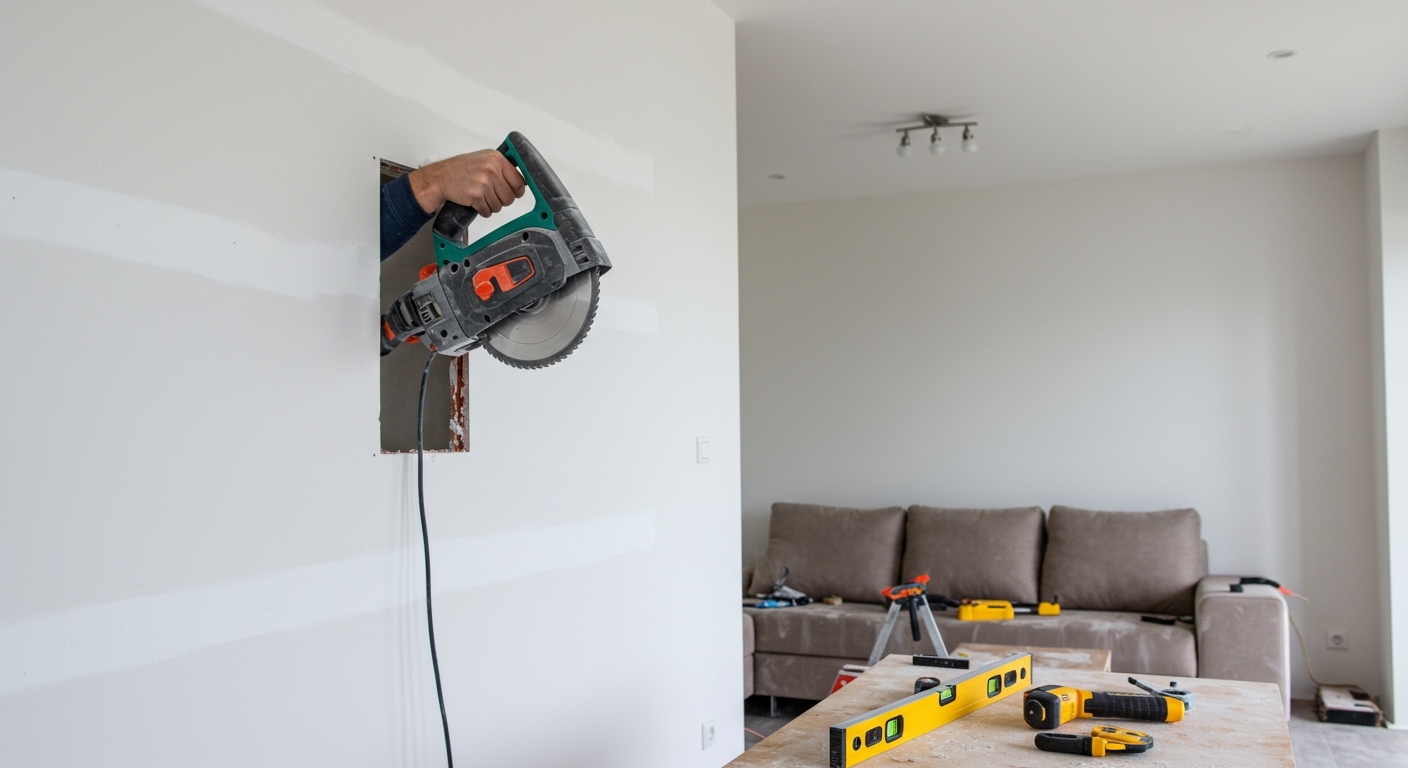
This is the “point of no return.” If you are nervous about hitting a wire, start by poking a small “pilot hole” in the center of your traced area with a screwdriver.
The Pilot Hole Technique
Insert a bent coat hanger into the pilot hole and rotate it 360 degrees. If it hits nothing, the cavity is clear. This simple trick has saved me from hitting hidden PVC drain pipes more times than I can count.
Executing the Cut
- Insert the tip of the drywall saw at one corner of your pencil line.
- Use short, controlled strokes.
- Hold the drywall piece as you finish the cut so it doesn’t fall inside the wall.
- Expert Advice: Wear a N95 mask and eye protection. Drywall dust is fine and can irritate your lungs and eyes instantly.
Step 4: Run the In-Wall Speaker Wire
Running the cable is often the most challenging part of how to install in wall speakers. You must bridge the gap between your AV Receiver (AVR) and the new hole in the wall.
Choose the Right Gauge
The “thickness” of the wire (gauge) affects sound quality over long distances.
16-Gauge: Sufficient for runs under 50 feet.
14-Gauge: Recommended for runs between 50 and 100 feet to prevent signal loss.
12-Gauge: Use for high-end audiophile setups or very long distances.
Using Fish Tape
Drop a weighted string or use fish tape from the speaker hole down to the baseboard area. If you have a crawlspace or attic, it is much easier to run wires through those “open” zones and then “drop” them into the wall cavity. Ensure you leave at least 2-3 feet of extra wire hanging out of the wall for easy connection.
Step 5: Connect and Secure the Speaker
Now that the wiring is ready, it’s time to actually mount in wall speakers. Most modern units use a “dog-leg” or “swing-out” mounting system.
Wire the Terminals
- Strip about 1/2 inch of insulation from the speaker wire ends.
- Identify the Positive (+) and Negative (-) leads. Usually, the positive wire has a red stripe or text on the jacket.
- Press the spring-loaded terminals on the back of the speaker and insert the bare copper. Ensure no “stray strands” are touching the opposite terminal, as this can short-circuit your amplifier.
Tighten the Clamps
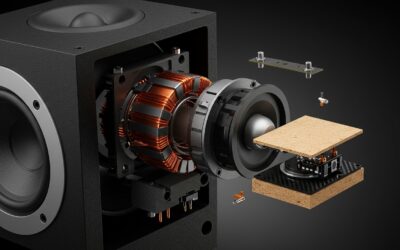
Insert the speaker into the hole. Using a manual screwdriver (not a power drill), tighten the screws on the front baffle. This will cause the “dog-legs” behind the drywall to swing out and sandwich the speaker against the wall.
Warning: Do not over-tighten! Over-tightening can crack the drywall or warp the speaker frame, causing the grille to fit poorly.
Step 6: Testing and Finishing Touches
Before you snap on the metal grilles, you must verify the phase and sound quality.
The “Phase” Test
Play a track with heavy bass. If the sound feels “hollow” or the bass is missing, your speakers might be out of phase. This happens if the (+) and (-) wires are swapped on one speaker but not the other. Simply reverse the wires on one end to fix it.
Painting the Grilles
Most in-wall speakers come with white grilles that can be painted to match your walls.
Use spray paint, not a brush or roller.
Apply multiple ultra-thin coats.
If you clog the tiny holes in the grille with thick paint, you will severely muffle the high frequencies.
Common Mistakes to Avoid
Even seasoned DIYers can run into trouble when learning how to install in wall speakers. Avoid these common pitfalls:
Cutting near Electrical Boxes: Stay at least 6 inches away from light switches or outlets to avoid EMI (Electromagnetic Interference) hum in your audio.
Ignoring the Fire Rating: Never use standard “zip cord” or lamp wire inside walls. It is a fire hazard and violates building codes.
Forgetting the Insulation: If the wall cavity is empty, the speaker will sound “boomy.” Stuffing a piece of Polyfill or fiberglass insulation behind the speaker tightens the bass response significantly.
- Not Leveling: A speaker that is even 2 degrees crooked will be an eyesore every time you look at the TV.
Frequently Asked Questions
(FAQs)
Can I install in-wall speakers in an apartment?
Generally, no. How to mount in wall speakers involves cutting large holes in the drywall and running permanent wiring, which typically violates rental agreements. Consider high-quality bookshelf speakers or “on-wall” speakers instead.
Do in-wall speakers need a back box?
While not strictly required for most models, a back box (an enclosure behind the speaker) provides consistent air volume for the woofer. This results in more predictable bass and prevents sound from leaking into the room behind the wall.
Is 16-gauge wire enough for in-wall speakers?
Yes, for most standard living room setups where the wire run is under 50 feet, 16-gauge CL2 wire is perfectly fine. For dedicated high-end home theaters, upgrading to 14-gauge is a cheap way to ensure maximum power delivery.
How do I find the wires if I lose them inside the wall?
If a wire falls back into the wall, use a magnetic stud finder or a “borescope” camera attached to your phone to locate it. Alternatively, a powerful Neodymium magnet tied to a string can sometimes “catch” a wire if you’ve taped a small metal washer to the end of the cable.
Conclusion: Transform Your Home Audio Today
Mastering how to install in wall speakers is a rewarding project that combines technical skill with interior design. By following the steps of mapping, safe cutting, and using CL2-rated wiring, you create a professional-grade audio system that stays out of sight while delivering high-impact sound.
Remember, the key to a successful installation is preparation. Take the time to find the studs, level your templates, and test your connections before the final “dog-leg” screws are tightened. Once finished, you’ll enjoy a clean, wire-free environment that enhances both your home’s value and your entertainment experience.
Ready to start? Grab your stud finder and start mapping your dream home theater today!