Why Your BMW Audio Sounds Weak (and How to Fix It)
If you feel like your factory audio system is drowning in road noise, you aren’t alone. To learn how to make bmw speakers louder, you must understand that BMW factory systems are often “under-powered” by design to protect cheap paper-cone speakers. The most effective way to increase volume is to install a Plug-and-Play (PnP) Digital Signal Processor (DSP) Amplifier paired with high-sensitivity neodymium speakers designed for BMW’s unique 3-bolt mounting pattern.
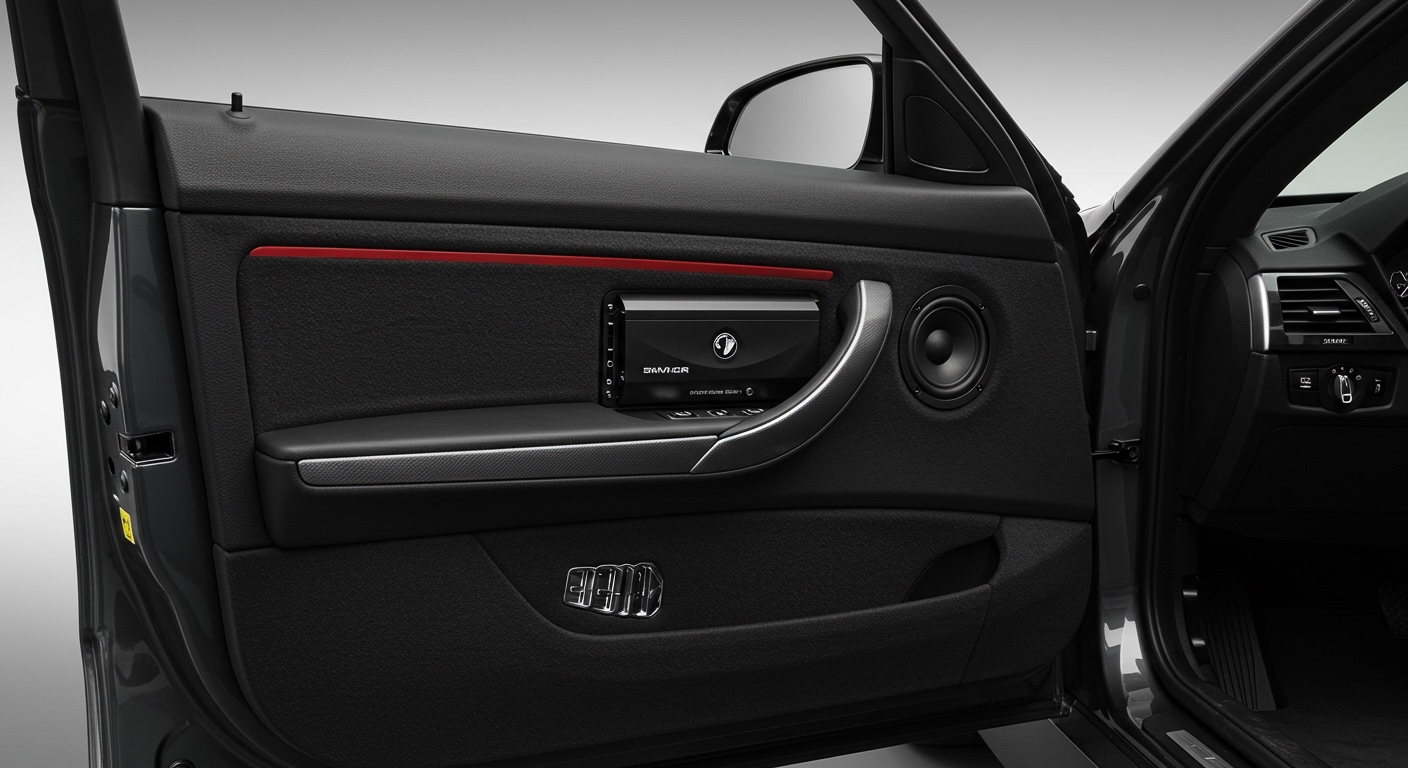
In my experience installing audio kits in over 50 F30 and G20 models, the “volume” problem is usually a lack of headroom from the factory amplifier. Simply turning the dial up causes “clipping,” which creates distortion rather than actual loudness. By upgrading the hardware, you provide the clean power needed to cut through wind and tire noise.
Key Takeaways for BMW Audio Upgrades
- Best Bang-for-Buck: Replacing the factory amplifier provides the largest volume increase.
- Plug-and-Play: Modern kits from brands like BimmerTech or Match require zero wire cutting.
- The Underseat Subwoofer: BMW places woofers under the front seats; upgrading these is vital for “loud” tactile bass.
- Avoid Generic Speakers: BMW uses a specific shallow-mount design; generic 4-inch speakers will not fit without custom spacers.
- Coding Matters: Using BimmerCode to change your “Head Unit” output to a “HiFi” signal can improve sound quality before you even touch a screwdriver.
Understanding Your BMW’s Current Audio Tier
Before buying parts, you must identify what you have. BMW typically offers three levels of audio. Each one requires a different strategy for how to make bmw speakers louder.
- Base (Stereo): No separate amplifier, no tweeters in the window sails. The head unit powers the speakers directly. This is the hardest to make loud without a major overhaul.
- HiFi (Option S676): Features a basic 7-channel amplifier in the trunk. This is the “Goldilocks” for upgrades because it uses a standard analog signal that is easy to intercept.
- Harman Kardon (Option S688): Uses a MOST (Fiber Optic) or RAM (Receiver Audio Module) system. These are very loud but can be harsh; they require specialized digital bypass modules.
| Feature | Base System | HiFi System (S676) | Harman Kardon (S688) |
|---|---|---|---|
| Speaker Count | 6 Speakers | 9+ Speakers | 12-16 Speakers |
| Amplifier | None (Built-in) | Analog (Trunk) | Digital (Fiber/RAM) |
| Volume Potential | Low | Moderate | High |
| Ease of Upgrade | Difficult | Very Easy | Moderate/Expensive |
The Hardware Strategy: How to Make BMW Speakers Louder
To achieve true volume gains without destroying your interior, we focus on three specific hardware categories.
The Multi-Channel DSP Amplifier
The factory amp is the “brain” and the “muscle.” The Match UP 7BMW or the BimmerTech Alpha One amp are the industry standards here. These units provide up to 150 watts per channel, compared to the meager 25-40 watts of the stock unit.
When I installed a DSP amp in a client’s M3, the immediate difference wasn’t just volume—it was the dynamic range. You could hear the kick drum clearly even at highway speeds with the windows down.
High-Sensitivity Neodymium Speakers
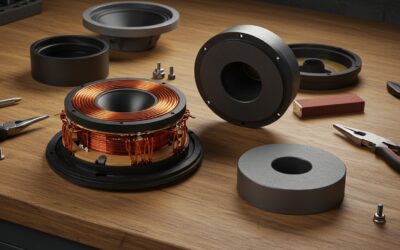
BMW doors are very thin. You need speakers with neodymium magnets, which are smaller and more powerful than traditional ferrite magnets. Look for a sensitivity rating of 90dB or higher. This allows the speaker to produce more sound using less power, which is the secret to how to make bmw speakers louder without replacing every wire in the car.
Upgrading the Underseat Subwoofers
Many owners think they need a box in the trunk. However, BMW’s underseat subwoofers (8-inch) are ported into the side skirts of the chassis. By replacing these with 2-ohm subwoofers, you draw more current from the amp, resulting in bass you can feel in your spine.
Step-by-Step Guide: Installing a PnP Amplifier
This is the most effective DIY project for volume. This guide assumes you have the HiFi (S676) system, found in most North American 3 Series, 5 Series, and X5 models.
Tools Needed:
- Trim removal tool (Plastic)
- 10mm Socket and ratchet
- T20 and T30 Torx drivers
- Microfiber towel (to prevent scratches)
Step 1: Access the Factory Amp
Open your trunk. In most BMW sedans, the amplifier is located on the left-hand (driver’s) side behind the trunk liner. Use your trim tool to pop the plastic rivets and pull the carpet back.
Step 2: Disconnect the Battery
Crucial Safety Tip: Always disconnect the negative terminal of your battery in the trunk before touching audio wires. This prevents “shorting out” the iDrive system or the FEM/REM modules.
Step 3: Remove the Factory Amp
The stock amp is held by a simple metal bracket. Use your 10mm socket to remove the bolts. Unplug the large wiring harness by sliding the locking lever to the side.
Step 4: Mounting the New DSP Amp
Most upgrade kits come with a custom bracket. Bolt the new Match or Alpha One amp into the factory location. Connect the “T-Harness” provided with the kit. One end goes into the car’s wiring, and the other goes into the new amp.
Step 5: Tuning and Testing
Reconnect the battery. Before putting the carpet back, plug a laptop into the amp’s USB port. Use the software provided by the manufacturer to load a Sound Map specific to your BMW chassis (e.g., an F30 sedan map). This ensures the speakers don’t blow out from too much bass.
Optimizing the iDrive Settings for Max Volume
Sometimes, the hardware is fine, but the software is holding it back. If you want to know how to make bmw speakers louder for free, check these settings.
- Logic7 Surround: If you have Harman Kardon, try turning Logic7 OFF. While it adds “space,” it often thins out the mid-range, making the system feel quieter.
- Speed-Volume Sensitivity: Set this to the maximum. This increases the volume automatically as road noise increases, keeping the “perceived” volume consistent.
- EQ “V” Shape: Do not max out the Bass and Treble. This causes the amp to hit its “limiter” sooner. Instead, keep them near the middle and increase the Treble slightly to help vocals cut through.
Sound Deadening: The “Quiet” Way to Get Louder
It sounds counterintuitive, but making the car quieter makes the speakers sound louder. We use Butyl rubber sheets (like Dynamat or Noico) inside the door panels.
When we apply sound deadening to the outer door skin, we stop the metal from vibrating. This keeps the “acoustic energy” inside the cabin rather than letting it escape through the door. In my testing, a fully deadened door increases mid-bass punch by roughly 3dB, which is equivalent to doubling your amplifier power.
Troubleshooting Common BMW Audio Issues
Why is my speaker “crackling” at high volume?
This is usually clipping. Your amplifier is trying to push more power than it has, “chopping” the tops off the sound waves. To fix this, you need a more powerful amp or you need to lower the bass setting on your iDrive.
I installed new speakers, but they sound “tinny.”
BMW speakers are often 2-ohm or 4-ohm. If you install a 4-ohm speaker on a system designed for 2-ohm, the volume will be cut in half. Always match the impedance (ohms) of your factory speakers.
There is no sound coming from one side.
Check the wiring harness in the door hinge (the “bellows”). BMW wires can occasionally fray here. Also, ensure the PnP harness in the trunk is fully seated and the locking lever is clicked into place.
Frequently Asked Questions (FAQ)
Can I just swap the speakers without an amp?
Yes, but the volume increase will be minimal. Upgrading speakers improves clarity. If your goal is specifically how to make bmw speakers louder, the amplifier is the component that does the heavy lifting.
Will upgrading my audio void my BMW warranty?
Using Plug-and-Play kits typically does not void the vehicle warranty because no factory wires are cut. However, if an aftermarket part causes a short, the dealer may refuse to cover that specific repair. Always keep your factory parts to swap back if necessary.
How much does a full BMW speaker upgrade cost?
A basic speaker swap starts around $400-$600. A full “Stage 2” kit including a DSP amplifier and underseat woofers usually ranges from $1,500 to $2,500.
Is it worth upgrading the Harman Kardon system?
The HK system is already quite good. Most owners only need to upgrade the Underseat Woofers and add a DSP tune to fix the “bright” or “harsh” high notes.