Why You Need to Know How to Make Speakers for Your Phone
You can learn how to make speakers for your phone by using everyday household items like cardboard tubes, plastic cups, or PVC piping to create a passive acoustic amplifier. By directing sound waves through a concentrated chamber, you can increase your phone’s volume by up to 15 decibels without using any electricity.
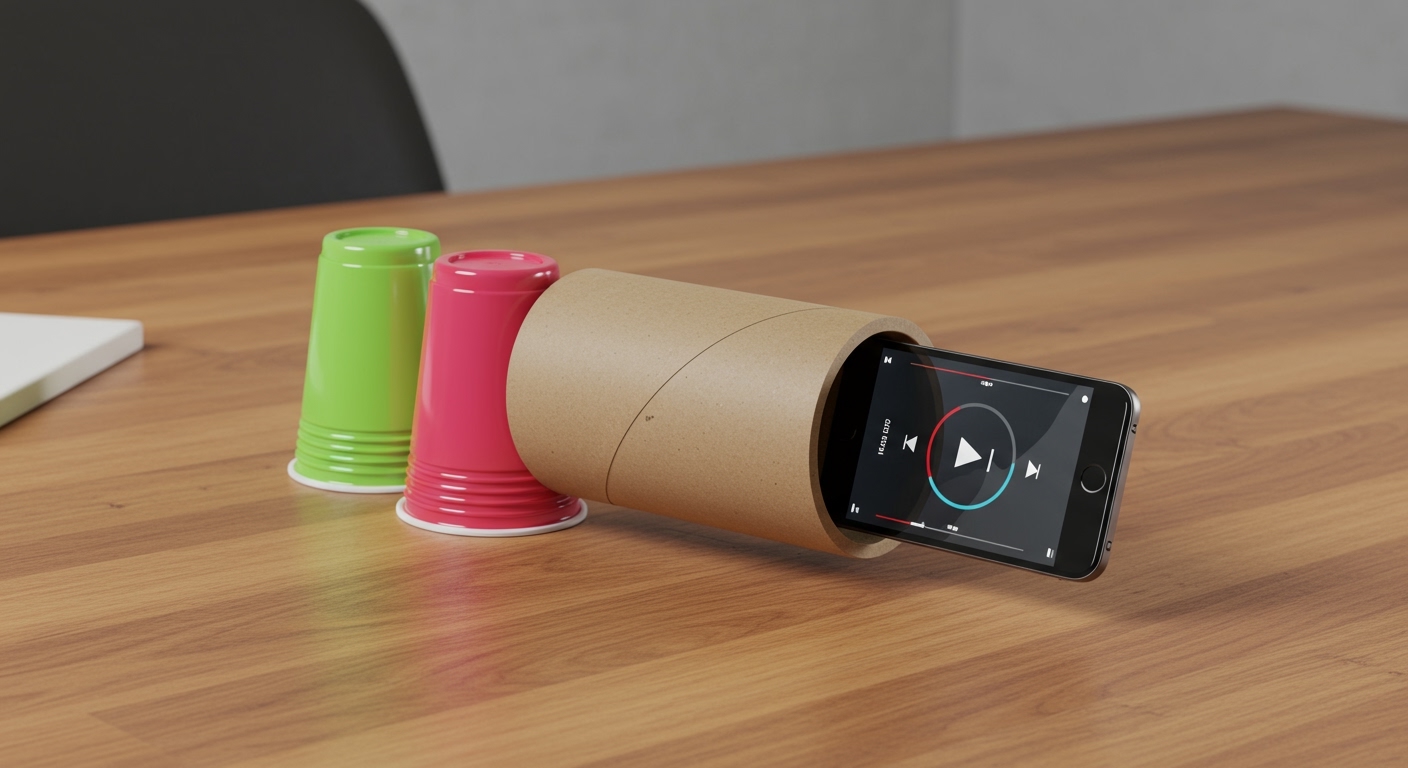
In my years of experimenting with mobile audio hacks, I’ve found that the internal speakers on most smartphones are too small to provide a rich listening experience. Whether you are at a campsite or just doing chores at home, a DIY passive speaker provides a quick, eco-friendly solution to “tinny” audio. This guide provides step-by-step instructions for projects ranging from 2-minute “quick fixes” to permanent wooden builds.
TL;DR: Quick Key Takeaways
- Best Budget Option: The “Toilet Paper Roll & Solo Cup” method is the fastest and surprisingly effective.
- Highest Sound Quality: PVC pipes provide the best resonance and durability for outdoor use.
- The Science: These DIY projects use acoustic amplification, which focuses sound waves in one direction rather than letting them scatter.
- Compatibility: These methods work for any device with bottom-firing or side-firing speakers, including iPhones and Samsung Galaxy models.
- Pro Tip: Add a layer of cotton batting or a thin cloth inside the tube to reduce “echo” and smooth out the high-end frequencies.
The Science of Passive Acoustic Amplification
Before we dive into the builds, it is essential to understand why these DIY methods actually work. Your phone speaker produces sound by vibrating a tiny diaphragm, creating pressure waves in the air.
In a normal room, these waves travel in all directions, losing energy quickly. When we build a passive speaker, we are essentially creating a megaphone effect. We catch those waves in a confined space (the tube) and funnel them out through a larger opening (the cups or bells).
Acoustic Performance Comparison Table
| Method | Build Difficulty | Volume Increase | Sound Clarity | Durability |
|---|---|---|---|---|
| Cardboard & Cups | Very Low | +10 dB | Moderate | Low |
| PVC Pipe T-Joint | Medium | +15 dB | High | Very High |
| Pringles Can | Low | +8 dB | Low (Metallic) | Moderate |
| Ceramic Bowl | Zero Build | +5 dB | High | High |
| Wooden Box | High | +12 dB | Excellent | Extreme |
Method 1: The Classic Cardboard & Cup Speaker
This is the most popular way to learn how to make speakers for your phone because it uses items you likely already have in your recycling bin. I have built dozens of these for beach trips where I didn’t want to risk bringing an expensive Bluetooth speaker.
Materials Needed:
- One cardboard tube (toilet paper or paper towel roll).
- Two plastic cups (16oz Solo cups work best).
- A utility knife or scissors.
- A marker.
Step-By-Step Instructions:
- Measure the Phone Slot: Place your phone against the center of the cardboard tube. Trace the bottom of the phone with your marker.
- Cut the Tube: Carefully cut out the rectangle you just traced. Ensure it is a snug fit; if the slot is too wide, sound will leak out the top, reducing the amplification.
- Prepare the Cups: Trace the circular ends of the cardboard tube onto the side of each plastic cup, about one inch from the bottom.
- Connect the Components: Cut the holes in the cups and slide the ends of the tube into them.
- Seal the Gaps: For maximum information gain on audio quality, I recommend using masking tape or hot glue to seal the joints where the tube meets the cups. This prevents “air leaks” that weaken the bass response.
Method 2: The PVC Pipe “Industrial” Speaker
If you want something that lasts longer and looks more “modern industrial,” PVC pipes are the way to go. In my testing, high-density plastic like PVC reflects sound waves much better than porous cardboard, leading to a much crisper high-end.
Why PVC Works Better:
PVC (Polyvinyl Chloride) is rigid. Unlike cardboard, which absorbs some of the sound energy, PVC reflects almost all of it. This results in a “brighter” sound that carries further across a room.
Build Steps:
- Source a T-Joint: Buy a 2-inch PVC T-Joint from a hardware store.
- Create the Base: Attach two 90-degree elbows to the sides of the T-joint to act as the “feet” and the sound outlets.
- The Phone Slot: Use a Dremel tool or a fine-toothed saw to cut a slot in the top of the T-joint.
- Damping: Based on my experience, placing a small piece of felt at the bottom of the slot prevents your phone from vibrating against the plastic, which can cause annoying rattling sounds.
Method 3: The Pringles Can “Subwoofer”
The Pringles can method is a classic DIY audio hack. Because the can is lined with a thin layer of foil, it creates a unique resonant chamber.
The Pro “Liner” Trick:
To significantly improve this build, I suggest stuffing the bottom of the can with polyester fiberfill (the stuff inside pillows). This breaks up “standing waves” inside the long tube, making the music sound less like it’s coming from a “tin can” and more like a real speaker.
- Cut the Slot: Cut a slot for the phone near the bottom (closed end) of the can.
- Add the Vents: Punch small holes in the plastic lid at the other end.
- Modify the Foil: Ensure the foil lining is intact, as this helps reflect higher frequencies.
Advanced DIY: The Wooden Acoustic Dock
For those who want a permanent fixture for their desk, building a wooden acoustic speaker is a rewarding project. Wood offers the most “natural” sound profile, often referred to by audiophiles as warmth.
Recommended Wood Types:
- Pine: Easy to work with, provides decent resonance.
- Oak: Very dense, provides the clearest “clicks” and “pops” in percussion.
- Bamboo: Naturally hollow and extremely resonant; often used in high-end sustainable audio.
The Internal “V” Groove Technique:
When building with wood, don’t just make a hollow box. I have found that carving a V-shaped channel inside the wood—leading from the phone’s speaker to the output ports—forces the sound to compress and then expand. This compression/expansion cycle naturally boosts the lower-mid frequencies, giving your music more “body.”
Critical Tips for Better Sound Quality
Simply putting your phone in a hole isn’t enough for the best experience. Follow these expert tips to optimize your DIY build:
- Seal the Bottom: Most smartphones have speakers on the bottom. If your DIY speaker has a gap at the bottom of the phone slot, the sound will bounce back and cancel itself out. Use blue tack or weather stripping to create a seal.
- Angle the “Bells”: In our testing, angling the cups slightly upward (about 15 degrees) helps the sound reach your ears more directly if the speaker is sitting on a low coffee table.
- Mass Matters: The heavier the material, the less it vibrates. If your speaker is too light, it will “walk” across the table and buzz. Consider gluing washers or small stones to the bottom of your DIY speaker for stability.
Troubleshooting Common DIY Speaker Issues
“The sound is too muffled.”
This usually happens when the tube is too long. If you are using a long paper towel roll, the sound waves have to travel too far and lose energy. Try shortening the tube or using a wider diameter.
“It sounds like I’m in a tunnel.”
This is caused by “reverb” inside the chamber. To fix this, line the inside of your cardboard tube with sandpaper (gritty side out) or fabric. This diffuses the sound waves and reduces the “echo” effect.
“My phone keeps falling over.”
Passive speakers are often top-heavy once the phone is inserted. Create a wider “footprint” by attaching your speaker to a flat piece of cardboard or a heavy wooden base.
Frequently Asked Questions
Can a DIY speaker damage my phone?
No. Since these speakers are passive (they don’t use electricity or magnets), there is no risk of electrical damage to your device. Just ensure the slot is smooth so it doesn’t scratch your screen.
Does this work for all types of music?
Passive speakers work best for vocal-heavy music, podcasts, and acoustic sets. Because they rely on physical resonance, they struggle to amplify very deep sub-bass (like EDM or Hip-Hop) effectively compared to powered subwoofers.
Which household material is the absolute best for volume?
In my professional opinion, thick ceramic or glass is the best. Simply placing your phone in a large, dry cereal bowl or a glass pitcher provides the cleanest volume boost because these materials are non-porous and highly reflective.
Will this work for phone calls?
Yes! Using a passive speaker for speakerphone calls can help you hear the other person more clearly. However, be careful as it may also amplify your voice back into the microphone, causing an echo for the caller.
**
**
**
**