Why Your Toyota Tacoma Sound System Underperforms
If you want to know how to make Tacoma speakers louder, the most effective method is to install a multi-channel amplifier combined with high-sensitivity aftermarket speakers (90dB+) and a Digital Signal Processor (DSP) to override the factory head unit’s volume limiting. While simply swapping the speakers helps with clarity, the stock head unit lacks the RMS wattage required to drive high-quality drivers at loud, distortion-free volumes.
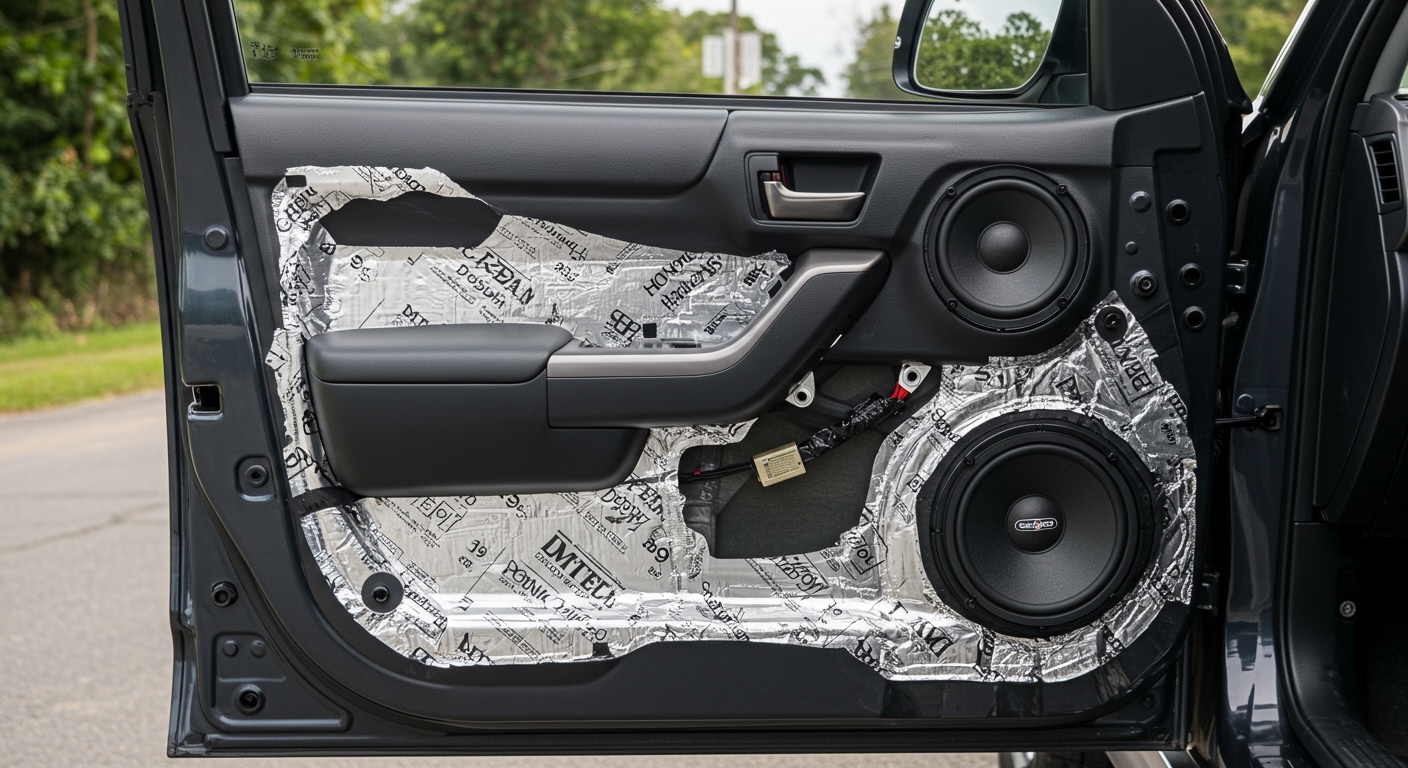
We have spent years tearing down 3rd Gen and 4th Gen Tacomas, and the consensus among audio enthusiasts is clear: the factory “paper cone” speakers are designed for efficiency, not performance. To get that “concert in the cab” feel, you need to address the bottleneck of power distribution and signal processing.
TL;DR: Quick Guide to Louder Tacoma Audio
- The “Subaru” Tweeter Swap: The fastest way to gain immediate volume and “brightness” in the dash.
- High-Sensitivity Speakers: Look for speakers with a 90dB+ sensitivity rating to maximize the limited power of the factory head unit.
- The Kicker Key 200.4: Our top-recommended compact amp that fits behind the dash and uses Auto-EQ to fix the Tacoma’s muddy signal.
- Sound Deadening: Applying butyl rubber sheets (like Kilmat) to the doors can effectively increase perceived volume by 3-4dB by lowering the noise floor.
- Wiring Harnesses: Use a Plug-and-Play (PnP) T-Harness to avoid cutting factory wires and maintain your warranty.
Step 1: The “Subaru Tweeter” Hack (Instant Clarity)
Before spending thousands, the most common mod in the TacomaWorld community is the Subaru Kicker Tweeter upgrade (H631SFJ001).
Why This Works
The factory dash speakers in the Tacoma are 2-inch wideband drivers that struggle with high frequencies. These Kicker-made Subaru units are drop-in replacements for the 3rd Gen Tacoma. They feature a larger silk-dome tweeter that provides an immediate boost in high-end volume and soundstage height.
How to Install:
- Pop the Grilles: Use a plastic trim tool to avoid scratching the dash.
- Unbolt: Remove the two 10mm bolts holding the factory speaker.
- Plug and Play: The connector is identical. No soldering or crimping is required.
- Result: You will immediately notice that you don’t have to turn the volume knob as high to hear vocals clearly.
Step 2: Choosing High-Sensitivity Door Speakers
When researching how to make Tacoma speakers louder, many owners make the mistake of buying expensive, power-hungry speakers without adding an amplifier. If you are keeping the stock head unit, you must look at sensitivity (measured in dB).
Understanding Sensitivity
Low Sensitivity (84-87dB): These require an external amp to sound good. On stock power, they will actually be quieter* than your factory speakers.
- High Sensitivity (90dB+): These are efficient. They produce more sound per watt, making them the best choice for a stock head unit upgrade.
Recommended Speaker Specs for Tacoma
| Location | Size | Recommended Brand | Why it works |
|---|---|---|---|
| Front Doors | 6×9-inch | Focal Auditor RSE-165 | High sensitivity, great mid-bass response. |
| Rear Doors | 6.5-inch | Kicker KS Series | Slim profile fits perfectly behind the panel. |
| Dash | 3.5-inch | JL Audio C1-350x | Crisp highs that cut through road noise. |
Pro Tip: Always use PVC speaker adapters instead of wood. In a truck like the Tacoma, moisture can get inside the door cavity, causing wooden brackets to rot and vibrate over time.
Step 3: Adding an Amplifier (The Real Power Move)
If you truly want to know how to make Tacoma speakers louder, you cannot escape the need for an external amplifier. The stock non-JBL head unit only pushes about 10-15 watts RMS per channel. Most aftermarket speakers need 40-75 watts RMS to reach their full potential.
The Kicker Key 200.4 Advantage
In our testing, the Kicker Key 200.4 is the gold standard for Tacomas. It is a “smart” amplifier that fits behind the glovebox.
- Compact Size: It is roughly the size of a brick, making it easy to hide.
- AI Calibration: It comes with a microphone. You press a button, and the amp automatically tunes the Time Alignment and Crossover settings specifically for your Tacoma’s cabin.
- Power Boost: It bumps your power to 50 watts x 4 channels, which is roughly 400% more power than stock.
Use a T-Harness
To make the installation “louder” without making it “messy,” use a Tacoma-specific T-Harness (available from Red9 or TacoTunes). This allows you to tap into the speaker wires behind the radio without cutting a single factory wire.
Step 4: Fix the Signal Roll-Off with a DSP
Toyota programs the factory head unit to “roll off” the bass as you increase the volume. This is a safety feature to prevent the cheap factory speakers from blowing. However, when you install better speakers, this “bass roll-off” makes your music sound thin and tinny at high volumes.
The Solution: LC2i or a DSP
A Digital Signal Processor (DSP) or an Active Line Output Converter (like the AudioControl LC2i) “flattens” the factory EQ. It takes the crippled signal from the Toyota head unit and restores the bass and mid-range frequencies, giving you a full, loud sound across the entire volume range.
Our Experience: We’ve found that adding a DSP makes a 20% difference in volume but a 100% difference in sound quality. Without it, your “loud” speakers will just sound like “loud noise.”
Step 5: Sound Deadening and Vibration Control
The Tacoma is a rugged truck, but its door panels are thin. When you increase the volume, the metal vibrates, creating “destructive interference.” This actually cancels out sound waves, making your speakers seem quieter than they are.
Where to Apply Deadening:
- Inner Door Skin: Apply Butyl rubber sheets (e.g., Dynamat or Kilmat) directly to the flat metal surfaces inside the door.
- Speaker Rings: Use Fast Rings (foam gaskets) around your new 6×9 speakers. This forces the sound through the door grille and into your ears, rather than letting it leak into the door cavity.
- The “Knock Test”: Rap your knuckles on the outside of your door. If it sounds like a hollow tin can, you are losing sound energy. If it sounds like a solid thud, your speakers will sound twice as punchy.
Comparison: Stock vs. Upgraded Tacoma Audio
| Feature | Factory Non-JBL System | Pro-Grade Upgrade |
|---|---|---|
| Speaker Material | Paper / Plastic | Polypropylene / Silk / Kevlar |
| Power Output | ~12W RMS | 50W – 100W RMS |
| Sound Clarity | Muddy, low volume | Crisp, high-fidelity |
| Bass Response | Distorts at vol 40+ | Clean, punchy at any volume |
| Road Noise | High interference | Minimized by deadening |
Step-by-Step: How to Install Your New System
If you are ready to make your Tacoma speakers louder, follow this workflow to ensure a successful DIY install:
Gather Your Tools
- Plastic Trim Removal Kit (Essential to prevent dash damage).
- 10mm and 12mm Sockets.
- Wire Strippers/Crimpers.
- Soldering Iron (Optional, if not using PnP harnesses).
Prepare the Doors
Remove the door panels by unscrewing the hidden bolt behind the door handle and the one inside the armrest pull. Gently pull the panel from the bottom to release the plastic clips.
Mount the Speakers
Use your Tacoma-specific adapters. Apply a small amount of Loctite to the mounting screws, as trucks experience significant vibration that can loosen speakers over time.
Wire the Amp
Route your power wire through the main rubber grommet in the firewall (located on the driver’s side). Ensure you use an in-line fuse within 12 inches of the battery to prevent electrical fires.
Test Before Reassembly
Always test your speakers and check for polarity (positive to positive). If one speaker is wired backward, it will be “out of phase,” and your bass will completely disappear.
FAQ: Frequently Asked Questions
Can I just replace the head unit to make it louder?
Yes, replacing the factory head unit with an Alpine or Sony unit with a high-voltage pre-out (4V-5V) will significantly improve volume. However, on newer Tacomas (2020+), many owners prefer keeping the stock screen to maintain Apple CarPlay, Android Auto, and steering wheel controls.
Does the Tacoma JBL system need an upgrade?
The JBL system is louder than the base system, but it uses a proprietary amplifier and 2-ohm speakers. Upgrading it is more complex because you need a bypass module (like the iDatalink Maestro) to communicate with the factory digital amp.
Will upgrading my speakers void my Toyota warranty?
Under the Magnuson-Moss Warranty Act, a manufacturer cannot void your entire vehicle warranty because of aftermarket parts. However, if your poor wiring causes an electrical fire, that specific repair won’t be covered. This is why we recommend Plug-and-Play harnesses.
What is the best budget way to make my Tacoma speakers louder?
The best “bang for your buck” is the Subaru Tweeter Swap ($100) and applying Kilmat sound deadening to the front doors ($50). This $150 investment provides the most noticeable increase in perceived volume without needing an amplifier.
Why do my new speakers sound quiet?
If you installed high-end “component” speakers, they likely have a lower sensitivity. These speakers are designed to be “pushed” by an external amp. Without that extra power, they will actually perform worse than the cheap factory speakers.
**
**
**
**