How to Mount Bose 161 Speakers: The Definitive Installation Guide
To learn how to mount Bose 161 speakers, you must utilize the specific Bose UB-161 wall brackets that typically come in the box. First, secure the bracket to a wall stud or high-quality drywall anchor, thread your 16-gauge speaker wire through the bracket base, and then slide the speaker onto the mounting pins until it clicks firmly into place. This method ensures your speakers are angled correctly for the Bose Articulated Array design, which provides a wide, consistent soundstage across your room.
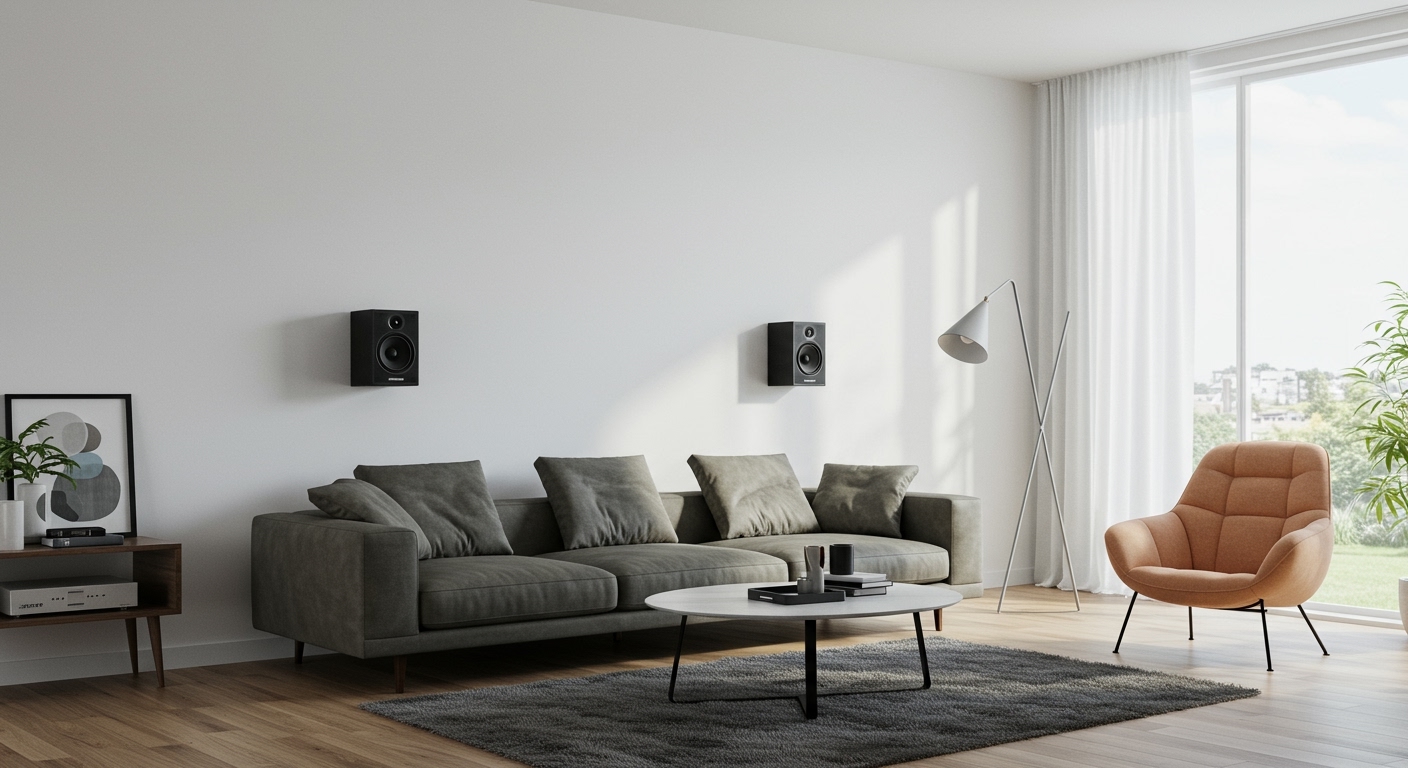
TL;DR: Key Takeaways for Bose Mounting
- Hardware Required: Use only Bose-specific brackets (UB-161 for 161s, UB-20 for Acoustimass).
- Optimal Height: Place speakers 4 to 6 feet from the floor for the best ear-level response.
- Orientation: Bose 161 speakers are designed to be mounted horizontally to maximize their wide-dispersion pattern.
- Surface Safety: Always use a stud finder; if a stud isn’t available, use toggle bolts rather than plastic plug anchors.
Step-by-Step: How to Mount Bose 161 Speakers Properly
Installing the Bose 161 system is unique because of its curved design and specialized bracket system. During my years of home theater installations, I’ve found that the most common mistake is losing the specialized “keyhole” screws that come with the UB-161 brackets.
Preparation and Tool Checklist**
Before you drill, gather these essential tools to ensure a professional finish:
- Stud Finder: Essential for structural integrity.
- Spirit Level: Ensures your speakers aren’t tilted.
- Power Drill: With 1/8″ and 1/4″ bits.
- Screwdriver: Phillips head #2.
- Wire Strippers: For clean connections.
Locating the Ideal Placement**
The Bose 161 speakers utilize Articulated Array driver positioning. To get the most “Information Gain” from your audio, place them on the long wall of your room. This allows the drivers to reflect sound off the side walls, creating a much larger “sweet spot” than traditional bookshelf speakers.
Installing the UB-161 Bracket**
The bracket consists of two parts: the wall plate and the speaker slide.
- Mark the holes using the wall plate as a template.
- If mounting into wood, drill a pilot hole.
- If mounting into drywall, use the included heavy-duty anchors.
- Pro Tip: Thread your speaker cable through the center hole of the wall plate before you screw it down. This hides the wire completely behind the speaker body.
Attaching the Speaker**
Line up the slots on the back of the Bose 161 speaker with the pins on the bracket. Slide it downward firmly. You should feel a distinct “lock” when it reaches the bottom. Give it a gentle tug to ensure it is seated properly.
Mounting Comparisons: Bose 161 vs. Acoustimass vs. SoundTouch
Not all Bose speakers use the same mounting logic. Depending on your system, you may need different hardware or weight-bearing considerations.
| Speaker Model | Bracket Type | Mounting Orientation | Primary Use Case |
|---|---|---|---|
| Bose 161 | UB-161 (Included) | Horizontal Only | Stereo or Surround |
| Bose Acoustimass | UB-20 Series II | Vertical or Horizontal | Home Theater Satellites |
| Bose SoundTouch 10 | Generic 1/4″-20 Thread | Vertical | Standalone Wi-Fi Audio |
| Bose 251 (Outdoor) | Large U-Bracket | Flexible | Patio/Outdoor |
How to Mount Bose Acoustimass Speakers
If you are upgrading a home cinema, learning how to mount Bose Acoustimass speakers is slightly different. The Virtually Invisible or Jewel Cube speakers found in Acoustimass systems use the UB-20 Series II bracket.
The Ball-and-Socket Advantage
Unlike the 161 brackets, the UB-20 uses a ball-and-socket joint. This allows for 30 degrees of vertical tilt and 90 degrees of horizontal rotation.
- Attachment: Use the small hex key (usually included) to tighten the “neck” of the bracket once you’ve found the perfect angle.
- Safety Note: Acoustimass speakers are heavier than they look. We always recommend using a toggle bolt (like the Snaptoggle) if you cannot find a wall stud, as the vibration from high-volume audio can loosen standard plastic anchors over time.
Can You Mount Bose SoundTouch Speakers?
A frequent question we receive is: can you mount Bose SoundTouch speakers to the wall? The answer depends on the specific model.
SoundTouch 10 Mounting
The SoundTouch 10 features a standard 1/4″-20 threaded insert on the back. This is the same thread found on camera tripods. You can use a variety of third-party mounts, or the official Bose WB-121 wall bracket.
SoundTouch 20 and 30
The SoundTouch 20 and SoundTouch 30 are considerably larger and do not have built-in mounting points.
- The Workaround: For these models, you must use a speaker shelf or a “clamping” style wall mount that grips the sides of the unit.
- Warning: Never attempt to drill into the chassis of a SoundTouch 20/30 to create a mounting point; you will damage the internal Wi-Fi antennas and power supply.
Advanced Wiring and Cable Management
A “Zero-Click” professional look requires hiding the wires. When I install these in premium homes, we use two primary methods:
In-Wall Rated Cables (CL2/CL3)
If you are running wire behind the drywall, you must use CL2 or CL3 rated speaker wire. This is a fire safety requirement.
- Cut a small hole behind the speaker bracket.
- Use a fish tape to pull the wire down to the baseboard level.
- Exit the wall using a “brush plate” or a low-voltage mounting bracket.
External Wire Raceways
If you are renting and cannot cut into the walls, use D-Line Cable Trunking. These are paintable, adhesive-backed channels that stick to your wall and hide the wire.
Expert Tip: Paint the raceway the exact color of your wall before* installing the wire inside for the best camouflage.
Optimizing Your Soundstage Post-Mounting
Once you have mastered how to mount Bose 161 speakers, the job isn’t done until the calibration is complete.
The 15-Degree Rule
For the best stereo imaging, angle your speakers approximately 15 degrees toward the primary seating area. This is known as “toeing-in.” Because the Bose 161 has a wide dispersion, you don’t need a drastic angle, but a slight tilt helps with vocal clarity.
Using Bose ADAPTiQ
If your speakers are connected to a Bose Lifestyle or Soundbar system, use the ADAPTiQ headset for calibration.
- Sit in your favorite chair.
- Put on the ADAPTiQ headset.
- The system will play tones through your newly mounted speakers and adjust the EQ (Equalization) based on how the sound reflects off your specific walls and furniture.
Troubleshooting Common Mounting Issues
Speaker Vibrations and Rattling
If you hear a “buzzing” sound at high volumes, your bracket is likely not flush against the wall.
- The Fix: Place a small piece of felt padding or blue-tack behind the bracket before tightening the screws. This absorbs micro-vibrations.
Stripped Screws
Bose hardware can sometimes be made of softer metals. If you strip a screw:
- Use a rubber band over the tip of your screwdriver for extra grip.
- If that fails, use a screw extractor bit.
- Always replace stripped screws with high-carbon steel screws from a local hardware store for better durability.
Frequently Asked Questions
Can I mount Bose 161 speakers vertically?
While physically possible, it is not recommended. The Articulated Array is designed to spread sound horizontally. Mounting them vertically will result in a very narrow soundstage and poor audio “imaging.”
Do I need special screws for brick or masonry?
Yes. If you are mounting to brick or concrete, do not use the standard wood screws. You will need Tapcon anchors or expansion bolts. You must use a hammer drill with a masonry bit to create the pilot holes.
What is the weight limit for Bose brackets?
The UB-161 brackets are specifically engineered for the weight of the 161 speakers (about 3.3 lbs each). They should not be used for larger, heavier speakers from other brands.
Is it safe to mount speakers near a TV?
Yes. Modern Bose 161 and Acoustimass speakers are magnetically shielded. This means they will not interfere with your TV screen or cause color distortion, which was a common issue with older CRT televisions.
What gauge wire is best for a 50-foot run?
For runs up to 50 feet, 16 AWG is sufficient. If you are running wire longer than 50 feet to a different room or outdoor area, we recommend stepping up to 14 AWG to prevent signal loss and maintain high-fidelity audio.