The Core Secret of How to Muffle Sound From Speakers
To how to muffle sound from speakers effectively, you must focus on decoupling the speakers from hard surfaces and adding dense, absorptive materials to your environment to capture sound energy. By using isolation pads to stop vibrations and acoustic panels to reduce echo, you can contain sound within a room and prevent it from bleeding through walls.
TL;DR: Fast Fixes for Speaker Noise
If you are in a hurry, here are the most effective ways to quiet your setup:
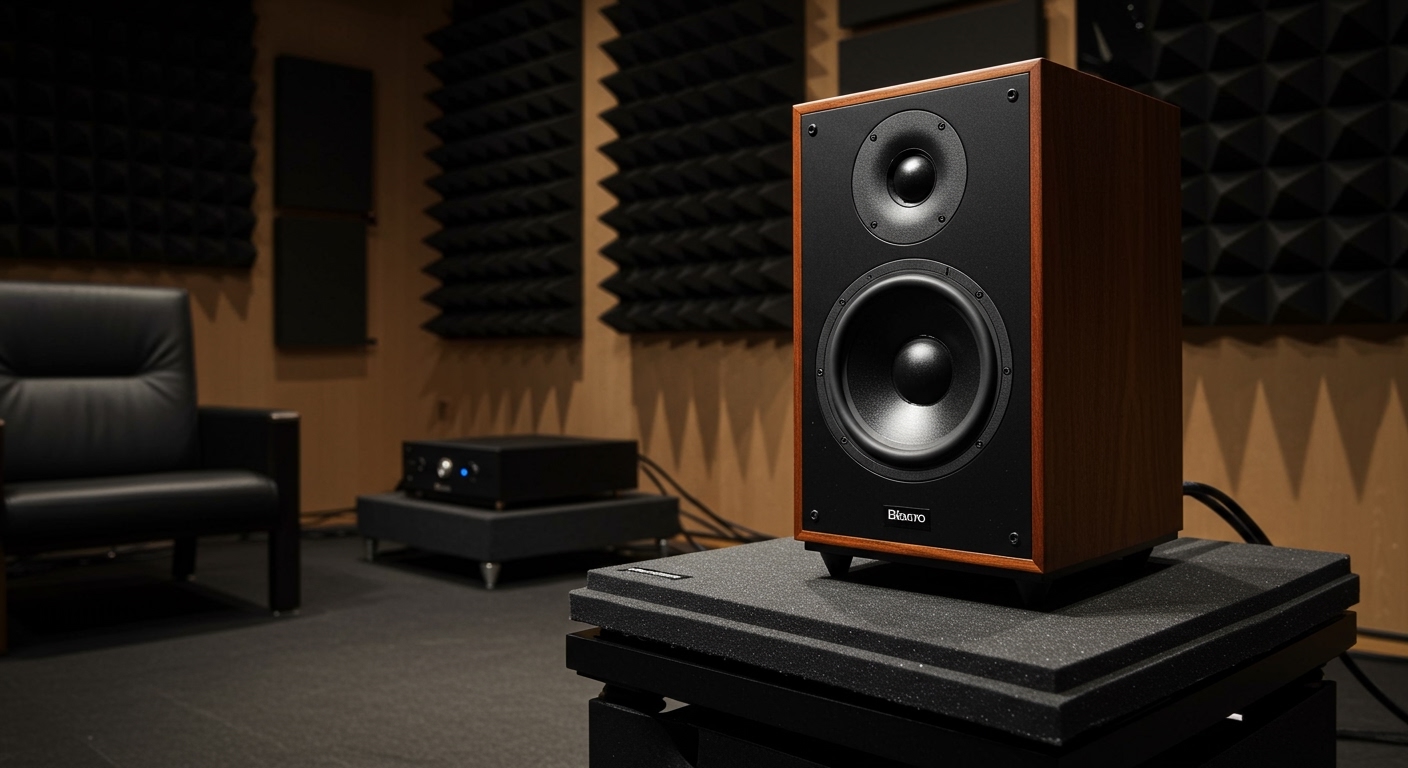
- Decouple Everything: Place speakers on isolation foam or SVS SoundPath feet to stop floor vibrations.
- Add Mass: Use Mass Loaded Vinyl (MLV) or heavy moving blankets on walls to block sound transmission.
- Manage Bass: Install bass traps in corners where low-frequency energy accumulates.
- Seal the Gaps: Use weatherstripping and door sweeps to stop “airborne” sound from escaping through cracks.
- Lower the Volume Digitally: Use an Equalizer (EQ) to roll off frequencies below 80Hz, which travel through walls easiest.
Understanding the Science: Why Speakers Are So Loud Next Door
Before we dive into the “how-to,” we need to understand what we are actually fighting. In my years of testing home theater setups, I’ve found that sound travels in two distinct ways: airborne noise and structure-borne noise.
Airborne noise is the music you hear floating through the air. Structure-borne noise is the physical vibration of the speaker cabinet shaking your desk, floor, and eventually, your neighbor’s ceiling. When you ask how to muffle sound from speakers, you are usually trying to solve the structure-borne vibration, which is much harder to stop than the air.
Low-frequency sounds (bass) have long wavelengths that pass through solid objects like wood and drywall with ease. High-frequency sounds (vocals/cymbals) are easily stopped by soft materials. To truly muffle a speaker, you need a multi-layered approach that addresses both.
Step 1: Decoupling Your Speakers (The Most Important Step)
The biggest mistake I see is people placing high-end speakers directly on a hardwood floor or a hollow wooden desk. This turns the entire floor into a giant sounding board.
Use Isolation Pads or Stands
I recommend using high-density acoustic foam pads. These act as a “shock absorber” for your speakers. They prevent the mechanical energy of the speaker driver from transferring into the furniture.
The Tennis Ball Hack (DIY Method)
If you are on a budget, you can use a trick I used in college. Cut four tennis balls in half and place them under a wooden platform. Rest your speaker on that platform. The air inside the tennis balls provides excellent decoupling for almost zero cost.
Professional Isolation Feet
For heavy subwoofers, standard foam isn’t enough. I suggest investing in SVS SoundPath Isolation Feet or IsoAcoustics Gaia series. These use specialized polymers to “float” the speaker, virtually eliminating floor-borne rumble.
Step 2: Adding Mass and Absorption to Your Walls
Once you’ve stopped the floor from shaking, you need to deal with the sound waves hitting the walls. Thin drywall acts like a drum skin—it vibrates when sound hits it, passing that sound to the next room.
The Power of Mass Loaded Vinyl (MLV)
If you are serious about how to muffle sound from speakers, Mass Loaded Vinyl (MLV) is your best friend. It is a heavy, limp material that doesn’t vibrate. Hanging MLV behind your speakers or inside a wall cavity can drastically reduce decibel leakage.
Acoustic Panels vs. Soundproofing
There is a common myth that acoustic foam (the egg-carton stuff) stops sound from leaving a room. It does not.
Acoustic foam is for “treatment”—it stops echoes inside the room so the music sounds better. To actually muffle the sound for others, you need density.
| Material Type | Primary Function | Effectiveness for Muffling |
|---|---|---|
| Acoustic Foam | Reduces Echo/Reverb | Low |
| Rockwool Panels | Absorbs Frequencies | Medium-High |
| Mass Loaded Vinyl | Blocks Sound Transmission | High |
| Heavy Curtains | Dampens High Frequencies | Low-Medium |
| Soundproof Drywall | Structural Blocking | Very High |
Step 3: Creating a “Sound Trap” Around the Speaker
Sometimes you can’t soundproof the whole room. In these cases, we focus on the speaker’s immediate environment.
Building a Speaker Coffin or Shield
In a studio environment, I often use “portable vocal booths” or reflection filters behind the speakers. You can mimic this by placing thick, heavy moving blankets on a PVC frame around the back and sides of the speaker. This forces the sound forward rather than letting it bleed out the back and into the wall.
The “Box in a Box” Concept
If you have a small desktop speaker, placing it inside a three-sided box lined with Rockwool or high-density foam can muffle the sound significantly for anyone standing behind or to the side of the setup.
Step 4: Sealing the “Air Leaks”
Sound is like water; it will find the easiest path out. The biggest “leaks” in any room are the gaps under the door and around windows.
Install a Heavy Door Sweep
Most interior doors are hollow-core and have a 1-inch gap at the bottom. This gap is responsible for up to 30% of sound leakage. I always install a thick rubber door sweep and use weatherstripping tape around the door frame to create an airtight seal.
Plugging the Vents
If your room has HVAC vents, sound will travel through the metal ductwork like a telephone. While you can’t block them entirely, using a magnetic vent cover when you are listening to loud music can help muffle the sound transfer.
Step 5: Bass Management and EQ Tuning
Sometimes the best way to how to muffle sound from speakers isn’t physical—it’s digital.
The 80Hz Rule
Bass frequencies are the hardest to stop. I’ve found that by using an Equalizer (EQ) to apply a High-Pass Filter (HPF) at 80Hz or 100Hz, you can remove the “thump” that neighbors hate while still keeping the music clear.
Corner Bass Traps
Bass energy builds up in the corners of a room (a phenomenon called “room modes”). By placing triangular bass traps made of dense fiberglass in all four corners, you soak up that excess energy before it can vibrate the structure of the house.
Expert Advice: My Personal “Stealth” Setup
When I lived in a thin-walled apartment, I had to get creative. Here is the exact “Stealth Setup” I used to keep my 12-inch subwoofer from getting me evicted:
- Double Isolation: I placed the subwoofer on an Auralex Great Gramma pad, which sat on top of a thick plush rug.
- Wall Buffer: I pulled the speakers 2 feet away from the wall. Sound intensity drops significantly with distance (Inverse Square Law).
- Rear Absorption: I hung a decorative tapestry, but hidden behind it was a sheet of Mass Loaded Vinyl.
- Night Mode: I used my receiver’s “Dynamic Compression” or “Night Mode” setting. This shrinks the difference between loud explosions and quiet dialogue.
Frequently Asked Questions
How do I muffle speaker sound without buying expensive gear?
You can use household items like thick blankets, pillows, and area rugs. Placing a speaker on a folded towel can provide basic decoupling, and hanging heavy “blackout” curtains over doors and windows will help absorb mid-to-high frequencies.
Does putting a box over a speaker muffle the sound?
Yes, but it will also ruin the audio quality. If you must enclose a speaker, use a box much larger than the speaker and line it with acoustic mineral wool. Ensure there is still some airflow if the speaker has a built-in amplifier to prevent overheating.
Why can my neighbors still hear the bass even if I turn the volume down?
Bass waves are long and low-energy. They don’t lose much power when passing through wood or drywall. To stop this, you must decouple the speaker from the floor using isolation feet, as the “hearing” is often actually “feeling” the vibrations through the building’s frame.
Will egg cartons muffle my speakers?
No. This is a persistent myth. Egg cartons are too thin to block sound and too hard to absorb it. They may slightly change the way sound bounces in a room, but they provide zero help in muffling sound for people outside the room.
What is the best material to block speaker noise?
The best material is Mass Loaded Vinyl (MLV) for blocking (muffling) and Rockwool (Mineral Wool) for absorbing. For the best results, use a combination of both: Rockwool to catch the sound and MLV to stop whatever is left.