A Professional Guide on How to Recone Speakers
Learning how to recone speakers is the process of removing all moving parts from a speaker frame and replacing them with a new voice coil, spider, and cone to restore original factory performance. This expert-level repair involves precision cleaning, voice coil alignment using shims, and the application of specialized adhesives to ensure the driver can handle its rated wattage without distortion.
I have spent over a decade in professional audio repair shops, and I can tell you that speaker reconing is often the only way to save high-end vintage drivers or expensive PA subwoofers. While a replacement driver might cost $400, a high-quality recone kit usually costs between $50 and $120. By following this guide, you will gain the technical skills needed to bring your dead speakers back to life with professional-grade results.
TL;DR: Key Takeaways for Speaker Reconing
- Cost Efficiency: Reconing saves up to 70% compared to buying new professional-grade drivers.
- Precision is Key: The voice coil must be perfectly centered in the magnetic gap using shims to prevent “coil rub.”
- Preparation Matters: 90% of a successful recone happens during the cleaning of the speaker frame (basket).
- Adhesive Selection: Use specific glues (Cyanacrylate for coils, contact cement for surrounds) to ensure durability.
- Testing: Always perform a “low-frequency sweep” after the glue cures to check for air leaks or misalignment.
Understanding the Components: What’s Inside a Recone Kit?
Before we dive into the “how-to,” you need to understand the parts you are handling. A standard recone kit from brands like JBL, Eminence, or Precision Devices typically includes:
| Component | Function | Material |
|---|---|---|
| Voice Coil | The “engine” that interacts with the magnet | Copper or Aluminum wire on a Kapton or Til former |
| Spider | The lower suspension that keeps the coil centered | Treated fabric (usually yellow or brown) |
| Cone | The diaphragm that moves air to create sound | Treated paper, Kevlar, or Carbon Fiber |
| Surround | The outer edge suspension | Foam, Rubber, or M-Roll Cloth |
| Dust Cap | Protects the magnetic gap from debris | Paper, Felt, or Plastic |
| Shims | Temporary plastic strips for centering | Plastic or Mylar |
Step 1: Preparation and Tool Gathering
You cannot learn how to recone speakers successfully without the right environment. You need a clean, dust-free workbench. Even a tiny piece of metal filing getting into the magnetic gap can ruin the entire repair.
Essential Tools for the Job:
- Chemicals: Acetone or high-strength Isopropyl Alcohol (99%).
- Scrapers: Utility knives, wood chisels, and wire brushes.
- Adhesives: Two-part Epoxy, Cyanoacrylate (CA) glue, and specialized rubber-based contact cement.
- Safety: Nitrile gloves and eye protection (solvent fumes are strong).
- Soldering Iron: A 40W–60W iron for lead-wire connections.
I’ve found that using a shop vacuum with a narrow nozzle is better than compressed air. Compressed air often blows metallic dust deeper into the magnet, while a vacuum pulls it out.
Step 2: Disassembly and Rigorous Cleaning
The first active step in how to recone speakers is removing the old, damaged components. Use your utility knife to cut around the surround (the outer edge) and the spider (the inner corrugated mesh).
Clearing the Basket
- Cut the Lead Wires: Desolder or cut the flexible tinsel leads connecting the terminal to the voice coil.
- Remove the Assembly: Pull the entire cone, coil, and spider assembly out of the frame.
- The Chisel Phase: Use a sharp wood chisel or scraper to remove every trace of old glue and gasket material from the basket’s rim and the spider landing.
- The Solvent Phase: Use Acetone on a rag to wipe the surfaces until they are bare metal. Glue will not bond to old residue.
Cleaning the Magnetic Gap (Crucial!)
This is where most beginners fail. If there is grit in the gap, the speaker will scratch and eventually short out.
- The Tape Method: Fold a piece of masking tape (sticky side out) over a shim or a thin piece of plastic.
- The Sweep: Insert it into the gap and move it around the entire circumference.
- Repeat: Continue until the tape comes out 100% clean. I usually do this 5-10 times per speaker.
Step 3: Aligning the Voice Coil (The “Shim” Method)
The most technical part of how to recone speakers is centering the voice coil. The gap between the coil and the magnet is often less than a millimeter.
- Dry Fit: Drop the new voice coil into the gap.
- Set the Height: The top of the voice coil windings should usually be level with the top of the pole piece (check your kit’s specific instructions). If it sits too deep, you’ll lose high-end; too shallow, and you’ll lose bass.
- Insert Shims: Place plastic shims (provided in the kit) between the inside of the coil and the center pole piece.
- Check Tension: The coil should be snug enough that it doesn’t move when you tilt the speaker, but not so tight that you deform the coil former.
Step 4: Installing the Spider and Cone
Once the coil is locked in place by the shims, it’s time for permanent bonding.
Applying Glue to the Spider
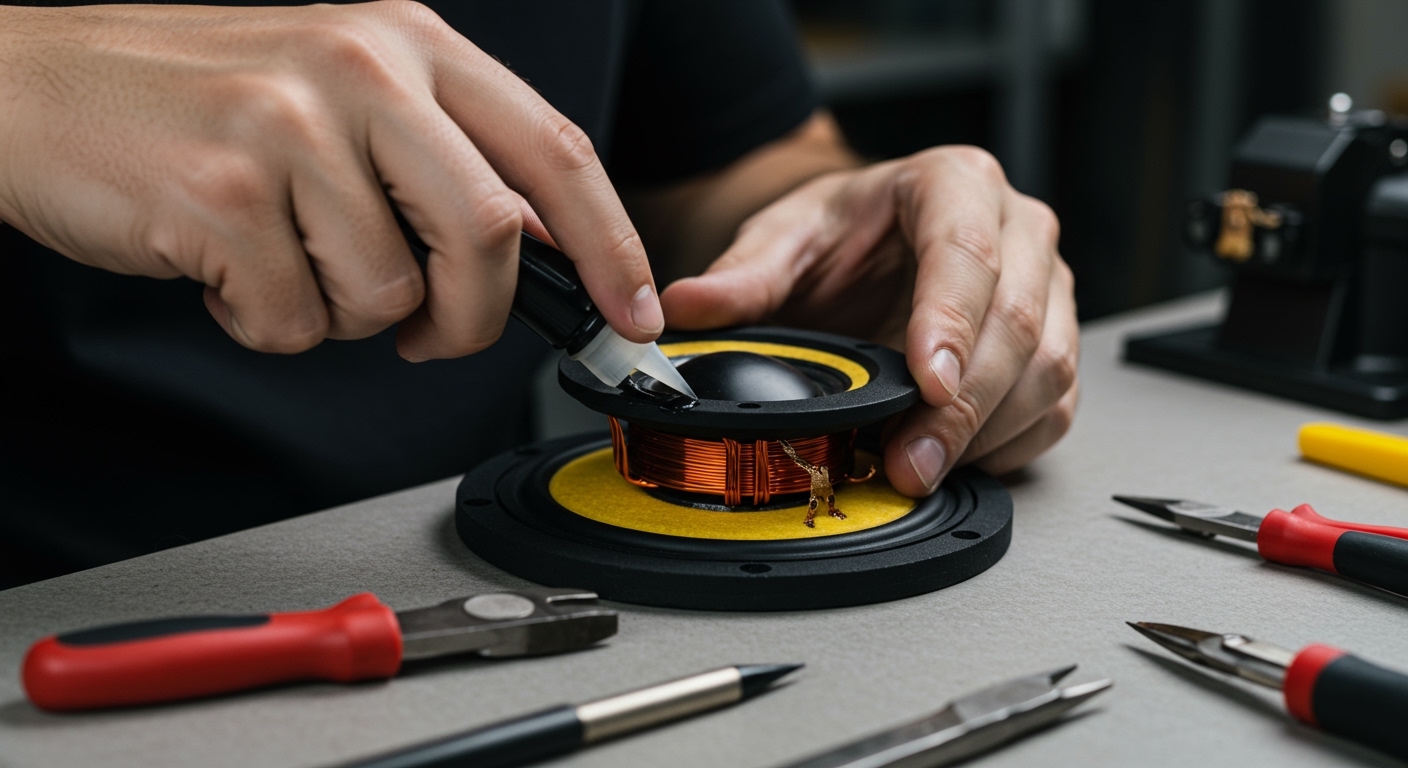
Apply a thin, consistent bead of two-part epoxy or high-strength CA glue to the “spider landing” (the flat metal shelf near the magnet). Carefully slide the spider down the voice coil until it sits flat on the glue. Press firmly with a blunt tool to ensure 100% contact.
Attaching the Cone
- Apply Adhesive to the Frame: Apply contact cement to the outer rim of the speaker frame.
- Apply Adhesive to the Coil: Apply a bead of specialized “coil-to-cone” glue (usually a black rubberized CA glue) to the area where the cone meets the voice coil former.
- The Drop: Carefully lower the cone over the voice coil. Press the outer surround onto the frame and ensure the inner hole of the cone is seated firmly against the spider and coil.
Pro Tip: I always let the spider glue cure for at least 30 minutes before attaching the cone. This prevents the “shifting” that happens when multiple wet glue joints pull against each other.
Step 5: Wiring and Final Adhesives
Your speaker is now physically assembled, but it needs an electrical connection.
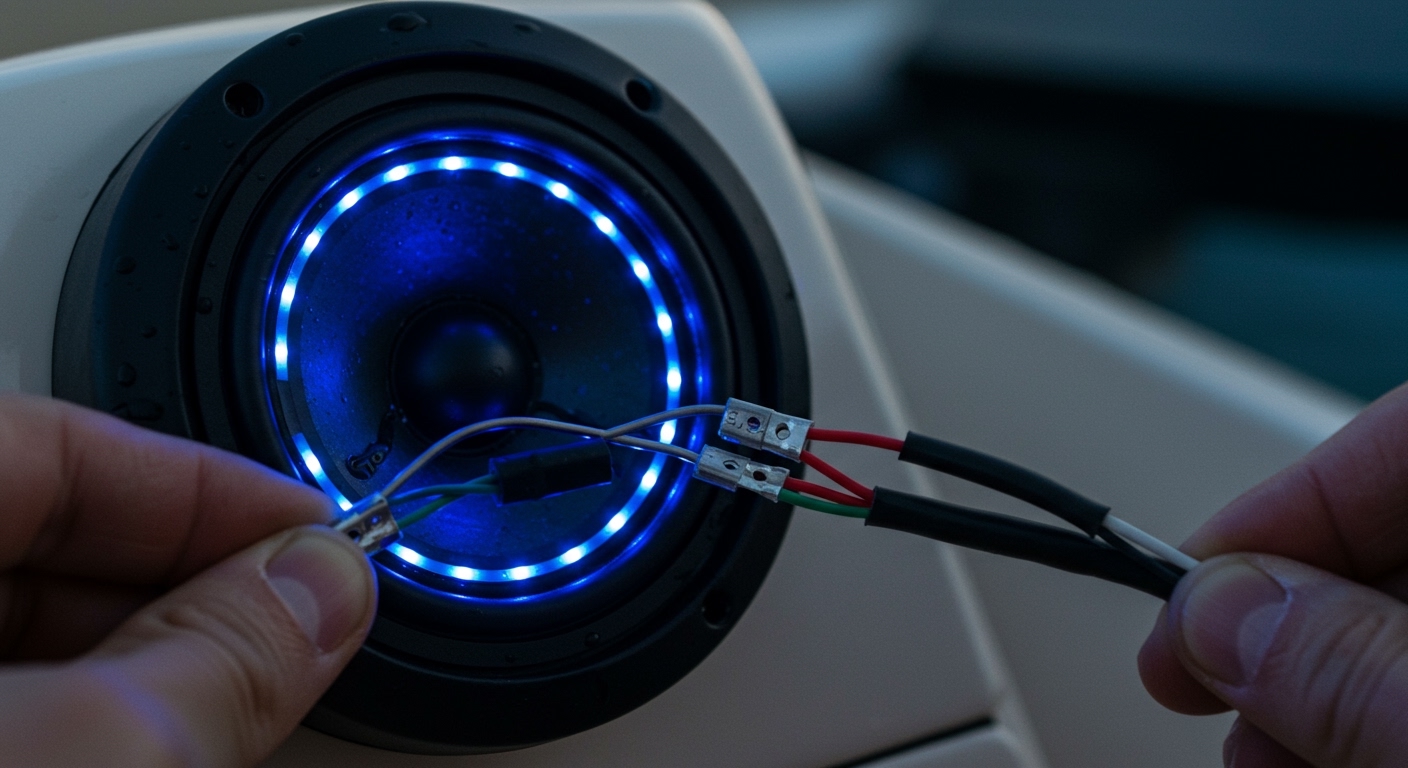
- The Lead Wires: Thread the flexible tinsel leads through the holes in the cone.
- The “Stress Relief” Bend: Leave a small amount of “slack” or a loop in the wire. This allows the cone to move back and forth (excursion) without snapping the wires.
- Soldering: Solder the leads to the terminals.
- Reinforcement: Apply a small dab of adhesive (often called “black tack”) over the spot where the leads exit the cone to prevent vibration fatigue.
Sealing the Coil Joint
Apply a final bead of adhesive around the junction where the voice coil, spider, and cone meet. This is the highest stress point of the speaker. We call this the “triple joint.” If this fails, the speaker will literally fly apart under high power.
Step 6: The Dust Cap and Curing
The final step in how to recone speakers is protecting the internals.
- Remove the Shims: Once the glue is 100% dry (usually 4–24 hours depending on the adhesive), carefully pull the shims out of the gap.
- The Movement Test: Gently press down on the cone with even pressure from both hands. It should move smoothly without any “scratching” or “rubbing” sounds.
- Install the Dust Cap: Apply a thin bead of glue to the lip of the dust cap and center it over the coil opening. This seals the magnetic gap from future dust.
Common Adhesives and Their Uses
| Glue Type | Application | Setting Time | Strength |
|---|---|---|---|
| Cyanoacrylate (CA) | Coil to Spider / Coil to Cone | 30 Seconds | Extremely High |
| Two-Part Epoxy | Spider to Frame | 5-10 Minutes | High (Rigid) |
| Rubber Contact Cement | Surround to Frame | 10 Minutes (Tacky) | Flexible |
| PVA/Acrylic Glue | Paper Dust Caps | 1 Hour | Moderate |
Troubleshooting Common Reconing Issues
Even if you follow the steps on how to recone speakers perfectly, issues can arise. Here is how I handle them in the shop:
The Voice Coil is Rubbing
- The Cause: Shims were removed too early, or the basket was slightly warped.
- The Fix: If the glue is still tacky, you can sometimes “shift” the spider. If it’s dry, you may have to cut the spider out and start over. This is why the “Dry Fit” is so important.
“Chuffing” or Air Leaks
- The Cause: A gap in the glue bead around the surround or the dust cap.
- The Fix: Use a brush to apply a thin layer of latex sealant or more contact cement over the suspected leak area.
Lead Wire Slap
- The Cause: Lead wires are too long and are hitting the back of the cone during high excursion.
- The Fix: Shorten the leads or use a small piece of foam or adhesive to dampen their movement.
Frequently Asked Questions (FAQ)
Is it better to recone a speaker or buy a new one?
If the speaker is a high-end model (e.g., JBL, EV, Tannoy), reconing is much better because it maintains the original magnetic structure and costs significantly less. For cheap, “entry-level” speakers, the labor and kit cost often exceed the price of a new unit.
How long does a reconed speaker last?
If done correctly with high-quality components, a reconed speaker will last as long as a brand-new one—typically 10 to 20 years depending on environment and usage.
Can I recone a speaker without a factory kit?
You can buy “generic” kits, but I don’t recommend it for beginners. Factory kits are precisely engineered for the correct weight and impedance. Using a generic kit can change the Thiele/Small parameters, resulting in poor sound quality in your specific cabinet.
What happens if I don’t clean the magnet gap?
Any debris left in the gap will eventually wear through the insulation of the voice coil wire. This causes the speaker to short-circuit, which can destroy your power amplifier.
How long should I wait before playing music?
I recommend a 24-hour cure time at room temperature. After that, perform a “break-in” by playing a low-frequency sine wave (around 30Hz) at low volume for an hour to loosen up the new suspension.
Expert Final Tip: Always keep your shims until the very end. I’ve seen many DIYers pull shims too early, only for the heavy cone to sag slightly while the glue is still “gassing off,” leading to a permanent coil rub. Patience is the most important tool in your kit.