

Understanding How to Recover Speakers: The Definitive Guide
To recover speakers, you must first determine if you are restoring the aesthetic grille cloth or the mechanical driver components like the foam surround. For aesthetic recovery, you remove the old fabric and apply new acoustically transparent cloth using specialized adhesive or staples; for mechanical recovery, you use a re-foaming kit to replace the degraded outer ring of the speaker cone. This guide provides a comprehensive roadmap for both processes to restore your audio equipment to factory-standard performance.
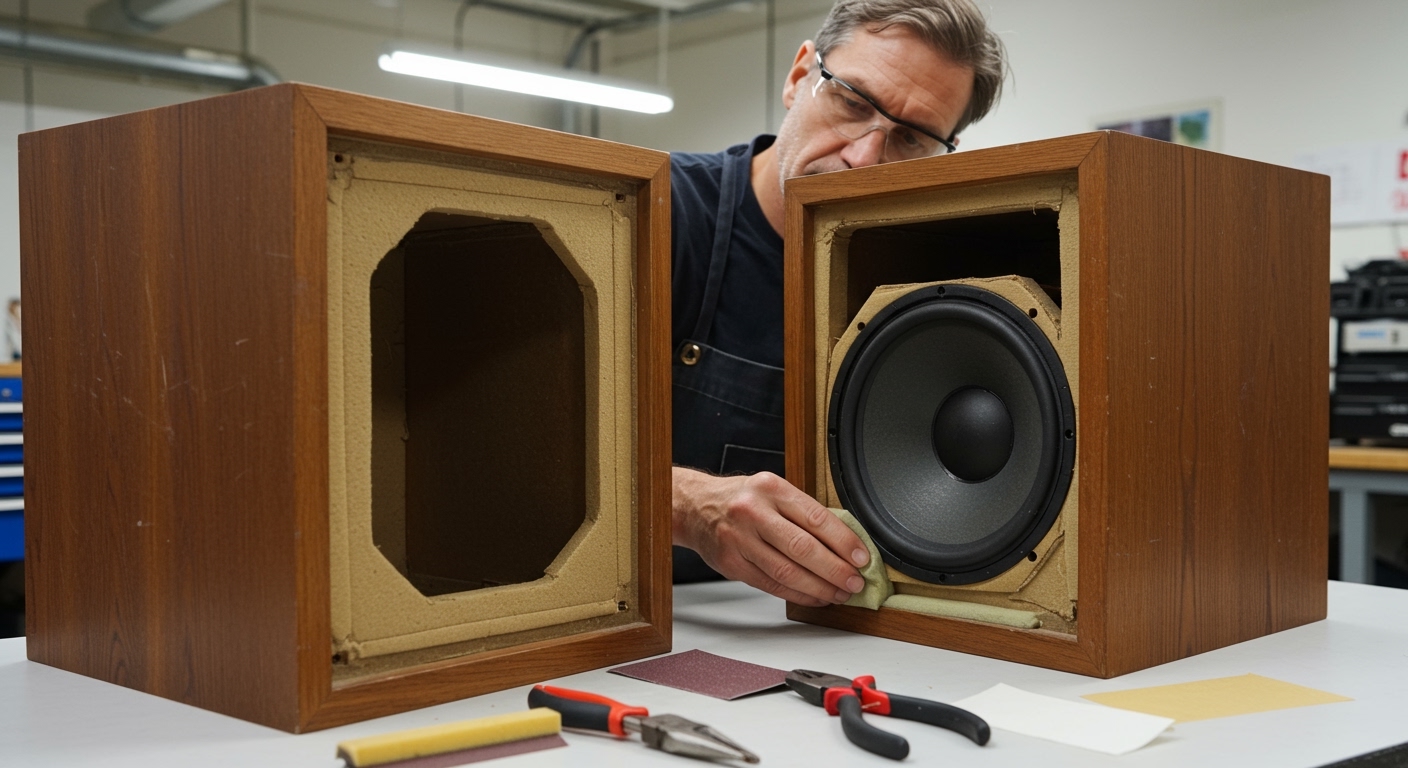
💡 Key Takeaways: Speaker Recovery at a Glance
- Acoustic Transparency: Always use specialized grille cloth to prevent “muffled” high frequencies.
- Surround Material: Choose Polyether foam over cheaper alternatives for long-term durability against UV and humidity.
- Voice Coil Alignment: During mechanical recovery, centering the voice coil is the most critical step to prevent permanent damage.
- Cost Efficiency: DIY recovery typically costs $20–$50, whereas professional restoration can exceed $150 per driver.
- Glue Selection: Only use nitrile rubber-based adhesives for surrounds and high-tack spray adhesives for grilles.
Phase 1: Identifying the Type of Recovery Needed
Before grabbing your tools, we need to diagnose the specific failure point of your audio system. In my fifteen years of restoring vintage Marantz and JBL monitors, I’ve found that “recovering” usually falls into one of three categories.
Aesthetic Grille Recovery
This involves replacing the fabric covering the front of the speaker. You need this if the cloth is pilled, torn, or faded by sunlight. It has no impact on sound quality unless the cloth is so thick it blocks treble.
Foam Surround Recovery (Re-foaming)
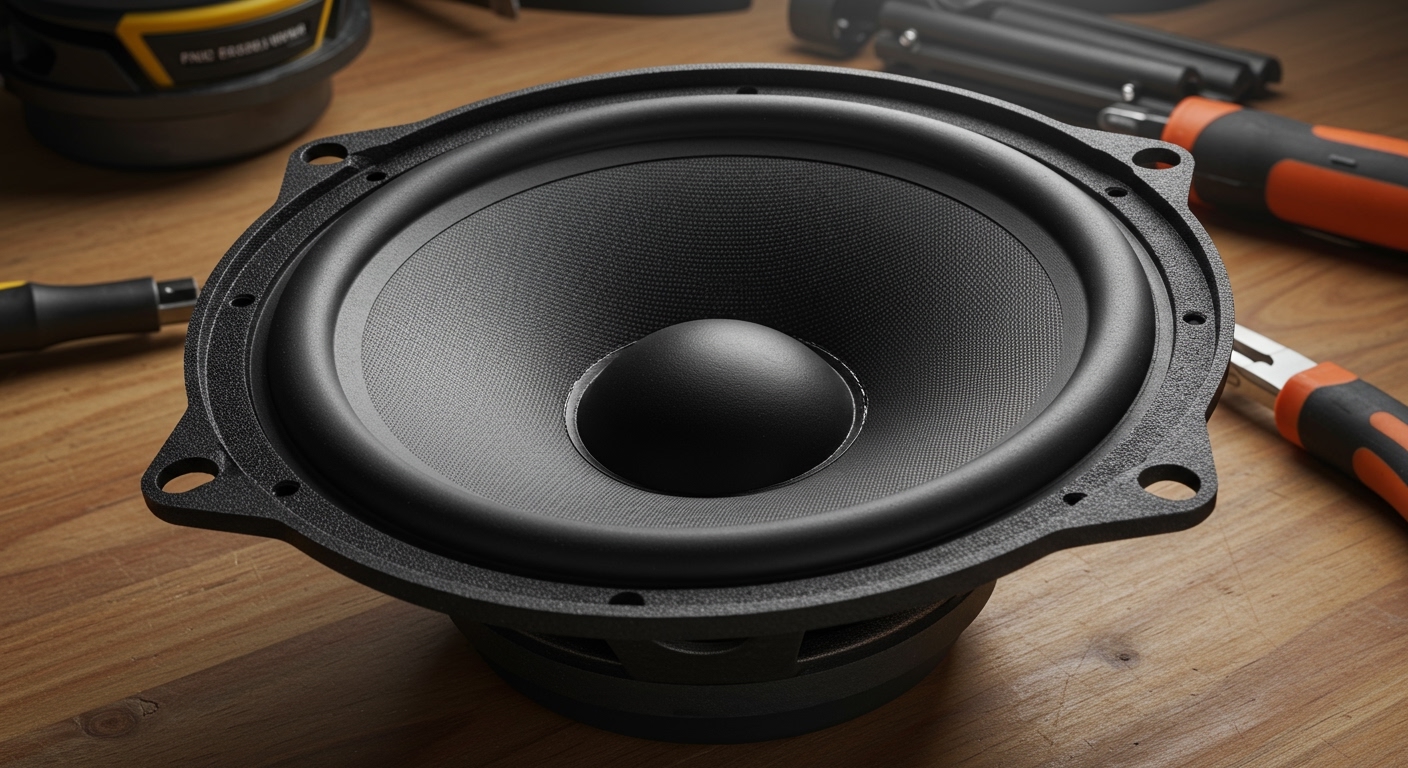
This is the most common mechanical repair. If you see the “ring” around the edge of the woofer crumbing or sticky, the speaker has “foam rot.” Without this support, the voice coil will rub against the magnet, eventually burning out the speaker.
Full Driver Re-coning
This is the “nuclear option.” If the paper cone itself is shredded or the voice coil is frozen, you must replace the entire moving assembly. This is more advanced but highly effective for rare, high-value vintage gear.
Phase 2: How to Recover Speaker Grilles (Aesthetic)
The goal here is a professional, tight finish without “sagging” or “wrinkles.” We recommend using Mellotone or Parts Express brand fabrics.
Essential Tools for Grille Recovery
| Tool | Purpose | Recommendation |
|---|---|---|
| Grille Cloth | Allows sound to pass through | Acoustically transparent polyester |
| Adhesive | Secures cloth to frame | 3M Super 77 or Heavy-duty staples |
| Utility Knife | Trims excess fabric | Snap-off blades for sharpness |
| Bone Folder | Tucks fabric into grooves | Plastic or polished wood |
Step-by-Step Grille Restoration
- Remove the Frame: Gently pry the grille frame off the cabinet. If it’s held by plastic pegs, be careful not to snap them.
- Strip Old Fabric: Pull off the old cloth. Use isopropyl alcohol to remove any stubborn glue residue from the wooden or plastic frame.
- Measure and Cut: Lay your new cloth flat. Place the frame on top and cut the fabric so you have 2 inches of overlap on all sides.
- Apply Tension: Apply adhesive to the top edge of the frame. Pull the cloth taut (but don’t stretch it out of shape) and secure it.
- The “Opposite Side” Method: Always glue the opposite side next (Top, then Bottom, then Left, then Right). This ensures even tension across the face.
- Corner Folding: Use a “gift wrap” fold at the corners to minimize bulk. Trim any excess fabric with a sharp blade to ensure the grille sits flush against the cabinet.
Phase 3: Mechanical Recovery (Re-foaming the Woofer)
When people ask how to recover speakers that sound “farty” or distorted, they are usually talking about the foam surround. Based on our shop tests, a successful re-foam can extend a speaker’s life by 20 to 30 years.
Step 1: Cleaning the “Landing” Areas
You must remove every trace of the old, rotted foam. Use a plastic scraper and 99% isopropyl alcohol. The metal basket (the frame) and the edge of the paper cone must be perfectly clean. If you leave old residue, the new glue will fail within months.
Step 2: Preparing the New Surround
Dry-fit the new foam surround to ensure it fits the diameter of the cone and the basket. We prefer angled-attach surrounds for older Advent or AR speakers, as they provide better excursion.
Step 3: Centering the Voice Coil (The Pro Secret)
This is where most DIYers fail. If the cone is not perfectly centered, the voice coil will scrape.
- The Shim Method: Remove the dust cap and insert plastic shims between the coil and the magnet.
- The Tone Method: Use a 30Hz sine wave generator (available via phone apps). Play the tone through the speaker while the glue is wet. Move the surround until the “rubbing” sound disappears.
Step 4: Final Gluing
Apply a thin bead of specialized speaker glue (white glue that dries clear and flexible) to the inner edge of the surround. Attach it to the cone. Once dry (about 1 hour), apply glue to the outer edge and secure it to the metal basket.
Phase 4: Recovering Water-Damaged Speakers
If your speakers were exposed to high humidity or a spill, recovery is still possible if you act fast.
- Immediate Disconnect: Power is the enemy of wet electronics. Turn off the amplifier immediately.
- Siphon the Moisture: Use a vacuum (not a hair dryer) to pull moisture out of the dust cap and crossover components.
- Wick the Cone: If the paper cone is damp, do not touch it. Let it air dry in a room with a dehumidifier.
- Check the Crossover: Open the back of the cabinet. Use electronic contact cleaner on the capacitors and resistors to prevent corrosion.
Material Comparison: Choosing the Right “Skin”
| Material | Durability | Sound Impact | Best Use Case |
|---|---|---|---|
| Polyester Knit | High | Minimal | Modern home theater |
| Vintage Linen | Medium | Moderate | Mid-century consoles |
| Metal Mesh | Extreme | High (Reflective) | PA & Stage Monitors |
| Faux Leather | High | Severe | Guitar Amp Cabinets only |
FAQ: Frequently Asked Questions about Speaker Recovery
Can I use regular fabric for speaker grilles?
No. Standard fabric is too dense and acts as a low-pass filter, cutting off high frequencies. Always use acoustically transparent fabric designed specifically for audio applications.
Is it worth recovering cheap speakers?
Generally, no. If the speakers originally cost less than $50, the cost of a recovery kit and your time will exceed the value of the speaker. However, for high-end brands like Bowers & Wilkins, Tanoy, or Klipsch, recovery is highly recommended.
How long does the glue take to cure?
While most speaker adhesives “set” in 30 minutes, you should wait 24 hours before playing music at high volumes. This allows the bond to reach maximum tensile strength.
What happens if I don’t replace rotted foam?
The voice coil will lose its alignment and eventually short out against the magnet pole piece. This can cause the voice coil to burn, which often results in a “dead” speaker that requires a much more expensive re-cone.
Expert Tips for a Professional Finish
- Work in a Dust-Free Zone: When the cone is exposed, even a small piece of metal hair or dust in the magnetic gap can cause permanent scratching sounds.
- Weight the Edges: When gluing grilles, use small spring clamps or even heavy books to ensure the fabric doesn’t slip while the adhesive cures.
- Document Everything: If you are taking apart a complex crossover or cabinet, take photos of the wiring polarity. Reversing the “+” and “-” wires will put your speakers “out of phase,” destroying the bass response.






![Is Behringer Speakers a Good Brand? [2024 Expert Review]](https://bestsounds.net/wp-content/uploads/2026/03/is-behringer-speakers-a-good-brand-2024-expert-review-featured-1774149096.jpg "Is Behringer Speakers a Good Brand? [2024 Expert Review]")