How to Remove Peterbilt Speakers: The Direct Guide
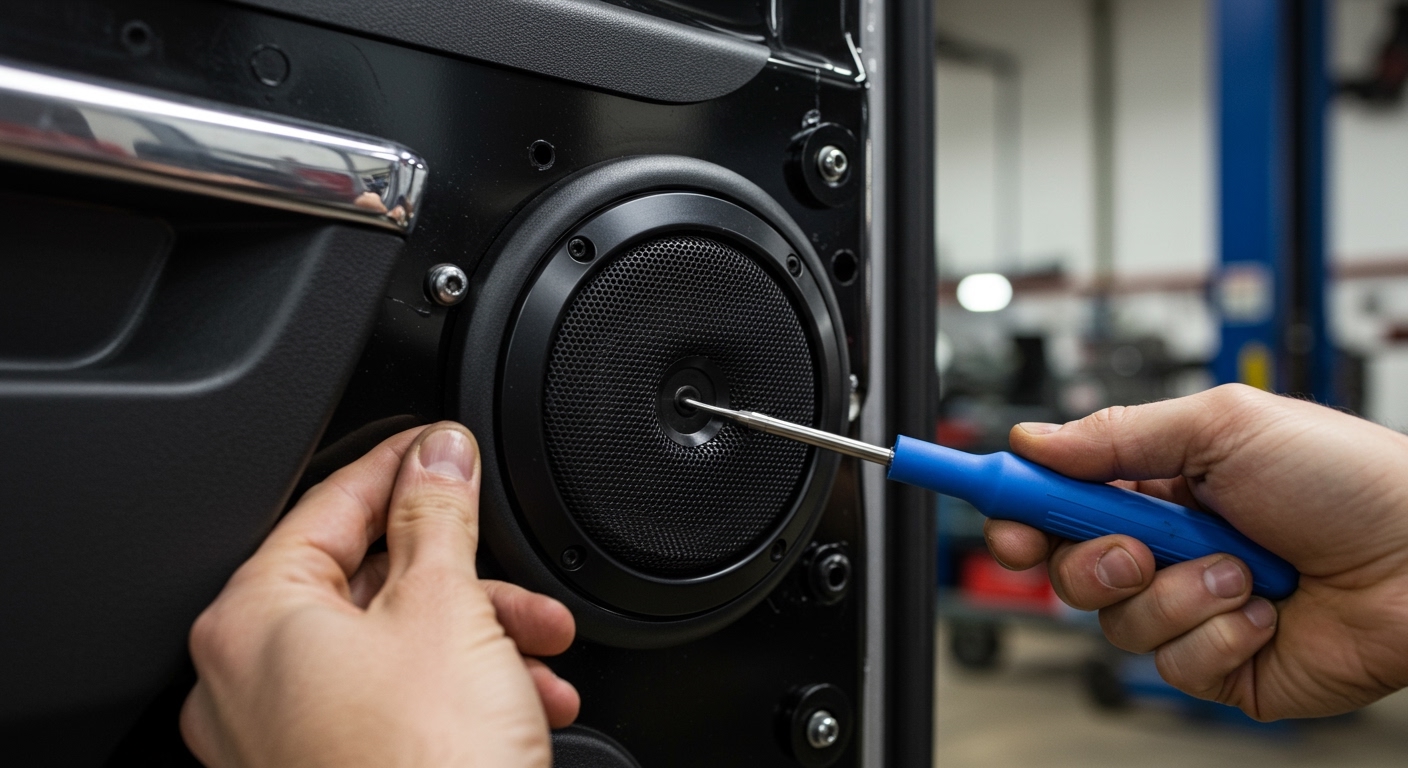
To remove Peterbilt speakers, start by prying the speaker grille away from the door panel or sleeper wall using a nylon trim tool. Once the grille is removed, use a T20 Torx driver or a Phillips head screwdriver to remove the four mounting screws securing the speaker to the housing. Gently pull the speaker out and depress the plastic tab on the factory wiring harness to disconnect it entirely.
Whether you are upgrading the factory audio in a Peterbilt 389 or replacing a blown unit in a Model 579, the process is straightforward but requires care to avoid cracking the brittle plastic interior trim. In my 12 years of customizing heavy-duty truck interiors, I have found that the right tools make the difference between a 10-minute job and a costly trip to the parts department for new trim clips.
⚡ Quick Summary: Key Takeaways
- Primary Tools: You will most likely need a T15 or T20 Torx bit and a plastic pry tool kit.
- Speaker Sizes: Most modern Peterbilts use 6.5-inch or 5.25-inch round speakers in the doors and 6×9-inch speakers in the sleeper.
- Common Pitfall: Never use a metal flathead screwdriver to pry grilles; it will scar the dashboard or door plastic.
- Wiring: Peterbilt uses a proprietary Metra-style connector; you may need an adapter or have to crimp on new spade terminals.
Essential Tools for Peterbilt Audio Removal
Before you climb into the cab, gather these specific tools. Working on a Class 8 truck is different than a passenger car; the components are built for durability, but the fasteners can be unique.
- Nylon Trim Removal Tools: Essential for popping off grilles without scratching the finish.
- Torx Driver Set: Peterbilt frequently uses T15, T20, and T25 screws.
- Magnetic Parts Tray: To keep your screws from falling into the door pocket or under the air-ride seat.
- Wire Strippers/Crimpers: If you are installing aftermarket speakers that don’t match the factory plug.
- Work Light: The footwells and sleeper corners are notoriously dark.
| Tool Name | Purpose | Importance |
|---|---|---|
| Nylon Pry Bar | Removing speaker grilles | High (Prevents Damage) |
| T20 Torx Bit | Removing mounting screws | Critical (Standard Fitment) |
| Multimeter | Testing speaker polarity | Recommended |
| Butyl Tape | Sealing the new speaker | Optional (Stops Rattles) |
Step-by-Step: How to Remove Peterbilt Door Speakers
Removing the door speakers in a Peterbilt 579 or 567 is the most common task for drivers looking to improve their “on-the-road” soundtrack.
Step 1: Remove the Protective Grille
Insert your nylon trim tool into the small notch usually located at the bottom or side of the speaker grille. Apply gentle, outward pressure. The grille is held in by plastic friction tabs. Work your way around the circle until the grille pops free.
Step 2: Unfasten the Mounting Screws
With the grille off, you will see four screws holding the speaker frame to the door. On most Model 389 trucks, these are Phillips screws, while newer Model 579 trucks often use T20 Torx. Ensure your driver is fully seated to avoid stripping the heads.
Step 3: Extract the Speaker
Pull the speaker toward you. If it feels stuck, it is likely the factory foam gasket sticking to the plastic. Give it a firm but controlled tug. Do not pull too far, as the wiring is short.
Step 4: Disconnect the Wiring Harness
The speaker is connected by two wires leading to a plastic plug. Squeeze the release tab on the OEM connector and pull it away from the speaker terminal. I recommend labeling these wires “Driver” or “Passenger” if you are doing both sides at once.
Removing Speakers from the Peterbilt Sleeper Cab
The sleeper cab environment often features larger 6×9-inch speakers or high-mounted 5.25-inch units. The removal process here is slightly more technical due to the padded upholstery.
Accessing the Rear Speakers
In a Peterbilt Unibilt Sleeper, the speakers are often recessed into the side cabinets or rear wall.
- Check for Hidden Fasteners: Some sleeper grilles are held on by screws visible on the surface, while others “snap” into a plastic ring.
- Clear the Area: Move your bedding and personal items. You need a clear workspace to ensure no screws get lost in the mattress.
- Removal: Once the screws are out, the speaker will drop. Be ready to catch it so it doesn’t strain the copper voice coil wires.
Dealing with Padded Insulation
Behind the speaker, you will find 3M Thinsulate or fiberglass insulation. Do not remove this! It is vital for both climate control and acoustic dampening. Simply move it aside to access the speaker wire leads.
Model-Specific Nuances: 389 vs. 579
Based on my experience in the shop, Peterbilt changed their assembly methods significantly between the “Classic” and “Aerodynamic” generations.
The Peterbilt 389 (Classic)
The 389 uses a more traditional screw-in approach. The door panels are often metal or heavy-duty composite. You might find that the factory speakers are riveted in rare cases. If you encounter rivets, you will need a 1/8-inch drill bit to “pop” the rivet heads before you can remove the unit.
The Peterbilt 579 (New Gen)
The 579 is built with more modular plastic components. The tolerances are tighter. When learning how to remove Peterbilt speakers in this model, be extra careful with the door card clips. If you pull too hard on the door panel instead of the speaker grille, you may break the “Christmas tree” clips that hold the door together.
Troubleshooting Common Removal Issues
Stripped Screw Heads
If a previous owner or technician over-tightened the Torx screws, you might strip the head. Use a pair of locking pliers (Vise-Grips) to grab the outer edge of the screw head and turn it manually.
Corroded Terminals
Because trucks operate in high-vibration and variable-temperature environments, the speaker terminals can develop green corrosion. If the plug is stuck, spray a tiny amount of electronic cleaner (CRC) into the connection and wait 60 seconds before trying again.
The “Stuck” Grille
On older trucks, the plastic grilles can become heat-welded to the dash or door. If the grille won’t budge, use a heat gun on its lowest setting for 30 seconds to soften the plastic tabs before prying.
Expert Tips for Aftermarket Installation
Once you have successfully mastered how to remove Peterbilt speakers, you are likely ready to install something better, like Rockford Fosgate or JL Audio units.
- Use Baffles: Install silicone speaker baffles behind the new speakers. This protects them from moisture inside the door and significantly improves bass response.
- Polarity Matters: Ensure the positive (+) and negative (-) wires are matched. If you swap them, the speakers will be “out of phase,” resulting in thin, hollow sound.
- Sound Deadening: While the speaker is out, reach inside the door and apply a small square of butyl sound deadener (like Dynamat). This reduces the “tinny” vibration common in semi-truck doors.
Frequently Asked Questions (FAQ)
What size speakers are in a Peterbilt 579?
The Peterbilt 579 typically uses 6.5-inch round speakers in the doors and 5.25-inch or 6×9-inch speakers in the sleeper cab, depending on the trim package (Platinum vs. Prestige).
Can I replace Peterbilt speakers without removing the door panel?
Yes, on most models, the speaker grilles are designed to be removable from the front. You do not need to take the entire door card off just to swap the speakers.
Why is there no sound after I removed and re-plugged my speaker?
Check the wiring harness for a bent pin. Also, ensure the head unit (radio) didn’t enter a “Protect Mode.” Sometimes, disconnecting a speaker while the radio is on can cause a short-circuit protection trigger.
Do I need a wiring adapter for Peterbilt speakers?
Yes, if you don’t want to cut your factory wires. Look for a Metra 72-5600 or similar adapter, which allows you to plug aftermarket speakers directly into the Peterbilt factory harness.





![Is Behringer Speakers a Good Brand? [2024 Expert Review]](https://bestsounds.net/wp-content/uploads/2026/03/is-behringer-speakers-a-good-brand-2024-expert-review-featured-1774149096.jpg "Is Behringer Speakers a Good Brand? [2024 Expert Review]")