

Why Learning How to Replace Foam on Speakers Saves Your Audio Setup
To replace foam on speakers, you must first remove the deteriorated surround, clean the cone and frame with isopropyl alcohol, and then carefully adhere a new foam ring using a nitrile-based adhesive. This process, known as “refoaming,” restores the driver’s structural integrity and prevents the voice coil from rubbing against the magnet, which can cause permanent damage.
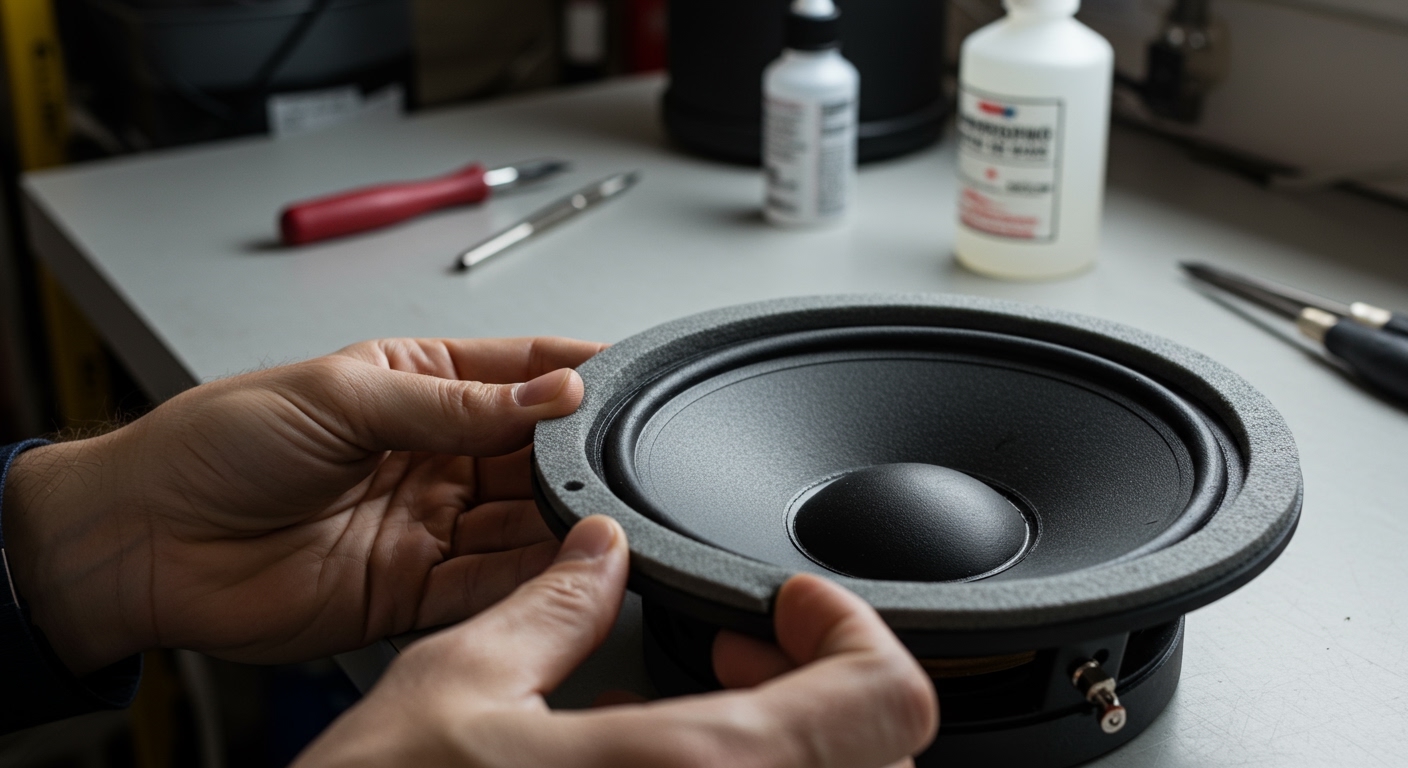
Many audiophiles believe that once a speaker surround starts to crumble, the speaker is trash. In my years of restoring vintage JBL, Advent, and Bose cabinets, I’ve found that 95% of these drivers are perfectly salvageable. Refoaming is a high-reward DIY project that costs roughly $20 to $40, whereas a professional recone or replacement can exceed $200 per driver. By following this guide, you can restore your high-fidelity sound and extend the life of your equipment by another 15 to 20 years.
TL;DR: Quick Key Takeaways
- Total Time: 2-4 hours (excluding curing time).
- Difficulty: Moderate (requires patience and steady hands).
- Essential Tools: New foam kit, Isopropyl Alcohol (90%+), utility knife, and specialized speaker glue.
- Primary Goal: Centering the voice coil to prevent “coil rub.”
- Cost Savings: Approximately 85% cheaper than buying new high-end drivers.
Understanding “Foam Rot” and When to Act
Speaker surrounds are typically made of polyester-based foam, which is chosen for its flexibility and “compliance.” However, environmental factors like humidity, UV light, and ozone cause the foam to undergo a chemical breakdown called hydrolysis.
If you notice your bass sounds “thin,” “rattling,” or “distorted” at higher volumes, you likely have foam rot. I recommend performing a visual inspection every five years. If the foam feels sticky, brittle, or has visible cracks, it is time to learn how to replace foam on speakers before the voice coil becomes misaligned and burns out.
Surround Material Comparison Table
| Material | Longevity | Sound Characteristic | Best For |
|---|---|---|---|
| Foam | 10-20 Years | High Compliance, Natural Bass | Vintage Hi-Fi, Home Theater |
| Rubber (Butyl) | 30+ Years | Dampened, Slightly Heavier | Subwoofers, Car Audio |
| Cloth (Treated) | 40+ Years | Stiff, Fast Response | Pro Audio, Guitar Amps |
Tools and Materials You Will Need
Before starting, gather these specific items. Using the wrong glue or cleaning agent is the most common reason for DIY failure.
- Replacement Foam Kit: Ensure it matches your specific speaker model (e.g., JBL L100 or Bose 901).
- Specialized Speaker Adhesive: Usually a white, water-based glue or a clear nitrile-based solvent.
- Isopropyl Alcohol: 91% or 99% concentration is best for dissolving old residues.
- Scraper Tools: A flat-head screwdriver, utility knife, or a specialized dental pick.
- Microfiber Cloths: For cleaning without leaving lint.
- Signal Generator App: Used for centering the cone (optional but recommended).
Step 1: Removing the Speaker Driver
Start by removing the driver from the cabinet. Most speakers use Phillips-head screws or Hex bolts.
Gently pry the driver out. I always recommend labeling the wires with masking tape—Positive (+) and Negative (-)—to ensure correct phase during reinstallation. Once the wires are disconnected, place the driver on a clean, flat workbench. If the speaker has a decorative plastic gasket covering the foam, carefully pry it off; we will reuse this later.
Step 2: Cleaning the Frame and Cone (The Most Critical Step)
You cannot glue new foam to old residue. This is where most beginners fail.
Cleaning the Metal Frame
Use your utility knife or scraper to remove the bulk of the old foam from the outer metal frame (the basket). Once the heavy debris is gone, soak a cloth in isopropyl alcohol and scrub the surface until the metal is shiny and free of tackiness.
Cleaning the Speaker Cone
This requires a delicate touch. If your cone is made of pressed paper, be careful not to tear the fibers.
- Scrape the old foam away from the outer edge of the cone using your fingernail or a dull plastic scraper.
- Wipe the edge with a small amount of alcohol.
- Pro Tip: If the cone is extremely fragile, I often use a slightly dampened Q-tip to “roll” the old glue off rather than scraping it.
Step 3: Dry-Fitting the New Foam
Before applying any glue, place the new foam ring on the speaker.
- The inner edge of the foam should overlap the cone by about 1/4 inch.
- The outer edge should sit flush on the metal frame.
- If the foam is too large, you may have the wrong kit. If it’s slightly off-center, adjust it now to see how much “play” you have.
Step 4: Gluing the Foam to the Cone
We glue the inner edge first. Apply a thin, consistent bead of speaker adhesive to the underside of the inner foam lip or the top edge of the cone (depending on whether the foam mounts on top or behind).
- Press the foam onto the cone.
- Use your fingers to “massage” the foam into the glue, ensuring there are no air pockets.
- Let this bond dry for at least 1 hour. The foam must be securely attached to the cone before you attempt to glue it to the frame.
Step 5: Centering the Voice Coil
This is the “make or break” moment in learning how to replace foam on speakers. If the cone is not perfectly centered, the voice coil will rub against the magnet, creating a scratchy sound.
The “Feel” Method (Manual)
Gently push the cone up and down. If you feel or hear a “scratch,” the coil is misaligned. Shift the foam on the frame until the movement is silent and smooth.
The “Tone” Method (Professional)
Connect the speaker to an amplifier and play a 30Hz to 50Hz sine wave at low volume. The vibration will naturally help the cone find its “center.” While the tone is playing, you can apply the glue to the outer frame.
The “Shim” Method
This involves cutting off the dust cap and inserting plastic shims between the coil and the magnet. This is the most accurate method but requires replacing the dust cap afterward. I recommend this for high-excursion subwoofers.
Step 6: Gluing the Foam to the Frame
Once centered, lift the outer edge of the foam and apply a bead of glue to the metal frame.
- Lower the foam onto the glue.
- Press down firmly around the entire circumference.
- If you removed a gasket in Step 1, apply glue to the bottom of the gasket and place it on top of the foam. This acts as a clamp while the glue dries.
- Allow the speaker to cure for 24 hours in a dry environment.
Common Mistakes to Avoid
- Using the Wrong Glue: Never use Super Glue or Gorilla Glue. They dry too brittle and will crack the foam or the cone. Use only flexible nitrile or PVA-based speaker adhesives.
- Rushing the Cleaning: Any leftover old foam will create an uneven surface, leading to air leaks and eventual bond failure.
- Over-gluing: A thin, even layer is better than a thick glob. Excess glue adds weight to the cone, which can change the Thiele/Small parameters and affect sound quality.
FAQ: Frequently Asked Questions
Can I use any foam for my speakers?
No. You must use foam specifically sized for your driver’s diameter and “roll” height. A foam ring that is too stiff will reduce bass response, while one that is too thin may tear under high volume. Always search for a kit matching your specific model number.
How long does speaker refoaming last?
When done correctly with high-quality polyether foam, a refoam job should last 15 to 25 years. Keeping your speakers out of direct sunlight and in a climate-controlled room will maximize this lifespan.
Is it worth refoaming cheap speakers?
Generally, if the speakers cost less than $50 new, the time and material cost might not be worth it. However, for vintage brands like Advent, AR, JBL, Tannoy, or Infinity, refoaming is always worth the investment as these drivers are often superior to modern entry-level replacements.
Do I need to remove the dust cap?
Only if you are using the shim method for centering. For most standard 6-inch to 10-inch woofers, the “test tone” or “manual feel” method is sufficient and keeps the original aesthetics of the speaker intact.
How soon can I play music after refoaming?
Wait at least 24 hours. While the glue may feel dry to the touch in an hour, it needs a full day to reach its maximum structural bond strength. Playing music too early can pull the foam out of alignment.




![Is Behringer Speakers a Good Brand? [2024 Expert Review]](https://bestsounds.net/wp-content/uploads/2026/03/is-behringer-speakers-a-good-brand-2024-expert-review-featured-1774149096.jpg "Is Behringer Speakers a Good Brand? [2024 Expert Review]")