How to Separate Magnets From Speakers: The Definitive Guide
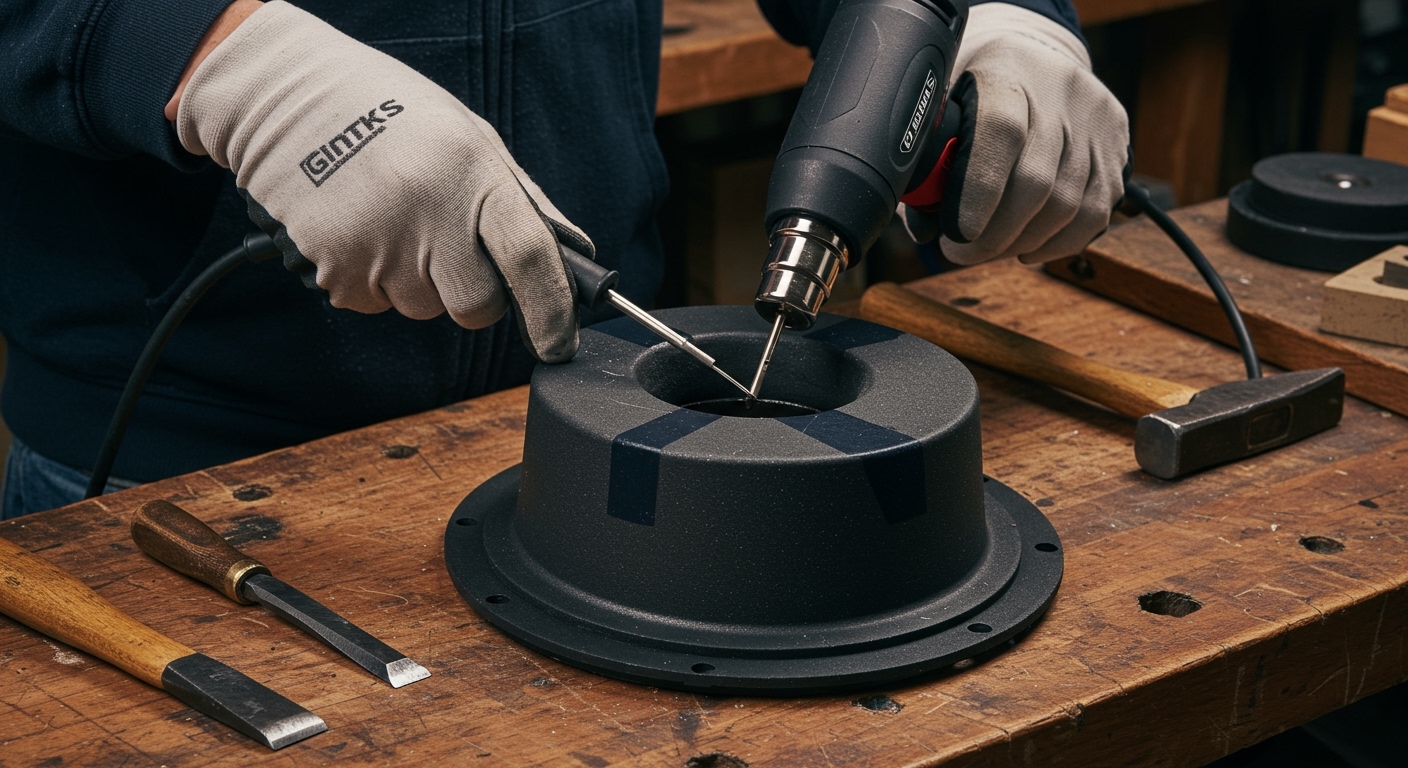
To learn how to separate magnets from speakers, you must break the high-strength epoxy or anaerobic adhesive bond between the magnet and the steel frame. In my experience, the most effective method involves applying localized heat with a heat gun to soften the glue, followed by a controlled mechanical strike with a chisel and hammer. Always wear heavy-duty gloves and eye protection, as magnets—especially ceramic or ferrite types—can shatter under stress.
TL;DR: Quick Summary for Magnet Removal
- Best Tool: A Variable Temperature Heat Gun set to roughly 250°F – 300°F.
- Key Technique: Soften the epoxy bond, then use a flat-head screwdriver or chisel as a wedge.
- Safety Warning: High-strength magnets (like Neodymium) can snap together with enough force to crush fingers.
- Difficulty: Moderate (Requires patience to avoid shattering the brittle magnet material).
Understanding Speaker Magnet Construction
Before you begin, it is vital to understand what you are working with. Most speakers utilize a Permanent Magnet Motor Structure consisting of three main parts: the top plate, the magnet ring, and the back plate (yoke).
These components are typically fused using industrial-grade adhesives designed to withstand decades of vibration and temperature fluctuations. In our workshop, we frequently see Ferrite (Ceramic) magnets in older or larger speakers and Neodymium (Rare Earth) magnets in modern, high-end, or portable equipment.
Common Magnet Materials Found in Speakers
| Magnet Type | Appearance | Magnetic Strength | Brittleness | Common Use |
|---|---|---|---|---|
| Ferrite / Ceramic | Dark gray, stone-like | Moderate | High (shatters easily) | Woofers, Guitar Amps |
| Neodymium | Shiny, silver/nickel | Extremely High | Moderate | Tweeters, Headphones |
| Alnico | Metallic, often painted | High | Low | Vintage Hi-Fi Speakers |
Essential Tools for Magnet Separation
When I first started salvaging magnets for DIY generators, I ruined dozens by being too aggressive. You need the right tools to ensure the magnet remains intact.
- Heat Gun: Essential for breaking down the chemical structure of the epoxy.
- Flat-Head Chisel: Used to create a physical gap between the magnet and the steel basket.
- Ball-Peen Hammer: Provides the necessary kinetic force for separation.
- Heavy Duty Workbench & Vice: To keep the speaker assembly stationary.
- Personal Protective Equipment (PPE): Including Kevlar-lined gloves and polycarbonate safety goggles.
- Acetone or Isopropyl Alcohol: For cleaning up leftover adhesive residue.
Safety First: The Hidden Dangers of Magnet Salvage
Learning how to separate magnets from speakers involves inherent risks that many DIYers overlook. Ferrite magnets are essentially a type of ceramic; when they break, they produce razor-sharp shards.
Furthermore, Neodymium magnets are surprisingly powerful. If you are separating two magnets and they slip, they can fly toward each other at high velocity. We have seen cases where this resulted in “blood blisters” or even fractured finger bones. Always keep your hands clear of the “pinch zone” between the magnet and any nearby steel surfaces.
Method 1: The Heat and Impact Technique (Recommended)
This is the “Gold Standard” for how to separate magnets from speakers without damaging the magnet itself. Heat expands the metal plates and softens the glue simultaneously.
Step 1: Remove the Cone and Voice Coil
Use a utility knife to cut the surround (the outer edge of the cone) and the spider (the corrugated fabric near the magnet). Pull the entire cone and voice coil assembly out of the basket. This exposes the top plate.
Step 2: Apply Localized Heat
Set your heat gun to a medium-high setting. Focus the heat on the seam where the magnet meets the steel plate. I recommend rotating the speaker slowly for 3–5 minutes. You are aiming to reach a temperature where the glue begins to “off-gas” or smell slightly sweet.
Step 3: Position the Chisel
Place the edge of your chisel exactly at the glue line between the magnet and the back plate. Angle the chisel slightly away from the magnet core to avoid direct impact on the brittle material.
Step 4: The Separation Strike
Give the chisel a firm, sharp tap with your hammer. If the glue is sufficiently softened, you will see a small crack form. Continue moving around the circumference of the magnet, tapping gently until the epoxy bond fails and the magnet pops off.
Method 2: The Solvent Soak (For Delicate Tweeters)
If you are working with small Neodymium magnets in tweeters, heat might demagnetize them (Neodymium loses its properties at lower temperatures than Ferrite). In these cases, a chemical approach is better.
- Submerge the Seam: Place the magnet assembly in a shallow container of 90% Isopropyl Alcohol or Acetone.
- Wait Time: Let it soak for 12–24 hours. The solvent will slowly wick into the epoxy and weaken it.
- Manual Leverage: Use a thin putty knife to gently pry the plates apart.
Method 3: The Cold Temperature Method
While heat is the most common approach, we have found that extreme cold can also work. Many industrial adhesives become extremely brittle when frozen.
- Place the speaker in a chest freezer for at least 6 hours.
- Remove the speaker and immediately apply a sharp blow with a rubber mallet.
- The difference in the thermal expansion coefficients between the ceramic magnet and the steel plate often causes the glue to “shatter” instantly.
How to Separate Neodymium Magnets Specifically
Neodymium magnets require a different strategy because they are often plated in nickel. If you scratch the nickel plating, the magnet can begin to corrode into a fine powder (magnet cancer).
- Slide, Don’t Pull: When learning how to separate magnets from speakers that use Neodymium, never try to pull them straight up. Use a wooden jig to slide the magnet horizontally off the pole piece.
- Temperature Sensitivity: Do not exceed 175°F (80°C) when heating Neodymium magnets unless they are high-temp rated (SH or UH grades). Overheating will permanently destroy their magnetic field.
Cleaning and Storing Your Salvaged Magnets
Once separated, the magnet will likely have glue remnants and metal filings stuck to it.
- Cleaning: Use a wire brush or a scuff pad dipped in Acetone to remove the old epoxy.
- De-burring: Ensure the steel plates you salvaged (the pole pieces) are free of burrs that could scratch future projects.
- Storage: Store salvaged magnets with spacers (pieces of cardboard or plastic) between them. This prevents them from snapping together and breaking or becoming impossible to separate later.
Environmental Impact and Recycling
If you cannot successfully separate the magnets, don’t throw the speaker in the trash. Speakers contain valuable copper (in the voice coil) and steel. Many local e-waste recycling centers will accept whole speaker assemblies. By salvaging the magnets, you are participating in a circular economy, reducing the need for mining rare earth metals.
Frequently Asked Questions
Can I use a torch instead of a heat gun?
I strongly advise against using a propane torch. The direct flame provides too much “thermal shock,” which can cause the ceramic magnet to explode or lose its magnetic orientation. A heat gun provides the controlled, even heat necessary for a clean break.
Why is my magnet no longer strong after I removed it?
If you used excessive heat, you likely reached the Curie Point. This is the temperature at which a material loses its permanent magnetic properties. For standard Ferrite magnets, this is around 860°F, but for Neodymium, it can be as low as 600°F.
How do I remove the metal plates stuck to the magnet?
The “plates” are the top plate and back plate. These are often held on by the same epoxy as the basket. Use the Heat and Impact method described above to separate these individual layers from the magnet ring.
Is the dust from a broken speaker magnet toxic?
Yes, especially with Neodymium. The dust can be an irritant to the lungs and eyes. If a magnet shatters, use a damp cloth to wipe up the pieces rather than vacuuming, which can blow fine particles back into the air.
What is the best way to separate two magnets stuck together?
Don’t pull them apart. Instead, place them on the edge of a wooden table with one magnet hanging over the edge. Use your body weight to slide the overhanging magnet downward. This “shear force” is much easier to overcome than the “pulling force.”