How to Set Up Quadraphonic Speakers for Immersive Audio
To set up quadraphonic speakers, you must position four independent audio channels in a 360-degree configuration around the listener and connect them to a 4-channel decoder or receiver. This requires placing two speakers in the front (left/right) and two in the rear (left/right), ensuring they are equidistant from the primary listening position to create a “phantom center” and full spatial immersion.
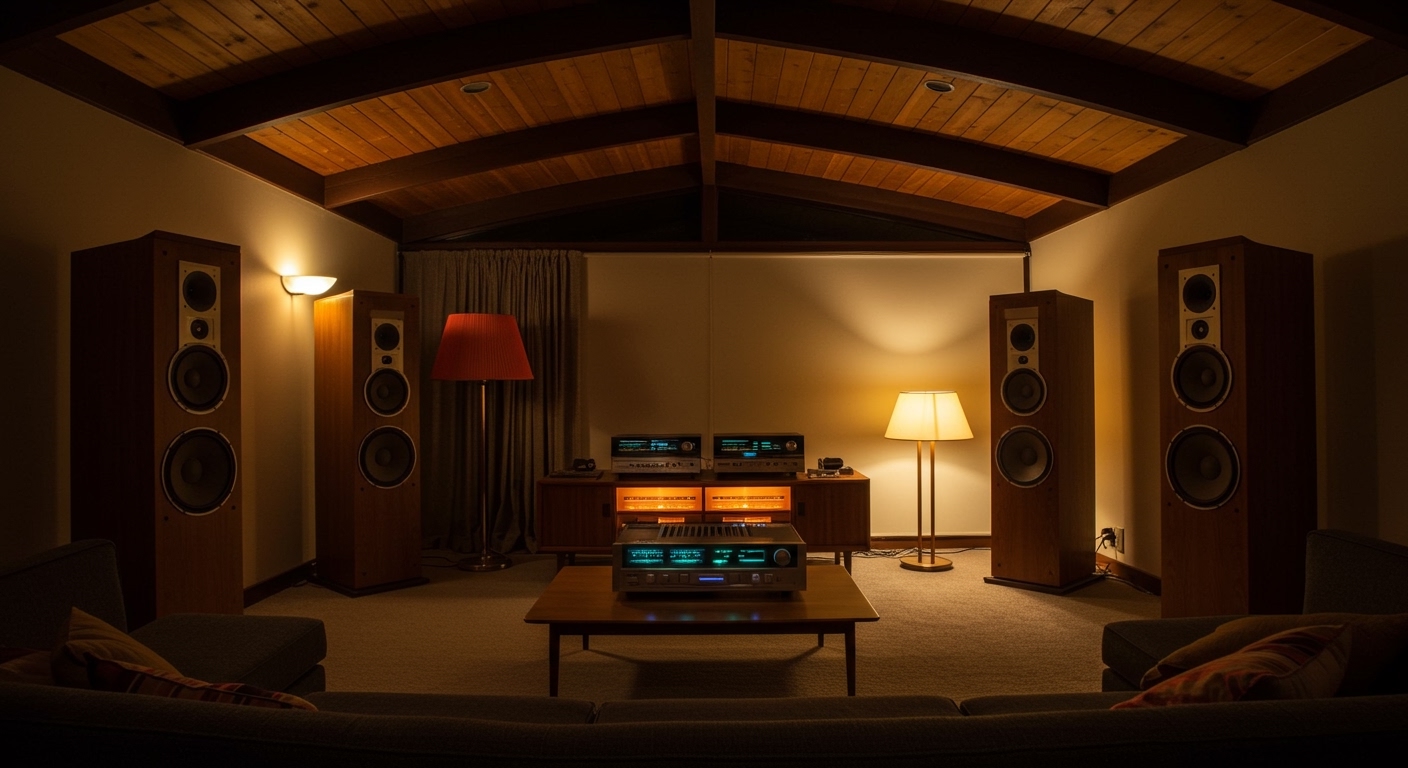
Setting up a quadraphonic system is a journey into the “Golden Age” of audio, offering a level of physical immersion that modern 5.1 systems often lack. Whether you are reviving a vintage Sansui QRX receiver or using a modern Audio Interface to simulate the 1970s experience, the physical geometry of your room is your most important asset. In this guide, we draw on decades of analog audio restoration experience to help you achieve the perfect 4-channel soundstage.
Key Takeaways: Quadraphonic Setup at a Glance
- Speaker Layout: Use a perfect square or rectangular configuration for the most accurate phase alignment.
- Essential Hardware: You need a quadraphonic receiver (SQ, QS, or CD-4) or a modern 4-channel amplifier.
- Wiring: Use high-quality 16-gauge oxygen-free copper (OFC) wire to prevent signal loss over longer rear-speaker runs.
- Calibration: Utilize the Joystick Balance Control found on vintage units to “center” the audio image.
- Media Requirements: True quadraphonic sound requires specific media, such as Quadradiscs, Q4 Reel-to-Reels, or 8-Track Quad cartridges.
Understanding the Quadraphonic Soundstage
Before you begin the physical installation, you must understand what quadraphonic sound actually is. Unlike modern surround sound, which uses a dedicated center channel for dialogue, quadraphonic audio relies on four full-range channels.
During my years restoring vintage Marantz 4400 units, I’ve found that the biggest mistake beginners make is treating the rear speakers like “effects” channels. In a true quadraphonic setup, the rear speakers are just as vital as the front. They often carry distinct instruments, such as a lead guitar or backing vocals, rather than just ambient crowd noise.
The Three Major Quad Formats
Not all quad is created equal. Your setup process will vary slightly depending on which “Matrix” or “Discrete” format you are using:
| Format Type | Examples | Technology | Setup Requirement |
|---|---|---|---|
| Matrix | SQ (Columbia), QS (Sansui) | 4 channels encoded into 2 | Requires a specific decoder/receiver. |
| Discrete | CD-4 (JVC/RCA) | 4 independent signals | Requires a Shibata stylus and low-capacitance cables. |
| Tape | Q4 Reel-to-Reel, Quad-8 | 4 physical tape tracks | Requires a 4-track playback head. |
Step 1: Choosing and Positioning Your Speakers
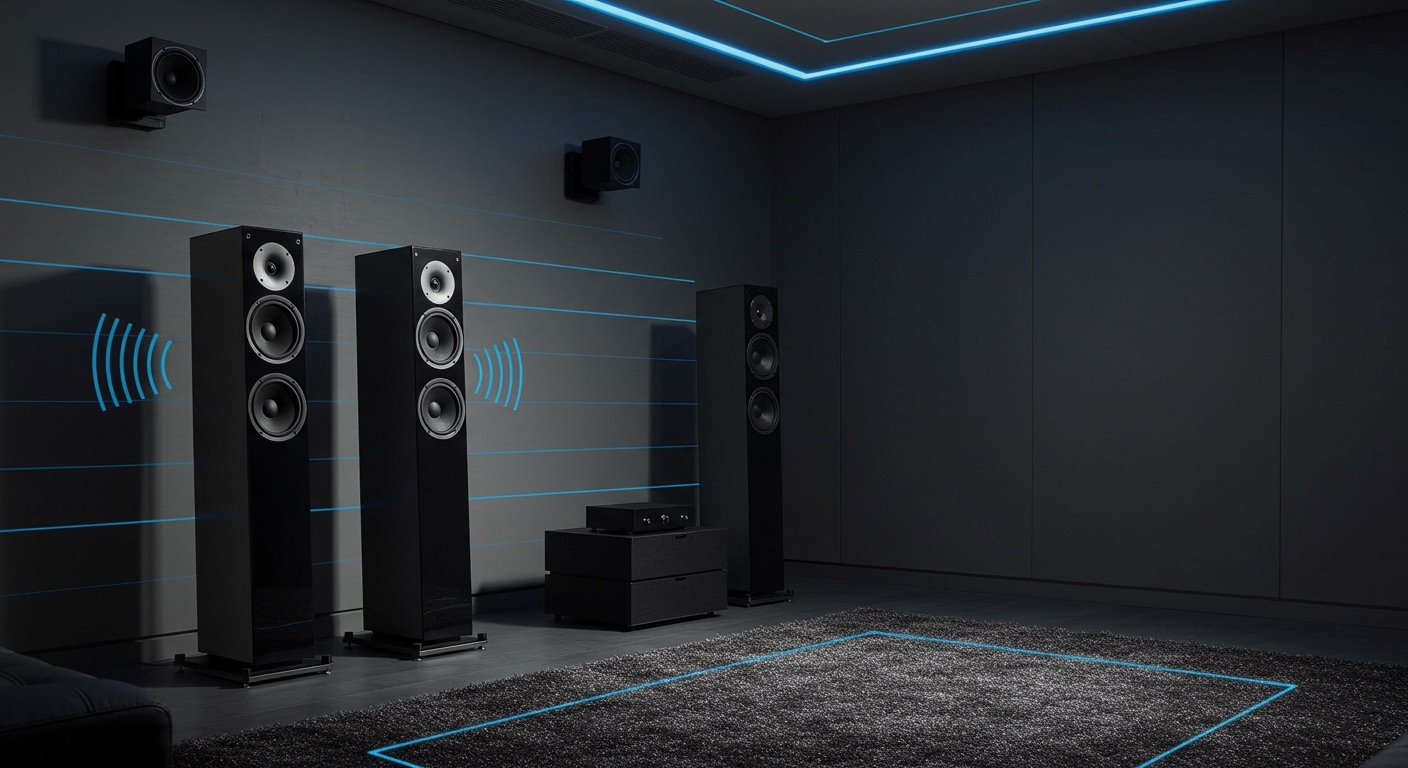
The most critical part of how to set up quadraphonic speakers is the physical placement. You are aiming for a 360-degree sound field where the listener is the exact epicenter.
Matching Your Drivers
For the best results, I highly recommend using four identical speakers. In the 70s, many users used large floor-standers for the front and small bookshelf speakers for the rear. This creates an unbalanced “tilt” in the soundstage. Using four Pioneer HPM-100s or four Advent Loudspeakers ensures that the timber and tonal quality remain consistent as sound pans around the room.
The Four-Corner Strategy
- Front Left and Right: Place these at a 45-degree angle from your seating position.
- Rear Left and Right: Place these behind you at a 135-degree angle.
- Height Matters: Ensure all four tweeters are at ear level. If your rear speakers are too high, the 4-channel “phantom image” will collapse.
- Toe-In: Angle all four speakers slightly toward your head. This increases the Direct-to-Reflected sound ratio, which is vital for the phase-heavy nature of SQ and QS matrix decoding.
Step 2: Connecting to a Quadraphonic Receiver
Once your speakers are placed, you need to wire them to your powerhouse. If you are using vintage gear like a Harman Kardon 900+ or a Pioneer QX-949, the back panel will look intimidating.
Wiring Instructions
- Identify the Terminals: You will see “Front” and “Rear” sections, each with Left and Right.
- Check Phase: Ensure the positive (+) terminal on the receiver goes to the positive (+) terminal on the speaker. In quadraphonic sound, if one speaker is out of phase, the entire “enveloping” effect is ruined.
- Cable Gauge: Since rear speakers often require longer cable runs (20-30 feet), use 14-gauge or 12-gauge wire to maintain damping factor and bass response.
The Importance of the “Discrete” Switch
Most vintage receivers have a mode selector. If you are playing a modern digital 4-channel file through an interface, set the receiver to “4-CH Discrete” or “CD-4.” If you are playing a standard vinyl record and want the receiver to “synthesize” surround sound, use the “Synthesizer” or “QS” mode.
Step 3: Calibrating the Sound Field
Learning how to set up quadraphonic speakers isn’t finished once the wires are in. You must calibrate the levels. Most high-end quad units feature a Joystick Balance Controller.
The “Blindfold” Test
I often advise clients to sit in their listening chair and close their eyes. Have a partner rotate the joystick. You should be able to track the sound moving in a perfect circle around your head. If the sound “jumps” from front to back instead of sliding smoothly along the walls, you need to increase the volume of the rear channels or move the speakers closer to the listening position.
Setting Gains
- Set the Master Volume to a comfortable level.
- Adjust the Front/Rear fader until the vocals (usually in the front) and the ambience (usually in the rear) feel balanced.
- Adjust the Left/Right balance to center the image.
Step 4: Special Considerations for Vinyl (CD-4)
If your goal is to play CD-4 Quadradiscs (Discrete 4-channel vinyl), your setup needs extra precision. CD-4 works by hiding a 30kHz “subcarrier” signal in the record groove.
- The Stylus: You must use a Shibata or Line-Contact stylus. A standard elliptical needle will not pick up the high-frequency carrier signal and will actually “erase” the quadraphonic information from the record over time.
- The Cables: Use low-capacitance RCA cables (under 100pF) between your turntable and the receiver. High-capacitance cables will roll off the 30kHz signal, preventing the CD-4 demodulator from “locking on” to the rear channels.
Step 5: Modern Digital Quadraphonic Setup
You don’t need 50-year-old hardware to enjoy 4-channel sound. Many modern enthusiasts use High-Resolution FLAC files (24-bit/96kHz) of original quad mixes.
The PC-to-Speaker Chain
- Sound Card: Use an external USB Audio Interface with at least 4 physical outputs (e.g., Focusrite Scarlett 4i4).
- Software: Use a player like Foobar2000 with the “Channel Mask” set to 4 channels.
- Amplification: Connect the 4 outputs of your interface to the “Main In” or “Aux” inputs of two stereo amplifiers or one 4-channel power amp.
Common Troubleshooting Issues
Even with a perfect quadraphonic speaker setup, things can go wrong. Here are the most common fixes:
- Weak Rear Channels: This is often caused by using “Simulator” mode instead of “Discrete” mode. Ensure your source is actually 4-channel.
- Static in CD-4: If you see the “Radar” light flickering on your receiver, your tracking force is likely too low, or your stylus is dirty. Increase tracking force by 0.25 grams.
- Hissing: Vintage quad decoders use many transistors. If you hear a “frying” sound, the internal capacitors in your receiver likely need replacement (re-capping).
Frequently Asked Questions
Can I use a 5.1 Home Theater system for Quadraphonic sound?
Yes, but you should disable the Center Channel and Subwoofer in your AVR settings. This forces the receiver into “Phantom Center” mode, which accurately mimics the 4-channel quadraphonic experience.
Do I need special speaker wire for quadraphonic setups?
While you don’t need “special” wire, you need consistent wire. Ensure all four speakers use the same brand and gauge of wire to maintain identical electrical resistance across all channels.
What is the best vintage receiver for a quad setup?
The Sansui QRX-9001 is widely considered the “Holy Grail” because of its superior Vario-Matrix decoding. Other excellent options include the Marantz 4400 and the Pioneer QX-949.
Can I play normal stereo records on a quadraphonic system?
Absolutely. Most quad receivers have a “Stereo-to-Quad” synthesizer mode (like Sansui’s QS) that intelligently maps stereo signals to four speakers, creating a “hall effect” that adds depth to standard recordings.
Is quadraphonic sound better than Dolby Atmos?
“Better” is subjective. Dolby Atmos is superior for object-based 3D positioning. However, Quadraphonic sound offers a unique, nostalgic analog warmth and a specific “wide” soundstage that many audiophiles prefer for 1970s progressive rock and jazz.