Understanding the Basics: How to Tune a Amp for Speakers
Learning how to tune a amp for speakers is the single most important step in transforming a mediocre car audio setup into a high-fidelity concert on wheels. Most DIYers mistakenly use the Gain knob as a volume control, which leads to clipping, distorted audio, and eventually, permanent speaker failure.
To properly tune car speakers, you must synchronize the output voltage of your head unit with the input sensitivity of your amplifier. This process ensures you reach the maximum “clean” volume your equipment can handle without introducing heat-generating distortion. Whether you are learning how to tune amp for door speakers or a full-range system, the goal is clarity, longevity, and tonal balance.
Key Takeaways (TL;DR)
Safety First: Always disconnect your subwoofers if you are only tuning door speakers to avoid distracting bass.
The 75% Rule: Set your head unit volume to 75% during the tuning process to find the “clean” limit.
Gain is Not Volume: The gain setting matches the amplifier’s input to the radio’s output signal.
Crossovers Matter: Use a High Pass Filter (HPF) for door speakers to block low bass frequencies that cause distortion.
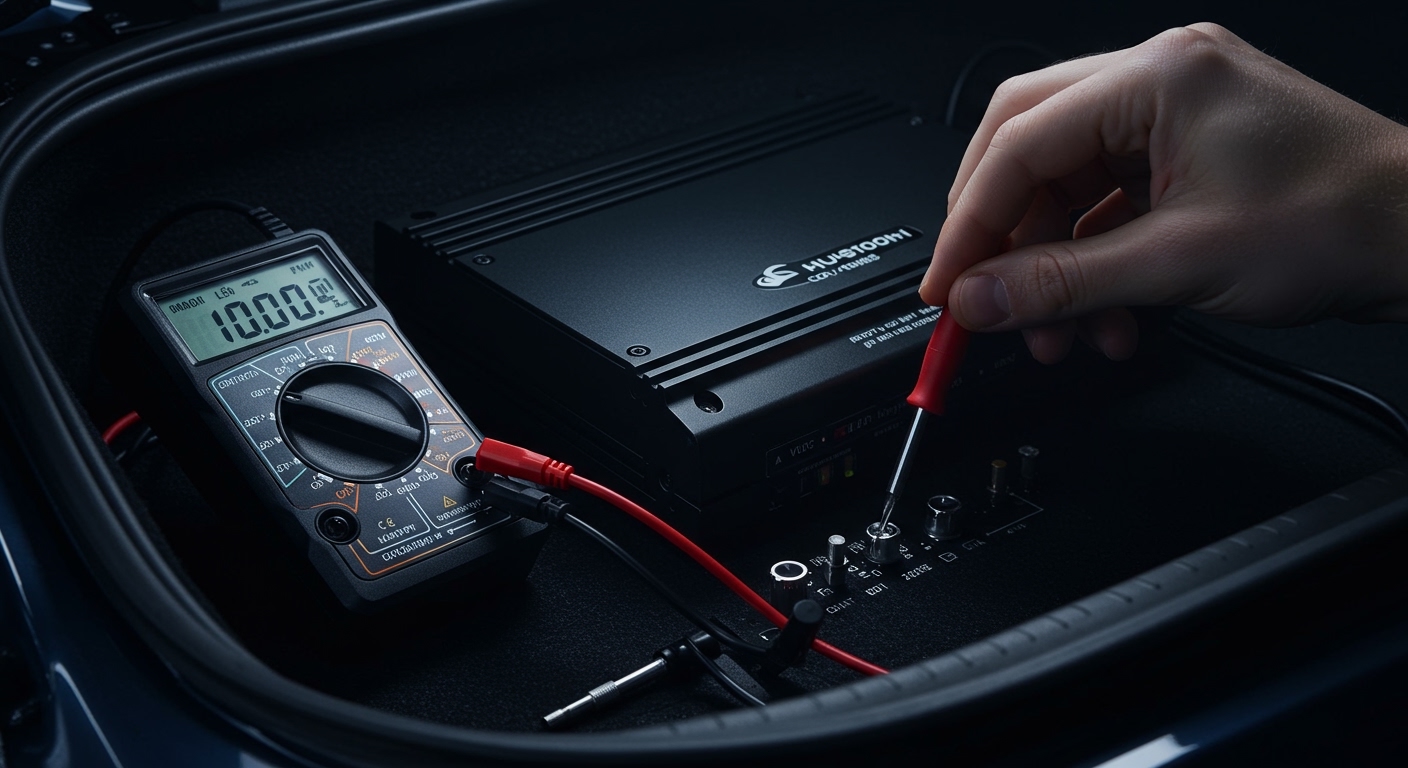
Tools Required: A digital multimeter is the most accurate way for beginners to set gain without an oscilloscope.
Essential Tools and Materials
Before you start learning how to tune an amp for door speakers, gather these essential items. Using the right tools prevents guesswork and protects your investment.
| Tool | Purpose | Importance |
|---|---|---|
| Digital Multimeter (DMM) | Measures AC voltage to set precise gain levels. | Essential |
| Test Tones (Sine Waves) | 1kHz for door speakers; 40Hz-50Hz for subwoofers. | Critical |
| Screwdriver Set | To adjust the small potentiometers on the amp. | Essential |
| Ohm’s Law Formula | $V = sqrt{P times R}$ (Voltage = Square root of Power x Resistance). | Expert Level |
| Ear Protection | Tuning involves loud, repetitive high-frequency tones. | Recommended |
Step 1: Prepare Your Audio System
Before touching the amplifier, you must reset your sound stage. This ensures you are working with a “flat” signal.
Zero Out the Head Unit
Navigate to your car stereo settings. Turn off all Loudness settings, Bass Boost, and Equalizer (EQ) presets. Set the Bass, Treble, and Midrange to “0” or “Flat.”
Reset the Amplifier
On the physical amplifier, turn the Gain (sometimes labeled Input Sensitivity) to its lowest setting (usually counter-clockwise). Set all Crossovers to “Off” or “Full” for now. Ensure any Bass Boost knobs on the amp are turned to zero.
Step 2: Calculate Your Target Voltage
To learn how to tune a amp for speakers like a professional, you need a specific target voltage. This prevents the amp from sending more power than the speakers can safely dissipate as heat.
Use the Formula
Find your speaker’s RMS Power Rating (not Peak power) and the Impedance (usually 4 ohms for door speakers).
Formula: $sqrt{text{RMS Watts} times text{Ohms}} = text{Target AC Voltage}$
Example: If your speakers are 60W RMS at 4 Ohms: $60 times 4 = 240$. The square root of 240 is 15.49V.
Why Target Voltage Matters
Setting the gain by voltage is safer than tuning by ear. It provides a mathematical “ceiling” that guarantees your car speakers stay within their mechanical limits even during aggressive listening sessions.
Step 3: Setting the Gain (The Core Process)
This is the most critical phase of how to tune car amp for speakers. Follow these steps precisely to avoid clipping.
- Disconnect the speakers: Unplug the speaker wires from the amplifier terminals. This protects your ears and the speakers while you measure voltage.
- Play the Test Tone: Insert a USB or CD with a 1kHz sine wave recorded at 0dB (or -3dB for a more “dynamic” real-world tune).
- Set Head Unit Volume: Turn the volume up to roughly 75% to 80% of its maximum range. If your radio goes to 40, set it to 30.
- Measure the Output: Insert the Multimeter probes into the amplifier’s speaker output terminals (Positive to Positive, Negative to Negative). Set the DMM to AC Voltage.
- Adjust the Gain: Slowly turn the Gain knob clockwise until the Multimeter displays your Target Voltage (calculated in Step 2).
- Reconnect: Turn the volume down, turn off the system, and reconnect your speaker wires.
Step 4: How to Tune Amp for Door Speakers (Crossovers)
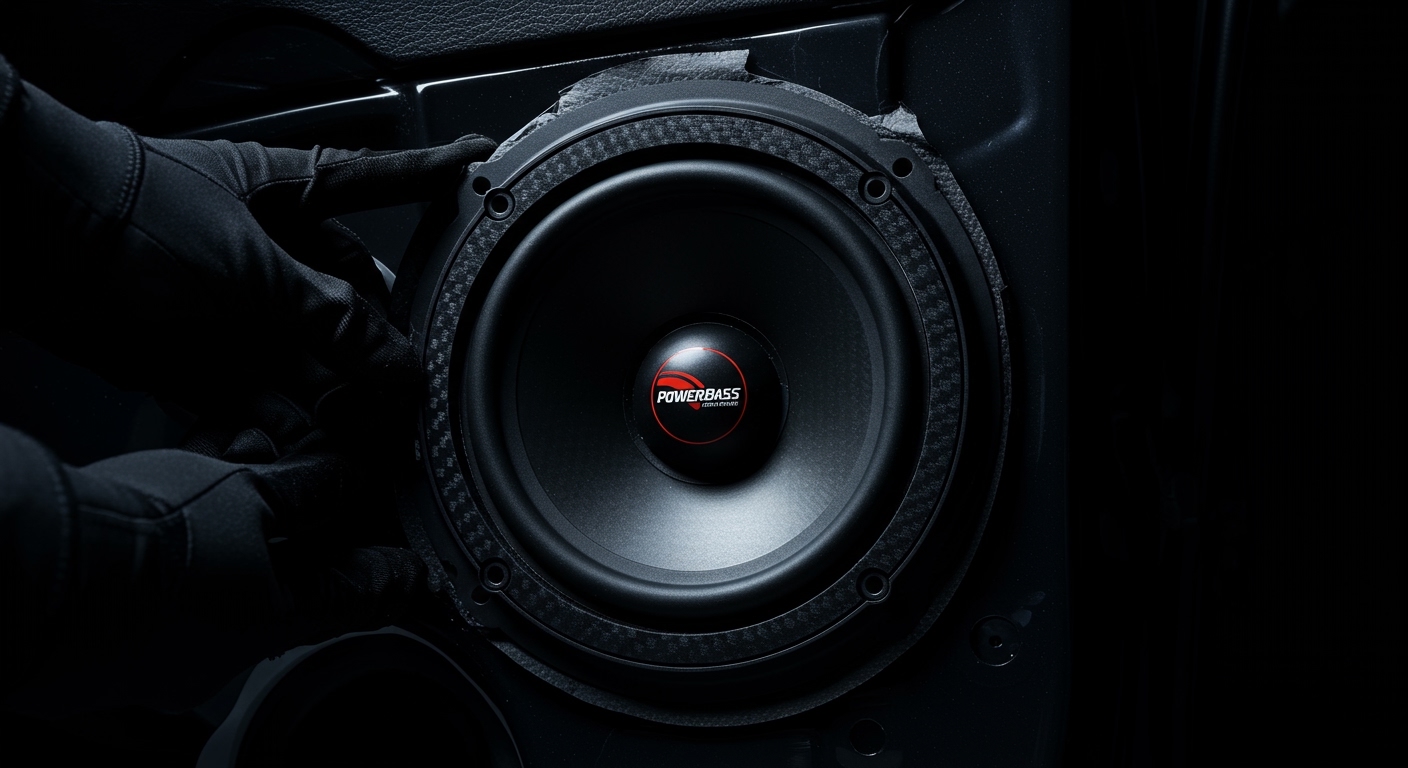
Door speakers are generally smaller (6.5″, 6×9″, or 5.25″) and cannot handle deep sub-bass. Mastering how to tune door speakers requires setting the High Pass Filter (HPF).
Setting the High Pass Filter (HPF)
The HPF allows high frequencies to pass through while “filtering out” low frequencies that cause door panels to rattle and cones to over-extend.
Standard Setting: Most experts recommend an HPF setting between 80Hz and 100Hz.
Small Speakers (4″): Use a higher cutoff, around 120Hz.
Large Speakers (6×9″): You can go as low as 60Hz if the doors are sound-deadened.
Adjusting the Slope
If your amp has a slope setting (e.g., 12dB or 24dB), choose 24dB for a sharper cutoff. This provides better protection for your door speakers by ensuring low-end frequencies drop off rapidly below your chosen crossover point.
Step 5: Fine-Tuning by Ear for Tonal Balance
While the multimeter gets you the safety numbers, your ears determine the final “musicality.” Here is how to tune speakers in car for the best subjective experience.
Listen for Distortion: Play a song you know well (high-quality FLAC or CD preferred). Increase the volume to your 75% mark. If the vocals sound “crunchy” or “thin,” dial the gain back slightly.
Check the Soundstage: Ensure the left and right speakers are balanced. If the driver-side speaker is overwhelming, use the Balance/Fade on the head unit rather than adjusting gain individually on the amp.
Address “Hiss”: If you hear a constant hiss when the music is paused, your gain is likely too high. This is known as the noise floor. Lower the gain and increase the source volume to fix this.
Expert Advice: Pro Tips for Amp Tuning
Drawing from years of experience in mobile electronics, here are the “secrets” that separate amateurs from pros:
The “Smell” Test: If you smell something like burning plastic or “hot” electronics while playing music, your amp is clipping. Turn it down immediately.
Input Voltage Matters: Ensure your car is running while you tune. A car’s electrical system sits at 12.6V when off but 14.4V when the alternator is running. Tuning with the engine off will result in an inaccurate gain setting once you start driving.
Sound Deadening: You can’t properly tune your speakers if the metal in your car doors is vibrating. Applying Butyl-based sound deadening (like Dynamat) improves mid-bass response by 3-5dB, making your tuning much more effective.
- Wiring Quality: Use OFC (Oxygen-Free Copper) wire. CCA (Copper Clad Aluminum) has higher resistance, which can cause voltage drops and make your amp work harder, leading to heat issues.
Common Mistakes to Avoid
- Using Bass Boost: Never use the Bass Boost knob on an amp to “fix” weak speakers. It introduces massive amounts of distortion at a specific frequency (usually 45Hz).
- Tuning with Bluetooth: Bluetooth compression can skew your results. Always use a wired connection (USB or Aux) or a CD for the initial tune.
- Ignoring the “Clipping” Light: If your amplifier has a Clip Indicator LED, pay attention to it. A flickering light is okay on peaks; a solid light means you are destroying your speakers.
Frequently Asked Questions
(FAQs)
Why do my speakers sound distorted even after tuning?
Distortion usually occurs because the source signal (your phone or head unit) is already “clipped” before it reaches the amp. Ensure your phone volume is at 90% and all EQ settings on your music app (like Spotify) are turned off.
What frequency should I use to tune door speakers?
For door speakers (full-range or components), always use a 1kHz (1000Hz) test tone. This is the standard frequency for measuring the midrange performance of an amplifier.
Can I tune an amp without a multimeter?
Yes, you can tune by ear, but it is risky. To do this, turn the gain up until you hear the sound change from “clear” to “fuzzy” or “sharp,” then immediately back it off by about 10 degrees. However, the multimeter method is far more reliable for preventing blown speakers.
What is the difference between HPF and LPF?
HPF (High Pass Filter) is for door speakers; it lets high notes through and blocks bass. LPF (Low Pass Filter) is for subwoofers; it lets bass through and blocks high notes. Setting these correctly is vital for how to tune car speakers properly.
Conclusion: Enjoy Your Optimized Audio
Mastering how to tune a amp for speakers is a rewarding skill that protects your hardware while delivering the best possible audio fidelity. By using a multimeter, setting a proper HPF, and avoiding the temptation to use Bass Boost, you ensure your car’s audio system performs at its peak for years to come.
Ready to take your sound to the next level? Start by checking your speaker’s RMS ratings today and use our formula to find your target voltage. Your ears—and your speakers—will thank you.