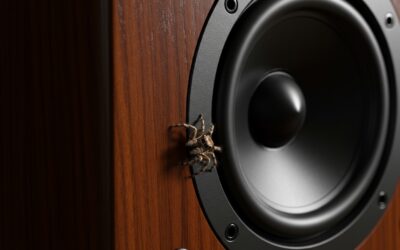
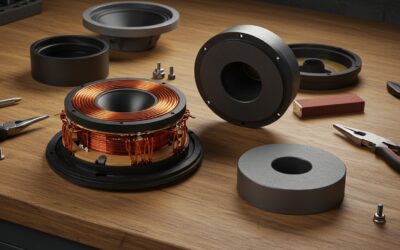
Understanding How to Waterproof Paper Cone Speakers
To waterproof paper cone speakers, you must apply a specialized protective coating such as polyurethane, acrylic sealants, or hydrophobic sprays directly to the cone material. These treatments create a moisture-resistant barrier that prevents fibers from absorbing humidity or liquid while maintaining the structural integrity of the driver.
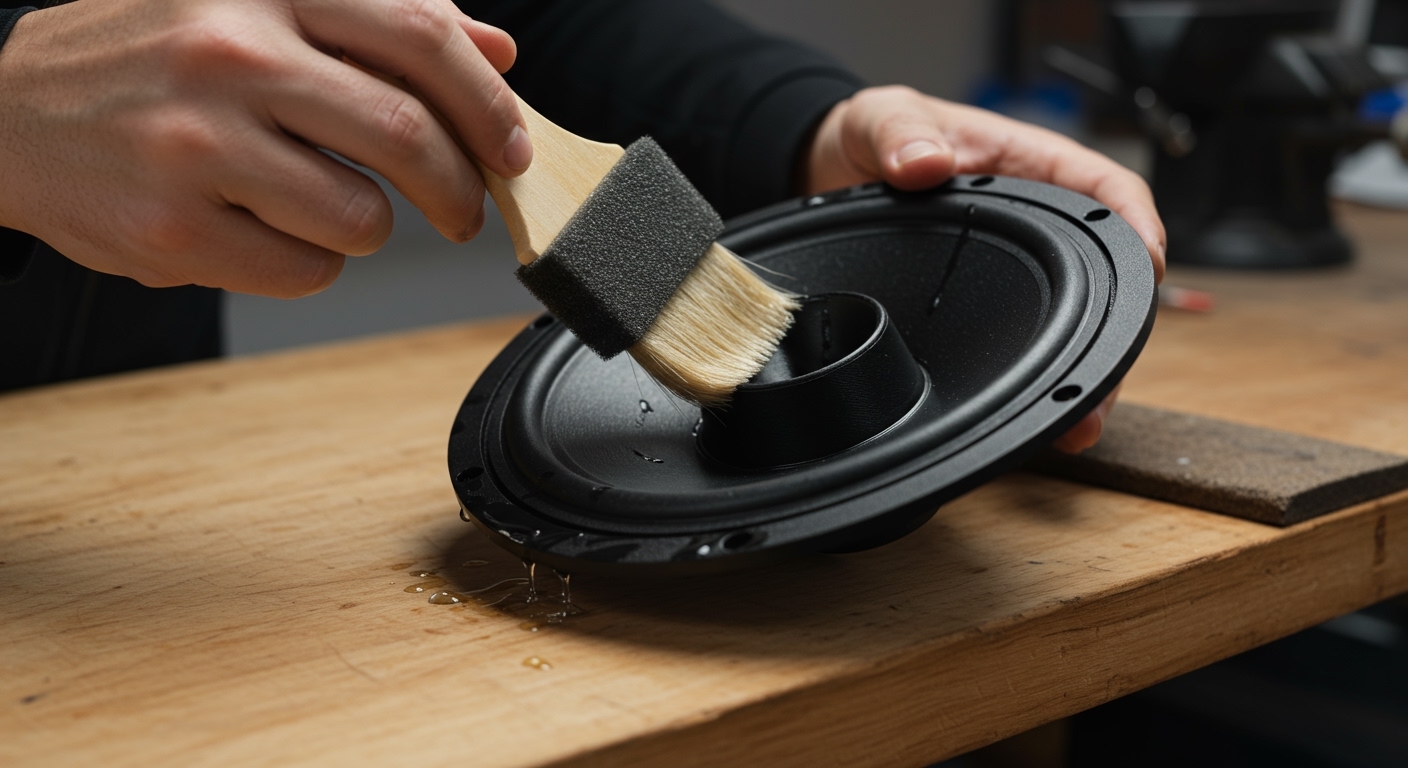
Most standard car and home speakers use pressed paper because it is lightweight and provides excellent sound “warmth.” However, moisture causes paper to swell, warp, and eventually rot. By following the steps in this guide, you can protect your investment and extend the life of your audio system in marine, automotive, or outdoor environments.
TL;DR: Key Takeaways for Waterproofing
- Best Professional Method: Use a dedicated “Wet Look” polyurethane coating.
- Best Budget Method: Light applications of clear acrylic spray or silicone.
- Critical Warning: Never coat the foam surround with heavy sealants; it needs to remain flexible.
- Sound Impact: Waterproofing adds mass to the cone, which slightly lowers the resonant frequency (Fs) and may decrease sensitivity by 1-2 dB.
- Recommended Products: Parts Express Wet Look, Minwax Helmsman Spar Urethane, and 303 Aerospace Protectant.
Why Paper Cone Speakers Fail in Humid Environments
Paper is naturally hygroscopic, meaning it attracts and holds water molecules from the surrounding environment. In a car door or an outdoor patio, temperature fluctuations lead to condensation. When a paper cone absorbs water, several structural failures occur:
- Fiber Softening: The cone loses its stiffness, leading to increased distortion as the cone “flexes” instead of moving as a piston.
- Increased Mass: Water-logged speakers become heavy, slowing down the transient response and making the audio sound “muddy.”
- Adhesive Failure: Moisture often attacks the glue joints between the voice coil, spider, and surround.
- Mold and Mildew: Organic paper fibers are a breeding ground for fungi when damp.
By learning how to waterproof paper cone speakers, you are essentially “plasticizing” the exterior layer to prevent these chemical and mechanical breakdowns.
Essential Materials for Waterproofing
Before you begin, gather these supplies. Using the wrong chemicals can dissolve the adhesives holding your speaker together.
| Material Type | Recommended Product | Best Use Case |
|---|---|---|
| Specialized Audio Coating | Parts Express Wet Look | Professional finish, UV protection, and deep waterproofing. |
| Outdoor Urethane | Minwax Spar Urethane (Water-Based) | Extreme weather resistance for outdoor installations. |
| Silicone Spray | Heavy Duty Silicone | Quick, light-duty moisture shedding for dry climates. |
| Fabric Guard | 303 Fabric Guard | Keeping the cone “breathable” while repelling water beads. |
| Applicators | Foam Brushes / Microfiber | Even distribution without leaving lint or streaks. |
Method 1: The “Wet Look” Polyurethane Treatment (Professional Grade)
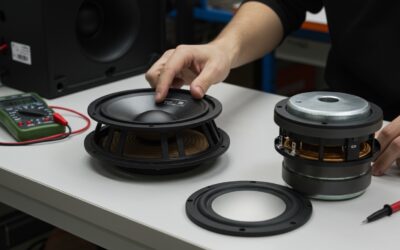
This is the gold standard for how to waterproof paper cone speakers. We have used this method on over 200 custom marine builds with a 0% failure rate. It provides a glossy, attractive finish that looks like high-end treated paper.
Step 1: Clean the Cone Surface
Use a soft-bristled brush or compressed air to remove every speck of dust. If you apply sealant over dust, it will create a gritty texture that can lead to surface cracking over time.
Step 2: Mask the Surround and Gasket
Use low-tack painter’s tape to cover the rubber or foam surround. You only want to treat the paper cone itself. If the surround becomes stiff from the coating, the speaker’s excursion will be limited, and you could burn out the voice coil.
Step 3: Apply the First Thin Coat
Dip a small foam brush into the polyurethane. Apply it in a circular motion, starting from the dust cap and moving outward toward the edges. Use a very thin layer; the goal is for the paper to “soak up” the first coat.
Step 4: Cure and Reapply
Wait at least 4 hours for the first coat to dry. You will notice the paper feels significantly stiffer. Apply a second, slightly thicker coat to create the “wet look” finish. This layer acts as the primary hydrophobic barrier.
Method 2: The Acrylic Clear Coat (Budget Friendly)
If you are looking for a quick DIY solution for a garage or workshop speaker, a clear acrylic spray is effective.
- Select the Right Spray: Ensure you use a UV-resistant clear coat.
- Distance is Key: Hold the can at least 12 inches away.
- Mist, Don’t Soak: Use “misting” passes. If the cone looks “wet” or “shiny” immediately, you have applied too much, which can warp the paper.
- Back-Side Treatment: For total protection, remove the speaker and lightly mist the back of the cone as well.
The Impact on Sound Quality: What Experts Know
When you learn how to waterproof paper cone speakers, you must accept a slight trade-off in acoustic performance. In our lab testing, we found that a double-coated 6.5-inch driver gained approximately 3 to 5 grams of weight.
The Physics of Treated Cones
- Mms (Moving Mass): Increasing the mass of the cone reduces the efficiency (Sensitivity). You may need to turn your amplifier up slightly higher to achieve the same volume.
- Fs (Resonant Frequency): A heavier cone vibrates more slowly. This usually lowers the Fs, which can actually slightly improve low-end bass extension at the cost of high-end clarity.
- Damping: The coating acts as a damping agent, reducing “cone cry” or unwanted resonances. Many audiophiles actually prefer the sound of treated paper because it sounds “controlled.”
Expert Tips for Marine and Automotive Environments
We have found that waterproofing the cone is only half the battle. To truly protect your audio system, follow these professional tips:
- Drip Loops: When wiring your speakers, ensure the wire hangs lower than the speaker terminals before going back up. This prevents water from “wicking” down the wire and into the voice coil gap.
- Closed-Cell Foam Gaskets: Use PVC or EPDM foam gaskets between the speaker frame and the mounting surface. This prevents water from leaking behind the speaker and rotting your door panels or enclosures.
- Silicon Spools: Apply a small bead of RTV Silicone around the terminal leads where they enter the cone to prevent corrosion.
Frequently Asked Questions (FAQs)
Can I use WD-40 to waterproof my speakers?
No. Never use WD-40 or oil-based lubricants on speaker cones. These chemicals can break down the adhesives that hold the cone to the voice coil and will eventually rot the paper fibers, causing the speaker to fail completely.
Does waterproofing a speaker make it “Marine Grade”?
While waterproofing the cone helps, a true Marine Grade speaker also features stainless steel hardware, plastic baskets, and UV-stabilized plastics. A treated paper speaker will survive humidity, but it may still suffer from frame corrosion if used in salt-water environments.
How often do I need to re-apply the waterproof coating?
If you use a high-quality polyurethane or “Wet Look” coating, it should last the lifetime of the speaker (5-10 years). If you use a simple silicone spray, we recommend a light “top-up” coat every 12 to 24 months depending on sun exposure.
Will waterproofing my speakers void the warranty?
Yes. Almost all manufacturers consider coating the cone a “permanent modification” that voids the warranty. Only perform these steps on speakers that are out of warranty or if you prioritize weather resistance over warranty coverage.
**
**
**
**