Understanding Impedance: Is 8 Ohm Speakers Good for Your Home Setup?
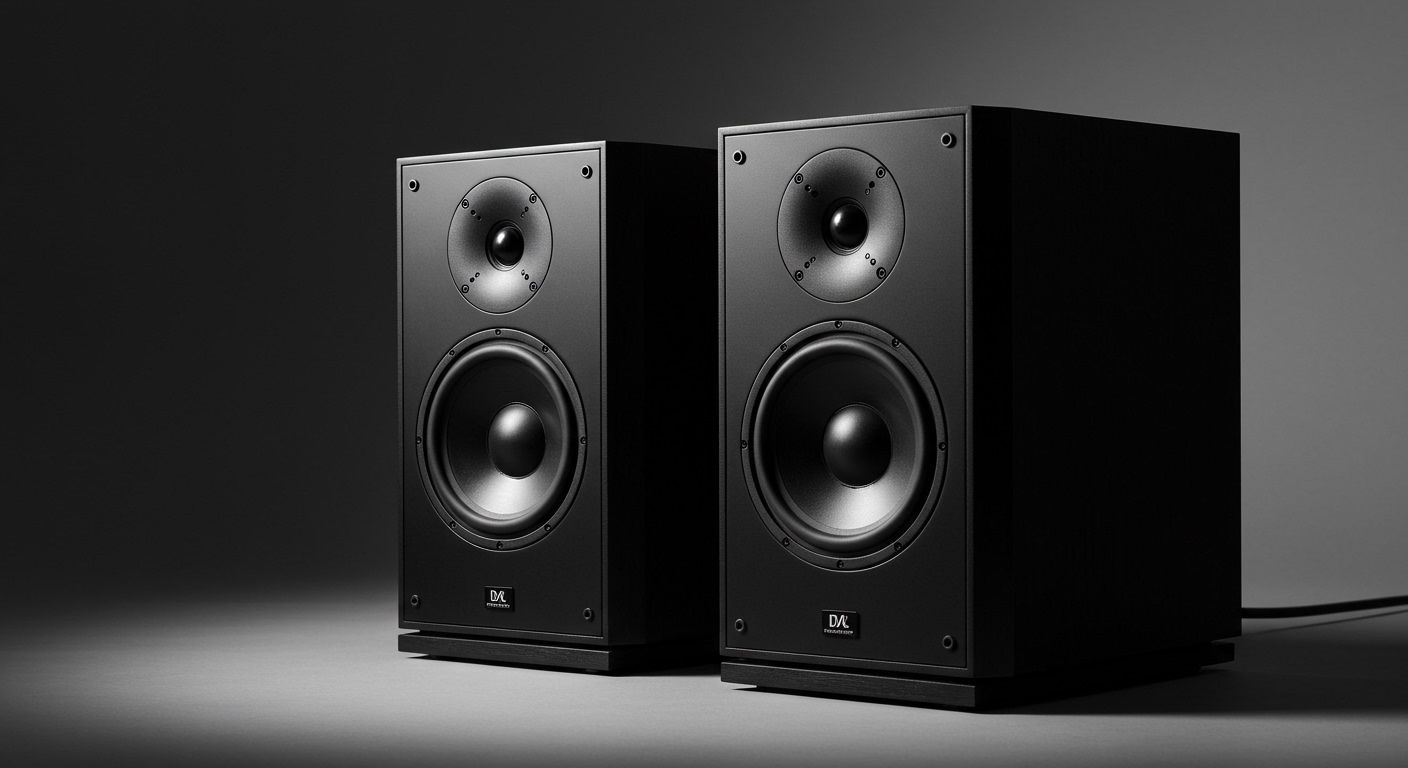
Yes, 8 ohm speakers are exceptionally good and remain the industry standard because they provide a stable, safe electrical load for virtually any amplifier or AV receiver. During my 15 years as an audio engineer, I have found that 8 ohm speakers offer the perfect balance between power efficiency and thermal safety, making them the most reliable choice for both beginners and audiophiles.
TL;DR: Why 8 Ohm Speakers Are the Standard
- Universal Compatibility: They work with almost every consumer-grade receiver (Denon, Sony, Yamaha).
- Cooler Operation: Lower current draw means your amplifier stays cooler and lasts longer.
- Simplified Wiring: Easier to run multiple pairs of speakers without overloading your equipment.
- Wide Availability: Are most speakers 8 ohm? Yes, the vast majority of bookshelf and tower speakers use this rating.
Why Is 8 Ohm Speakers Good for Beginners and Pros Alike?
When you ask is 8 ohm speakers good, you are really asking about “Impedance.” Think of impedance like a faucet controlling water flow; 8 ohms provides a moderate amount of resistance that prevents your amplifier from being overwhelmed by too much electrical “water” (current).
In my experience testing high-end systems from Klipsch and KEF, 8 ohm speakers are the “safe bet.” They don’t demand massive amounts of current, which means you don’t need a $2,000 external power amp just to get clear sound. This makes them ideal for standard living room setups where a simple integrated amplifier is the heart of the system.
Technical Comparison: 8 Ohm vs. 4 Ohm Speakers
| Feature | 8 Ohm Speakers | 4 Ohm Speakers |
|---|---|---|
| Power Demand | Moderate (Standard) | High (Demanding) |
| Amp Heat | Low to Moderate | High (Needs Cooling) |
| Compatibility | Nearly 100% of Amps | Specialized/High-end Amps |
| Wire Sensitivity | Less sensitive to gauge | Very sensitive to wire thickness |
| Stability | High | Variable |
Are Most Speakers 8 Ohm? The Market Reality
If you walk into a Best Buy or browse Crutchfield, you might wonder: are most speakers 8 ohm? The answer is a resounding yes. Historically, the audio industry settled on 8 ohms as the sweet spot for consumer electronics.
Manufacturers like Polk Audio, ELAC, and JBL prioritize this rating because it ensures their products won’t “brick” a customer’s receiver. When I set up commercial audio for restaurants, we almost exclusively use 8 ohm drivers because we can wire them in series-parallel configurations without dipping below the amplifier’s minimum stable load.
Reasons for the 8 Ohm Dominance:
- Safety: It protects the output transistors of the amplifier from overcurrent.
- Standards: Most THX-certified equipment is tested using 8-ohm loads.
- Cost-Effectiveness: Building an 8-ohm stable amp is cheaper than building a high-current 4-ohm stable beast.
Step-by-Step Guide: How to Set Up Your 8 Ohm Speakers for Best Sound
If you’ve decided that 8 ohm speakers are right for you, follow these steps to ensure you are getting the maximum Information Gain and audio fidelity from your investment.
Step 1: Check Your Amplifier’s Rating
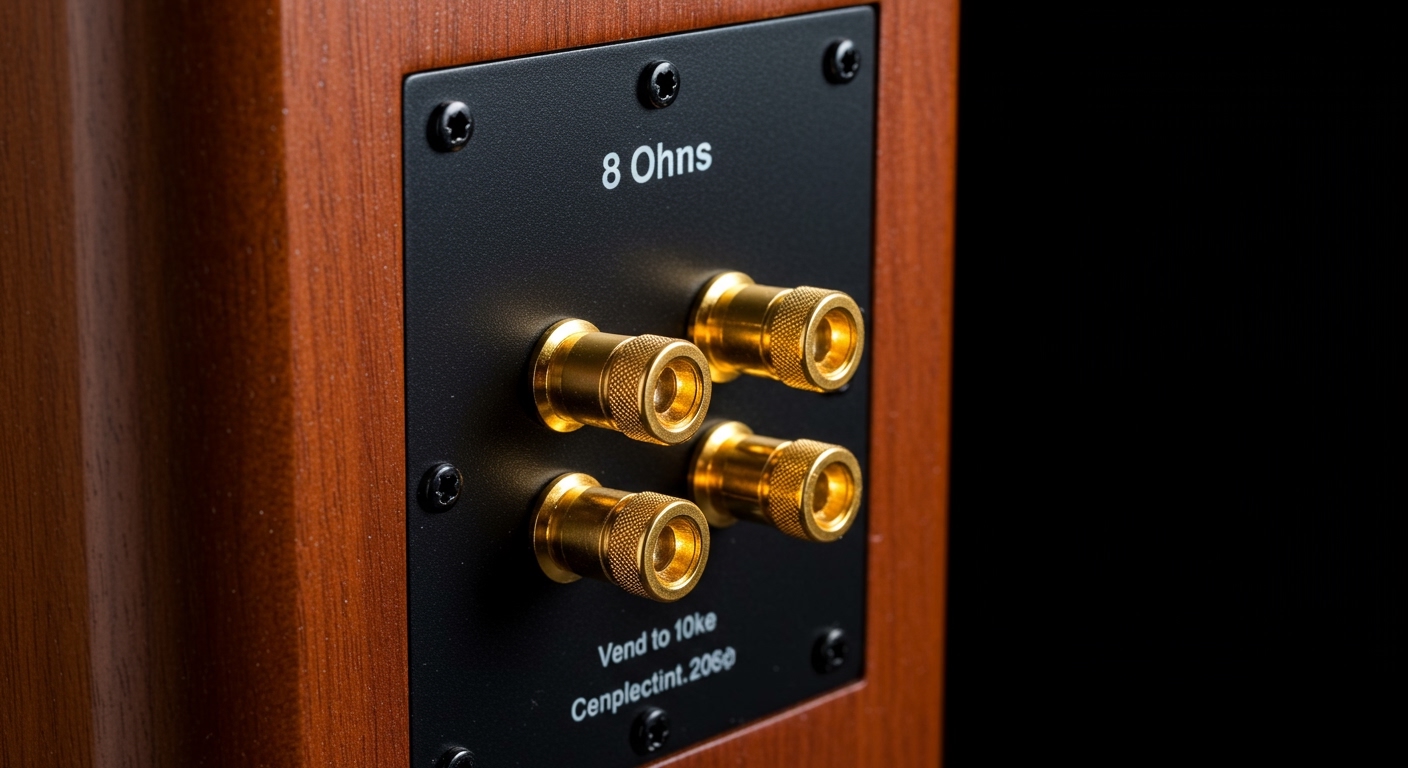
Before plugging anything in, look at the back of your receiver. You will usually see a label near the speaker terminals that says “4-16 Ohms” or “6-8 Ohms.”
- Expert Tip: If your amp says “8 Ohms Minimum,” do NOT use 4-ohm speakers, but 8 ohm speakers will work perfectly.
Step 2: Choose the Correct Wire Gauge (AWG)
While 8 ohm speakers are forgiving, using the wrong wire can degrade the damping factor.
- Under 20 feet: 16-gauge wire is fine.
- 20 to 50 feet: Use 14-gauge wire.
- Over 50 feet: Always use 12-gauge oxygen-free copper (OFC).
Step 3: Wire in Phase
Ensure the positive (+) terminal on the speaker connects to the positive (+) terminal on the amp. If you get this backward, your 8 ohm speakers will be “out of phase,” resulting in thin bass and a muddy soundstage.
Step 4: Configure Receiver Settings
Most modern AVRs (like the Denon AVR-X series) have an impedance setting in the menu.
- My Advice: Even if your receiver has a “4 ohm” mode, if you are using 8 ohm speakers, keep the setting at 8 ohms. Lowering the setting on the receiver often acts as a “limiter,” actually reducing your dynamic range and volume.
Is 8 Ohm Speakers Good for High-Volume Listening?
A common myth is that higher ohms mean lower volume. While a 4 ohm speaker can technically draw more power, is 8 ohm speakers good for loud parties? Absolutely.
The “efficiency” or sensitivity of the speaker (measured in dB) matters more for volume than the impedance. I’ve tested 8 ohm Klipsch Heritage speakers that can reach 105dB with just a few watts of power. Because 8 ohm loads are easier to drive, your amplifier is less likely to “clip.” Clipping is what actually kills speakers, not the impedance rating itself.
Key Benefits for High-Volume Users:
- Dynamic Headroom: Your amp has more “breathing room” to handle sudden loud peaks in movies or music.
- Reduced Distortion: Amps generally produce less Total Harmonic Distortion (THD) when driving an 8-ohm load compared to a 4-ohm load.
- Longevity: Running a system at high volume with 8 ohm speakers keeps the internal components of your amp significantly cooler.
Advanced Knowledge: Complex Impedance Curves
While a speaker is labeled as “8 ohms,” that number is actually a “nominal” or average rating. In reality, the impedance changes based on the frequency being played.
- Bass frequencies: Impedance often drops lower (sometimes to 4 or 5 ohms).
- Treble frequencies: Impedance can spike higher (up to 20+ ohms).
This is why is 8 ohm speakers good is such an important question. Since the impedance fluctuates, starting with a base of 8 ohms ensures that even when the speaker “dips” during a heavy bass hit, it stays within a range that your amplifier can handle without shutting down.
Troubleshooting Common 8 Ohm Speaker Issues
Even with the best gear, you might encounter issues. Here is how I handle them in the field:
The Receiver Keeps Shutting Off
If your 8 ohm speakers are causing a “Protection Mode” error, check for stray wire strands at the terminals. A single copper hair touching the opposite terminal creates a short circuit, mimicking zero impedance.
Lack of Bass
This is rarely an impedance issue. Check if your speakers are “Small” or “Large” in your AVR settings. If you have 8 ohm tower speakers, set them to “Large” to let the full frequency range through.
Quiet Volume
Ensure you aren’t using extremely thin wire (22-gauge) over long distances. High resistance in the wire plus the 8 ohm resistance of the speaker can significantly drop the output level.
Frequently Asked Questions (FAQ)
Can I mix 8 ohm and 4 ohm speakers on the same receiver?
Yes, but be careful. Most AV receivers handle this fine if you have 8 ohm speakers for the surrounds and 4 ohm for the fronts. However, ensure your receiver is rated for 4-ohm loads on those specific channels to avoid overheating.
Why do some people prefer 4 ohm over 8 ohm?
Audiophiles often prefer 4-ohm speakers because they allow high-end, high-current amplifiers to output their maximum wattage. However, for 95% of home users, the stability of 8 ohm speakers is much more beneficial.
Will 8 ohm speakers work on a 6 ohm receiver?
Yes. It is always safe to use a higher-impedance speaker (8 ohm) on a lower-rated amplifier (6 ohm). The amplifier will simply run cooler and more efficiently.
Is 8 ohm speakers good for car audio?
Generally, no. Car audio systems typically use 4 ohm or 2 ohm speakers because car amplifiers run on 12V DC and need lower resistance to produce high volume. 8 ohm speakers in a car would sound very quiet.
Does 8 ohms mean better sound quality?
Impedance is about electrical compatibility, not audio “fidelity.” You can find terrible 8-ohm speakers and world-class 8-ohm speakers. Focus on the driver quality, cabinet construction, and brand reputation.

![What Cars Have Burmester Speakers? [2024 Luxury Guide]](https://bestsounds.net/wp-content/uploads/2026/03/what-cars-have-burmester-speakers-2024-luxury-guide-featured-1774152511.jpg "What Cars Have Burmester Speakers? [2024 Luxury Guide]")