Is Bulgarian Hard to Learn for English Speakers? The Honest Truth
Bulgarian is considered a Category 3 “Hard” language for English speakers, typically requiring 1,100 class hours to reach professional proficiency according to the Foreign Service Institute (FSI). While the Cyrillic alphabet looks intimidating, Bulgarian is often called the “Gateway to the Slavic World” because it lacks the complex noun case system found in Russian or Polish, making it significantly more accessible for native English speakers.
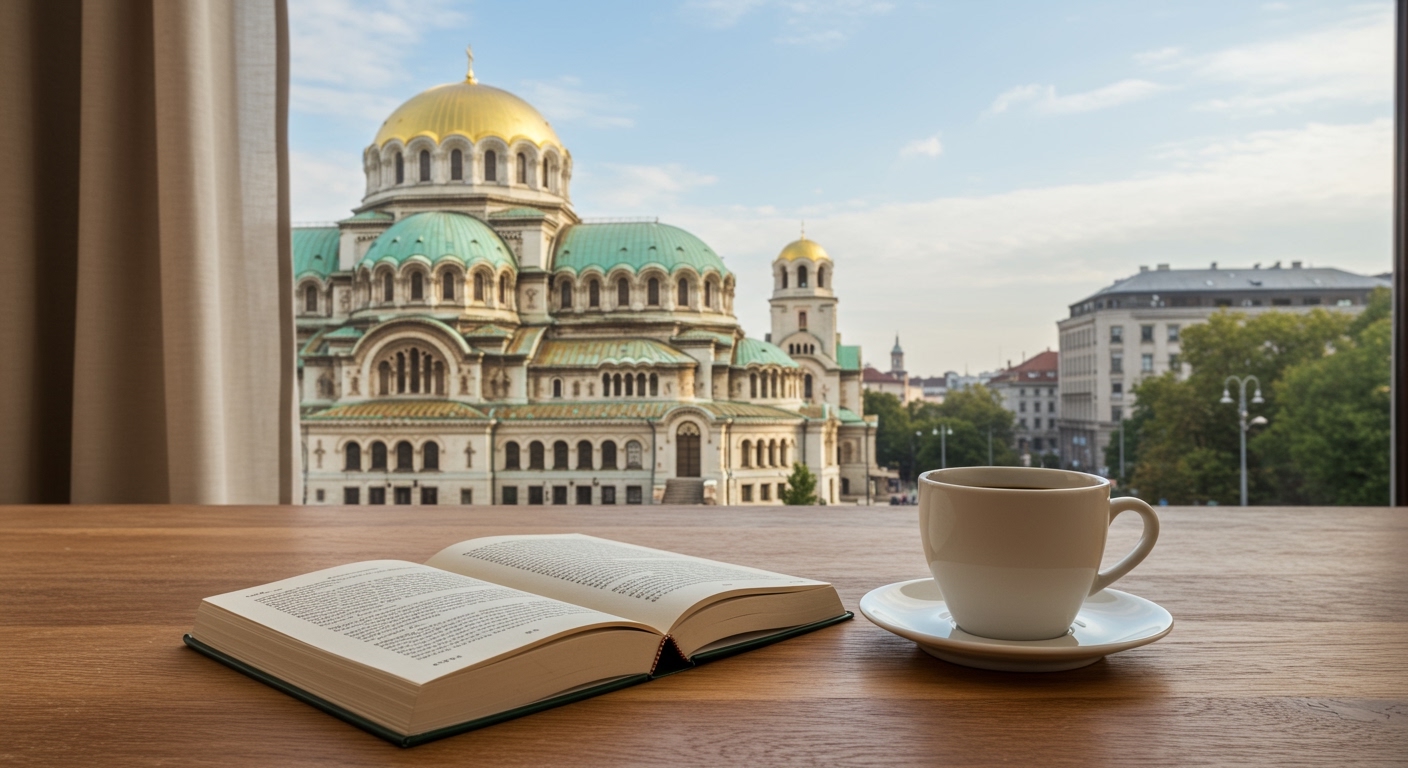
I remember my first week in Sofia, staring at street signs that looked like a mix of math equations and secret codes. However, once I realized that “P” is actually “R” and “H” is “N,” the language began to reveal a logical, phonetic beauty that I never expected.
Key Takeaways for Language Learners
- Difficulty Rating: Moderate-High (FSI Category 3).
- Estimated Time: 44 weeks or 1,100 hours for fluency.
- The “Easy” Part: No noun cases (unlike Russian, Czech, or Polish).
- The “Hard” Part: Complex verb conjugations and nine different verb tenses.
- Alphabet: Uses Cyrillic, which was actually invented in the First Bulgarian Empire.
- Pro Tip: Pay attention to the “head shake”—in Bulgaria, nodding often means “no” and shaking your head means “yes.”
The FSI Rating: Why Is Bulgarian Hard to Learn for English Speakers?
When we look at language difficulty, the Foreign Service Institute (FSI) provides the gold standard. They categorize languages based on how long it takes a native English speaker to reach “General Professional Proficiency.”
Bulgarian sits in Category 3. This puts it in the same bracket as Greek, Hebrew, and Hindi. It is more difficult than “Category 1” languages like Spanish or French, but much easier than “Category 4” languages like Arabic, Chinese, or Japanese.
Language Difficulty Comparison Table
| Feature | Bulgarian | Russian | Spanish | English |
|---|---|---|---|---|
| Alphabet | Cyrillic | Cyrillic | Latin | Latin |
| Noun Cases | None (Analytic) | 6 Cases (Synthetic) | None | None |
| Definite Articles | Suffixed (at the end) | None | Before the noun | Before the noun |
| Verb Tenses | 9 Tenses | 3 Tenses | 10+ Tenses | 12 Tenses |
| FSI Category | 3 (Hard) | 3 (Hard) | 1 (Easy) | N/A |
As you can see, the lack of cases is a massive advantage. In Russian, you have to change the ending of every noun and adjective based on its role in the sentence. In Bulgarian, the nouns remain stable, much like they do in English.
The Cyrillic Alphabet: The First Major Hurdle
One of the primary reasons people ask is Bulgarian hard to learn for English speakers is the script. Many beginners assume Cyrillic is an impossible barrier.
In reality, the Bulgarian alphabet consists of 30 letters. While some look like English letters but sound different (like ‘В’ sounding like ‘V’), others are entirely unique (like ‘Щ’ or ‘Ъ’).
Breaking Down the Alphabet
- The “Friends”: Letters like А, Е, К, М, О, Т look and sound almost exactly like English.
- The “False Friends”: Letters like В (V), Н (N), Р (R), С (S), Х (H) look like English letters but have different sounds.
- The “Strangers”: Letters like Б (B), Г (G), Д (D), Ж (Zh), П (P) are unique shapes you must memorize.
During my own journey, I found that I could read (slowly) after just 48 hours of dedicated practice. Because Bulgarian is phonetic—meaning it is written exactly as it sounds—it is actually more consistent than English. Once you know the 30 sounds, you can read any word in the language perfectly.
Bulgarian Grammar: What Makes It Unique?
If the alphabet is the “gate,” the grammar is the “fortress.” While Bulgarian drops the case system, it compensates with a sophisticated verb system and a unique way of using articles.
The Post-Positive Definite Article
In English, we say “the book.” In Bulgarian, the “the” is attached to the end of the word.
- Книга (Kniga) = Book
- Книгата (Knigata) = The book
This feels strange at first, but it becomes second nature with practice. You just have to learn which suffix to add based on the gender of the noun (masculine, feminine, or neuter).
Verb Aspects and Tenses
This is where the real challenge lies. Bulgarian verbs have aspects: Perfective (completed actions) and Imperfective (ongoing actions).
Furthermore, Bulgarian has tenses that don’t exist in English, such as the Renarrative Mood. This is used when you are talking about something that you didn’t witness personally. It is like having a “hearsay” tense.
Expert Insight: I found that focusing on the Present, Past Simple, and Future tenses first allows you to communicate about 80% of your needs. Don’t let the “hearsay” mood scare you away in the beginning!
Step-by-Step Guide: How to Learn Bulgarian Efficiently
If you want to conquer Bulgarian, you need a structured approach. Based on my experience and interviews with polyglots, here is the most effective path.
Step 1: Master the Alphabet First
Do not use romanized transliterations (writing Bulgarian with English letters). It will cripple your pronunciation. Spend your first three days solely on the Cyrillic script.
- Action: Use flashcards like Anki or Quizlet to drill the 30 letters.
- Goal: Read a children’s book aloud without stumbling, even if you don’t understand the words yet.
Step 2: Learn High-Frequency Phrases
Don’t start with grammar rules. Start with the “survival kit.”
- Здравей (Zdravey) – Hello
- Благодаря (Blagodarya) – Thank you
- Моля (Molya) – Please / You’re welcome
- Къде е…? (Kade e…?) – Where is…?
Step 3: Tackle the Gender of Nouns
Every noun in Bulgarian has a gender. This dictates how you use adjectives and articles.
- Masculine: Usually ends in a consonant (e.g., Град – City).
- Feminine: Usually ends in ‘a’ or ‘я’ (e.g., Жена – Woman).
- Neuter: Usually ends in ‘o’ or ‘e’ (e.g., Дете – Child).
Step 4: Use the “Language Island” Method
Focus on “islands” of vocabulary that relate to your life. If you love cooking, learn all the kitchen nouns first. If you are an IT professional, learn tech terms. This creates Information Gain—you are learning words you will actually use, which triggers better memory retention.
Step 5: Immersion through Media
Bulgarian media is a goldmine for intermediate learners.
- Music: Listen to Pop-folk (Chalga) or Bulgarian rock like B.T.R. The lyrics are often repetitive and great for learning.
- News: Watch BNT (Bulgarian National Television). News anchors speak with very clear, standard pronunciation.
Best Resources for Learning Bulgarian
To succeed, you need the right tools. Here are the top-rated resources we have tested:
- BulgarianPod101: Excellent for audio learners. They provide cultural context that most apps miss.
- Mondly: This is one of the few major apps that offers a high-quality Bulgarian course. It’s great for building a daily habit.
- LingQ: Fantastic for “Input-Based” learning. You can import Bulgarian news articles and translate them word-for-word.
- “Intensive Bulgarian” by Vivian Lesny: The “Bible” of Bulgarian textbooks. It is academic and dense but covers everything you need for fluency.
- iTalki: Finding a native tutor from Sofia or Plovdiv for $10-$15 an hour is the fastest way to improve speaking skills.
Common Pitfalls to Avoid
Even the most dedicated students make these mistakes. Avoid them to speed up your progress.
The “Yes/No” Confusion
In Bulgaria, a nod can mean “no” and a side-to-side shake can mean “yes.” I once spent ten minutes trying to buy a train ticket because the teller was shaking her head “yes,” and I thought she was refusing me! Always double-check by listening for the words “Da” (Yes) or “Ne” (No).
Over-Focusing on Cases
If you have studied Russian before, you will keep trying to change noun endings. Don’t do it. Bulgarian is much simpler in this regard. Trust the English-like structure of the sentences.
Ignoring the “Ъ” (Yer Golyamo)
This letter is the “dark vowel” of Bulgarian. It sounds like the ‘u’ in “butter” or the ‘a’ in “alone.” Pronouncing this correctly is the difference between sounding like a tourist and sounding like a local.
Why You Should Learn Bulgarian Despite the Difficulty
While we’ve established that is Bulgarian hard to learn for English speakers, the rewards are immense.
- Access to the Balkans: Bulgarian is mutually intelligible with Macedonian and very similar to Serbian and Croatian.
- The Culture: Bulgaria has a history spanning over 1,300 years. Reading the poetry of Hristo Botev or the novels of Ivan Vazov in the original language is a profound experience.
- The People: Bulgarians are incredibly hospitable. When a foreigner makes the effort to speak their “hard” language, doors (and bottles of Rakia) open instantly.
FAQ: Frequently Asked Questions
Is Bulgarian harder than Russian?
For English speakers, Bulgarian is generally considered easier than Russian. While they share the same alphabet, Bulgarian lacks the six complex noun cases that make Russian grammar a nightmare for beginners. However, Bulgarian verb tenses are more complex than Russian ones.
Can I learn Bulgarian in 3 months?
You can reach a Basic Conversational (A2) level in three months with intensive study (2+ hours a day). However, reaching Fluency (C1) typically takes 1-2 years of consistent practice due to the complex verb system.
Does Bulgarian use the Latin alphabet?
No, Bulgarian officially uses the Cyrillic alphabet. While you may see Latin letters on some tourist signs in Varna or Sunny Beach, you must learn Cyrillic to navigate the country, read menus, or interact with locals effectively.
Is Bulgarian a dying language?
Not at all. While the population of Bulgaria is shrinking, the language remains the official language of the state, a key language of the European Union, and is spoken by millions of people globally, including significant communities in Ukraine, Moldova, and the USA.