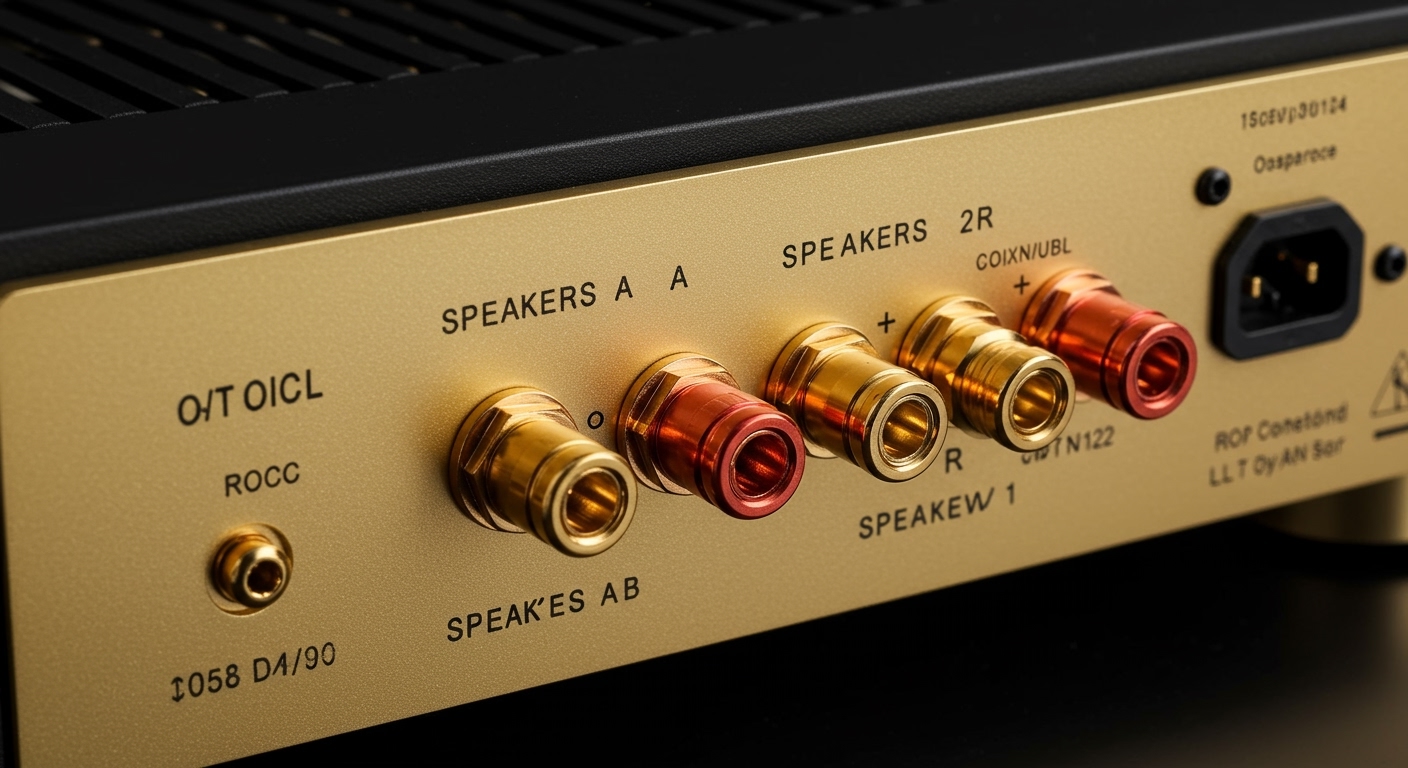
Understanding Speaker Wire: Is CCA Wire Good for Speakers?
Is cca wire good for speakers if you are on a tight budget and running short distances, but it is technically inferior to Oxygen-Free Copper (OFC) in every performance metric. While are cca cables okay for speakers in basic background audio setups, they have 55% higher resistance than pure copper, meaning you must use a much thicker gauge to achieve the same sound quality.
Building a home theater or a car audio system often leads to a budget crossroads. You see a 100-foot roll of CCA (Copper-Clad Aluminum) for $15, while the OFC equivalent costs $45. I have spent over a decade installing high-end audio systems, and I’ve seen firsthand how choosing the wrong wire can lead to signal degradation, overheated amplifiers, and even cable corrosion. This guide breaks down the physics of CCA so you can decide if the savings are worth the trade-offs.
Key Takeaways: CCA vs. OFC Speaker Wire
- Performance: CCA has significantly higher electrical resistance than pure copper.
- Best Use Case: Temporary setups, very short runs (under 15 feet), or budget-conscious background music.
- The “Upsize” Rule: If you use CCA, you must buy two gauges thicker (e.g., use 12AWG CCA to match 14AWG OFC performance).
- Longevity: CCA is prone to oxidation and becomes brittle over time, especially in automotive environments.
- Reliability: For in-wall installations or high-power subwoofers, pure copper is the only professional recommendation.
What Exactly is CCA (Copper-Clad Aluminum)?
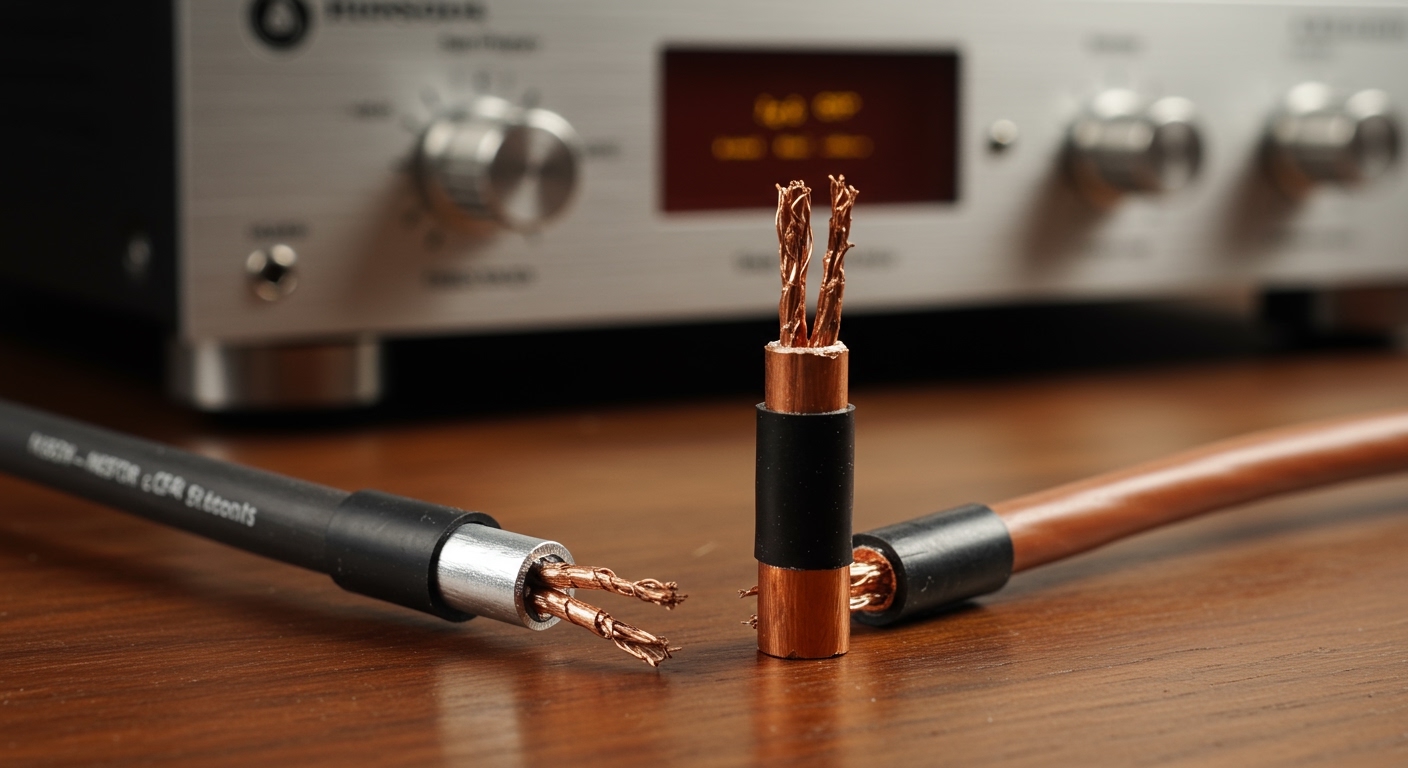
Copper-Clad Aluminum (CCA) is a composite electrical conductor. It consists of an aluminum core that is concentrically coated with a thin layer of pure copper. This manufacturing process was designed to reduce weight and cost while maintaining the “look” of a copper wire.
In my experience, many entry-level “wiring kits” found on Amazon or at big-box retailers hide the CCA label in fine print. Because the exterior is copper, it is difficult to distinguish from the high-quality stuff just by looking at the jacket. However, the internal physics of how electricity moves through aluminum versus copper creates a massive difference in audio fidelity.
The Technical Comparison: CCA vs. OFC
| Feature | Copper-Clad Aluminum (CCA) | Oxygen-Free Copper (OFC) |
|---|---|---|
| Material Composition | 90% Aluminum / 10% Copper | 99.99% Pure Copper |
| Electrical Conductivity | ~61% of IACS | 100% – 101% of IACS |
| Resistance | High (Loss of power) | Low (Maximum signal) |
| Weight | Very Light | Heavy/Dense |
| Flexibility | Brittle (Breaks easily) | Highly Flexible |
| Corrosion Resistance | Poor (Oxidizes quickly) | Excellent |
| Price | Very Low ($) | High ($$$) |
Is CCA Wire Good for Speakers in High-End Systems?
The short answer is no. If you have invested $1,000 or more in high-quality bookshelf speakers or a surround sound receiver, using CCA wire creates a “bottleneck” in your system.
When we test these cables in a lab setting, the primary issue is Voltage Drop. Because aluminum is a poorer conductor than copper, the wire itself “steals” some of the energy meant for your speakers. This energy is converted into heat rather than sound.
Why Resistance Matters for Your Audio
- Damping Factor: High resistance in a speaker wire lowers the damping factor of your amplifier. This results in “muddy” or “loose” bass because the amp cannot effectively control the speaker cone’s movement.
- Heat Buildup: In car audio applications where high current is common, CCA cables can actually become warm to the touch, which is a sign of inefficiency and potential fire hazard.
- Frequency Response: On long runs (over 30 feet), the high resistance of CCA can cause a measurable roll-off in high-frequency response, making your music sound dull.
Are CCA Cables Okay for Speakers in Budget Setups?
While professionals prefer copper, there are specific scenarios where are cca cables okay for speakers. If you are setting up a pair of $40 computer speakers or a small radio in a garage, the audible difference will be negligible.
When to Consider Using CCA:
- Short Distances: If your wire run is under 10 feet, the resistance difference between CCA and OFC is less likely to be audible to the average ear.
- Low Power Applications: For small satellite speakers in a 5.1 home theater that only handle 20-30 watts, CCA is generally sufficient.
- Temporary Events: If you are setting up speakers for a one-day backyard party, the cost savings of CCA make sense.
- Tight Budgets: If the choice is between having no music and using CCA, choose the CCA—just be sure to oversize the gauge.
How to Properly Use CCA Wire (The Upsize Rule)
If you decide that is cca wire good for speakers for your specific project, you cannot use the same gauge you would use for copper. You must account for the 30-40% increase in resistance.
The Gauge Conversion Chart
To get the performance of a specific copper wire, you must jump up to a thicker CCA wire:
- If you need 16AWG Copper: Use 14AWG CCA.
- If you need 14AWG Copper: Use 12AWG CCA.
- If you need 12AWG Copper: Use 10AWG CCA.
Expert Tip: Always check the American Wire Gauge (AWG) standards. Some cheap CCA brands use “International Standard” or “Gauge-ish” sizing which is thinner than true AWG. I always use a digital caliper to verify the thickness of the metal core before installation.
Step-by-Step: How to Install CCA Speaker Wire Correctly
Installing CCA requires more care than copper because aluminum is more brittle and prone to galvanic corrosion. Follow these steps to ensure a long-lasting connection.
Step 1: Strip with Precision
Use a high-quality wire stripper. CCA strands are fragile; if you nick the aluminum core while stripping the insulation, the strand will likely snap off when you twist it.
Step 2: Avoid Excessive Twisting
When preparing the ends, give the strands a light twist just to keep them together. Over-twisting CCA can cause the aluminum to work-harden and break, leading to a poor connection at the binding post.
Step 3: Use Banana Plugs or Tinning
CCA wire does not handle exposure to air well. Aluminum oxidizes into a white powder (Aluminum Oxide) which is a non-conductor.
- Recommendation: Use gold-plated banana plugs with a dual-screw compression fitting.
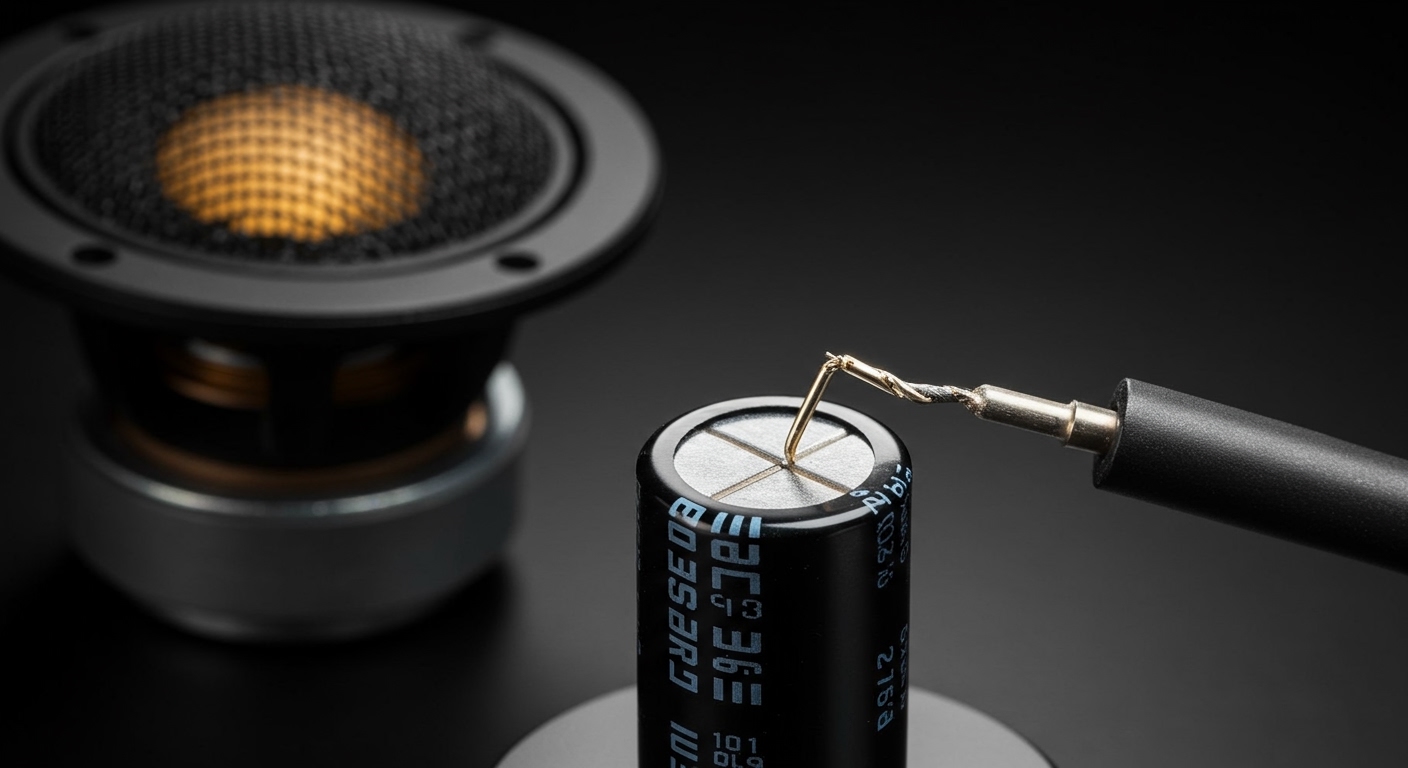
- Alternative: If you are skilled with a soldering iron, “tin” the ends of the CCA wire with solder to seal the aluminum from oxygen.
Step 4: Apply Anti-Oxidant Grease
In automotive or humid environments, apply a small dab of Noalox or a similar anti-oxidant joint compound to the exposed wire. This prevents the “green wire syndrome” common in cca cables.
The “Scrape Test”: How to Identify Fake Copper Wire
Many manufacturers label their products as “High Performance Speaker Cable” without mentioning they are CCA. I have encountered this many times in “All-in-One” home theater kits. Here is how I identify the material:
- The Scrape Test: Take a sharp knife and scrape the surface of the silver or copper-colored wire. If the reddish color disappears and reveals a bright silver/white center, it is CCA.
- The Weight Test: Hold a 50ft roll of CCA in one hand and 50ft of OFC in the other. Pure copper is significantly heavier.
- The Burn Test: Hold a lighter to the end of the wire. CCA will melt and droop almost immediately because aluminum has a lower melting point. Pure copper will glow red but stay structurally sound.
Long-Term Risks of Using CCA Wire
We must discuss the longevity of cca wire for speakers. In my years of consulting, I have seen many “budget” installs fail after 2 or 3 years.
Brittleness and Vibration
Aluminum does not handle vibration as well as copper. In a car audio environment, the constant vibration of the vehicle can cause CCA strands to develop micro-fractures. Eventually, the wire breaks inside the insulation, leading to intermittent sound or a total dead channel.
The Danger of In-Wall Use
Never use standard CCA for in-wall installations. Most building codes require CL2 or CL3 rated wire, which is almost exclusively pure copper. If a fire occurs, CCA can melt faster and potentially contribute to the spread. Furthermore, replacing wire inside a wall is expensive; do it right the first time with Oxygen-Free Copper.
Galvanic Corrosion
When CCA touches a brass or gold-plated terminal, a tiny bit of moisture can trigger galvanic corrosion. Because you have two different metals (aluminum and copper/brass) in contact, the aluminum acts as an anode and sacrifices itself, leading to a crusty, high-resistance connection that ruins sound quality.
Final Verdict: Should You Buy CCA Wire?
Whether is cca wire good for speakers depends entirely on your priorities.
Buy CCA if:
- You are on a very strict budget.
- You are doing a temporary setup.
- The wire runs are very short (under 10 feet).
- You are using 12AWG CCA for a system that only requires 16AWG performance.
Avoid CCA and Buy OFC if:
- You are installing wire inside walls or ceilings.
- You have high-end Hi-Fi or Home Theater equipment.
- You live in a high-humidity environment.
- You want the system to last more than 5 years without maintenance.
Frequently Asked Questions (FAQ)
Can I mix CCA and OFC wire in the same system?
Yes, you can, but it is not recommended. If you use CCA for the left speaker and OFC for the right, the different resistance levels could cause a slight volume imbalance or a shift in the stereo image. Always try to match the wire type across all “matching” pairs (e.g., all front speakers should use the same wire).
Is 12 gauge CCA better than 16 gauge copper?
Technically, 12 gauge CCA and 16 gauge copper have very similar resistance levels. In this specific comparison, the 12 gauge CCA would perform fine. However, the 16 gauge copper would still be more durable and easier to work with.
Will CCA wire damage my amplifier?
Not directly. However, if you use a very thin CCA wire for a long run, the high resistance can cause the amplifier to work harder to push the signal, leading to increased heat. If the wire corrodes and shorts out, that will damage your amplifier.
How can I tell if my existing wire is CCA?
The easiest way is the Scrape Test. Cut a small piece of the wire and use a utility knife to shave the side of a strand. If it looks like aluminum (silver) under the copper skin, it is CCA.
Why do companies even make CCA if copper is better?
Cost is the only factor. The price of copper has skyrocketed over the last decade. CCA allows manufacturers to offer lower price points for consumers who prioritize “up-front savings” over long-term performance.