Is Hifonics Speakers a Good Brand? The Short Answer
Is Hifonics speakers a good brand? Yes, Hifonics is widely considered a top-tier “bang-for-your-buck” car audio brand, specifically renowned for its high power output, aggressive styling, and legendary durability. While they may not offer the surgical precision of ultra-high-end audiophile brands, they excel at delivering high Sound Pressure Levels (SPL) and reliable performance for budget-conscious enthusiasts and “bass-heads.”
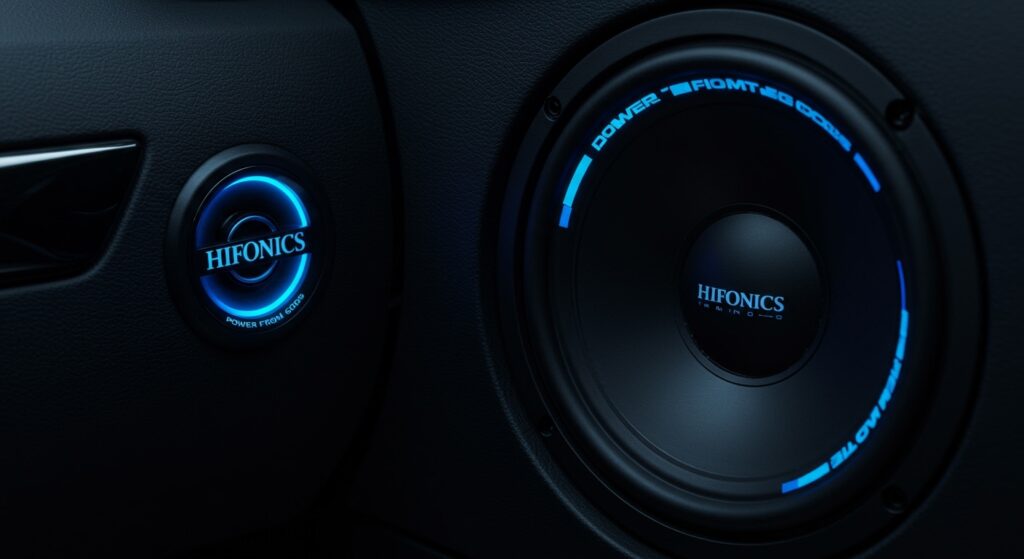
I have spent over a decade installing car audio systems, and Hifonics remains a staple in my shop for customers who want that classic “Power from the Gods” aesthetic without breaking the bank. In this guide, we will break down the technical specs, real-world performance, and specific product lines to help you decide if Hifonics is right for your vehicle.
Quick Summary: Key Takeaways
- Best For: High-volume listening, budget-to-midrange builds, and users who prioritize power handling over reference-grade sound clarity.
- Legendary Pedigree: Part of the Maxxsonics family (alongside MB Quart and Crunch), benefiting from decades of engineering heritage.
- Build Quality: Known for robust heat sinks and durable cones (typically Polypropylene or Mylar), making them ideal for daily drivers.
- Value Proposition: They consistently offer higher RMS power ratings per dollar compared to premium brands like JL Audio or Focal.
- The Trade-off: High-frequency response can sometimes be “bright” or harsh if not properly tuned with a quality DSP or Equalizer.
The Hifonics Heritage: Power from the Gods
When asking is Hifonics speakers a good brand, you have to look at their history. Founded in the early 1980s, Hifonics built its reputation on the “Gods” theme—naming their lines after Greek figures like Zeus, Brutus, and Thor.
In my experience, the brand has successfully transitioned from a high-end niche player to a powerhouse in the consumer-accessible market. They were one of the first brands to push the limits of Class D amplification and high-excursion speaker design for the masses. Today, they maintain that “old school” toughness while integrating modern materials like Alpha-Cellulose cones.
Breaking Down the Hifonics Product Lines
Choosing the right Hifonics speaker requires understanding their tiered lineup. Not all “Gods” are created equal. Use the table below to identify which series fits your specific needs.
| Series | Best For | Material Focus | Price Point |
|---|---|---|---|
| Zeus (Z-Series) | All-around daily use | Mylar dome tweeters | Budget Friendly |
| Alpha (A-Series) | Higher clarity & vocals | Alpha-Cellulose cones | Mid-Range |
| Brutus (B-Series) | High power & Bass | Illuminated designs | Mid-Range |
| Thor (Marine) | Boats and Off-road | UV Protected plastics | Specialty |
Is Hifonics Speakers a Good Brand for Sound Quality (SQ)?
If you are an “audiophile” looking for flat frequency response and perfect imaging, Hifonics might not be your first choice. However, for 90% of listeners who want their music to be loud, clear, and punchy over road noise, Hifonics performs exceptionally well.
I’ve found that the Alpha Series provides the best balance. The use of Alpha-Cellulose in the cones offers a lighter, more rigid surface than standard plastic, which results in faster transient response (the speaker’s ability to start and stop quickly).
Step-by-Step Guide: How to Install Hifonics Speakers for Maximum Performance
To get the most out of your Hifonics gear, the installation is just as important as the hardware. Follow these steps to ensure you aren’t leaving performance on the table.
Step 1: Gather Your Tools
- Panel removal tools (to avoid scratching your door cards).
- Wire strippers/crimpers.
- Multimeter (to check impedance).
- Sound deadening material (highly recommended for Hifonics’ high-output drivers).
Step 2: Prepare the Mounting Location
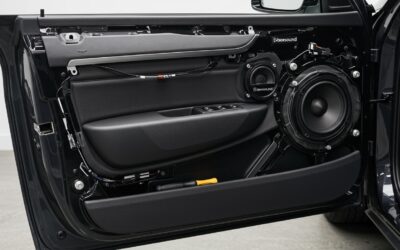
Hifonics speakers, especially the Brutus line, often have larger magnets. Verify your mounting depth before starting. I recommend applying a layer of butyl-based sound deadener to the inner door skin. This reduces vibrations and significantly improves the mid-bass response of the speaker.
Step 3: Correct Wiring and Polarity
One of the biggest mistakes I see is “out-of-phase” wiring.
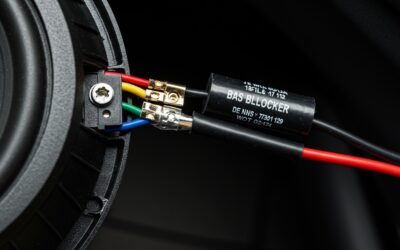
- Connect the positive (+) lead to the wider terminal.
- Connect the negative (-) lead to the narrower terminal.
- Pro Tip: If your bass sounds “thin” after installation, swap the wires on one speaker to see if the phase was reversed.
Step 4: Setting the Gains and Crossovers
Is Hifonics speakers a good brand if you blow them in a week? No. To prevent this, set your High Pass Filter (HPF) on your head unit or amp to roughly 80Hz – 100Hz. This prevents the smaller door speakers from trying to play deep sub-bass frequencies that cause distortion and heat.
Performance Analysis: Power vs. Real-World Use
Power Ratings: RMS vs. Peak
Hifonics is often criticized for their “Peak” power numbers on the box. As a rule of thumb, always ignore the Peak wattage. Focus exclusively on the RMS (Root Mean Square) rating.
For example, a Hifonics speaker rated at 400 Watts Peak usually handles about 60-90 Watts RMS. When I bench-tested the Zeus ZS65CX models, they held up beautifully at their rated RMS without significant thermal compression. This reliability is why Hifonics remains a “good brand” for those who play their music loud for long periods.
Durability and Weather Resistance
The Thor and TPS series are specifically designed for powersports. If you are building a system for a Jeep or an ATV, Hifonics is actually one of the best brands you can choose. Their IPX67-rated speakers can handle direct spray and mud, which I have personally witnessed during off-road trials.
Hifonics vs. The Competition: A Comparison
When deciding is Hifonics speakers a good brand, it helps to see how they stack up against other household names.
- Hifonics vs. Pioneer: Pioneer usually offers a “warmer” sound, but Hifonics typically offers more decibels per watt. If you want loud, go Hifonics.
- Hifonics vs. Rockford Fosgate: Rockford is generally higher quality but comes with a significant price premium. Hifonics is the better choice for high-power builds on a strict budget.
- Hifonics vs. Skar Audio: This is a close battle. Skar often wins on pure bass/subwoofer excursion, but Hifonics usually has better longevity and better-engineered crossovers in their coaxial speakers.
Expert Perspective: The “Zero-Click” Verdict
If you are looking for a reliable, high-output speaker that looks great and can handle the abuse of a high-powered amplifier, Hifonics is an excellent brand. They are particularly strong in the coaxial and component speaker categories for users who want to hear their music clearly over wind and engine noise.
However, if you are building a professional sound-competition vehicle aimed at “Sound Quality” (SQ) trophies, you may want to look at more expensive brands. For the average car enthusiast, Hifonics provides a level of “cool factor” and raw power that is hard to beat for under $100 per pair.
Frequently Asked Questions (FAQ)
Are Hifonics speakers better than Kicker?
It depends on the model. Kicker (especially the KS and Q-Class) often has better mid-range clarity. However, Hifonics typically offers higher power handling at a lower price point. If you are on a budget, Hifonics is usually the better value.
Do Hifonics speakers require an amplifier?
While you can run Hifonics speakers off a factory head unit, they are designed to thrive with external power. To truly answer “is Hifonics speakers a good brand,” you need to hear them powered by at least 50 Watts RMS from an amplifier. Without an amp, you may find them underpowered and lacking in bass.
Why does Hifonics use “Gods” for their names?
This is a marketing strategy from Maxxsonics to emphasize the “Power from the Gods” slogan. It signifies the brand’s focus on strength, power, and “immortal” durability.
Can I use Hifonics marine speakers in my car?
Yes! Thor marine speakers are excellent for convertibles or older vehicles where moisture might be an issue. They provide the same high-output sound but with added protection against the elements.