Who Makes Micca Speakers? Unpacking the Budget Audio Giant
Struggling to find speakers that deliver rich, detailed sound without emptying your wallet? You’ve likely stumbled upon the name Micca in forums and reviews, praised for its incredible value. But this raises a critical question: who makes Micca speakers, and how do they achieve such impressive performance at such a low price?
Micca is a direct-to-consumer brand that designs its products in the U.S. and works with established overseas manufacturers, primarily in China, to produce them. By cutting out traditional retail middlemen and selling almost exclusively online through platforms like Amazon, Micca keeps overhead low and passes those savings directly to you. This lean business model is the secret behind their ability to offer audiophile-grade features in budget-friendly packages.
TL;DR: Key Takeaways
- Manufacturer: Micca is a U.S.-designed, China-manufactured brand. They follow a direct-to-consumer model.
- Key Selling Point: They offer exceptional audio performance for their price, making them a top choice for budget-conscious enthusiasts.
- Most Famous Models: The Micca MB42X and Micca RB42 are iconic bookshelf speakers celebrated for their sound quality.
- Where to Buy: The primary and most reliable place to purchase Micca speakers is Amazon.
- Are They Good? Yes, for the price, they are excellent. They outperform nearly everything in their immediate price bracket, but require a separate amplifier.
Understanding Who Makes Micca Speakers: The Direct-to-Consumer Secret
Unlike legacy brands like Klipsch or Polk that you’d find in a big-box store, Micca operates on a different playbook. The answer to “who makes Micca speakers” isn’t a single, famous factory but a strategic partnership between U.S.-based design and engineering and high-efficiency overseas manufacturing.
Here’s the breakdown of their successful model:
- Design and Specification: The core concepts, acoustic engineering, and product specifications are developed by a team with a deep understanding of audio principles. They focus on what truly matters for sound quality, like driver quality and crossover design, while saving costs on cosmetic elements.
- OEM Manufacturing: Micca partners with an Original Equipment Manufacturer (OEM) in China to build the speakers to their exact standards. This is a common practice in the electronics industry that allows brands to leverage the scale and efficiency of massive production facilities.
- Direct-to-Consumer Sales: By selling directly to customers online, primarily through Amazon, Micca eliminates several layers of cost. There’s no distributor markup, no retailer profit margin, and no expensive marketing campaigns.
This entire process is focused on a single goal: maximizing the performance-to-price ratio. When I first got into this hobby, the cost was a huge barrier. Micca was one of the first brands that made me realize you don’t need to spend a fortune to get truly enjoyable sound.
Are Micca Speakers Good? An Honest Performance Review
So, the crucial question remains: are Micca speakers good? Yes, they are exceptionally good for their price. It’s essential to manage expectations—a $90 pair of Micca MB42X won’t outperform a $1,000 pair of KEFs. But in the sub-$200 category, they are often the benchmark against which all others are judged.
Based on my hands-on experience with several of their models and years of community feedback, here’s an objective look at their performance.
Sound Signature
Micca speakers are generally known for a relatively neutral and balanced sound profile. They don’t typically have the V-shaped signature (boosted bass and treble) common in many consumer-grade speakers. This makes them versatile for both music and movies.
- Treble: The silk dome tweeters used in models like the MB42X and RB42 produce clear and detailed highs without being harsh or fatiguing.
- Midrange: This is where Micca often shines. Vocals and instruments sound natural and present, a quality often missing in budget speakers that scoop out the midrange.
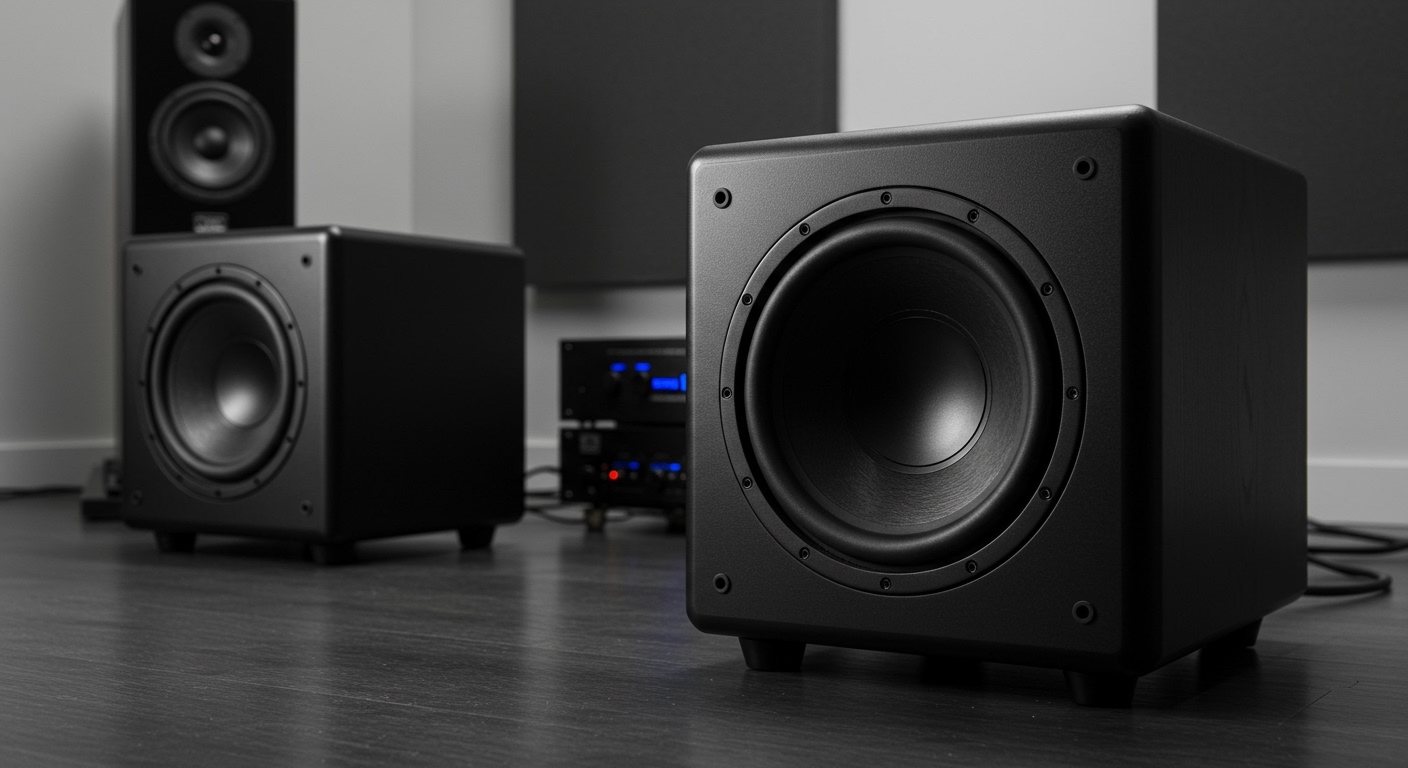
- Bass: Due to their small size, the bass is tight and punchy but won’t shake the room. For deep, rumbling bass, pairing them with a subwoofer is highly recommended. I found this to be especially true for the MB42X in my home office setup.
Build Quality & Aesthetics
To keep costs down, this is where Micca makes the most compromises. The cabinets are typically made of MDF with a basic black ash vinyl wrap. They are functional and sturdy but lack the premium finish of more expensive speakers. The binding posts are simple but effective. You’re paying for the sound components, not a piece of fine furniture.
Ideal Use Cases
Micca speakers are incredibly versatile, but they excel in specific applications:
- Desktop Audio: Their compact size and excellent nearfield performance make them perfect for a desktop or office setup.
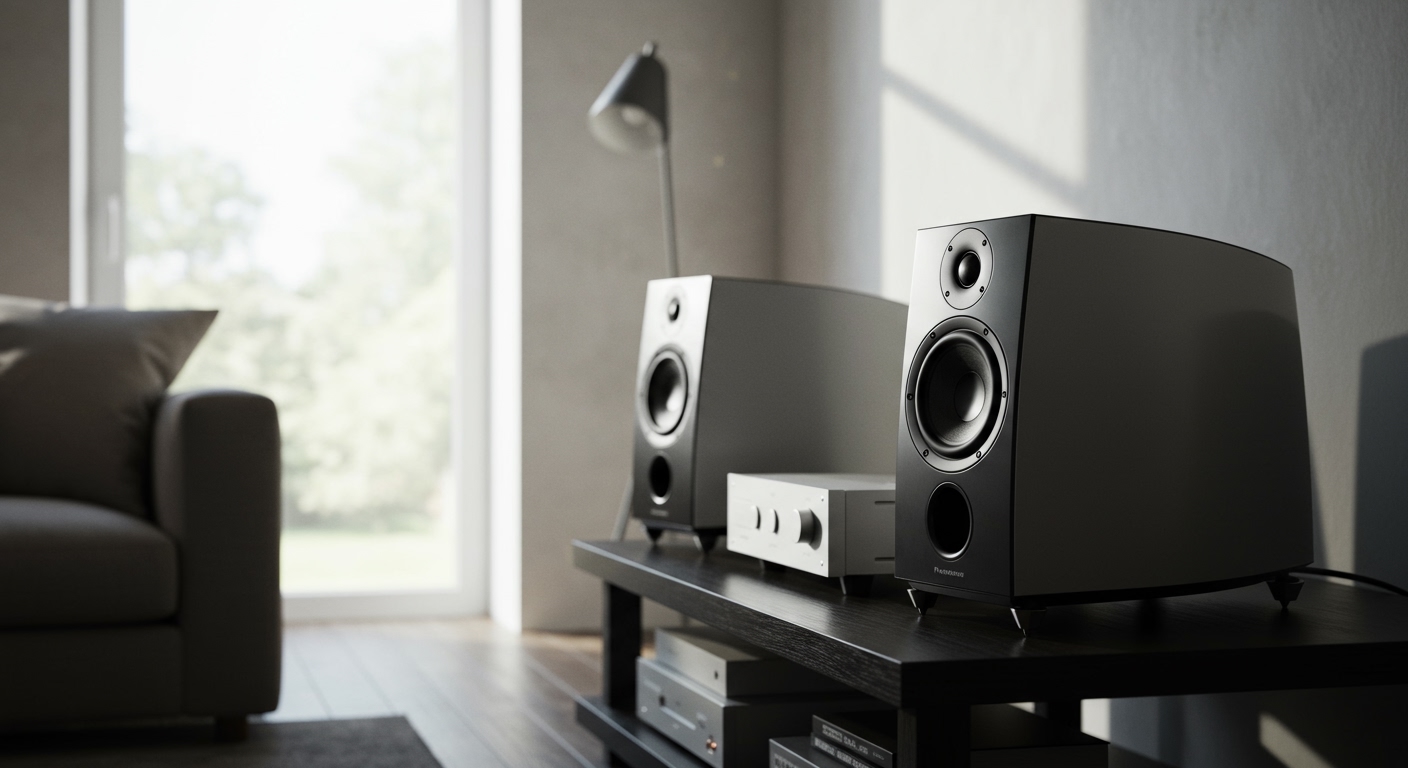
- Small to Medium Rooms: In a smaller living room or bedroom, they can easily fill the space with high-quality sound.
- Budget Home Theater: You can build a surprisingly capable 2.1, 3.1, or even 5.1 surround sound system using Micca speakers without breaking the bank.
A Guide to the Most Popular Micca Speaker Models
Micca offers a focused lineup of products, with a few standout models that have achieved legendary status in the budget audio community. Here’s a look at the speakers you’re most likely to encounter.
Micca MB42X: The Gateway to Hi-Fi
The Micca MB42X is arguably the most famous budget speaker of the last decade. It’s the product that put Micca on the map for many aspiring audiophiles, including myself.
- Key Feature: The “X” in MB42X is critical. It signifies the inclusion of a proper 9-element crossover network. The original MB42 lacked this, and the “X” version offers vastly superior sound integration between the woofer and tweeter.
- Performance: It delivers stunning clarity and imaging for its size and price. It’s the perfect first step away from cheap computer speakers or all-in-one systems.
- Best For: Desktop use and small rooms. It absolutely needs a subwoofer to sound its best.
Micca RB42: The Bass Powerhouse
The Micca RB42 was the highly anticipated follow-up to the MB42X, designed to address its predecessor’s biggest weakness: bass response.
- Key Feature: It boasts a larger 4-inch carbon fiber woofer with a massive magnet structure and a ported enclosure. This allows it to produce significantly deeper and more impactful bass than the MB42X.
- Performance: The RB42 is a more complete-sounding speaker. While still compact, it has a weight and authority to its sound that is shocking for its size. I was genuinely taken aback when I first heard them; they sound much larger than they are.
- Best For: Small to medium-sized rooms where you want a richer, fuller sound without an immediate need for a subwoofer.
Micca OoO: The Unique Coaxial
The Micca OoO (Origain Oria) is a more specialized speaker with a unique design.
- Key Feature: It uses a coaxial driver, where the tweeter is mounted in the center of the woofer. This design creates a point-source for sound, leading to phenomenal imaging and a very coherent soundstage.
- Performance: The sound is incredibly precise. This makes them fantastic for nearfield listening on a desk, where that pinpoint accuracy is most noticeable.
- Best For: Desktop audiophiles who prioritize imaging and clarity above all else.
Micca In-Wall & In-Ceiling Speakers
Micca also produces a popular line of architectural speakers, like the M-Series (M-8C, M-6C). These are a fantastic, budget-friendly option for creating a clean, integrated home theater system, especially for Dolby Atmos height channels.
Micca Speaker Model Comparison
| Feature | Micca MB42X | Micca RB42 | Micca OoO |
|---|---|---|---|
| Woofer Size | 4″ Carbon Fiber | 4″ Carbon Fiber (Long Throw) | 3″ Paper Cone (Coaxial) |
| Tweeter | 0.75″ Silk Dome | 0.75″ Silk Dome | 0.75″ Silk Dome (Coaxial) |
| Enclosure | Sealed | Ported (Rear) | Ported (Rear) |
| Bass Response | Modest | Very Good | Decent |
| Best Use Case | Desktop / Small Room (with Sub) | Small-Medium Room / Standalone | Desktop / Nearfield |
| Price Point | $ | $$ | $$ |
How to Get the Most Out of Your Micca Speakers (Step-by-Step)
Because Micca speakers are passive, they require a separate amplifier to work. Simply buying the speakers is only half the equation. Follow these steps to build a complete system and optimize their performance.
Step 1: Choose the Right Amplifier
You don’t need a powerful, expensive amplifier. Modern Class D mini-amps are affordable, compact, and provide plenty of clean power for Micca speakers.
- Budget Pick: The Fosi Audio BT20A or AIYIMA A07 are excellent entry-level choices. They offer around 50 watts per channel, which is more than enough.
- Mid-Tier Pick: The SMSL AD18 or Loxjie A30 are fantastic all-in-one units that include a DAC (Digital-to-Analog Converter), multiple inputs (USB, Optical), and a subwoofer output.
- My Experience: I’ve personally paired Micca speakers with a dozen