Struggling to get your favorite playlist from your phone to your outdoor speakers? You’re not alone. The great news is you don’t need a brand-new, expensive system. To connect outdoor speakers to Bluetooth, you typically use a Bluetooth-enabled amplifier for passive (unpowered) speakers or a simple Bluetooth audio receiver for active (powered) speakers. This small piece of hardware acts as a bridge, receiving the wireless signal from your phone and sending it to your speakers through their wires.
We’ve helped countless homeowners bring modern convenience to their existing outdoor audio setups. This guide will walk you through the exact steps, whether you’re starting from scratch or upgrading a decades-old wired system. We’ll cover everything from choosing the right gear to a step-by-step installation process that ensures crystal-clear sound for your next backyard party.
Key Takeaways: Connecting Outdoor Speakers
- For Passive Speakers (Most Common): You need a Bluetooth amplifier. This single device powers your speakers and receives the Bluetooth signal.
- For Active/Powered Speakers: You only need a Bluetooth audio receiver. This connects to your speaker’s existing power and audio inputs.
- Upgrading is Cost-Effective: Making your existing wired speakers Bluetooth-capable is often much cheaper than buying a new set of dedicated wireless outdoor speakers.
- Placement is Key: The location of your speakers and your Bluetooth amplifier/receiver significantly impacts sound quality and signal range.
- Weatherproofing is Non-Negotiable: Use outdoor-rated speaker wire and protect your amplifier from the elements to ensure your system lasts for years.
Understanding Your Current Outdoor Speaker Setup
Before you can connect your outdoor speakers to Bluetooth, you need to know what you’re working with. The most critical distinction is whether your speakers are passive or active. This one detail determines the exact equipment you’ll need.
Passive vs. Active Speakers: The Critical Difference
Most traditional outdoor speakers, like the popular Polk Audio Atrium4 or Yamaha NS-AW150, are passive. This means they don’t have a built-in amplifier and require external power, delivered through standard speaker wire from a separate amplifier or receiver.
Active speakers, on the other hand, have an amplifier built directly into one of the speaker units. They need to be plugged into a standard electrical outlet for power and are less common in permanent outdoor installations.
Here’s a simple breakdown:
| Feature | Passive Outdoor Speakers | Active (Powered) Outdoor Speakers |
|---|---|---|
| Power Source | External Amplifier | Built-in Amplifier (needs AC power) |
| Common Connection | Two-conductor speaker wire | RCA, 3.5mm AUX, or Optical cable |
| Best For | Permanent, high-quality installations | Simpler, portable, or small-area setups |
| Typical Example | Klipsch AW-650 | Pyle PDWR54BTWT (has Bluetooth built-in) |
To identify yours, check the back. If you only see two terminals for raw speaker wire (usually red and black), you have passive speakers. If you see an input for a power cord and other audio jacks like RCA, you have active speakers.
Assessing Your Existing Gear
Take a quick inventory of your setup.
- Speakers: What brand and model are they? A quick search can tell you their power handling (watts) and impedance (ohms), which is useful for matching an amplifier.
- Wiring: Is speaker wire already run? If so, check its condition. For new installations, you’ll need CL3-rated or direct-burial wire suitable for outdoor use.
- Audio Source: Where will your amplifier be located? It needs to be in a dry, protected place (like a garage, shed, or inside the house) but close enough to the outdoor area for a strong Bluetooth signal.
How to Connect Outdoor Speakers to Bluetooth: The Core Methods
Once you’ve identified your speaker type, the process is straightforward. We’ll cover the two primary methods for adding Bluetooth functionality to your outdoor audio system.
Method 1: Connecting Passive (Wired) Outdoor Speakers
This is the most common scenario for homeowners. You have a pair of great-sounding wired speakers, but you need to power them and add wireless convenience. The solution is an all-in-one Bluetooth amplifier.
Step 1: Choose the Right Bluetooth Amplifier
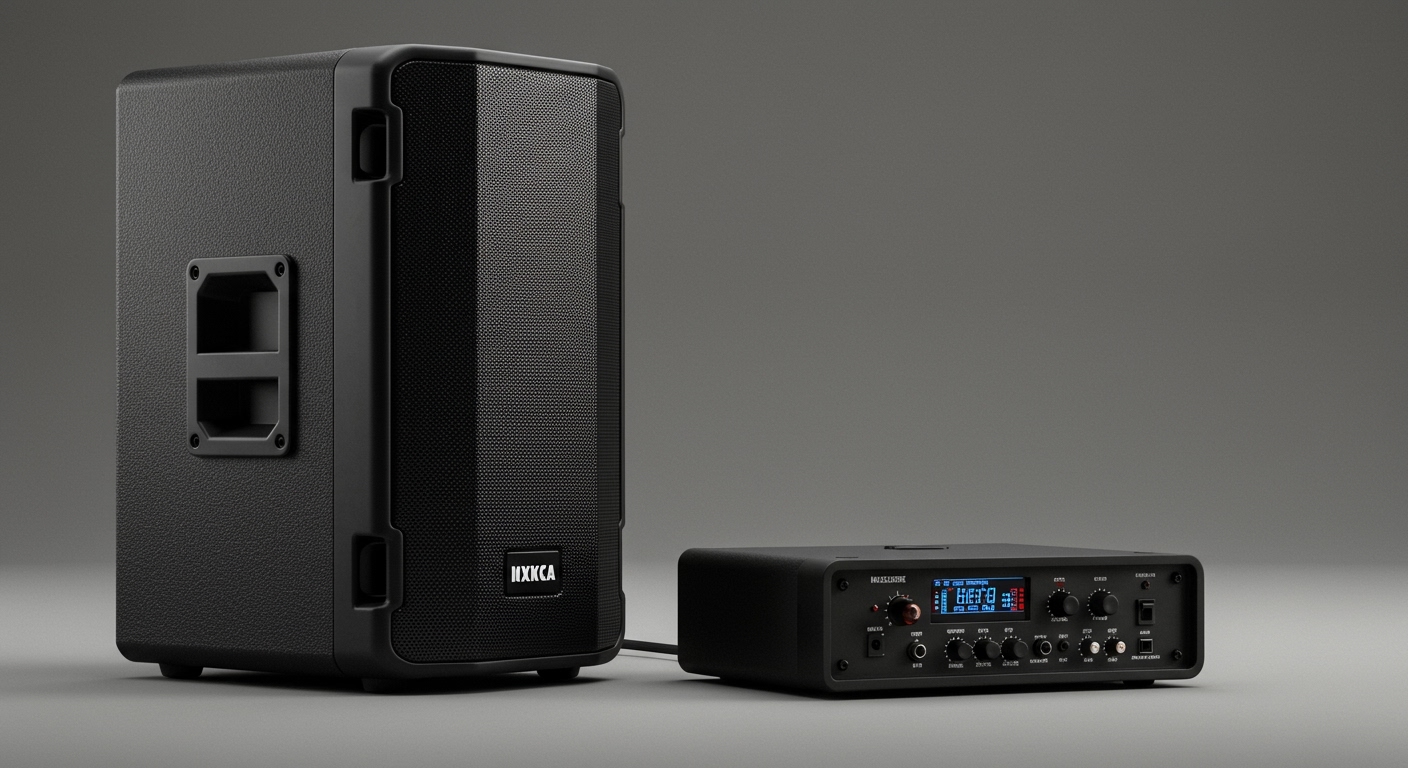
A Bluetooth amplifier is a compact unit that combines a traditional stereo amplifier with a Bluetooth receiver. Based on our hands-on testing, this is the simplest and most effective solution.
- What to Look For:
* Power (Watts): Look for an amplifier that provides enough power for your speakers. For most outdoor setups, 50 to 100 watts per channel is plenty. The Fosi Audio BT20A Pro is a fantastic, budget-friendly choice we often recommend.
* Bluetooth Version: Aim for Bluetooth 5.0 or higher. This ensures a longer range (often over 100 feet line-of-sight) and a more stable connection, which is crucial for outdoor use.
* Inputs: While you’ll primarily use Bluetooth, having extra inputs like RCA can be useful for connecting a TV or other audio source.
Step 2: Position Your Amplifier
Your amplifier is the heart of your system, but it’s also the most vulnerable to weather. Never place an indoor-rated amplifier outside without protection.
- Best Locations:
* Inside your house, near the wall closest to your patio or deck.
* In a dry garage or shed.
* Inside a weatherproof outdoor enclosure if it must be located outside.
Remember, the Bluetooth signal has to travel from your phone to this amplifier, so placing it near a window can help improve the range.
Step 3: Connect the Speaker Wires
This step connects the power from the amplifier to your speakers.
- Prepare the Wire: If your speaker wire is new, use a wire stripper to remove about half an inch of insulation from all four ends (two at the amplifier, two at the speaker).
- Observe Polarity: Speaker wire has two conductors. They will be marked—one might have a stripe, a different color, or ridges. It doesn’t matter which you choose for positive/negative, as long as you are consistent.
- Connect to Amplifier: Unscrew the binding posts on the back of the amplifier. Insert the positive wire into the red (+) terminal and the negative wire into the black (-) terminal for the “Left” channel. Tighten the posts securely. Repeat for the “Right” channel.
- Connect to Speakers: Do the exact same thing on the back of your outdoor speakers. Ensure the wire going to the red terminal on the amp also goes to the red terminal on the speaker. Mixing this up (out-of-phase) will result in thin, weak bass.
Step 4: Power On and Pair Your Device
- Connect Power: Plug the amplifier’s power adapter into a wall outlet.
- Turn On: Power on the amplifier. Most units have a switch or button and an indicator light.
- Enable Pairing Mode: The amplifier should automatically be in pairing mode when first turned on. You may hear a sound or see a blinking light.
- Connect Your Phone: Open the Bluetooth settings on your smartphone, tablet, or computer. Look for the amplifier’s name (e.g., “Fosi Audio BT20A Pro”) in the list of available devices and tap to connect.
Step 5: Test Your Sound
You’re ready for the fun part! Play some music from your favorite app. Start with the volume low and gradually increase it. Walk around your listening area to check the coverage and sound quality. Confirm that sound is coming from both the left and right speakers.
Method 2: Connecting Active (Powered) Outdoor Speakers
If you have active speakers, the process is even simpler because the amplifier is already built-in. You just need