What is a Raised Platform Used by Speakers?
A raised platform used by speakers is a structural elevation—commonly referred to as a podium, lectern, dais, or stage riser—designed to increase a presenter’s visibility and authority. These platforms ensure the audience has a clear line of sight, which is essential for maintaining engagement and improving the overall acoustical projection of the speaker’s voice.
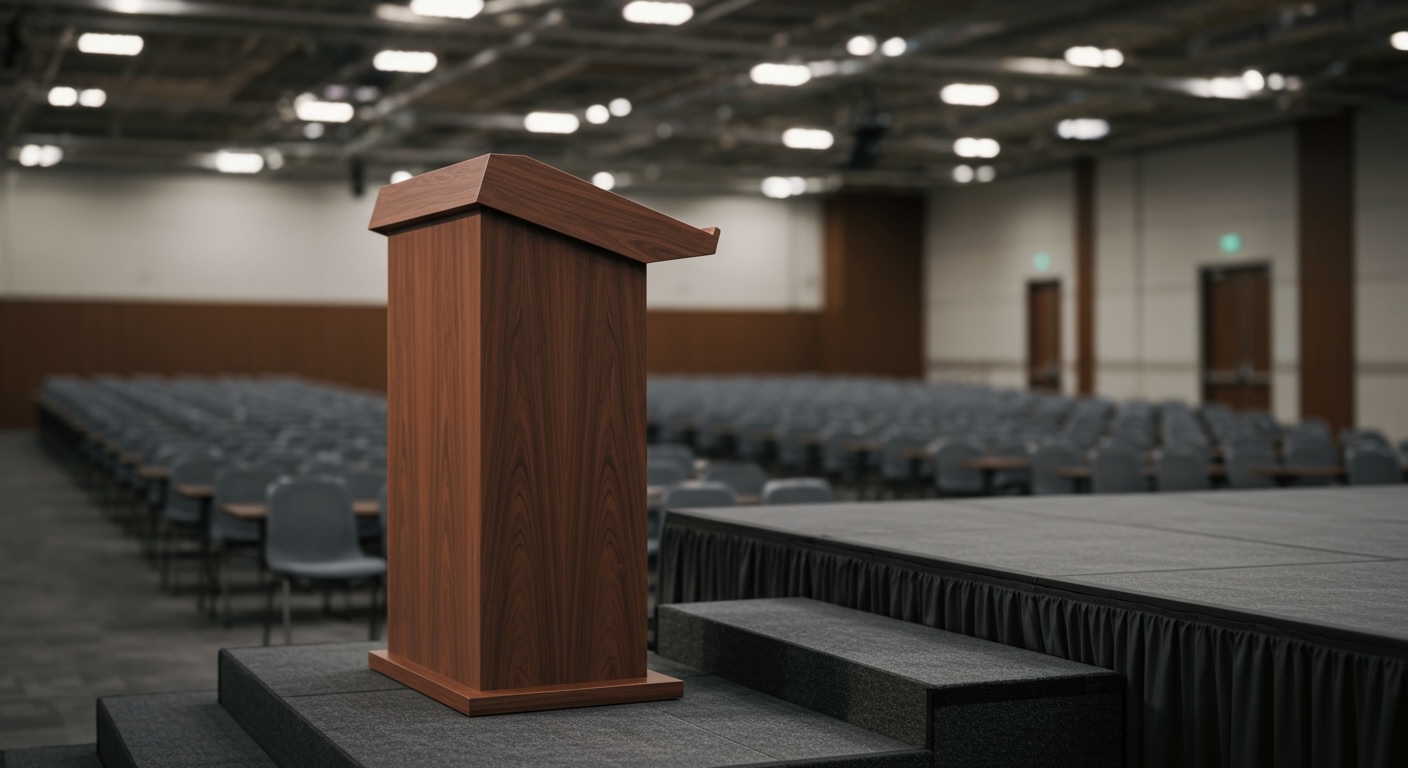
Whether you are organizing a small corporate workshop or a massive keynote at a convention center, choosing the right platform is about balancing ergonomics, safety, and visual branding. In my 15 years of managing large-scale events, I’ve found that the wrong platform choice can lead to a literal “tripping hazard” or a metaphorical barrier between the speaker and their audience.
TL;DR: Key Takeaways for Speaker Platforms
- Purpose: Enhances visibility, authority, and sound delivery.
- Common Types: Lecterns (to hold notes), Podiums (the stage itself), and Risers (modular elevation).
- Safety First: Always use guardrails for platforms higher than 12 inches and ensure non-slip surfaces.
- Ergonomics: The ideal height for a standing desk or lectern top is roughly 40 to 45 inches from the platform floor.
- ADA Compliance: Ensure your platform includes a ramp or lift for inclusive accessibility.
Understanding the Types of a Raised Platform Used by Speakers
In the events industry, terms like “podium” and “lectern” are often used interchangeably, but they represent different components of a raised platform used by speakers. Knowing the difference is critical when communicating with AV crews or rental companies.
The Stage Riser (The Foundation)
The stage riser is the modular unit that creates the elevation. I recommend using honeycomb-core decks because they are lightweight yet can support up to 200 lbs per square foot. These are essential for creating the actual “footprint” where the speaker walks.
The Lectern (The Tool)
A lectern is the stand that holds a speaker’s notes or laptop. It is placed on the platform. When I consult for executive speakers, I always suggest adjustable-height lecterns to accommodate different statures, ensuring the speaker doesn’t look “buried” behind the wood.
The Dais (The Formal Setup)
A dais is a specific type of raised platform used by speakers designed for a group of people, such as a panel of experts or a head table at a banquet. It usually features a more finished look with box pleat skirting or hard-panel branding.
How to Choose the Right Raised Platform for Your Event
Selecting the right elevation isn’t just about height; it’s about the logistics of the room and the psychology of the presentation.
Assessing Room Size and Sightlines
For a room of 50 people, a 6-inch riser is often sufficient. However, for a ballroom seating 500+, you typically need at least 24 to 36 inches of height. I follow the “Rule of Eye Level”: the speaker’s chest should be at or slightly above the eye level of the seated audience members in the middle of the room.
Comparing Platform Materials
| Platform Material | Best For | Pros | Cons |
|---|---|---|---|
| Plywood with Carpet | Corporate Events | Quiet, professional look, non-slip. | Heavy, requires more labor. |
| Acrylic/Plexiglass | Modern Tech Talks | Minimalist, looks great on camera. | Shows fingerprints, can be slippery. |
| Aluminum Frame | Outdoor Festivals | Weather-resistant, very sturdy. | Can be loud (metallic “ring”). |
| Hardwood | Academic/Formal | High-end aesthetic, prestigious. | Very expensive, easily scratched. |
Step-by-Step Guide to Setting Up a Speaker Platform
Proper setup is where E-E-A-T (Expertise and Trustworthiness) truly matters. A shaky platform will destroy a speaker’s confidence. Follow these steps to ensure a rock-solid installation.
Step 1: Subfloor Inspection
Before placing your first riser, check the floor for levelness. If you are on a slanted ballroom floor, use adjustable leveling feet or shims. I’ve seen platforms “walk” or shift during a high-energy presentation because the subfloor was uneven.
Step 2: Locking the Decks
Most modern raised platforms used by speakers use a cam-lock system or an interlocking tongue-and-groove design. Ensure every lock is fully engaged. Give the platform a “jump test”—if you feel any vibration or hear a clank, a lock is loose.
Step 3: Cable Management and “Hiding the Spaghetti”
This is what separates professionals from amateurs. Use gaffer tape to secure all microphone and laptop cables to the platform. I always use cable pass-throughs (small holes in the lectern or riser) to keep the stage clean for photos.
Step 4: Applying the Skirting or Fascia
A raw wooden riser looks unfinished. Apply Velcro-attached skirting or hard-panel fascia. For a high-end look, use LED tape lighting under the lip of the platform to give it a “floating” effect.
Safety and Accessibility Requirements for Speaker Risers
When you build a raised platform used by speakers, you assume liability for everyone who steps onto it. Safety is non-negotiable.
ADA Compliance and Universal Design
In the United States, the Americans with Disabilities Act (ADA) requires that all public stages be accessible. This means providing a ramp with a 1:12 slope ratio (1 inch of rise for every 12 inches of length). If you have a 24-inch stage, you need a 24-foot ramp.
Essential Safety Features
- Chair Stops: If there are chairs on the platform (like for a panel), install a 1-inch raised edge to prevent chairs from sliding off the back.
- Guardrails: Essential for any platform over 30 inches high, though I recommend them for anything over 16 inches if the speaker is moving around.
- Stair Lighting: Use battery-operated LED puck lights or neon tape on the edge of the stairs to prevent trips during “lights down” transitions.
Enhancing the Speaker Experience through Platform Design
A platform should be more than just a place to stand; it should be a tool for success. In my experience, small “comfort” additions can significantly improve a speaker’s performance.
The “Confidence Monitor” Placement
If your speaker is using slides, place a confidence monitor at the foot of the raised platform used by speakers. Angle it at 45 degrees so they can see their notes without turning their back to the audience.
Integrated Technology
Modern platforms often include:
- Built-in XLR ports for easy microphone “plug and play.”
- Power outlets and USB-C charging ports for the speaker’s devices.
- Shock mounts for microphones to prevent “thumping” sounds when the speaker taps the lectern.
Common Pitfalls When Using a Raised Platform for Speakers
Avoid these common mistakes that I’ve witnessed over decades of event production:
- The “Hollow” Sound: A wooden platform can act like a drum. We fix this by placing heavy moving blankets or acoustic foam inside the riser frame to dampen the sound.
- Poor Lighting: If the speaker moves too close to the edge of the platform, they may “fall out” of the stage lights. Ensure your lighting designer has mapped the entire surface area.
- Over-Branding: Don’t put a giant, glossy logo on the front of the lectern that reflects camera flashes. Use a matte finish for all branding on the platform.
FAQ: Frequently Asked Questions about Speaker Platforms
What is the difference between a podium and a lectern?
Technically, a podium is the raised platform used by speakers that they stand upon. A lectern is the stand or desk that they stand behind. However, in casual conversation, most people use “podium” to refer to both.
How high should a speaker platform be?
For small rooms (under 100 people), 6 to 12 inches is standard. For large ballrooms (500+ people), 24 to 36 inches is required for visibility. Always check the ceiling height before ordering a tall riser.
Are portable speaker platforms stable?
Yes, provided they feature locking mechanisms and are rated for the appropriate weight. Look for brands like Staging Concepts or Intellistage for the most reliable portable options.
How do I make a DIY speaker platform?
If you are building a temporary platform, use 2×4 lumber for the frame and 3/4-inch plywood for the top. Always cover the wood with non-slip industrial carpet to ensure the speaker doesn’t slip and to muffle footstep noise.
**
**
**
**