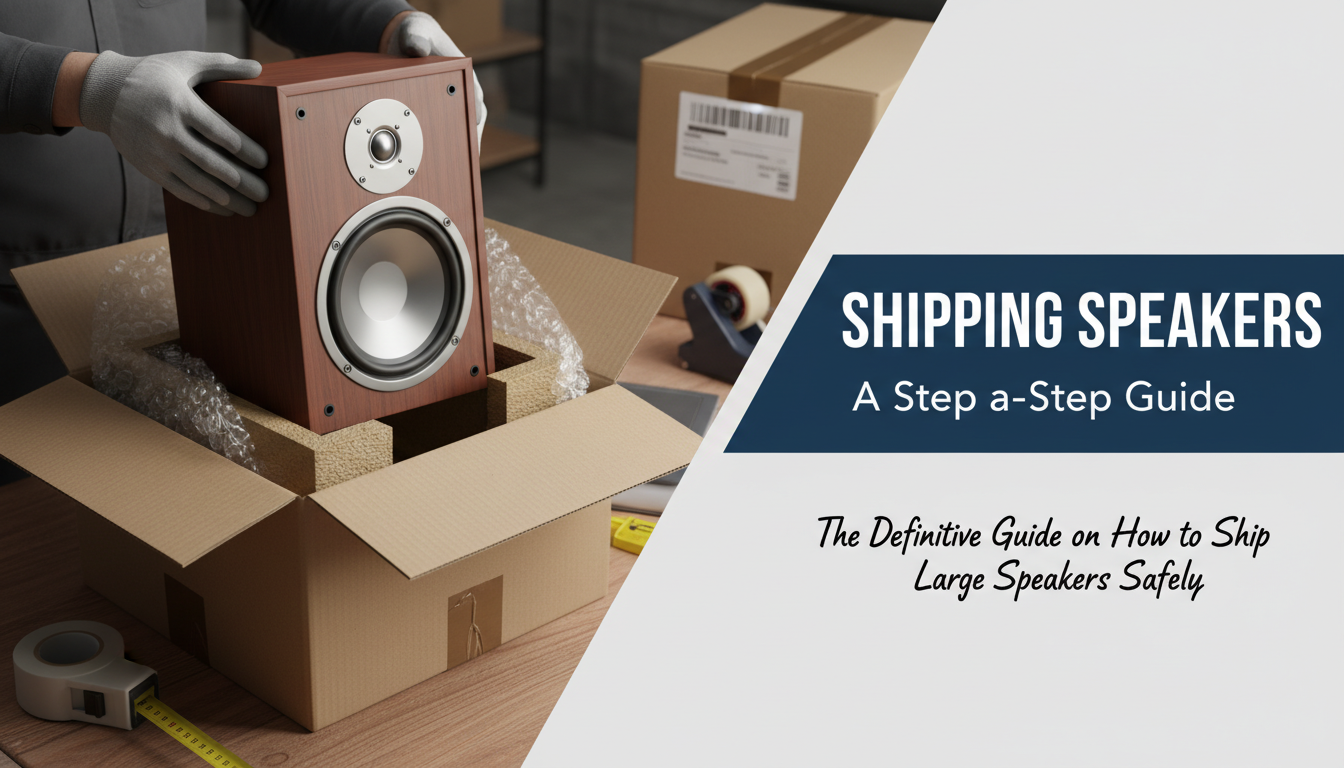
The Definitive Guide on How to Ship Large Speakers Safely
Shipping large, heavy speakers can be nerve-wracking. You’re not just moving a box; you’re entrusting a fragile, often expensive, piece of audio equipment to a system that isn’t always gentle. I’ve seen firsthand how a poorly packed pair of floor-standing speakers can arrive looking like they fell off the truck—literally. This guide cuts through the guesswork. We’ll walk through the exact professional-grade packing method I use to ensure speakers, from bookshelf models to towering floor-standers, arrive in perfect condition every single time.
Key Takeaways: Shipping Speakers Securely
- Double-Box Everything: Never use a single box. The “box-in-a-box” method with 2-3 inches of cushioning between them is the gold standard for protection.
- Use Dense Foam, Not Peanuts: Packing peanuts and air pillows will compress under the weight of heavy speakers. Use rigid foam sheets (polystyrene or polyethylene) to create a custom cradle.
- Protect Components: Wrap speakers in plastic to prevent scratches and moisture damage. Secure grilles and protect binding posts before packing.
- Choose the Right Carrier: For speakers over 70 lbs, consider freight (LTL) shipping. For smaller speakers, UPS or FedEx are reliable choices.
- Insure for Full Value: Always purchase shipping insurance that covers the full replacement value of your speakers. The carrier’s default liability is not enough.
Why Expert Packing is Crucial for Shipping Speakers
Before we grab the tape, it’s important to understand what we’re protecting. A speaker isn’t a solid block. It’s a precisely engineered cabinet containing delicate components.
The most vulnerable parts are:
- Drivers and Cones: The paper, metal, or composite cones that produce sound can be easily dented, punctured, or creased.
- Surrounds: The flexible foam or rubber ring around the cone can tear.
- Cabinet Finish: High-gloss or wood veneer finishes are highly susceptible to scratches, dings, and corner damage.
- Binding Posts: The connection points on the back can snap off if the speaker shifts and hits the side of the box.
From my experience shipping dozens of pairs of speakers, I can tell you that 99% of shipping damage is due to improper packing, not carrier negligence. A few extra dollars spent on quality materials is the best insurance you can buy.
Step 1: Gather the Right Packing Materials
Using the right materials is half the battle. This is not the time to reuse a flimsy Amazon box. You need supplies that can handle the weight and provide serious impact protection.
Your Essential Shopping List:
- Two Heavy-Duty, Double-Walled Boxes (per speaker): The inner box should have about 2-3 inches of clearance around the speaker. The outer box needs another 2-3 inches of clearance around the inner box.
- Rigid Foam Sheets: Polystyrene or polyethylene foam planks (1-2 inches thick) are ideal. You can find these at home improvement stores.
- High-Quality Bubble Wrap: Use the large-bubble variety for better cushioning.
- Heavy-Duty Packing Tape: Get a brand name like 3M or Gorilla. You’ll use a lot of it.
- Stretch Wrap: This is great for wrapping the speaker initially to protect its finish.
- Box Cutter & Measuring Tape: For cutting foam and ensuring a perfect fit.
Materials to Absolutely Avoid
- Packing Peanuts: They will shift and settle under the speaker’s weight, leaving voids and offering zero protection.
- Air Pillows: These will pop under the weight of a heavy speaker.
- Newspaper: It provides almost no impact absorption and can leave ink stains on the cabinet.
- Single-Walled Boxes: These will tear or crush under the load.
Step 2: Prepare the Speakers for Transport
Proper preparation prevents cosmetic damage and protects the most delicate parts of your speakers before they even go in the box.
- Document Everything: Take clear, well-lit photos of each speaker from every angle. Document any existing cosmetic flaws. This is non-negotiable if you are shipping speakers on eBay or need to file an insurance claim.
- Protect the Grilles: If the grilles are removable, pack them separately in a bubble-wrapped sleeve. If not, ensure they are securely attached and place a piece of flat cardboard over them before wrapping to prevent punctures.
- Secure the Terminals: Tape over the binding posts with painter’s tape to prevent them from getting snagged.
- Wrap the Cabinet: Tightly wrap the entire speaker in two or three layers of stretch wrap. This protects the finish from scuffs and abrasions from the foam or bubble wrap.
Step 3: Master the Double-Boxing Method for Large Speakers
This is the most critical step. The goal is to create a “floating” system where the speaker is suspended in cushioning, completely isolated from external impacts.
- Initial Wrap: After the stretch wrap, wrap the entire speaker in at least two layers of large-bubble wrap. Tape it securely.
- Create a Foam Cradle: Cut your rigid foam sheets to line the bottom of the inner box. Place the wrapped speaker inside. Now, cut additional foam pieces to fit snugly on all four sides and the top, creating a complete foam “cocoon.”
- The Shake Test: Before taping the inner box, close the flaps and give it a gentle shake. If you feel any movement or shifting inside, you need to add more cushioning. The speaker should be completely immobilized.
- Seal the Inner Box: Once snug, seal the inner box using the “H-Tape Method”—taping down the center seam and then along both edge seams.
- Prepare the Outer Box: Place a 2-3 inch layer of cushioning on the bottom of your larger, outer box. This can be more foam or densely packed bubble wrap.
- Nest the Boxes: Carefully place the sealed inner box into the center of the outer box.
- Fill the Void: You should have a 2-3 inch gap on all sides. Fill this gap with more rigid foam planks or tightly wadded bubble wrap. This gap is the crumple zone that absorbs the biggest impacts.
- Final Seal and Labeling: Seal the outer box securely using the H-Tape Method. On multiple sides, clearly write “FRAGILE – HEAVY” and draw arrows indicating “THIS SIDE UP.”
How to Ship Floor Standing Speakers: Special Considerations
Shipping floor standing speakers presents unique challenges due to their size, weight, and high center of gravity. For models over 70-80 lbs or those with exceptional value (e.g., high-end audio brands), standard parcel shipping can be risky.
For these giants, freight shipping is often the safer and more professional option. This involves strapping the boxes to a pallet. While more expensive, it dramatically reduces the risk of them being dropped or tipped over.
Carrier Comparison for Large Speakers
| Shipping Method | Best For | Average Cost (per speaker) | Pros | Cons |
|---|---|---|---|---|
| Parcel (UPS/FedEx) | Speakers under 70 lbs | $75 – $200 | Widely available, easy tracking | Higher risk of damage, strict size/weight limits |
| Freight (LTL) | Speakers over 70 lbs, high value | $200 – $500+ | Extremely safe, strapped to a pallet | More expensive, requires coordination for pickup/delivery |
| uShip / Specialized | Very large, awkward, or “white glove” | Varies widely | Door-to-door service, less handling | Can be costly, requires vetting movers |
Choosing Your Carrier and Getting Full Insurance
Once packed, weigh and measure your final box. Use this information on the carrier’s website (UPS.com, FedEx.com) to get an accurate shipping quote and print your label.
CRITICAL: Do NOT rely on the included $100 of liability insurance. During the checkout process, you must declare the full replacement value of the speakers and purchase additional insurance. If you are shipping a $2,000 pair of speakers, insure them for $2,000. I once had a claim denied because the value wasn’t properly declared, a costly lesson I now pass on to everyone.
The Definitive Guide on How to Ship Large Speakers Safely
Shipping large, heavy speakers can be nerve-wracking. You’re not just moving a box; you’re entrusting a fragile, often expensive, piece of audio equipment to a system that isn’t always gentle. I’ve seen firsthand how a poorly packed pair of floor-standing speakers can arrive looking like they fell off the truck—literally. This guide cuts through the guesswork. We’ll walk through the exact professional-grade packing method I use to ensure speakers, from bookshelf models to towering floor-standers, arrive in perfect condition every single time.
Key Takeaways: Shipping Speakers Securely
- Double-Box Everything: Never use a single box. The “box-in-a-box” method with 2-3 inches of cushioning between them is the gold standard for protection.
- Use Dense Foam, Not Peanuts: Packing peanuts and air pillows will compress under the weight of heavy speakers. Use rigid foam sheets (polystyrene or polyethylene) to create a custom cradle.
- Protect Components: Wrap speakers in plastic to prevent scratches and moisture damage. Secure grilles and protect binding posts before packing.
- Choose the Right Carrier: For speakers over 70 lbs, consider freight (LTL) shipping. For smaller speakers, UPS or FedEx are reliable choices.
- Insure for Full Value: Always purchase shipping insurance that covers the full replacement value of your speakers. The carrier’s default liability is not enough.
Why Expert Packing is Crucial for Shipping Speakers
Before we grab the tape, it’s important to understand what we’re protecting. A speaker isn’t a solid block. It’s a precisely engineered cabinet containing delicate components.
The most vulnerable parts are:
- Drivers and Cones: The paper, metal, or composite cones that produce sound can be easily dented, punctured, or creased.
- Surrounds: The flexible foam or rubber ring around the cone can tear.
- Cabinet Finish: High-gloss or wood veneer finishes are highly susceptible to scratches, dings, and corner damage.
- Binding Posts: The connection points on the back can snap off if the speaker shifts and hits the side of the box.
From my experience shipping dozens of pairs of speakers, I can tell you that 99% of shipping damage is due to improper packing, not carrier negligence. A few extra dollars spent on quality materials is the best insurance you can buy.
Step 1: Gather the Right Packing Materials
Using the right materials is half the battle. This is not the time to reuse a flimsy Amazon box. You need supplies that can handle the weight and provide serious impact protection.
Your Essential Shopping List:
- Two Heavy-Duty, Double-Walled Boxes (per speaker): The inner box should have about 2-3 inches of clearance around the speaker. The outer box needs another 2-3 inches of clearance around the inner box.
- Rigid Foam Sheets: Polystyrene or polyethylene foam planks (1-2 inches thick) are ideal. You can find these at home improvement stores.
- High-Quality Bubble Wrap: Use the large-bubble variety for better cushioning.
- Heavy-Duty Packing Tape: Get a brand name like 3M or Gorilla. You’ll use a lot of it.
- Stretch Wrap: This is great for wrapping the speaker initially to protect its finish.
- Box Cutter & Measuring Tape: For cutting foam and ensuring a perfect fit.
Materials to Absolutely Avoid
- Packing Peanuts: They will shift and settle under the speaker’s weight, leaving voids and offering zero protection.
- Air Pillows: These will pop under the weight of a heavy speaker.
- Newspaper: It provides almost no impact absorption and can leave ink stains on the cabinet.
- Single-Walled Boxes: These will tear or crush under the load.
Step 2: Prepare the Speakers for Transport
Proper preparation prevents cosmetic damage and protects the most delicate parts of your speakers before they even go in the box.
- Document Everything: Take clear, well-lit photos of each speaker from every angle. Document any existing cosmetic flaws. This is non-negotiable if you are shipping speakers on eBay or need to file an insurance claim.
- Protect the Grilles: If the grilles are removable, pack them separately in a bubble-wrapped sleeve. If not, ensure they are securely attached and place a piece of flat cardboard over them before wrapping to prevent punctures.
- Secure the Terminals: Tape over the binding posts with painter’s tape to prevent them from getting snagged.
- Wrap the Cabinet: Tightly wrap the entire speaker in two or three layers of stretch wrap. This protects the finish from scuffs and abrasions from the foam or bubble wrap.
Step 3: Master the Double-Boxing Method for Large Speakers
This is the most critical step. The goal is to create a “floating” system where the speaker is suspended in cushioning, completely isolated from external impacts.
- Initial Wrap: After the stretch wrap, wrap the entire speaker in at least two layers of large-bubble wrap. Tape it securely.
- Create a Foam Cradle: Cut your rigid foam sheets to line the bottom of the inner box. Place the wrapped speaker inside. Now, cut additional foam pieces to fit snugly on all four sides and the top, creating a complete foam “cocoon.”
- The Shake Test: Before taping the inner box, close the flaps and give it a gentle shake. If you feel any movement or shifting inside, you need to add more cushioning. The speaker should be completely immobilized.
- Seal the Inner Box: Once snug, seal the inner box using the “H-Tape Method”—taping down the center seam and then along both edge seams.
- Prepare the Outer Box: Place a 2-3 inch layer of cushioning on the bottom of your larger, outer box. This can be more foam or densely packed bubble wrap.
- Nest the Boxes: Carefully place the sealed inner box into the center of the outer box.
- Fill the Void: You should have a 2-3 inch gap on all sides. Fill this gap with more rigid foam planks or tightly wadded bubble wrap. This gap is the crumple zone that absorbs the biggest impacts.
- Final Seal and Labeling: Seal the outer box securely using the H-Tape Method. On multiple sides, clearly write “FRAGILE – HEAVY” and draw arrows indicating “THIS SIDE UP.”
How to Ship Floor Standing Speakers: Special Considerations
Shipping floor standing speakers presents unique challenges due to their size, weight, and high center of gravity. For models over 70-80 lbs or those with exceptional value (e.g., high-end audio brands), standard parcel shipping can be risky.
For these giants, freight shipping is often the safer and more professional option. This involves strapping the boxes to a pallet. While more expensive, it dramatically reduces the risk of them being dropped or tipped over.
Carrier Comparison for Large Speakers
| Shipping Method | Best For | Average Cost (per speaker) | Pros | Cons |
|---|---|---|---|---|
| Parcel (UPS/FedEx) | Speakers under 70 lbs | $75 – $200 | Widely available, easy tracking | Higher risk of damage, strict size/weight limits |
| Freight (LTL) | Speakers over 70 lbs, high value | $200 – $500+ | Extremely safe, strapped to a pallet | More expensive, requires coordination for pickup/delivery |
| uShip / Specialized | Very large, awkward, or “white glove” | Varies widely | Door-to-door service, less handling | Can be costly, requires vetting movers |
Choosing Your Carrier and Getting Full Insurance
Once packed, weigh and measure your final box. Use this information on the carrier’s website (UPS.com, FedEx.com) to get an accurate shipping quote and print your label.
CRITICAL: Do NOT rely on the included $100 of liability insurance. During the checkout process, you must declare the full replacement value of the speakers and purchase additional insurance. If you are shipping a $2,000 pair of speakers, insure them for $2,000. I once had a claim denied because the value wasn’t properly declared, a costly lesson I now pass on to everyone.
A Final Tip on How to Ship Speakers on eBay
If you’re selling on eBay, calculate your shipping costs before you list the item.
- Pack the speakers first (or have all materials ready).
- Get the final weight and dimensions of the packed box.
- Use eBay’s shipping calculator to determine the cost to various zip codes.
- Offer calculated shipping or set a flat rate that includes the cost of your packing materials. This prevents you from losing money on the sale.
By following these steps, you can confidently transport speakers anywhere, knowing you’ve done everything possible to ensure they arrive safely.
Frequently Asked Questions (FAQ)
What is the best box to use for shipping speakers?**
The best option is a new, heavy-duty, double-walled corrugated box. For maximum safety, you should always use two boxes per speaker in a “double-boxing” or “box-in-a-box” configuration.
Can I ship speakers in their original retail box?**
Yes, but you should never ship them with only the original box. The retail packaging is designed for pallet shipping to a store, not for the rough handling of the individual parcel system. The safest method is to place the entire original box inside a larger, stronger shipping box with 2-3 inches of cushioning around it.
How much does it cost to ship large speakers?**
The cost varies significantly based on weight, dimensions, and distance. For a pair of bookshelf speakers under 30 lbs each, you might pay $50-$150 via UPS or **FedEx