Do Ceiling Speakers Need Enclosures? The Definitive Answer
Struggling to get that rich, full sound from your new ceiling speakers? If they sound thin, tinny, or you can hear them perfectly in the room upstairs, you’re experiencing a common problem that has a straightforward solution. The issue isn’t your speakers; it’s what’s behind them. So, do ceiling speakers need enclosures?
Yes, ceiling speakers absolutely need enclosures, often called “back boxes,” to perform correctly. An enclosure provides a sealed, predictable air volume for the speaker driver, which is essential for producing controlled bass and clear mid-range frequencies. Without one, sound waves from the back of the speaker cancel out the waves from the front, resulting in weak bass and poor overall audio quality. They also prevent sound from leaking into adjacent rooms.
Key Takeaways / TL;DR
- Yes, Enclosures are Crucial: For 99% of installations, a back box is not optional. It’s a critical component for sound quality and isolation.
- Better Bass & Clarity: Enclosures prevent acoustic short-circuiting, leading to deeper, tighter bass and a much clearer mid-range. Your music and movies will sound as the artist intended.
- Stop Sound Bleed: A back box acts as a sound barrier, significantly reducing how much audio leaks into the floor above or adjacent rooms.
- Consistent Performance: Ceiling joist cavities vary in size. An enclosure ensures every speaker in your setup has the identical acoustic environment, delivering a balanced and uniform soundstage.
- Protection & Safety: Enclosures protect the delicate speaker components from dust, insulation fibers, and moisture. Fire-rated enclosures are also required in many building codes to maintain the ceiling’s fire barrier.
Why Your Ceiling Speakers Need an Enclosure: The Science of Sound
To understand why enclosures are so vital, we need to talk about how a speaker actually works. A speaker cone moves back and forth rapidly, creating sound waves. When it moves forward, it creates a positive pressure wave (the sound you want to hear). When it moves backward, it creates an equal but opposite negative pressure wave inside the wall or ceiling cavity.
The Problem: Acoustic Short-Circuiting
Without an enclosure, these two sound waves are free to meet. The low-frequency (bass) sound waves are long and powerful enough to wrap around the speaker’s frame and cancel each other out. This phenomenon is called acoustic short-circuiting or a “phase cancellation” issue.
The result?
- Weak, thin, or non-existent bass.
- Muddy, undefined mid-range frequencies.
- Overall poor audio fidelity.
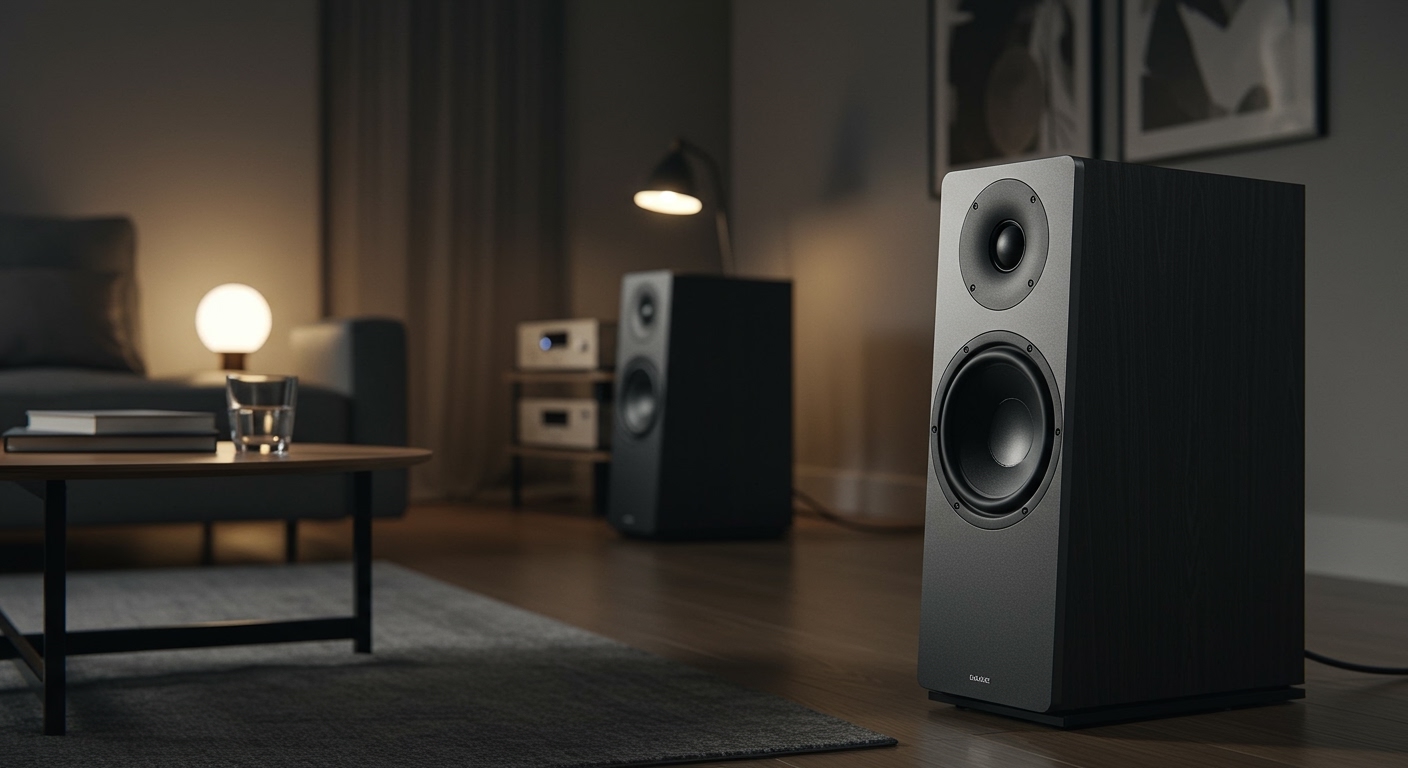
Think of a traditional bookshelf speaker. It’s not just a driver mounted on a piece of wood; it’s a driver mounted in a carefully engineered box. Your ceiling is the “baffle” (the front board), but the wall cavity is an unpredictable, leaky box. A dedicated enclosure fixes this.
The Solution: A Predictable Acoustic Environment
A speaker back box provides a sealed, solid enclosure with a specific volume of air. Speaker designers engineer their products to perform optimally with a certain amount of air behind them. An enclosure provides this exact environment every single time.
This controlled space allows the driver to move as intended, producing the full frequency range it was designed for. The bass becomes tight and punchy, and vocals become crisp and clear. In my experience installing hundreds of home audio systems, the difference between a speaker with and without a back box is not subtle—it’s a night-and-day transformation.
The Tangible Benefits of Using Speaker Enclosures
Still on the fence? Let’s break down the concrete advantages you’ll gain by installing a proper back box with every ceiling speaker.
Dramatically Improved Bass Response
This is the most immediate and noticeable improvement. By separating the front and rear sound waves, the speaker can produce the low frequencies that give music and movies their impact and depth. Without an enclosure, you’re simply throwing away the bottom end of your sound.
Enhanced Mid-Range Clarity
Acoustic short-circuiting doesn’t just affect bass. It also muddies the mid-range, which is where vocals and most instruments live. By controlling the speaker’s rear output, an enclosure allows the mid-range to come through with stunning clarity and detail. Dialog in movies becomes easier to understand, and instruments in music sound distinct and natural.
Consistent Performance Across Your Home
The space between ceiling joists is not uniform. Some cavities might be larger, smaller, or have pipes and ducts running through them. If you install speakers without enclosures, each one will sound slightly different, destroying the cohesive soundstage you want for a home theater or multi-room audio system.
Enclosures guarantee that every single speaker performs identically, creating a seamless and immersive listening experience.
Superior Sound Isolation
Have you ever been in a bedroom upstairs and could hear the movie playing in the living room below almost perfectly? That’s because the ceiling drywall is acting like a giant speaker cone itself, vibrating and transmitting sound directly to the floor above.
A quality, solid back box—especially one with sound-dampening material—acts as a barrier. It contains the acoustic energy, preventing it from shaking the structure and leaking into other parts of your home. It’s the key to enjoying your system at reference levels without disturbing the rest of the household.
Protection From Debris and Insulation
The space inside your ceilings and walls is dirty. It’s filled with dust, loose insulation fibers, and potentially moisture. These elements can easily work their way into the delicate electronics and moving parts of a speaker’s driver and crossover, causing damage and shortening its lifespan. An enclosure completely seals off the back of the speaker, protecting your investment for years to come.
Meeting Building and Fire Codes
This is a critical point many people overlook. When you cut a hole in your ceiling, you compromise its fire-resistance rating. In many areas, particularly in multi-family dwellings or commercial buildings, building codes require you to install a fire-rated speaker enclosure (often called a “fire hood”). These are designed to restore the ceiling’s fire barrier for 30, 60, or 90 minutes, preventing the spread of fire. Always check your local building codes.
Types of Ceiling Speaker Enclosures: What Are Your Options?
Enclosures come in a few different flavors, each suited for different needs and installation types.
Pre-Constructed Back Boxes (The Gold Standard)
These are ready-made boxes, typically built from MDF (Medium-Density Fiberboard), ABS plastic, or sometimes aluminum. They are sized to fit standard joist spacing and are designed for optimal acoustic performance.
- Pros: Excellent acoustic properties, durable, provide consistent results. Many include acoustic dampening foam inside.
- Cons: Can be more expensive and require more effort to install, especially in a retrofit situation.
- Examples: Brands like Sonance, Dynamat, and Klipsch offer high-quality back boxes.
Integrated Enclosures (The Convenient Choice)
Many premium ceiling speakers come with the enclosure already built into the speaker’s design. This is common in higher-end models where the manufacturer wants to guarantee performance.
- Pros: Perfect acoustic matching for the speaker, simplified one-piece installation.
- Cons: The speaker itself is typically more expensive and larger/deeper than non-enclosed models.
- Examples: Many models in the Bowers & Wilkins CI Series or **KEF’s Architectural