The Core Mission: What Good Speakers Do First and Foremost
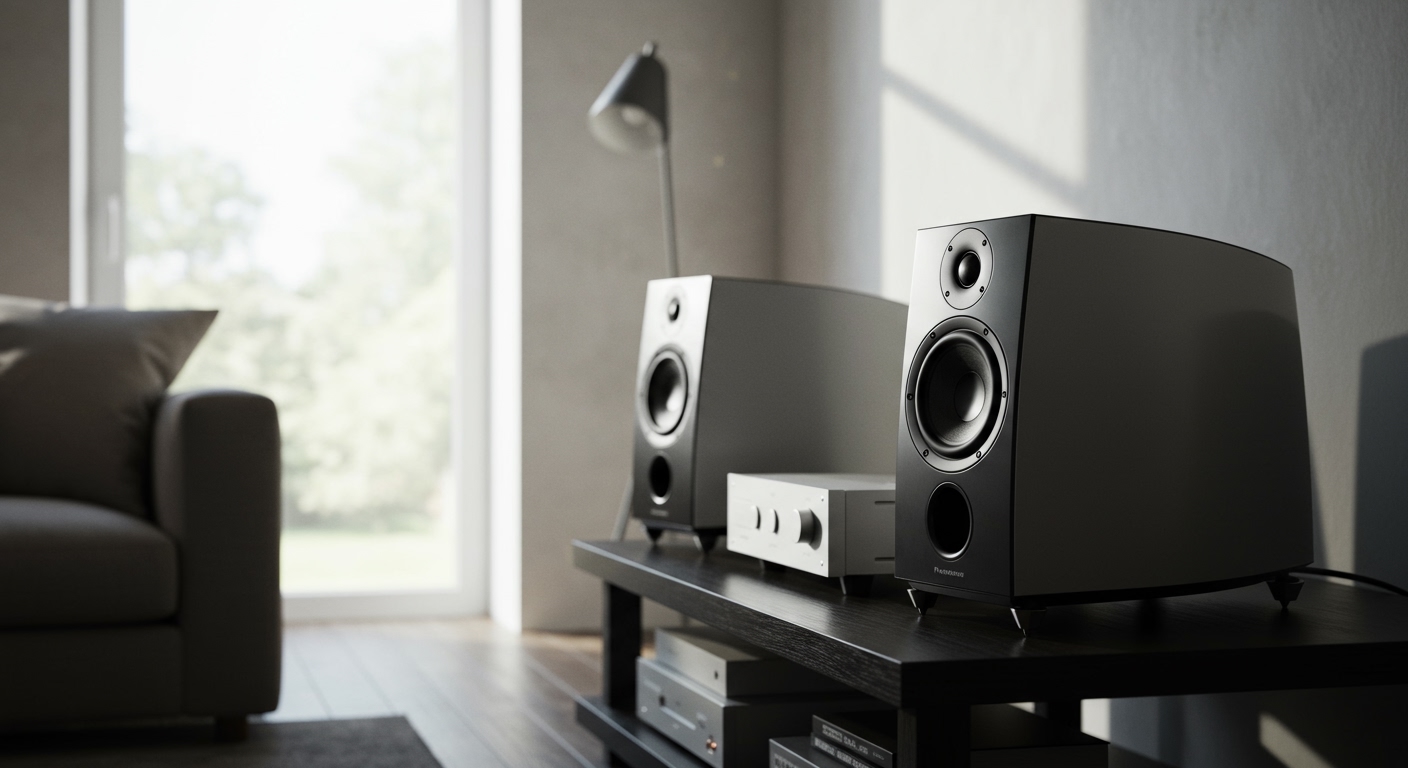
Ever felt frustrated by muddy dialogue in a movie or music that sounds flat and lifeless? The problem often lies with speakers that aren’t performing their fundamental job correctly. So, what do good speakers do? At their core, good speakers accurately convert an electrical audio signal back into mechanical sound waves with as little alteration or distortion as possible, faithfully recreating the original recording.
Their goal is to be a clear window to the sound, not a colored lens. A great speaker doesn’t add its own “flavor”; it simply presents the music or movie soundtrack exactly as the artist and engineers intended. This principle, known as high fidelity (hi-fi), is the ultimate benchmark of quality.
Key Takeaways: The 4 Core Functions of a Great Speaker
- Accurate Reproduction: A good speaker plays back all frequencies—from the deepest bass to the highest treble—at the correct volume, without adding its own coloration to the sound.
- Minimal Distortion: It produces clean, clear sound even at high volumes, avoiding the harshness or “fuzziness” that plagues lesser-quality speakers.
- Dynamic Performance: It can handle both the quietest whispers and the loudest explosions in a track, recreating the full emotional impact of the performance without compression.
- Realistic Imaging: It creates a convincing three-dimensional “soundstage,” allowing you to pinpoint the location of individual instruments and vocals as if the performers were in the room with you.
Breaking Down How Good Speakers Achieve Sonic Accuracy
To understand what good speakers do, we have to look at how they are engineered to handle the entire spectrum of sound. It’s not about just making noise; it’s about making the right noise at the right time. My years of testing audio equipment have shown me that excellence lies in the seamless integration of several key components.
A speaker’s ability to sound “real” comes down to how well it manages the full range of human hearing (roughly 20 Hz to 20,000 Hz) and how cleanly it does so.
Mastering the Full Frequency Range (Highs, Mids, and Lows)
No single speaker driver can effectively reproduce the entire audible frequency range. That’s why high-quality speakers use multiple specialized drivers to handle specific jobs.
Tweeters (High Frequencies): These small drivers are responsible for the high-end sparkle and detail. Think of the crisp tsss* of a cymbal, the breathiness in a singer’s voice, or the delicate sound of a violin. Good tweeters, often made from materials like silk, aluminum, or even beryllium, reproduce these sounds without sounding harsh or sibilant.
- Mid-Range Drivers (Mid Frequencies): This is where the magic happens. The mid-range contains the most critical information in music and movies, including vocals, guitars, and the core sounds of most instruments. A good mid-range driver delivers clarity and warmth, making voices sound natural and present.
- Woofers (Low Frequencies): These are the largest drivers, tasked with producing bass and sub-bass. A good woofer delivers bass that is tight, controlled, and articulate—not just a boomy, one-note thud. You should be able to distinguish the notes of a bass guitar, not just feel a generic rumble.
The Unsung Hero: The Crossover Network
The crossover is a filter circuit inside the speaker cabinet that acts like a traffic cop for audio frequencies. It takes the incoming signal from your amplifier and intelligently directs the appropriate frequencies to the correct driver.
- High frequencies are sent to the tweeter.
- Mid frequencies are sent to the mid-range driver.
- Low frequencies are sent to the woofer.
In my experience, a poorly designed crossover is the number one reason a speaker can sound disjointed. When I’ve listened to cheap speakers, I can often hear a “hole” in the sound where the woofer stops and the tweeter begins, making vocals sound thin. A well-engineered crossover ensures a seamless blend between the drivers, making them sound like a single, cohesive source.
Minimizing Distortion: Keeping the Signal Pure
Distortion is any sound produced by the speaker that wasn’t in the original audio signal. It’s the enemy of clarity. Total Harmonic Distortion (THD) is a key metric here; a lower number is always better.
Good speakers minimize distortion in two primary ways:
- High-Quality Drivers: They use drivers built with rigid, lightweight materials that can move back and forth rapidly without flexing or “breaking up,” which adds a fuzzy or harsh quality to the sound.
- Well-Braced Cabinets: The speaker cabinet itself can be a source of distortion. If it’s flimsy, it will vibrate along with the drivers, coloring the sound. I’ve often tapped on the side of a high-end speaker and heard a dull, solid “thud”—a sign of a rigid, non-resonant cabinet that lets the drivers do their job without interference.
Beyond Accuracy: What Do Good Speakers Do to Create a Realistic Experience?
Once a speaker achieves technical accuracy, the next level is creating an immersive and believable performance. This is where good speakers separate themselves from great ones. It’s not just about hearing the music; it’s about feeling like you’re there.
Building a Three-Dimensional Soundstage
This is one of the most thrilling things a high-quality speaker can do. Instead of sound that seems glued to the speaker boxes, a great system will create a soundstage—a three-dimensional acoustic space that extends beyond the physical location of the speakers.
- Width: The soundstage should feel wide, extending to the left and right of the speakers.
- Depth: You should perceive a sense of front-to-back depth, with some instruments sounding closer and others farther away.
- Height: In truly exceptional systems, you can even get a sense of verticality in the sound.
Within this soundstage is imaging, which is the speaker’s ability to place individual instruments and voices in a specific, stable location. When I close my eyes listening to a system with great imaging, I can point directly to the singer, the guitarist, and the drummer. This is what a speakers does to transform listening from a passive activity to an active, engaging experience.
Handling Dynamics: From a Whisper to a Roar
Dynamic range is the difference between the quietest and loudest sounds in a recording. A good speaker must be able to reproduce these shifts in volume effortlessly and instantly.
I like to think of this in two parts:
- Macro-dynamics: These are the big, dramatic swings in volume, like an orchestral crescendo or a sudden explosion in a film. A good speaker delivers these moments with power and impact, without sounding strained or compressed.
- Micro-dynamics: These are the smaller, more subtle shifts in volume and texture that give music its life and emotion. It’s the slight variation in how a drummer hits a cymbal or the subtle waver in a singer’s voice. Speakers that excel at micro-dynamics sound incredibly realistic and engaging.
When we test speakers, we listen for compression at high volumes. Lesser speakers will “squash” the dynamic range, making everything sound loud and fatiguing. A great speaker maintains its composure, allowing the quiet parts to be delicate and the loud parts to be powerful, preserving the full emotional intent of the recording.
A Practical Guide to Hearing What Good Speakers Do
Knowing the theory is one thing, but hearing it for yourself is what truly matters. If you’re shopping for speakers or just want to evaluate your current system, you need to know what to listen for.
How to Audition Speakers Like an Expert
When I go to an audio shop or set up a new pair of speakers for review, I follow a simple process to get a true sense of their capabilities.
- Bring Your Own Music: Use high-quality recordings you know intimately. Choose tracks with clean vocals, acoustic instruments, and good dynamic range. A well-recorded jazz trio or a simple female vocal track can reveal more than a compressed rock song.
- Listen for Vocal Clarity: Pay close attention to the human voice. Does it sound natural and present, as if the person is in the room? Or does it sound thin, “chesty,” or sibilant (with exaggerated “s” sounds)?
- Evaluate the Bass: Listen for tightness and definition in the low end. Can you follow the bass line easily, or is it a muddy, indistinct rumble? The bass should have impact without overwhelming the rest of the music.
- Check the Highs: Listen to cymbals. They should have a clean, metallic shimmer and decay naturally. They shouldn’t sound like a burst of white noise or a harsh “splash.”
- Test the Soundstage: Close your eyes. Can you mentally “see” where each instrument is placed? Does the sound seem to come from a space between and behind the speakers, or is it trapped in the boxes?
- Vary the Volume: Listen at low, medium, and high volumes. A good speaker should maintain its character and clarity at all levels. Many poor speakers only sound good when played loudly, falling apart at lower volumes.
Key Speaker Specifications Explained
While your ears should be the final judge, specifications can give you clues about a speaker’s performance. Here’s a table comparing what you might see for a typical budget speaker versus a well-engineered high-end model.
| Specification | Typical Budget Speaker | High-Performance Speaker | What It Means for You |
|---|---|---|---|
| Frequency Response | 60Hz – 20kHz (±6dB) | 40Hz – 22kHz (±3dB) | A wider, flatter response means more accurate sound with deeper bass and clearer highs. |
| Sensitivity | 86 dB | 90 dB | Higher sensitivity means the speaker gets louder with less amplifier power, often resulting in better dynamics. |
| Nominal Impedance | 4-8 Ohms | 8 Ohms (stable) | A stable impedance is an easier load for an amplifier to drive, preventing distortion. |
| THD @ 90dB | < 1% | < 0.5% | Lower Total Harmonic Distortion means cleaner, purer sound, especially at higher volumes. |
Understanding these metrics helps you interpret what a speakers does on a technical level, complementing what you hear with your own ears.
Frequently Asked Questions (FAQ)
What is the most important function of a speaker?
The most important function is accurate sound reproduction. A speaker’s primary goal is to convert an electrical signal into sound waves as faithfully as possible, without adding or removing any information from the original recording. All other attributes, like dynamic range and imaging, are built