Understanding the Core Metrics: How to Know How Loud Speakers Are
The best way to know how loud speakers are is by understanding three key specifications: Speaker Sensitivity, Amplifier Power (Watts), and the resulting Sound Pressure Level (SPL), measured in decibels (dB). Sensitivity is the single most important metric, as it tells you how efficiently a speaker converts power into sound.
Have you ever bought a new set of speakers, excited for room-filling sound, only to find them disappointingly quiet? Or maybe you’ve experienced the opposite, where a “high-wattage” system sounds harsh and strained when you turn it up. This common frustration comes from focusing on the wrong numbers. Most people look at watts, but the real secret to loudness lies in a specification called sensitivity. This guide will demystify the specs and show you exactly how to tell how loud speakers are before you even buy them, and how to measure them yourself.
Key Takeaways (TL;DR)
- Sensitivity is King: This is the most crucial spec for loudness. A higher sensitivity rating (e.g., 90 dB) means a speaker will play louder with less power than one with a lower rating (e.g., 85 dB).
- Watts Are Fuel, Not Speed: Amplifier power (watts) is the fuel for your speakers. More watts provide more potential volume, but a speaker’s sensitivity determines how that power is used.
- Decibels (dB) Are Logarithmic: A small 3 dB increase requires double the amplifier power and is perceived as a noticeable jump in volume. A 10 dB increase sounds roughly twice as loud and requires ten times the power.
- Distance Matters: Sound gets quieter as you move away from the speaker. The Inverse Square Law states that for every doubling of distance, the sound level drops by about 6 dB.
The Key Specs: How to Tell How Loud Speakers Are on Paper
Before you can measure anything, you need to learn how to read a speaker’s spec sheet. It’s less intimidating than it looks. We’ve found that focusing on just two numbers—sensitivity and power handling—gives you 90% of the information you need to predict a speaker’s loudness.
What is Speaker Sensitivity? (The Most Important Spec)
Speaker sensitivity measures how loud a speaker will play in decibels (dB) when given one watt of power, measured from one meter away. It’s the ultimate efficiency rating.
Imagine two cars. One gets 40 miles per gallon (high sensitivity), and the other gets 15 miles per gallon (low sensitivity). With the same one-gallon of gas (one watt of power), the first car will go much farther (play much louder).
- How it’s written: You’ll see it listed as something like “89 dB (1W/1m)”.
- Low Sensitivity: Anything below 86 dB. These speakers are “power-hungry” and need a more powerful amplifier to get loud.
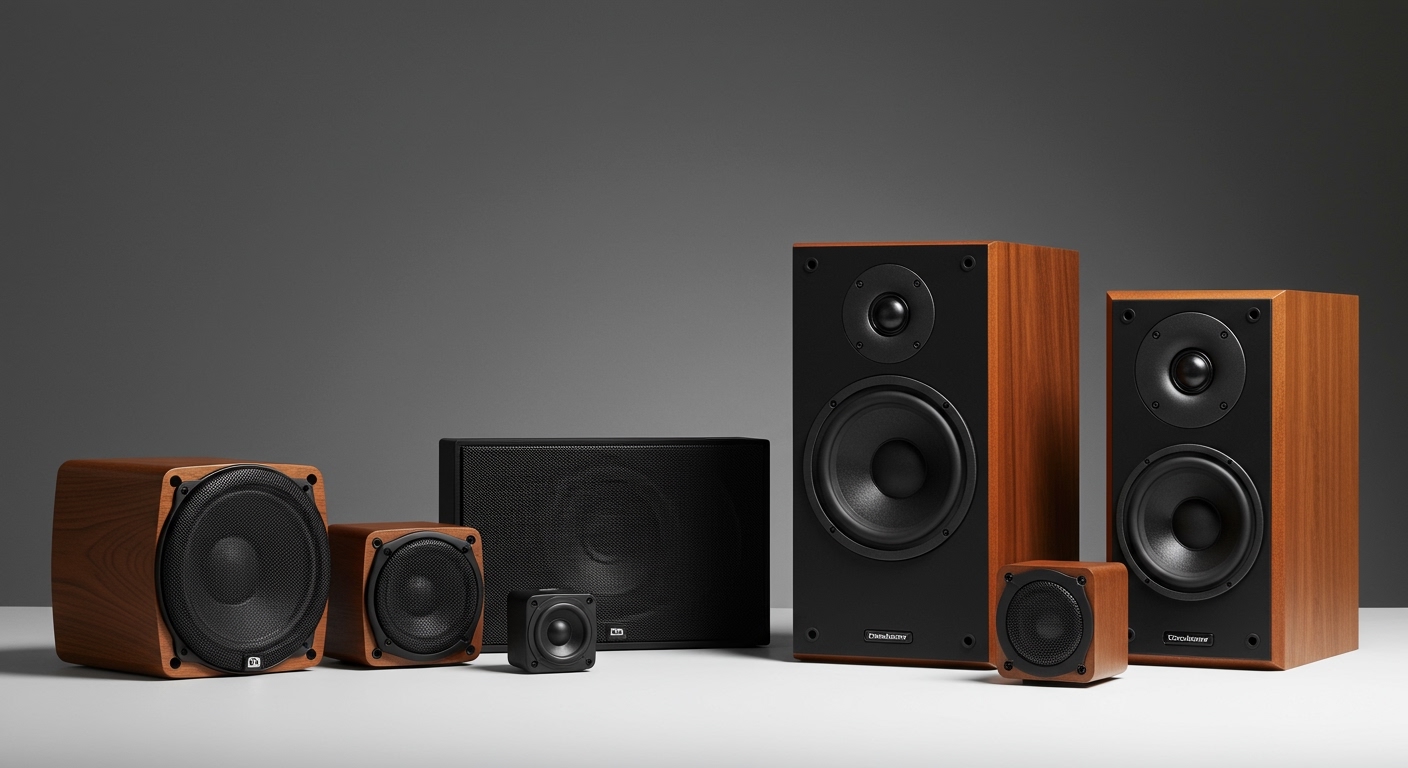
- Average Sensitivity: Between 87 dB and 90 dB. Most bookshelf and tower speakers fall in this range.
- High Sensitivity: Anything 91 dB and above. These speakers are very efficient and can get very loud with just a few watts, making them ideal for lower-power tube amplifiers.
In my own listening room, I have a pair of Klipsch Heresy IV speakers, which have a very high sensitivity of 99 dB. This means I can drive them to concert-level volumes with a small, 15-watt tube amplifier. Conversely, I also own a pair of KEF LS50 Meta bookshelf speakers with a much lower sensitivity of 85 dB. They require a powerful, 100-watt solid-state amplifier to achieve the same volume.
The Role of Amplifier Power (Watts)
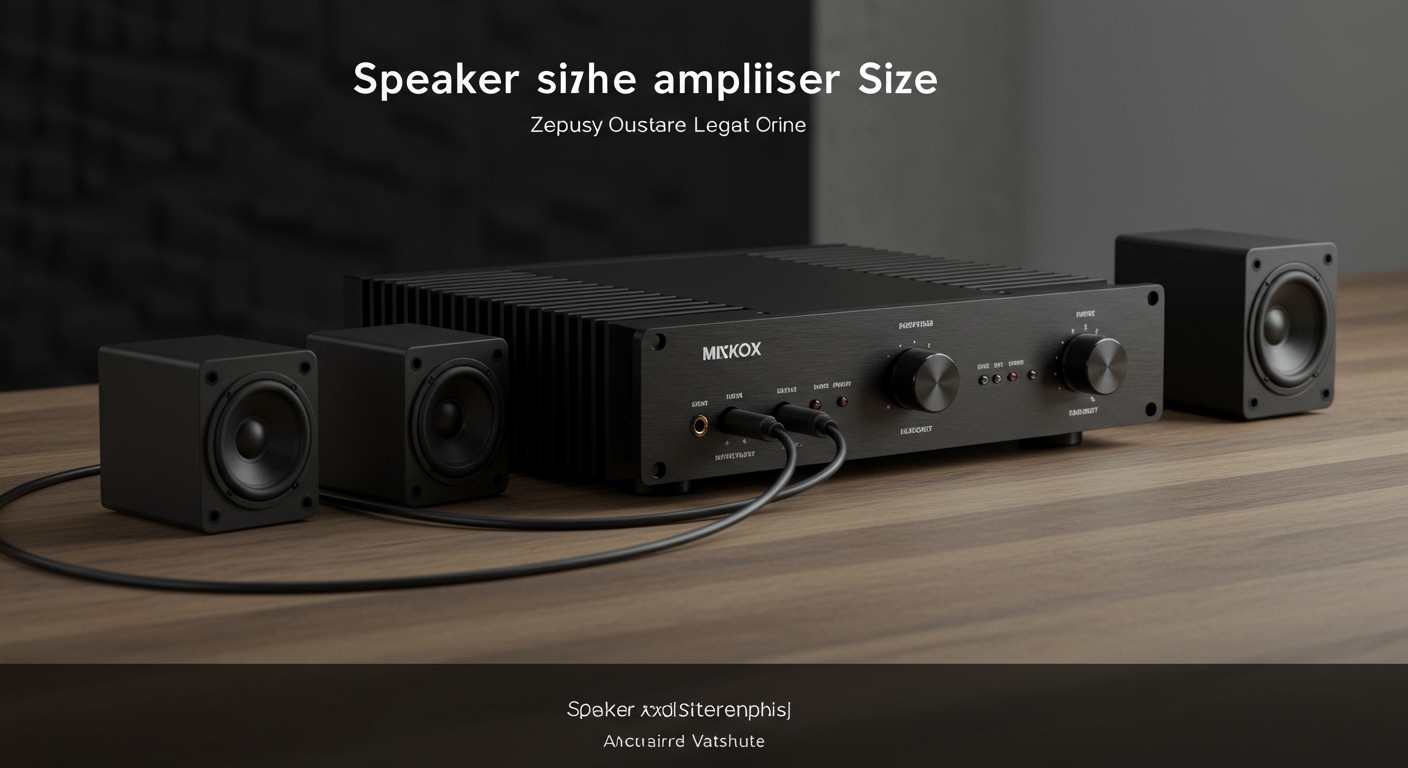
While sensitivity is more important, amplifier power—measured in watts—is still a critical part of the equation. Watts represent the amount of power your amplifier can send to the speakers.
The relationship between watts and decibels is logarithmic, not linear. This is the most misunderstood concept in audio.
The 3 dB Rule: To make a speaker play just 3 dB louder, you must double the amplifier power.
Let’s take an average speaker with a sensitivity of 88 dB.
- With 1 watt of power, it produces 88 dB.
- With 2 watts, it produces 91 dB.
- With 4 watts, it produces 94 dB.
- With 8 watts, it produces 97 dB.
- With 16 watts, it produces 100 dB (which is very loud!).
As you can see, the returns diminish quickly. It takes a huge jump in power to get a small increase in perceived volume. This is why a 100-watt amplifier isn’t “twice as loud” as a 50-watt one; the potential volume increase is only 3 dB.
Power Handling: RMS vs. Peak
You will often see two power ratings for a speaker:
- RMS (Root Mean Square) or Continuous Power: This is the most important number. It tells you how much power the speaker can handle continuously without being damaged.
- Peak Power: This is the maximum power the speaker can handle in brief, instantaneous bursts (like a cymbal crash or explosion in a movie). Ignore this number; it’s mostly for marketing.
Always match your amplifier’s RMS output to your speaker’s RMS handling capabilities.
Decibels (dB): The Language of Loudness
Decibels are the unit we use to measure Sound Pressure Level (SPL), or how loud something is. Because the scale is logarithmic, it mirrors how our ears perceive sound. A 10 dB increase is generally perceived by the human ear as being twice as loud.
Here is a table to put decibel levels into perspective:
| Decibel Level (dB) | Sound Source Example | Perceived Loudness |
|---|---|---|
| 0 dB | Threshold of human hearing | Silent |
| 30 dB | A quiet whisper | Very Faint |
| 60 dB | Normal conversation | Moderate |
| 75 dB | A vacuum cleaner | Loud |
| 85 dB | Heavy city traffic / OSHA damage risk | Very Loud |
| 100 dB | Jackhammer / Subway train | Extremely Loud |
| 110 dB | Live rock concert (front row) | Painful |
| 120 dB | Jet engine at takeoff | Immediate Damage |
For home listening, a comfortable average volume is around 70-75 dB, with dynamic peaks in music and movies hitting 85-95 dB.
How to Calculate a Speaker’s Maximum Loudness
Now let’s put it all together. You can estimate a speaker’s maximum theoretical loudness with a simple formula.
Let’s use the KEF LS50 Meta as an example:
- Sensitivity: 85 dB (1W/1m)
- Recommended Amplifier Power: 40-100 watts
- Start with the sensitivity at 1 watt: 85 dB
- Calculate the dB increase from the power: We’ll use the maximum recommended power of 100 watts. We need to find out how many “doublings” of power it takes to get from 1 watt to 100 watts.
* 1W -> 2W (+3 dB)
* 2W -> 4W (+3 dB)
* 4W -> 8W (+3 dB)
* 8W -> 16W (+3 dB)
* 16W -> 32W (+3 dB)
* 32W -> 64W (+3 dB)
* 64W -> 128W (+3 dB)
So, 100 watts is just under 7 doublings of power. Each doubling is +3 dB. So, 7 x 3 dB = 21 dB.
- Add the dB gain to the sensitivity rating: 85 dB (sensitivity) + 21 dB (gain from power) = 106 dB.
So, theoretically, the KEF LS50 Meta can produce about 106 dB at a distance of 1 meter. This is very loud, but remember, this doesn’t account for distance.
The Impact of Listening Distance (The Inverse Square Law)
Sound doesn’t travel forever. The Inverse Square Law is a physics principle that states sound intensity decreases significantly with distance.
The 6 dB Rule: For every doubling of distance from the speaker in an open space, the sound level drops by 6 dB.
Let’s continue with our KEF speaker example, which can hit 106 dB at 1 meter.
- At 1 meter (about 3 feet), you get 106 dB.
- At 2 meters (about 6.5 feet), the volume drops to 100 dB.
- At 4 meters (about 13 feet), the volume drops to 94 dB.
This is critically important. If you have a very large room and sit far from your speakers, you need speakers that can play loud enough to overcome this distance-related volume loss.
How to Measure the Loudness of Your Speakers at Home
Reading specs is great for theory, but the best way to