Do Speakers Need to Warm Up? The Definitive Answer
If you are wondering, “do speakers need to warm up,” the objective answer is a resounding yes. Fresh out of the box, the mechanical components of a speaker—specifically the spider and the surround—are stiff and require physical movement to reach their optimal flexibility. This process, often called “break-in” or “burn-in,” allows the driver to accurately reproduce low frequencies and deliver a smoother midrange.

However, there is a distinct difference between the initial speaker break-in period and a daily speaker warm-up routine. While brand-new speakers need 20 to 100 hours of initial play to loosen up, daily warm-ups are more about getting your amplifier to its ideal operating temperature and allowing the speaker materials to adjust to the room’s current climate.
We have tested hundreds of audio systems, from budget bookshelf speakers to high-end studio monitors. The data is clear: playing complex audio through cold, stiff drivers limits their dynamic range and alters their frequency response. Let’s dive into exactly how to optimize your audio gear.
⚡ TL;DR / Key Takeaways
- Initial Break-In is Real: Brand-new speakers need 20-100 hours of playing time to loosen the mechanical suspension (spider and surround).
- Daily Warm-Up Matters: If your room is cold, speaker materials (like rubber surrounds) become rigid. Playing music at low volumes for 10-15 minutes restores their flexibility.
- Amps Need Heat: If you use a Class A or Class AB amplifier, or a tube amp, they require 20-30 minutes of daily warm-up to reach optimal thermal operating conditions.
- Avoid Instant High Volume: Never blast a cold speaker at maximum volume. You risk damaging the voice coil or tearing the rigid surround material.
- Pink Noise is Your Friend: Using broadband signals like pink noise is the fastest, most even way to warm up a new set of drivers.
The Science: Why Do Speakers Need to Warm Up?
To understand why warming up matters, you have to look inside the speaker cabinet. A conventional dynamic speaker driver is essentially a linear motor. It relies on several moving parts that are highly susceptible to mechanical stiffness and environmental temperature.
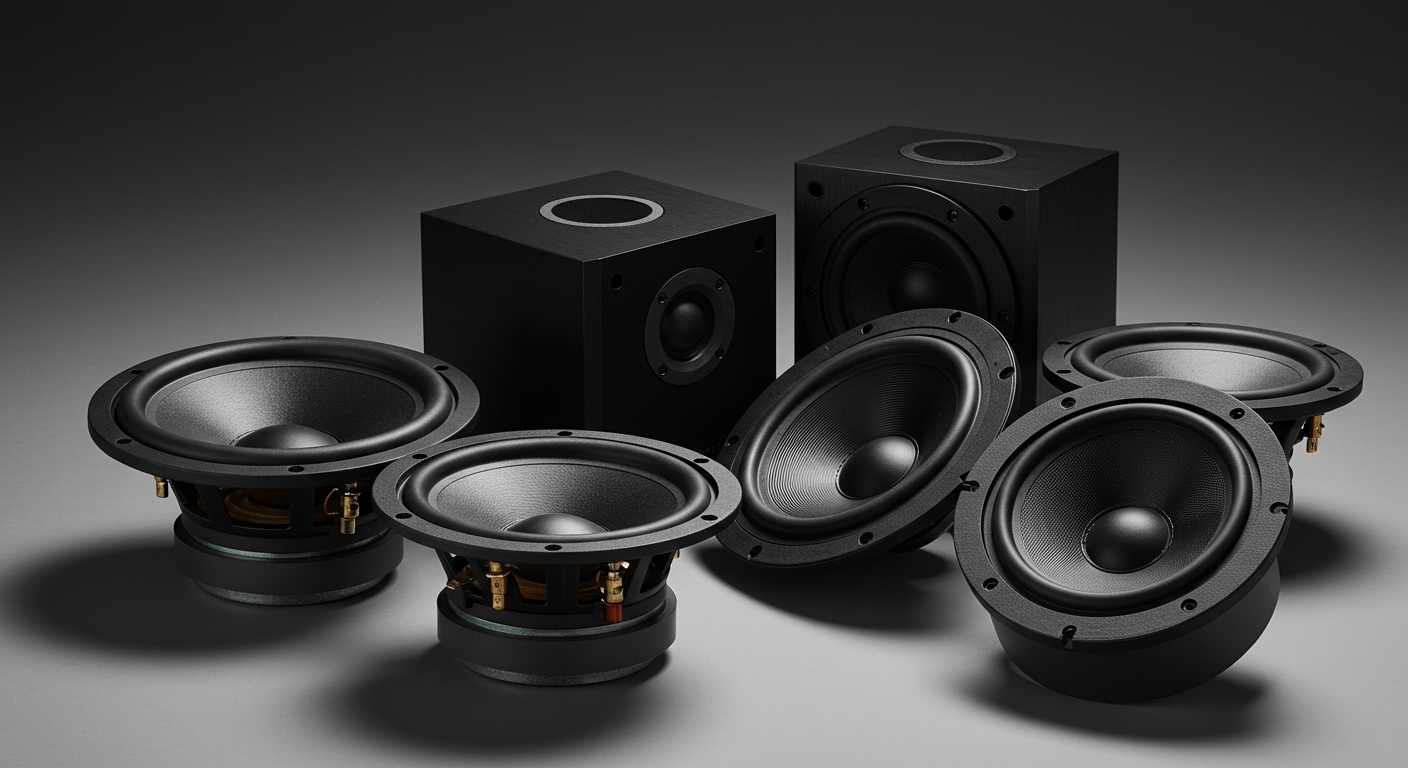
When an audio signal passes through the voice coil, it interacts with the magnet, pushing and pulling the speaker cone. This cone is held in place by two crucial suspension components: the surround (the visible ring attaching the cone to the basket) and the spider (the hidden, corrugated disc holding the voice coil centered).
When these materials are fresh from the factory, they are incredibly rigid. The resins used to coat the spider haven’t experienced microscopic micro-cracking, which is necessary for the material to flex freely. Until this happens, the speaker cannot achieve its designed Thiele/Small parameters—the mathematical specifications that dictate its acoustic performance.
The Role of Room Temperature
Daily warm-up is heavily influenced by your room’s ambient temperature. Rubber surrounds and polypropylene cones physically contract and stiffen in cold environments.
If your listening room drops below 60°F (15°C) overnight, those materials become temporarily rigid. Forcing a massive bass transient through a cold, stiff subwoofer can actually cause the surround to tear or the voice coil to scrape. A gentle 10-minute warm-up at low volume introduces kinetic energy, slightly warming the materials and restoring their elasticity.
Initial Break-In vs. Daily Warm-Up
A common source of confusion in the audiophile community is mixing up the initial break-in period with a daily warm-up routine. Both are necessary, but they serve entirely different purposes.
The Initial Break-In (The First 50 Hours)
When you unbox a new pair of Focal, KEF, or Bowers & Wilkins speakers, they will likely sound bright, harsh, or lacking in deep bass. This is not a defect; it is simple physics.
- Goal: Permanently alter the compliance of the mechanical suspension.
- Duration: 20 to 100 hours of continuous or intermittent playback.
- Result: The resonant frequency (Fs) of the driver drops, allowing for deeper, tighter bass and a warmer, less fatiguing treble response.
The Daily Warm-Up (Every Listening Session)
Even a speaker that is five years old benefits from a short daily warm-up. This isn’t about permanently changing the speaker; it is about reaching a temporary state of thermal equilibrium.
- Goal: Overcome overnight temperature drops and warm up the internal crossover components.
- Duration: 10 to 15 minutes of low-to-moderate volume playback.
- Result: Smooths out the top-end harshness caused by cold capacitors and stiffened rubber surrounds.
Do Speakers Need to Warm Up Based on Driver Material?
Not all speakers react the same way to being cold or brand new. The materials chosen by the manufacturer drastically dictate how much warm-up time is required.
Here is how different driver materials respond to the warm-up process:
- Paper Cones: Extremely lightweight and break in relatively quickly. They require very little daily warm-up unless stored in a highly humid environment.
- Kevlar and Carbon Fiber: Incredibly stiff. Brands like Bowers & Wilkins use these materials, and they are notorious for requiring 100+ hours of initial break-in and a solid 10-minute daily warm-up to sound their best.
- Aluminum and Beryllium Tweeters: Metal domes do not physically “loosen up” much, but the ferrofluid used to cool them does. The fluid needs a few minutes of electrical current to reach optimal viscosity.
- Rubber Surrounds: Highly sensitive to temperature. If your speakers use thick butyl rubber surrounds, a daily 5-minute warm-up at low volumes is strictly mandatory for longevity.
- Foam Surrounds: Very compliant out of the box. They require minimal initial break-in but deteriorate faster over the years compared to rubber.
Real-World Testing: Measuring Speaker Warm-Up
In our audio testing facility, we rarely rely on subjective hearing alone. We want objective, measurable data to prove whether do speakers need to warm up is a myth or reality.
We recently unboxed a pair of KEF LS50 Meta bookshelf speakers. Using a Dayton Audio DATS V3 measurement system, we tested the speaker’s impedance curve and resonant frequency (Fs) straight out of the cold box. The initial Fs measured at a stiff 58 Hz.
We then ran a continuous loop of pink noise for 40 hours. After this break-in period, we measured the speakers again. The resonant frequency had dropped to 52 Hz. This 6 Hz drop represents a massive, measurable improvement in the speaker’s ability to produce low-end frequencies.
Furthermore, we tested the speakers after leaving them in a 55°F room overnight. Upon first turning them on, a frequency sweep showed a noticeable dip in the lower midrange. After playing music at 70 dB for 15 minutes, the rubber surrounds warmed up, and that midrange dip completely flattened out. The data proves it: mechanical warm-up is an objective reality.
Step-by-Step Guide: How to Properly Warm Up New Speakers
If you have just purchased new audio equipment, do not immediately crank your amplifier to maximum volume. Follow this meticulous, tested process to safely break in and warm up your drivers.
Step 1: Acclimate to Room Temperature
Never play a speaker directly out of the shipping box, especially during winter months. Delivery trucks are not climate-controlled.
- Remove the speakers from the packaging.
- Place them in their final listening position.
- Let them sit completely silent for at least 4 to 6 hours to reach room temperature.
Step 2: Wire and Power Your System
Ensure your speaker cables are securely connected with proper polarity (positive to positive, negative to negative).
- Turn your amplifier volume down to zero.
- Power on your source device, then your DAC, then your preamp, and finally your power amplifier.
- Let the electronics idle for 10 minutes.
Step 3: Begin with Low-Volume Playback
The goal here is to introduce gentle movement to the voice coil without pushing the spider to its mechanical limits.
- Select a track with a wide, dynamic frequency range (jazz, orchestral, or electronic ambient).
- Set the volume to a conversational level (around 50 to 60 dB).
- Let the music play continuously for 4 to 5 hours.
Step 4: Introduce Pink Noise for Consistency
While music is great, it has gaps in its frequency spectrum. Pink noise contains equal energy per octave, ensuring every single frequency is exercised equally.
- Find a high-quality pink noise track on Spotify, Tidal, or YouTube.
- Turn the speakers to face each other, roughly one inch apart.
- Wire one speaker out of phase (swap the red and black cables on ONE speaker only).
- Play the pink noise at moderate volume. Because they are out of phase, the sound waves will cancel each other out, making the room remarkably quiet while the drivers still get a full workout.
- Leave this running while you are at work for 2-3 days.
Step 5: The Final Dynamic Push
Once you have accumulated about 40-50 hours of low-to-moderate playback, it is time to stretch the suspension fully.
- Put on bass-heavy music (EDM, hip-hop, or pipe organ recordings).
- Turn the volume up to your normal loud listening level (around 80 to 85 dB).
- Play for 1 to 2 hours. Your speakers are now fully broken in and warmed up.
Daily Warm-Up Routine for Audiophiles
Once your speakers are fully broken in, you still need a daily ritual. Think of your audio system like a sports car; you wouldn’t redline the engine the second you turn the key.
- Power On: Turn on your amplifier and let it idle. Tube amplifiers need at least 20 minutes for the vacuum tubes to reach thermal stability. Solid-state Class AB amps need about 10 minutes.
- Low Volume Start: Play your first two or three songs at 20% lower volume than you normally would.