If you are wondering, do all Toyotas have JBL speakers, the definitive answer is no. Standard base model Toyotas come equipped with basic, unbranded factory audio systems, while premium Toyota JBL speakers are exclusively reserved for higher trim levels (like Limited, Platinum, or TRD Pro) or purchased as an optional audio upgrade package.
Upgrading a vehicle’s audio is a major priority for many drivers, and understanding exactly what sound system your car has is the first step. In this guide, I will walk you through how to identify your vehicle’s audio system, explain the technological differences, and provide a step-by-step guide on how to tune or upgrade your Toyota’s sound system for maximum audio clarity.
TL;DR: Key Takeaways
- Not universally standard: Base trims (LE, SE) feature standard audio; higher trims (Limited, Touring, TRD Pro) feature JBL premium audio.
- Easy identification: Look for the signature orange or silver JBL logo on your lower door speaker grilles or the center dashboard display.
- Technology differences: JBL systems include Clari-Fi technology, dedicated amplifiers, and an enclosed factory subwoofer.
- Actionable upgrades: If your Toyota lacks JBL, you can drastically improve sound quality by adding an aftermarket Digital Signal Processor (DSP), component speakers, and sound deadening materials.
Do All Toyotas Have JBL Speakers Available?
While the answer to “do all Toyotas have JBL speakers” is no, almost every modern Toyota model offers a JBL upgrade as an option. Toyota and JBL (a Harman International company) have maintained a strong partnership since 1996.
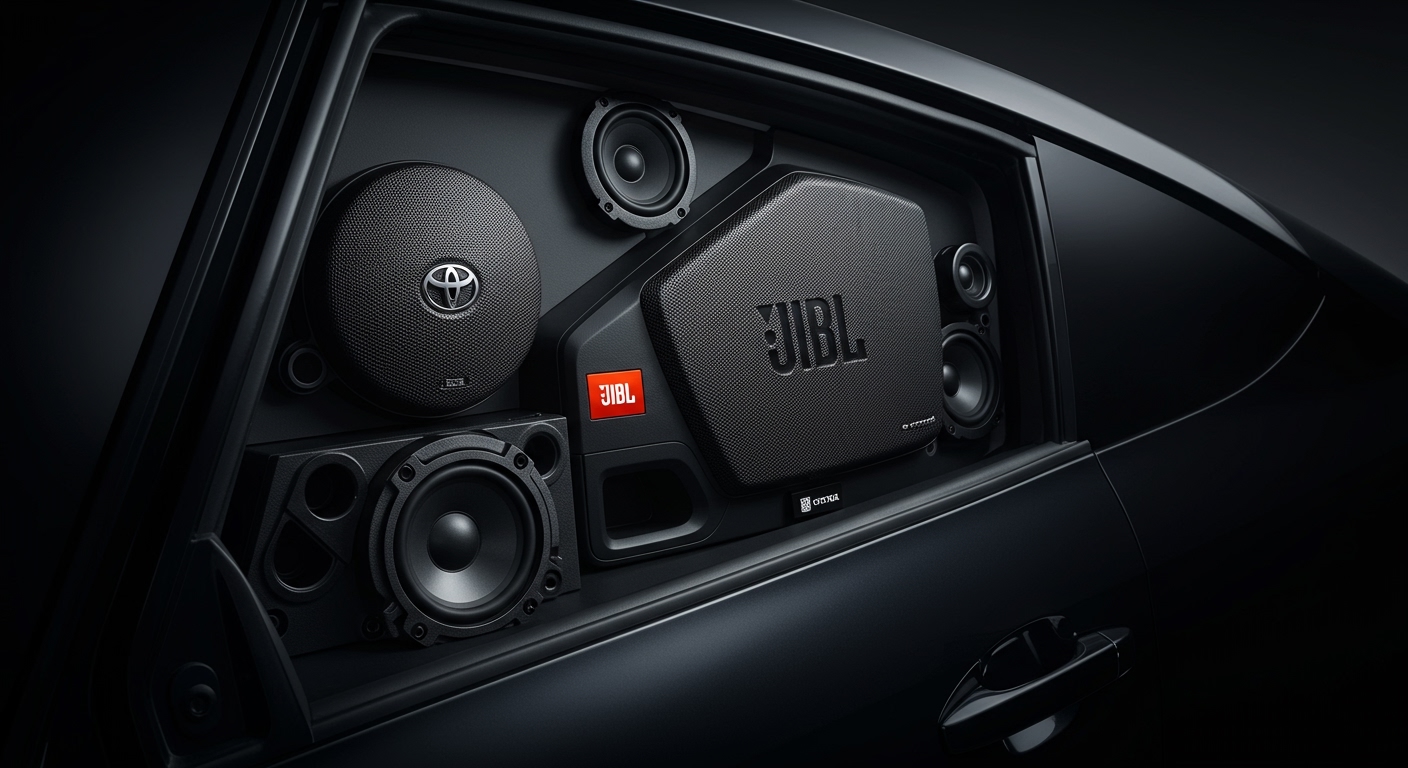
This partnership ensures that the audio acoustics are specifically tuned for the exact cabin dimensions of each specific Toyota model. However, economy trims are built to be cost-effective. Adding a 14-speaker JBL audio system with an 800-watt amplifier would drastically increase the base price of a standard Toyota Corolla or Toyota RAV4.
Therefore, Toyota strategically gates this premium audio experience behind upper-tier trims. If you are shopping for a used or new Toyota, you must pay close attention to the vehicle’s spec sheet to ensure the Premium Audio Package is included.
How to Identify if Your Toyota Has Premium JBL Audio (Step-by-Step)
If you just purchased a Toyota or are test-driving one, you might not immediately know what audio system is installed. Here is my step-by-step process for identifying the JBL sound system in any Toyota vehicle.
Step 1: Inspect the Door Speaker Grilles
The fastest way to check your audio system is by looking at the physical speakers.
- Open the driver or passenger side door.
- Look down at the large speaker grille located near the bottom of the door panel.
- Look for a distinct, small square emblem. A true JBL system will always have a branded badge (usually orange and white, or chrome) embedded directly into the plastic grille.
Step 2: Check the Dashboard Tweeters
Toyota models with premium audio feature expanded speaker arrays.
- Examine the top corners of your dashboard, near the base of the windshield.
- Premium systems feature distinct A-pillar or dashboard tweeters, which also occasionally carry subtle JBL branding.
- Standard systems often have flat, unbranded plastic covers here, or blank plates if tweeters are entirely absent.
Step 3: Look for the Infotainment Branding
The central head unit is the brain of your car’s audio.
- Turn on the vehicle’s ignition to power up the Toyota Audio Multimedia display.
- Look at the physical bezel surrounding the touchscreen.
- Many older models (2010–2019) have the JBL logo printed directly on the plastic bezel below the CD player or screen. Newer models may display the logo digitally during the boot-up animation.
Step 4: Locate the Factory Subwoofer
A hallmark of the Toyota JBL audio upgrade is dedicated bass reproduction.
- Open the trunk or rear cargo area of your Toyota.
- Check the side panels. In SUVs like the Toyota RAV4 or Highlander, the factory subwoofer is usually built into the rear-right or rear-left cargo wall.
- In trucks like the Toyota Tacoma or Tundra, check behind or directly underneath the rear passenger seats for a molded plastic subwoofer enclosure.
Toyota Models and JBL Availability Breakdown
To help you understand exactly where these premium speakers live, I have compiled a breakdown of popular Toyota models. This table highlights which trims typically feature the standard unbranded audio versus the upgraded JBL sound system.
| Toyota Model | Standard Audio Trims (No JBL) | Premium JBL Audio Trims (Standard or Optional) | Total JBL Speakers |
|---|---|---|---|
| Toyota Camry | LE, SE, Nightshade | XLE, XSE, TRD (Optional) | 9 Speakers + Subwoofer |
| Toyota RAV4 | LE, XLE, XLE Premium | Limited, TRD Off-Road, Prime XSE | 11 Speakers + Subwoofer |
| Toyota Tacoma | SR, SR5, TRD Sport | TRD Off-Road (Opt), Limited, TRD Pro | 6 to 10 Speakers (varies by year) |
| Toyota Tundra | SR, SR5 | Limited, Platinum, 1794 Edition, Capstone | 12 Speakers + Subwoofer |
| Toyota Prius | LE, XLE | Limited | 8 Speakers |
| Toyota Highlander | L, LE, XLE | Limited, Platinum | 11 Speakers + Subwoofer |
Note: Available packages change per model year. Always verify with the vehicle’s specific VIN.
Standard vs. JBL Toyota Audio: What is the Real Difference?
When people ask, “do all Toyotas have JBL speakers,” they are usually trying to figure out if the upgrade is actually worth the money. Having tested both standard factory audio and the premium JBL upgrades extensively, the differences are night and day.
Power and Amplification
Standard Toyota audio relies on the built-in power of the dashboard head unit, which typically outputs a meager 15 to 20 watts RMS per channel. This results in distortion when you turn the volume up to highway-driving levels.
The JBL premium system utilizes an external, dedicated DSP amplifier hidden under a seat or in the trunk. These amplifiers can push between 600 and 1200 watts of total system power, allowing for massive headroom, zero distortion at high volumes, and punchy, dynamic audio.
Advanced Acoustic Technology (Clari-Fi and GreenEdge)
JBL does not just add more speakers; they integrate proprietary software. Clari-Fi technology actively analyzes compressed audio files (like Spotify streams or Bluetooth audio) in real-time. It digitally rebuilds the lost details, making digital music sound closer to an uncompressed studio recording.
Additionally, Toyota utilizes JBL GreenEdge technology. This highly efficient speaker and amplifier design draws significantly less electrical current from the vehicle’s alternator. This is especially crucial for Toyota Hybrids and EVs, where electrical drain directly impacts fuel economy and battery range.
Speaker Count and Placement
A base Toyota Corolla might have just four or six cheap, paper-cone speakers in the doors. The soundstage is muddy, and the audio feels like it is trapped by your ankles.
A JBL-equipped Toyota utilizes a complex array of 9 to 14 speakers. This includes dedicated silk-dome tweeters for crisp highs, midrange drivers in the dash to lift the soundstage to ear level, and a trunk-mounted subwoofer to handle sub-bass frequencies below 80Hz.
Step-by-Step Guide: How to Tune Your Toyota JBL Speakers
If you are lucky enough to own a vehicle with this premium package, you must tune it properly. Out of the box, factory audio settings are usually set to a flat, neutral profile.
Here is my professional step-by-step method to optimize the JBL EQ settings in your Toyota for the best possible sound.
Step 1: Access the Sound Settings Menu
- Turn on your vehicle and allow the Toyota Infotainment screen to boot up.
- Press the “Menu” or “Gear” icon on the touchscreen.
- Navigate to “Audio,” then select “Sound” or “Audio Settings.”
Step 2: Adjust the Treble, Mid, and Bass (The EQ)
Do not immediately crank all the sliders to the maximum; this causes artificial distortion.
- Treble: Increase the treble slightly to +2 or +3. This brings out the crispness in cymbals, acoustic guitars, and female vocals.
- Mid: Leave the Midrange at 0 or drop it slightly to -1. Boosting mids too high makes the music sound “honky” or muddy, like it is playing through a tin can.
- Bass: Push the bass to +2 or +4, depending on your genre preference. Because the JBL system has a dedicated subwoofer, it can handle this