[Your Article Content in Markdown — START directly with ## H2 headings]
Struggling with muddy, lifeless audio in your car or home? If your favorite songs lack that crisp detail in the vocals and the shimmer of cymbals, you’re likely missing critical high-frequency sound. The good news is you don’t need a whole new system. Learning how to add tweeters to speakers is the single most impactful upgrade you can make for audio clarity, transforming your listening experience from dull to dynamic. This guide will walk you through the entire process, step-by-step, based on our years of hands-on audio installation experience.
Key Takeaways: Quick Guide to Tweeter Installation
- Use a Crossover: This is non-negotiable. A crossover filters frequencies, protecting your new tweeter from damaging bass notes that will instantly destroy it.
- Prioritize Placement: Where you mount the tweeter dramatically affects the soundstage. For cars, A-pillars or sail panels aimed at the listener are ideal.
- Check Polarity: Always wire positive (+) to positive and negative (-) to negative on the tweeter, crossover, and amplifier. Incorrect polarity will result in thin, weak sound.
- Component vs. Coaxial: This guide focuses on adding component tweeters, which are separate from the main woofer and offer superior sound quality and imaging.
- Safety First: When working on a car, always disconnect the negative terminal of the battery before you begin wiring.
Why You Should Add Tweeters to Your Speakers
Stock audio systems, whether in your car or in a budget home setup, often use cheap, full-range speakers. These speakers try to reproduce all sound frequencies—from deep bass to high treble—with a single cone, and they do a poor job at the extremes. This is why your music sounds muffled.
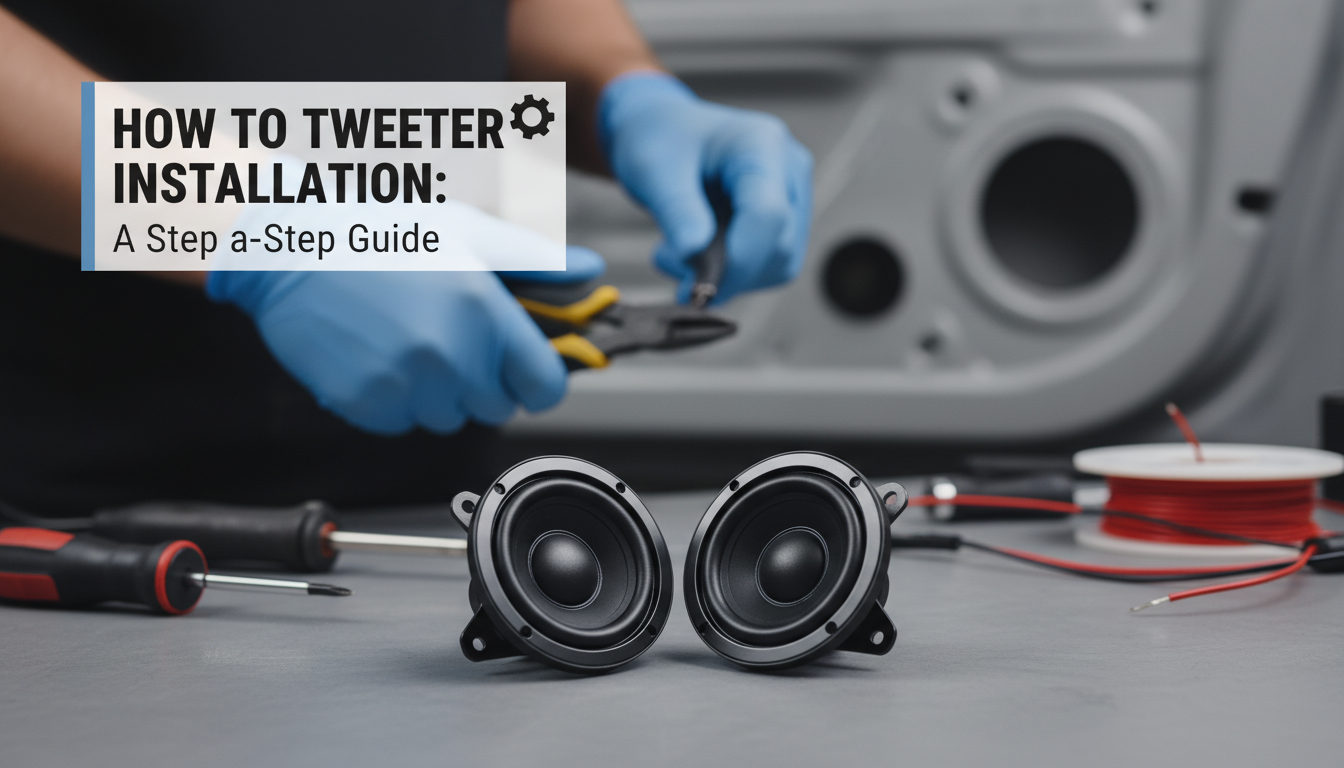
A dedicated tweeter is a small speaker specifically designed to reproduce high-frequency sounds, typically from 2,000 Hz to 20,000 Hz.
Adding tweeters provides three main benefits:
- Clarity and Detail: You’ll finally hear the subtle details in your music, like the breath of a vocalist, the crisp snap of a snare drum, and the shimmer of cymbals.
- Improved Soundstage: Soundstage is the perceived sense of space and width in your music. By placing tweeters higher up and closer to ear level (especially in a car), you “lift” the sound from the floor and create a more immersive, concert-like experience.
- Better Stereo Imaging: Proper tweeter placement helps your brain pinpoint where individual instruments are in the mix, creating a clear and stable stereo image between the left and right channels.
From my experience installing hundreds of audio systems, I can confidently say that adding a quality component set with separate tweeters provides a more significant “wow factor” than almost any other single upgrade.
Understanding the Key Components for Tweeter Installation
Before you start cutting holes and running wires, it’s crucial to understand the parts you’ll be working with. A successful installation depends on matching the right components.
The Tweeter: Types and Materials
The tweeter itself is the star of the show. They primarily come in two materials:
- Silk Domes: These are known for a warm, smooth, and refined sound. They are very popular in both car and home audio because they produce detailed highs without being harsh, reducing listener fatigue.
- Metal Domes (Aluminum/Titanium): These are known for a bright, crisp, and highly detailed sound. They can be incredibly accurate but sometimes are perceived as harsh or “tinny” if not paired with the right equipment.
For most people upgrading a factory system, I highly recommend a silk dome tweeter. It’s more forgiving and provides a significant, pleasant upgrade.
The Crossover: The Brain of the Operation
If the tweeter is the star, the crossover is the director. It is a small electronic device that acts as a traffic cop for audio frequencies.
A passive crossover (the type included with most component speaker sets) has one input and two outputs:
- INPUT: Receives the full-range signal from your amplifier or head unit.
- WOOFER (WF): Sends only low and mid-range frequencies to your main speaker (the woofer).
- TWEETER (TW): Sends only high frequencies to your tweeter.
WARNING: Never, ever connect a tweeter directly to a full-range speaker wire without a crossover in between. Low-frequency bass signals will instantly overheat and destroy the tweeter’s tiny voice coil.
Essential Tools and Materials
Having the right tools makes the job infinitely easier. Here’s a checklist of what we use for a professional installation:
- Drill with a hole saw bit set
- Wire strippers and crimpers
- Screwdriver set (Phillips and flathead)
- Panel removal tool kit (for cars)
- Fish tape or a coat hanger (for running wire)
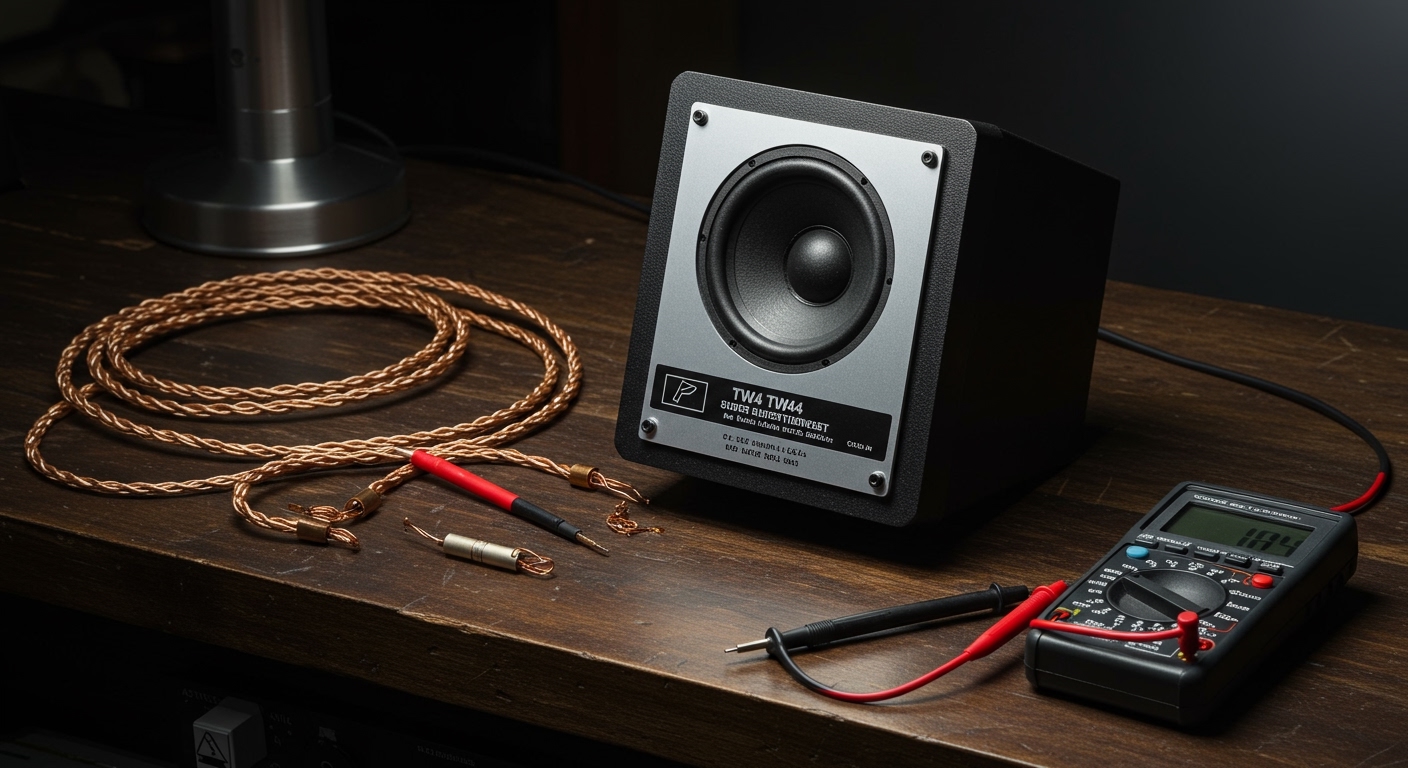
- Digital Multimeter (for testing)
- Speaker wire (16 or 18-gauge is sufficient for tweeters)
- Butt connectors or other wire terminals
- Zip ties and electrical tape
Why You Should Add Tweeters to Your Speakers
Stock audio systems, whether in your car or in a budget home setup, often use cheap, full-range speakers. These speakers try to reproduce all sound frequencies—from deep bass to high treble—with a single cone, and they do a poor job at the extremes. This is why your music sounds muffled.
A dedicated tweeter is a small speaker specifically designed to reproduce high-frequency sounds, typically from 2,000 Hz to 20,000 Hz.
Adding tweeters provides three main benefits:
- Clarity and Detail: You’ll finally hear the subtle details in your music, like the breath of a vocalist, the crisp snap of a snare drum, and the shimmer of cymbals.
- Improved Soundstage: Soundstage is the perceived sense of space and width in your music. By placing tweeters higher up and closer to ear level (especially in a car), you “lift” the sound from the floor and create a more immersive, concert-like experience.
- Better Stereo Imaging: Proper tweeter placement helps your brain pinpoint where individual instruments are in the mix, creating a clear and stable stereo image between the left and right channels.
From my experience installing hundreds of audio systems, I can confidently say that adding a quality component set with separate tweeters provides a more significant “wow factor” than almost any other single upgrade.
Understanding the Key Components for Tweeter Installation
Before you start cutting holes and running wires, it’s crucial to understand the parts you’ll be working with. A successful installation depends on matching the right components.
The Tweeter: Types and Materials
The tweeter itself is the star of the show. They primarily come in two materials:
- Silk Domes: These are known for a warm, smooth, and refined sound. They are very popular in both car and home audio because they produce detailed highs without being harsh, reducing listener fatigue.
- Metal Domes (Aluminum/Titanium): These are known for a bright, crisp, and highly detailed sound. They can be incredibly accurate but sometimes are perceived as harsh or “tinny” if not paired with the right equipment.
For most people upgrading a factory system, I highly recommend a silk dome tweeter. It’s more forgiving and provides a significant, pleasant upgrade.
The Crossover: The Brain of the Operation
If the tweeter is the star, the crossover is the director. It is a small electronic device that acts as a traffic cop for audio frequencies.
A passive crossover (the type included with most component speaker sets) has one input and two outputs:
- INPUT: Receives the full-range signal from your amplifier or head unit.
- WOOFER (WF): Sends only low and mid-range frequencies to your main speaker (the woofer).
- TWEETER (TW): Sends only high frequencies to your tweeter.
WARNING: Never, ever connect a tweeter directly to a full-range speaker wire without a crossover in between. Low-frequency bass signals will instantly overheat and destroy the tweeter’s tiny voice coil.
Essential Tools and Materials
Having the right tools makes the job infinitely easier. Here’s a checklist of what we use for a professional installation:
- Drill with a hole saw bit set
- Wire strippers and crimpers
- Screwdriver set (Phillips and flathead)
- Panel removal tool kit (for cars)
- Fish tape or a coat hanger (for running wire)
- Digital Multimeter (for testing)
- Speaker wire (16 or 18-gauge is sufficient for tweeters)
- Butt connectors or other wire terminals
- Zip ties and electrical tape
Step-by-Step Guide: How to Add Tweeters to Car Speakers
Installing tweeters in a car is the most common scenario, so we’ll focus on a detailed walkthrough for that process.
Step 1: Safety First – Disconnect the Battery
Before you touch any wiring, open the hood and use a wrench to disconnect the negative (-) terminal of your car’s battery. This prevents any accidental short circuits that could damage your vehicle’s electronics or your new audio gear.
Step 2: Choose Your Tweeter Mounting Location
Placement is everything for sound quality. You want the tweeters mounted as high as possible and aimed toward the listeners’ ears.
- A-Pillars: The pillars on either side of the windshield. This is often the best location for soundstage and imaging but requires more custom work.
- Sail Panels: The small, triangular plastic piece where your side mirror mounts to the door. This is an excellent, ear-level location and often the easiest to work with.
- Upper Door Panel: A good compromise, placing the sound higher than the stock location.
- Dashboard: Some vehicles have factory tweeter locations in the dash corners. Using these is the simplest option if available.
In our shop, we almost always recommend the sail panels for a balance of great sound and reasonable installation difficulty.
Step 3: Plan Your Wire Route and Install the Crossover
Before mounting anything, figure out where everything will go.
- Find a Home for the Crossover: The crossover needs to be installed somewhere between the head unit/amplifier and the speakers. The most common place is inside the door panel itself. Find a flat spot where it won’t interfere with the window mechanism and secure it firmly with screws or heavy-duty zip ties to prevent rattling.
- Run the Wires: You’ll need to run three sets of wires to and from the crossover: